Why Bessemer Mining and Metals Plants Are Re-Evaluating Clarification in 2026
40 CFR Part 437 (Ore Mining and Dressing Point Source Category) is the binding federal framework for Bessemer-area aggregate, coal-handling, and metals-finishing facilities, with monthly-average ceilings of settleable solids ≤ 0.2 mL/L and TSS ≤ ~30 mg/L for most restrictive subparts (per EPA 40 CFR 437). Alabama's ADEM administers the underlying NPDES permit, and receiving waters for the Bessemer industrial corridor—Valley Creek and the Black Warrior River—are already listed for legacy metals impairment. The compliance bar is rising, as ADEM enforcement now prioritizes monthly-average compliance over single-day excursions. Because a Bessemer plant's TSS can swing from 500 to 10,000 mg/L during storm events or process upsets, facilities must re-evaluate primary clarification to maintain compliance. For a local comparison against a sister corridor, the Fairhope mining and metals DAF-vs-clarifier guide covers the Mobile-Bay watershed counterpart under the same 40 CFR 437 ceiling.
How a DAF System Actually Separates Solids in Mining Effluent
Dissolved air flotation is a buoyancy-based separator that uses pressurized recycle water to lift particles to the surface. Pressurized recycle water saturated with air at ≥5 bar is released through proprietary air-release nozzles near the contact zone, generating a cloud of 30–50 µm microbubbles (per SigmaDAF / Clearwater Industries DAF datasheet, 2026) that attach to previously flocculated particles and lift them to the surface, where a counter-current scraper removes the float blanket; clarified underflow exits the bottom and part of it is recycled to the saturator to close the loop. The five-step DAF process is fixed by the chemistry, not the vendor: (1) chemical treatment with coagulant and flocculant to build floc, (2) air injection via the pressurized recycle, (3) bubble-floc contact and separation, (4) surface sludge removal, and (5) clarified water outlet, with the recycle stream feeding back into step 2 (per WastewaterMachinery DAF process flow, 2025-12). The performance ceiling is high: TSS reduction up to 97% and COD removal of 60–80% are documented on industrial streams at saturation pressure ≥5 bar and an optimized A/S (air-to-solids) ratio (per WastewaterMachinery DAF datasheet, 2025-12). The HydropureWater dissolved air flotation system covers 4–300 m³/h across 13 standard models, so a Bessemer mine water or metals-finishing stream sits comfortably inside a single skid envelope.
How a Gravity or Lamella Clarifier Settles the Same Solids
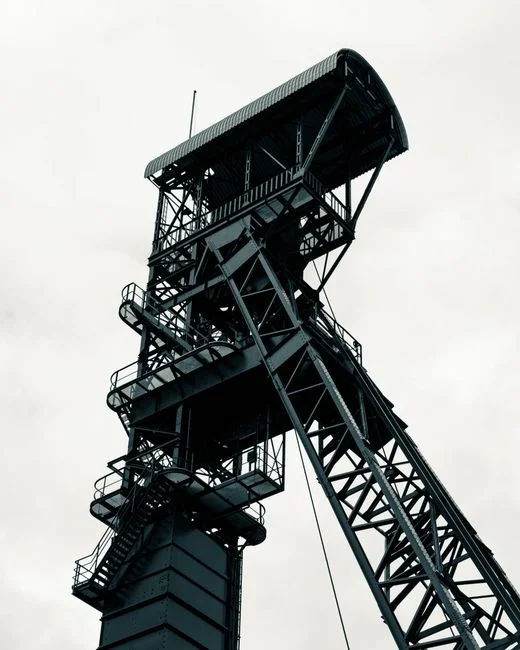
A conventional gravity clarifier relies on Stokes-law settling where particles denser than water drift downward, requiring low overflow rates to prevent bed resuspension. That low loading rate is why an unaided clarifier is large — long retention times of 2–4 hours are normal, and the basin footprint scales directly with flow. A lamella/inclined-plate clarifier multiplies the effective settling area by stacking parallel plates at 55–60°, so the equivalent settling footprint shrinks dramatically. The HydropureWater high-efficiency lamella clarifier is rated for 20–40 m/h surface loading and is documented to reduce coagulant consumption by up to 30% versus a conventional basin, because the inclined plates give each floc a short, predictable path to a collection surface. Gravity and lamella units both perform well on steady, low-to-moderate TSS streams below ~1,000 mg/L, where floc density is high enough to overcome hydraulic turbulence, and they are insensitive to compressed-air systems. The published range for mineral-processing and aggregate effluents is 2,000–10,000 mg/L TSS with 300–1,000 mg/L dissolved solids and moderate COD (Springer review of industrial wastewater treatment, 2024) — that is the operating envelope where plain gravity settling starts to fail without pre-thickening or a polishing step.
DAF vs Clarifier for Mining/Metals: Head-to-Head Performance Matrix
The comparison lives in the parameters rather than marketing claims. The matrix below is sized for a Bessemer ore-mining or metals-finishing stream at 50 m³/h with an influent TSS in the 1,000–10,000 mg/L range, the typical envelope from the Springer industrial wastewater review (2024).
| Parameter | DAF (e.g., HydropureWater / DAF-050 class) | Lamella / Gravity Clarifier |
|---|---|---|
| TSS removal | Up to 97% (per WastewaterMachinery, 2025-12) | 50–80%, floc-strength dependent |
| Hydraulic residence time | ~15–30 min | 2–4 h |
| Footprint per m³/h | ~0.05–0.1 m² | ~0.2–0.4 m² (2–4× larger) |
| Heavy-metal co-removal (Pb, Cu, Zn, Ni) | Simultaneous with floc step | Requires separate precipitation stage |
| Flow turndown / surge tolerance | 4–300 m³/h, one skid | Sensitive to hydraulic surges |
| Sludge consistency | 3–6% dry solids (float) | 1–3% dry solids (underflow) |
| Best-fit influent TSS | 500–10,000+ mg/L | <1,000 mg/L, steady flow |
The downstream dewatering step is where DAF sludge pulls further ahead: a 3–6% float feeds a HydropureWater plate and frame filter press with shorter cycle times and lower polymer demand than the 1–3% underflow from a clarifier, which directly cuts haul-off cost.
40 CFR 437 and Bessemer Discharge Pathways: Which Tech Wins the Permit
40 CFR 437 is technology-based, not equipment-prescriptive, so neither DAF nor a lamella clarifier is "required" — but the effluent ceilings bind regardless of whether the discharge goes to a POTW or to surface water under an NPDES permit in the Black Warrior basin. The binding parameters for ore mining and dressing are settleable solids (≤0.2 mL/L monthly average), TSS, and the heavy-metal monthly-average limits on Pb, Cu, Zn, and Ni (per EPA 40 CFR 437). For direct surface-water discharge into Valley Creek or the Black Warrior River, the most reliable 2026 compliance train in our field experience is DAF plus pH adjustment and Fe-based precipitation for the metals — gravity alone rarely clears the monthly-average metal ceilings without a polishing step, and storm events tend to blow the limit on a clarifier. For POTW discharge, a lamella clarifier with disciplined coagulant dosing can be acceptable and lower CAPEX, but the monthly-average framing means a single storm surge can still cause an excursion. Pre-DAF screening matters more than vendors admit: a GX series rotary mechanical bar screen protects the air-release nozzles from ragging, and pairing the screen with a HydropureWater automatic chemical dosing system keeps the A/S ratio in band when flows shift.
Sizing, Footprint, and OPEX for a 50 m³/h Bessemer Plant
A worked example provides a clear baseline for financial planning. At 50 m³/h, the DAF-050 class unit is roughly 8.4 m × 3.6 m × 2.7 m with a 55,000 kg operating weight (per WastewaterMachinery DAF-050 datasheet, 2025-12); an equivalent lamella clarifier handling the same flow is typically 12 m × 5 m × 4 m, roughly 2.5× the plan area. OPEX lines are different in shape, not just magnitude.
| OPEX line | DAF (50 m³/h) | Lamella clarifier (50 m³/h) |
|---|---|---|
| Recycle / air supply | ~10–15% of throughput as pressurized recycle | None |
| Chemical dosing (coagulant + flocculant) | $0.30–$0.80 per m³ treated (2026 mining range) | $0.25–$0.70 per m³; up to 30% higher per HydropureWater lamella comparison |
| Sludge hauling / dewatering | Lower: float is 3–6% dry solids | Higher: underflow is 1–3% dry solids |
| Maintenance driver | Periodic nozzle cleaning, scraper wear | Sludge pump wear, plate cleaning |
| Footprint at 50 m³/h | ~30 m² | ~60 m² |
For smaller Bessemer plants that need coagulation, sedimentation, and filtration in a single skid for mine-water supply (not the full metals-removal train), the HydropureWater JY integrated water purification unit covers 10–200 m³/h in one package.
Decision Framework: DAF or Clarifier for Your Bessemer Site
Review these selection criteria before soliciting bids. Choose DAF if influent TSS is consistently above 1,000 mg/L; heavy metals (Pb, Cu, Zn, Ni) are present and must co-precipitate; site footprint is constrained; or flows are storm-driven and variable. Choose a lamella or gravity clarifier if TSS is below 1,000 mg/L, flow is steady, the discharge path is to a POTW with available hydraulic capacity, and CAPEX is the binding constraint. Consider a hybrid train — lamella clarifier as primary, DAF as polish — for facilities with the highest compliance risk or for direct surface-water discharge under the strictest 40 CFR 437 subpart. When these criteria leave the decision open, run jar tests on-site: A/S ratio and floc strength settle the argument faster than any vendor brochure. For a different regional lens, the Milwaukee mining/metals DAF-vs-clarifier guide and the Topeka mining DAF-vs-clarifier guide both apply the same matrix against different watershed contexts.
Frequently Asked Questions
What TSS removal can a DAF system achieve on mining wastewater?
Up to 97% on optimized streams, per the WastewaterMachinery DAF technical sheet (2025-12), with COD reduction of 60–80% reported in the same source. Realized removal depends on coagulant type, A/S ratio, and influent TSS — heavy-metal-laden mining streams typically land in the 85–95% TSS range after jar-test tuning.
When is a lamella clarifier better than DAF?
When influent TSS stays below ~1,000 mg/L, flow is steady, and the discharge path is to a POTW with available capacity. CAPEX is lower, no compressed-air system is required, and the lamella design reduces coagulant consumption by up to 30% versus a conventional basin (HydropureWater lamella catalog, 2026).
Does 40 CFR 437 require DAF?
No. 40 CFR 437 is technology-based and sets effluent limits, not equipment specifications (per EPA 40 CFR 437). DAF is not mandated, but it is the most reliable 2026 path for direct surface-water discharge in the Black Warrior basin because it co-removes metals in the floc step.