Why Houston Chemical Plants Face a Different DAF-vs-Clarifier Question in 2026
For Houston chemical plants discharging to the Ship Channel or Galveston Bay, the 2026 DAF-versus-clarifier decision is no longer a generic textbook call — it is now driven by 40 CFR 414 (the Organic Chemicals, Plastics, and Synthetic Fibers category) loading-rate limits, the site-specific TPDES (TPDES) permit, and the Houston air-permit interplay that increasingly pushes operators toward covered or enclosed flotation units. Influent variability makes the question harder: Houston chemical streams routinely swing pH 2–12, push TDS to 15,000 mg/L, carry intermittent solvent or non-ionic surfactant slugs, and run 20–40 °C — a temperature window that measurably reduces micro-bubble nucleation efficiency in unconditioned recycle water. The 2026 driver is therefore not technology curiosity but convergence: tightened local enforcement of TPDES limits, ESG-linked water-reuse targets, and a wave of aging primary clarifiers from the 1990s round of capacity additions now reaching end-of-life. DAF has been a Houston chemicals mainstay for two decades — U.S. Filter was already permitting a 100,000 gpd DAF + biological train in Baytown for oily wastewater in 2002 (Industrial Info, 2002-09) — so the 2026 decision is really about when to keep DAF, when to switch to a high-rate lamella, and when to combine them. Engineers evaluating a 2026 CAPEX should also benchmark against the broader regional compliance picture laid out in the 2026 industrial wastewater compliance engineering guide, since the same loading-rate logic drives equipment sizing in both regulatory environments.
How a DAF System Actually Works on a Chemical Stream
A DAF system removes floatable and finely suspended material by attaching 10–80 μm micro-bubbles to the target particles, lowering their effective density, and floating them to the surface for skimming. In a typical chemical-plant installation, 25–35% of clarified effluent is pressurized in a saturation vessel to 4–6 bar (60–90 psig) using a recycle pump and compressed-air feed, then released through a pressure-relief valve at the centre of the flotation tank. The pressure drop nucleates the micro-bubble cloud that does the actual separation work. Komline-Sanderson's engineering documentation is the right vocabulary to borrow when justifying DAF to a plant manager: flotation is "best applied to remove materials that normally settle slowly, persist by remaining in suspension, or have a tendency to float" — exactly the description of emulsified oils, plasticizer droplets, and polymer flake common to Houston specialty-chemical streams. On real chemical streams, chemical conditioning is not optional: a coagulant (typically polyaluminum chloride at 50–150 mg/L or ferric chloride at 80–200 mg/L) destabilizes the emulsion, and an anionic polyacrylamide flocculant (1–5 mg/L) bridges oil droplets onto bubbles. ClearStream's design notes identify the two components that decide oil-removal performance on real-world streams: a properly designed air-saturation vessel that maximises air transfer efficiency, and a pressure-relief valve that minimises large-bubble formation in the recycle line. For sizing on a 2026 project, engineers should evaluate the HydropureWater dissolved air flotation system, which is offered across 13 standard models covering 4–300 m³/h and is configurable with integral coagulation and flocculation chambers.
How Clarifiers (and Lamella Plate Clarifiers) Treat Chemical Wastewater
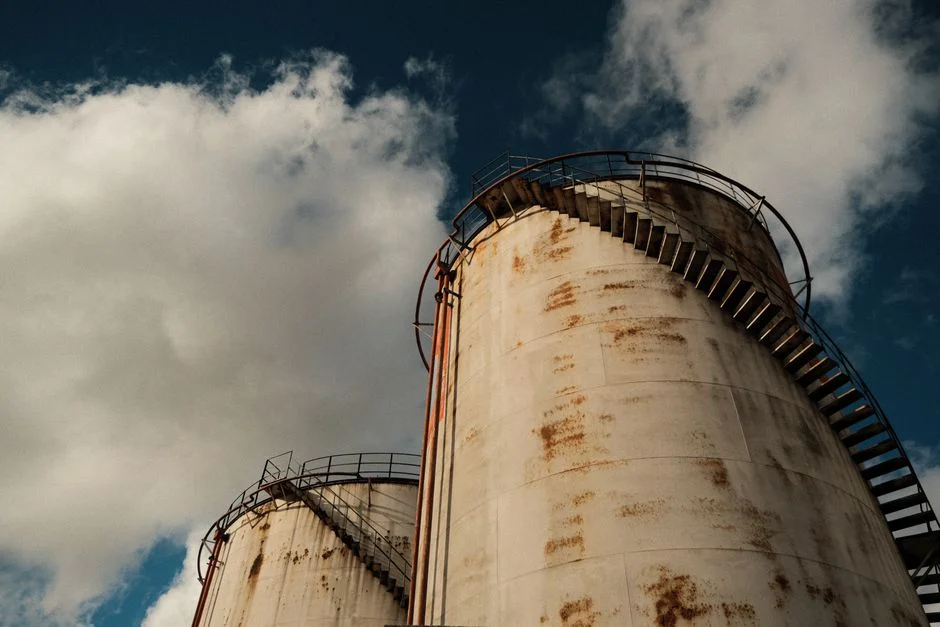
In 2026 procurement conversations, "clarifier" almost always means a high-rate lamella plate unit, not a 1970s circular concrete basin. A conventional circular clarifier relies on gravity settling of heavy solids onto a sloped floor, where a slowly rotating scraper moves sludge to a central hopper; surface weirs collect clarified effluent. On settleable TSS, a well-operated circular clarifier can deliver 85–95% removal, and Ecologix's 2026 mining case documents a 90% heavy-solids reduction at lower operating cost than a comparable DAF (Ecologix, 2026). A lamella clarifier adds a stack of inclined plates at 55–60° inside the tank; the shortened effective settling distance pushes surface loading rates to 20–40 m/h and cuts coagulant consumption by roughly 30% relative to a conventional basin. For chemical-industry influent, clarifiers are the right primary for heavy-metal hydroxide removal (Ni, Cr, Cu, Zn), lime softening, silica reduction, and brine clarification — applications where the target contaminant actually settles. They are the wrong primary, however, for streams carrying FOG above ~200 mg/L, free-oil sheen, or low-density solvent emulsions, because light, oily, or colloidal material simply does not settle at any reasonable hydraulic residence time. For a 2026 retrofit on the Houston Ship Channel where heavy-metal precipitation is the primary goal, the HydropureWater lamella clarifier is the typical reference design, sized to the same 4–300 m³/h flow band as the DAF line so the two can be benchmarked head-to-head on the same plot.
DAF vs Clarifier: Side-by-Side Comparison for Houston Chemical Streams
The single most useful data points for a 2026 Houston chemical-plant decision are the head-to-head removal efficiencies: a DAF system achieved 95% removal of oils and greases on a high-oil food-processing influent, compared to a clarifier's 70% FOG efficiency on the same stream, while a clarifier reduced heavy sediment loads by 90% at lower cost in a mining case (Ecologix, 2026). Translating those benchmarks to the chemical-industry influent typical of the Houston Ship Channel requires looking at four more parameters: footprint, hydraulic residence time, utility demand, and surge tolerance. The table below consolidates the engineering numbers an engineer should be able to defend in a CAPEX review.
| Parameter | DAF | Lamella Plate Clarifier | Conventional Circular Clarifier |
|---|---|---|---|
| FOG / immiscible oil removal | ~95% (Ecologix 2026) | ~70% (Ecologix 2026) | <60% on buoyant oil |
| Settleable TSS removal | 70–85% | 85–95% | 85–95% (Ecologix 2026, 90% mining case) |
| Hydraulic residence time | 20–30 min | 45–90 min | 2–4 h |
| Standard flow range (HydropureWater catalog) | 4–300 m³/h across 13 models | 4–300 m³/h | Site-specific; large footprint |
| Plan-area footprint at equal flow | 1.0× baseline (compact) | 1.3–1.5× baseline | 2–3× baseline |
| Utility demand | Recycle pump + saturator compressor + chemical dosing train | Feed pump + sludge pump + coagulant dosing only | Feed pump + sludge pump + rake drive |
| Chemical conditioning | Coagulant + flocculant (PAC + anionic PAM typical) | Coagulant only in many cases | Coagulant only |
| Flow-surge tolerance | High (small tank, fast recovery) | Moderate | Low (sludge bed can lift) |
| Best-fit Houston influent | FOG >200 mg/L, solvents, plasticizers, polymer flake | Metals hydroxide floc, lime softening, silica, brine | Legacy high-TSS settleable streams |
| Cover / VOC containment | Easily enclosed (ClearStream 2026 design note) | Can be covered, but larger headspace | Covering civil-structure intensive |
The 70-percentage-point FOG gap between DAF and a clarifier is the single number that usually decides the technology choice for an influent dominated by oils or solvents; conversely, the 90% heavy-solids performance at lower OPEX is what swings the decision toward a lamella on a metals-precipitation duty. Footprint matters because Houston Ship Channel plot pricing is among the highest in the Gulf Coast, so the 30–50% plan-area premium of a lamella at the same flow often shows up in the civil-works estimate before the equipment quote arrives.
The 2026 Decision Tree: Pick DAF, Clarifier, or Hybrid
The selection logic below is written so a process engineer can apply it the morning after the influent characterisation comes back from the lab, without re-reading the rest of the article.
- Branch 1 — Pick DAF when influent FOG or immiscible solvent exceeds ~200 mg/L, when a free-oil sheen is present on the equalization basin, or when the suspended load is mostly buoyant (polymer flake, plasticizer droplets, low-density catalysts). The HydropureWater dissolved air flotation system covers this branch across 4–300 m³/h.
- Branch 2 — Pick a lamella clarifier when TSS is above 500 mg/L and predominantly settleable, when metals precipitation (Ni, Cr, Cu, Zn) is the primary removal goal, or when the plant has limited operating-skill headcount and minimal compressed-air infrastructure. The HydropureWater lamella clarifier is the reference unit for this branch.
- Branch 3 — Pick DAF followed by lamella (or lamella followed by DAF, depending on which fraction is larger) when the stream carries both FOG/emulsions and heavy-metal hydroxide floc — the typical Houston specialty-chemicals profile. Ecologix's 2026 FAQ explicitly endorses hybrid trains to "address complex wastewater streams, combining DAF's oil removal with clarifiers' sedimentation capabilities" (Ecologix, 2026). On Houston Ship Channel sites this is often configured as a covered DAF for VOC capture followed by a lamella polishing step before the TPDES outfall.
- Edge case — bypass both: a high-TDS brine side stream with no FOG and no metals (a chlor-alkali or reverse-osmosis reject, for example) is rarely a good DAF or clarifier candidate; the unit operation that actually pays is evaporation or crystallisation, and the 2026 budget is better spent there than on a misapplied clarifier.
For the OPEX numbers behind each branch, the DAF Plant Operating Cost Breakdown: 2026 OPEX Guide is the matching reference.
2026 CAPEX and OPEX Ranges for Houston Chemical Plants
Budget conversations for a 2026 CAPEX cycle on the Houston Ship Channel are usually anchored in three numbers: equipment cost, installed cost (which includes any concrete basin, cover, or odour-control enclosure), and ongoing OPEX. The table below is built from HydropureWater catalog flow bands and the 2026 OPEX breakdown for dissolved-air-flotation plants, cross-checked against Ecologix's 2026 note that clarifiers "generally have lower operational costs" while DAF "may be more cost-effective for specific contaminants like oils."
| Flow band (m³/h) | DAF equipment CAPEX (USD) | Lamella equipment CAPEX (USD) | DAF installed CAPEX (with cover & dosing) | Lamella installed CAPEX (with basin) | DAF OPEX (USD/m³) | Lamella OPEX (USD/m³) |
|---|---|---|---|---|---|---|
| 4–10 | Low six figures | ~30–50% lower | +20–30% over equipment | Civil basin often dominates | 0.25–0.45 | 0.10–0.20 |
| 10–50 | Mid six figures | ~30–40% lower | +20–30% (skidded packages) | Basin cost can flip comparison | 0.20–0.40 | 0.08–0.18 |
| 50–150 | High six figures | ~30–40% lower | +20–30% + 10–20% for VOC cover | Civil works scale with footprint | 0.18–0.35 | 0.07–0.15 |
| 150–300 | Low seven figures | ~30–50% lower | Multi-million installed | Concrete basin may exceed equipment cost | 0.15–0.30 | 0.06–0.12 |
DAF OPEX is dominated by electricity for the recycle pump and saturator compressor (30–40% of OPEX) and coagulant plus polyacrylamide consumption (40–50% of OPEX), with the remainder in sludge handling and maintenance (HydropureWater OPEX breakdown, 2026). Lamella OPEX is materially lower because the recycle pump, saturator compressor, and flocculant dosing train disappear. The 10–20% installed-cost premium for a covered or gas-blanketed DAF — increasingly required on the Ship Channel for VOC and odour control — should be flagged explicitly in any 2026 quote comparison; the HydropureWater dissolved air flotation system is offered with integral cover options, and the HydropureWater lamella clarifier can be supplied as a packaged steel unit to avoid the concrete-basin cost spike.
Pilot Testing and Sizing Protocol Before You Sign the PO
Skipping pilot testing on a chemical stream is the most expensive way to discover a technology mismatch. The four-step protocol below has held up on Houston Ship Channel projects for two decades and is the same logic Komline-Sanderson applies when offering its pilot rental fleet.
- Step 1 — Full influent characterisation. Pull a 7-day composite across at least one production campaign so slug events are captured: FOG, TSS, TDS, pH, temperature, and the regulated metals under 40 CFR 414 (Ni, Cr, Cu, Zn, Pb). Without this, the DAF-versus-clarifier decision is guesswork.
- Step 2 — Jar tests for coagulant and flocculant selection. On chemical streams, this step is non-negotiable: the same DAF or lamella will deliver 95% FOG or 70% FOG (Ecologix, 2026) depending on whether the chemistry is right. Jar tests are the cheapest insurance against a wrong technology choice and should be paired with a HydropureWater automatic chemical dosing system sized to the selected dose.
- Step 3 — Bench-scale or rented pilot DAF and pilot lamella. Komline-Sanderson explicitly offers DAF pilot rentals, and equivalent lamella pilots are available from multiple vendors. Run both side-by-side on the actual Houston stream for at least 72 hours, across turndown and peak flows, to verify the 95%/70% FOG and 90% TSS benchmarks in your own chemistry.
- Step 4 — 40 CFR 414 / TPDES permit check. Confirm the chosen technology meets the regulated pollutant limits at design turndown and peak flows, and ship the pilot report with the TPDES permit application if the regulator asks. For context on how the same decision logic plays out in adjacent Gulf and Southeast chemistries, the DAF or Clarifier for Petroleum Wastewater in Newport (2026 Guide) and the DAF or Clarifier for Pulp & Paper Wastewater in Jacksonville (2026 Factory Guide) are useful cross-checks.
Frequently Asked Questions
Should a Houston chemical plant in 2026 choose a DAF or a clarifier as its primary clarifier?
For streams where FOG, free oil, or immiscible solvents exceed ~200 mg/L, choose a DAF — Ecologix's 2026 data shows ~95% FOG removal on a DAF versus ~70% on a clarifier. For heavy, settleable TSS, metals hydroxide floc, lime softening, or silica reduction, choose a lamella plate clarifier for its ~90% heavy-solids removal at materially lower OPEX.
Can a DAF and a clarifier be used together on the same chemical stream?
Yes. Hybrid DAF + lamella trains are explicitly endorsed for complex chemical streams carrying both FOG/emulsions and metals hydroxide floc, which is the typical Houston specialty-chemicals profile. The DAF takes out the buoyant fraction first, the lamella polishes settleable solids and metals, and the combined effluent typically meets 40 CFR 414 limits at a smaller combined footprint than two oversized single-technology units.
What does 40 CFR 414 compliance mean for DAF versus clarifier sizing in 2026?
40 CFR 414 sets categorical pretreatment limits for Organic Chemicals, Plastics, and Synthetic Fibers (OCPSF) discharges, and the site-specific TPDES permit layers local limits on top. The technology must be able to meet regulated pollutant concentrations at both design turndown and peak flow; in practice, this means DAF is sized for the FOG and TSS limits, while a lamella is sized for the metals-precipitation duty. Pilot data is the standard evidence shipped with the permit application.
Is pilot testing really required before buying a DAF or clarifier in 2026?
On a chemical stream, yes — a jar test plus at least 72 hours of side-by-side pilot operation on the actual Houston influent is the cheapest way to verify whether the 95%/70% FOG and 90% TSS benchmarks hold in your chemistry. Komline-Sanderson and several lamella vendors offer pilot rentals specifically to support this step.
What is the typical payback period for a DAF retrofit on a Houston chemical plant in 2026?
Most DAF retrofits on the Houston Ship Channel pay back in 18–36 months, driven by avoided surcharges on the TPDES permit, reduced hauled sludge volume from higher solids capture, and lower downstream biological-loading costs. The 10–20% installed-cost premium for a covered DAF to capture VOCs and odour is typically recovered inside the same window on sites with air-permit exposure.