
Why Jacksonville Pulp & Paper Mills Are Revisiting Primary Clarification in 2026
Jacksonville’s containerboard, tissue, and recycled-fiber operations are among the most water-intensive industrial users in the St. Johns River basin. In 2026, these mills face a dual squeeze: FDEP Industrial Wastewater Permits are tightening TSS, color, and temperature surcharge triggers on St. Johns outfalls, while warm whitewater reuse has become the most effective way to reduce fresh-water intake and natural-gas boiler load. The 2026 capex question is which configuration of primary clarification allows a mill to recover fiber, protect downstream biology, and stay under FDEP permit limits without rebuilding the civil side of the plant.
Pulp and paper effluent is a notoriously difficult stream to settle. The 2025 Ecologix characterization of the industry describes wastewater that is typically high in Total Suspended Solids (TSS), Biochemical Oxygen Demand (BOD), Chemical Oxygen Demand (COD), color, and organic compounds, including wood fibers and fillers. These low-density, near-neutral-buoyancy particles resist gravity settling. The U.S. EPA's 1973 review, EPA-R2-73-184, concluded that satisfactory methods are available for removing the bulk of suspended solids, but noted that some wastes—particularly from filled/coated papers and waste paper reclamation—contain finely dispersed pigments that chemical coagulation cannot always capture. For these specific grades, a clarifier alone is an inadequate primary unit, making the choice of separation technology critical.
How a DAF System Clarifies Pulp & Paper Wastewater
A dissolved air flotation (DAF) unit functions by pressurizing a recycle stream of clarified effluent to 5–7 bar, saturating it with air, and releasing it into a flotation cell at atmospheric pressure. This pressure drop nucleates a cloud of 30–80 µm micro-bubbles that attach to chemically conditioned fiber, filler, and colloidal solids, lifting them to the surface as a float blanket that an automatic skimmer removes. Clarified effluent exits from the bottom of the cell.
DAF is the optimal tool for particles with densities similar to water that resist conventional sedimentation. This category includes wood fiber, broke fines, filler pigments, and stickies—the primary contaminants in mill effluent. The operational advantage is hydraulic retention time: a DAF clarifies in 3–5 minutes compared to 1–3 hours for a gravity clarifier, allowing the system to achieve the same throughput in roughly one-tenth of the basin volume (per Krofta, 2026).
The DAF system covers 4–300 m³/h across 13 standard models with integrated micro-bubble release, automatic skimming, and pre-plumbed chemical feed points—a sizing envelope that maps to most Northeast Florida mill primary-clarification duties (per HydropureWater product catalog, 2026).
How a Gravity (Lamella) Clarifier Works on Paper Mill Streams
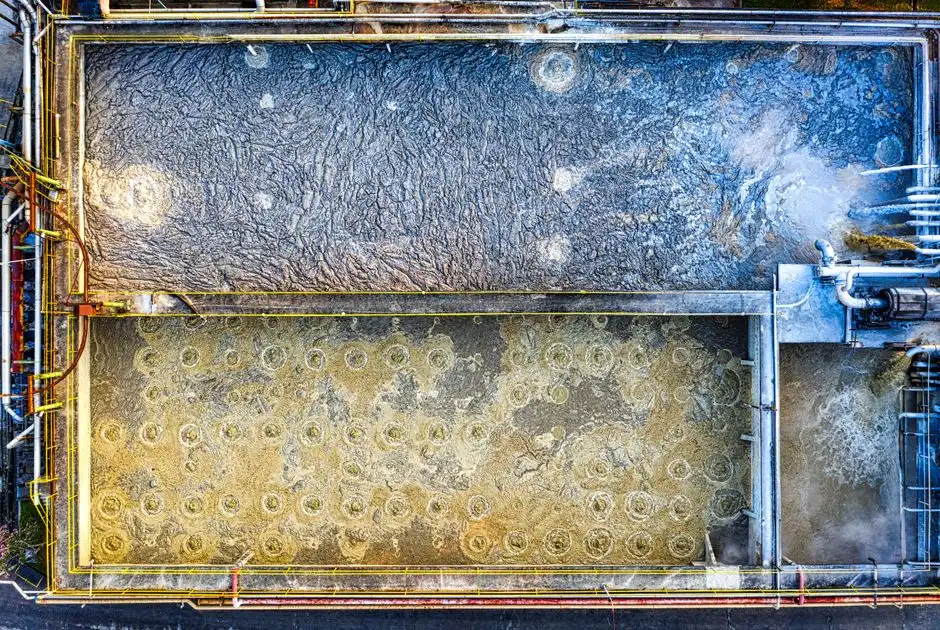
A lamella clarifier uses inclined plates to accelerate gravity settling. Chemically conditioned influent enters a flocculation zone and flows upward through a stack of plates set at 55–60°, which shortens the effective settling path and allows particles to slide into a sludge hopper while clarified water rises to a launder. This geometry provides higher effective surface loading than a conventional rectangular basin.
HydropureWater catalog data indicates lamella surface loading of 20–40 m/h, with up to 30% lower polymer consumption than a conventional clarifier due to the efficiency of the inclined plates (per HydropureWater product catalog, 2026). The lamella clarifier is a lower-CAPEX option for cool, higher-density streams, raw surface-water clarification, and polishing DAF effluent. However, these systems struggle with the low-density fines and stickies found in filled, coated, and deinking streams, as gravity cannot overcome the buoyancy of these specific particles.
DAF vs Clarifier: Head-to-Head for Pulp & Paper Effluent
The following table compares sizing anchors, including the 3–5 minute DAF HRT versus 1–3 hour clarifier HRT (per Krofta, 2026) and the 4–300 m³/h DAF capacity envelope and 20–40 m/h lamella surface loading (per HydropureWater product catalog, 2026). CAPEX and OPEX figures are directional planning bands.
| Parameter | DAF (Primary) | Lamella Clarifier |
|---|---|---|
| Separation mechanism | Micro-bubble flotation of conditioned solids | Gravity settling on inclined plates |
| Hydraulic retention time | 3–5 min (per Krofta, 2026) | 1–3 h |
| Sizing envelope | 4–300 m³/h, 13 standard models | Surface loading 20–40 m/h |
| Footprint per m³/h | Compact; small civil footprint | Larger basin; deeper civil works |
| Typical TSS removal | 80–95% with proper coagulant/flocculant | 50–80% on fiber streams; lower on fillers and fines |
| Fiber recovery | Yes — float blanket is sellable fiber | Limited; light fines escape |
| Color / opalescence | Strong on filled, coated, deinking streams | Weak — flagged by EPA, 1973 |
| Temperature sensitivity | Slight loss above ~45 °C; warm whitewater is an asset | Insensitive to temperature |
| CAPEX (planning band) | Higher per unit; lower civil; faster install | Lower per unit; higher civil cost |
| OPEX (planning band) | Polymer, saturator power, sludge handling; offset by fiber value | Polymer, sludge pumping; large basin maintenance |
| Best-fit mill stream (2026) | Whitewater, tissue, deinking, coated grades, NSSC | Raw water intake, cool high-density streams, DAF polish |
DAF remains the standard for primary clarification of fiber-laden streams, while the lamella is best suited for raw-water intake and polishing.
When a Jacksonville Mill Should Still Choose a Clarifier
A clarifier remains effective when applied to specific, non-fiber-heavy streams. Four legitimate 2026 use cases remain.
First, raw surface-water intake: Jacksonville mills drawing from the St. Johns or wells face seasonal algae and turbidity spikes, where a lamella clarifier with sludge recirculation is a lower-CAPEX option. Second, cooler process streams: DAF efficiency drops slightly above 45 °C, making clarifiers a stable choice for long, cool whitewater loops. Third, polishing: a small lamella after a DAF catches escaped fines and buffers flow surges to meet strict suspended-solids permits. Fourth, brownfield sites: where existing deep rectangular basins make a DAF retrofit mechanically impractical.
The 2026 Jacksonville Best Practice: DAF Primary + Lamella Polish
The 2026 answer for most Northeast Florida mills is a hybrid train: a DAF system as primary, stripping 80–95% of TSS, BOD, fiber, and filler, followed by a lamella clarifier to polish residual fines and provide a hydraulic buffer. This dual-stage approach addresses the limitations of settling technology for low-density fines while maximizing fiber recovery.
Three drivers make this configuration the most defensible. (1) Warm whitewater reuse: DAF recovers heat and fiber, paying for the polymer program through boiler-gas savings. (2) FDEP limits: a DAF-plus-lamella train reliably hits 30 mg/L TSS targets on deinking streams where a single DAF might struggle. (3) Revenue: recovered fiber at current market prices provides a tangible return. Because jar testing is mandatory to ensure these units perform as expected, refer to the sludge thickener maintenance guide and the coagulant and flocculant dosing guide to optimize the chemical program that drives separation efficiency.
Frequently Asked Questions
Is DAF or a clarifier better for primary clarification of paper mill effluent in 2026?
DAF is the default for fiber-laden streams, including whitewater, tissue, deinking, and coated grades. A lamella clarifier is the correct tool for raw surface-water intake, cool high-density streams, and polishing effluent downstream of a DAF.
What TSS removal can a DAF realistically hit on pulp and paper effluent?
80–95% TSS removal is the typical range with a properly selected coagulant and flocculant (per Ecologix; per Krofta, 2026). The specific performance for any given mill depends on jar testing, as chemical selection is the primary bottleneck.
How do DAF and lamella CAPEX and OPEX compare?
DAF carries higher unit CAPEX but smaller civil requirements and faster installation. A lamella is cheaper to fabricate but requires deeper basins. OPEX for both is driven by polymer and sludge handling, though DAF can offset these costs through recovered fiber and heat.
What FDEP and St. Johns River considerations apply in 2026?
Effluent must meet FDEP industrial discharge limits for TSS, color, and temperature. Fiber recovery reduces surcharge loads, and warm whitewater reuse is a permit-incentivized practice; both favor the DAF primary configuration.
What is the 2026 standard configuration for a Florida pulp and paper mill?
The standard is a DAF primary for fiber and TSS removal, followed by a lamella clarifier to capture residual fines and buffer surge flows. This ensures compliance with discharge standards while maximizing the value of recovered fiber and process water.