Why Jenkins Mining and Metals Factories Face a Different Clarification Problem in 2026
Jenkins sits in the Central Appalachian coal basin of Letcher County, Kentucky, where active and legacy coal mining, aggregate and quarry washing, and small metal-fabrication shops all discharge under the Kentucky Division of Water (DOW) permitting umbrella — a fact that shapes the influent chemistry more than flow rate ever will. A typical plant stream in 2026 is a mix of process wash water, pit dewatering, acid rock drainage (ARD) seepage, and metalworking coolant or cutting oil, so total suspended solids (TSS), iron, manganese, settleable solids, and occasional fats/oils/grease (FOG) all appear in the same pipeline. That blended influent is what makes a one-line "pick a clarifier" answer useless for this region.
Two regulatory anchors drive the equipment decision in 2026. The first is 40 CFR Part 437 (Ore Mining & Dressing Point Source Category), which sets effluent limits for TSS, settleable solids, and a long list of metals including iron, manganese, aluminum, copper, lead, and zinc. The second is the site-specific Kentucky Pollutant Discharge Elimination System (KPDES) permit, which on tighter receiving streams adds limits for residual metals, settleable solids (<0.5 mL/L/hour is common), and sometimes whole-effluent toxicity (WET). Both dissolved air flotation and lamella clarifiers can meet 40 CFR 437 when correctly designed and paired with proper coagulation. The deciding variables are influent chemistry — pH, FOG, density of solids — and 10–15 year operating cost, not compliance alone.
The terrain matters too. Jenkins sites are typically built on narrow contours with limited laydown area, often inside a hillside cut. A small-footprint clarifier that can be erected above grade without a heavy foundation is operationally and economically different from the same technology on a flat Midwestern pad. That is why the Appalachian context — AMD, steep sites, tight receiving streams — has to sit in front of the technology comparison, not behind it.
How DAF Works: Microbubbles, Floc, and Skimming
A dissolved air flotation unit is a physical separator in which air is dissolved under pressure (typically 4–6 atm) in a recycle stream and then released through needle valves or nozzles as 30–50 µm microbubbles (per Clearwater/SigmaDAF). Those bubbles attach to chemically conditioned floc and lift it to the surface, where a paddle skimmer scrapes the float into a sludge trough. Heavier particles that do not attach settle to a bottom collection zone and are augered out. The microbubble size matters because smaller bubbles have a higher surface-area-to-volume ratio and attach more reliably to fragile or low-density floc than the 1 mm+ bubbles produced by dispersed air flotation (per the 2017 Palaniandy chapter in Waste Treatment in the Service and Utility Industries).
Three pressure-DAF flow configurations are used in industrial service. Full-flow pressurizes the entire influent and is reserved for streams that do not need flocculation. Split-flow pressurizes only a portion of the feed and is used when particles are shear-sensitive. Recycle-flow pressurizes a side stream of clarified water (typically 20–40% of throughput) and is the most common arrangement for coagulation-dependent industrial wastewater, because it preserves the chemistry of the floc (per Palaniandy et al., 2017).
Two operational facts drive DAF design in mining service. First, chemical conditioning is not optional: without coagulant and polymer, oil removal can fall to roughly 60%, while a paired polyacrylamide program routinely pushes removal above 90% (per the Daura Refinery study). Second, the float sludge produced by DAF runs 2–3% solids versus well under 1% from a clarifier underflow, and effluent TSS in well-designed systems lands in the 20–30 mg/L range (per the LIWT-KEC Spracell data summarized in academia.edu). For mining and metals — where many hydroxide and mineral flocs are naturally low-density and slow-settling — that bubble lift is doing real work that gravity alone cannot.
How a Lamella or Conventional Clarifier Works in Mining Service
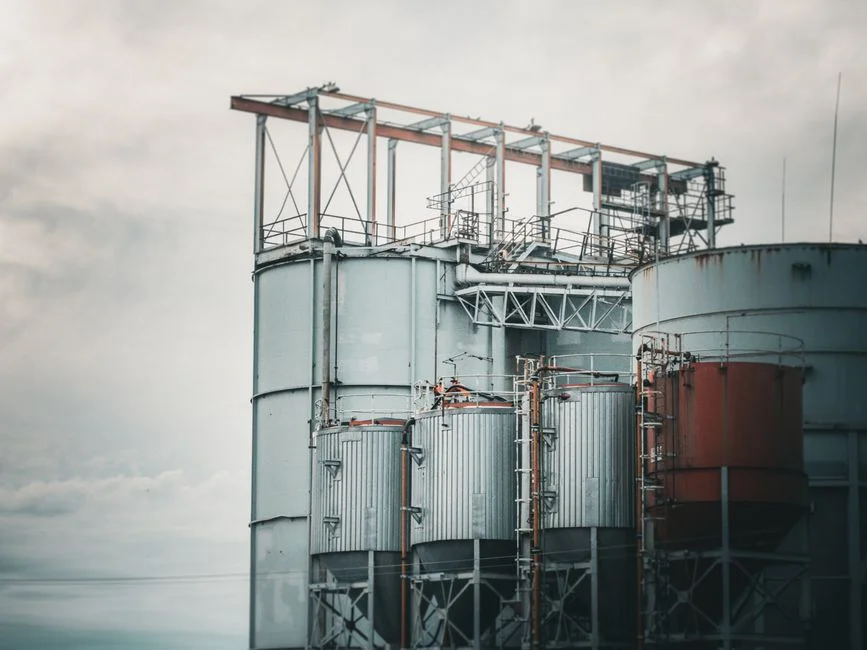
A gravity clarifier is a quiescent vessel where settleable solids drop to a sludge bed, clarified water overflows a peripheral launder, and sludge is scraped or pumped from the bottom. Retention time is long: 1–3 hours for a conventional clarifier (per EPA 625/1-75-003a design parameters). The advantage is mechanical simplicity — a tank, a drive, a scraper, and a pump — which is why lamella and conventional clarifiers still dominate mining and aggregate service where solids are heavy and FOG is absent.
The lamella upgrade packs inclined plates at 55–60° from horizontal into a fraction of the footprint. Effective surface loading rises to 20–40 m/h because each plate behaves as a shallow settler stacked in parallel, and coarse mineral solids settle out in 30–60 minutes of total retention rather than the multi-hour wait of a conventional clarifier (per the HydropureWater JY-series spec and Palaniandy et al., 2017). The plates self-clean as settled sludge slides down the inclined surface into a hopper; the angle is steep enough that the sludge does not re-entrain.
Two more facts matter for the comparison. Lamella clarifiers tolerate a wider coagulant window than DAF and typically use roughly 30% less chemical in straight TSS-removal applications (per HydropureWater product data on the high-efficiency sedimentation tank). And lamella clarifiers struggle with low-density, oily, or buoyant flocs — exactly the streams where DAF excels. That single sentence is the entire reason a 2026 buyer-guide for Jenkins cannot just default to gravity.
DAF vs Clarifier for Jenkins Mining/Metals: 2026 Comparison
The matrix below lines up the two technologies on the parameters a Jenkins plant manager actually defends in a capital review. Use it as the anchor, then read the narrative for what each row implies in Appalachian mining service.
| Parameter | DAF (recycle-flow) | Lamella clarifier | Conventional clarifier |
|---|---|---|---|
| Typical TSS removal band | 70–95% (site-dependent) | 50–85% for settleable fractions | 40–75% |
| Hydraulic / surface loading | 5–15 m/h | 20–40 m/h on plates | 1–2 m/h overflow |
| Retention time | ~3 min flotation | 30–60 min | 1–3 h |
| Footprint per m³/h | Smallest | Medium | Largest |
| FOG / oil handling | 80–94% with polymer | Poor | Poor |
| AMD / low-pH suitability | Strong once pH is raised | Moderate | Moderate |
| Chemical demand | Higher (coagulant + polymer) | Lower (~30% less in many cases) | Lower |
| Effluent TSS achievable | 20–30 mg/L | 30–60 mg/L | 40–80 mg/L |
| Sludge consistency | 2–3% float solids | <1% underflow | <1% underflow |
| CAPEX band | Moderate (saturator, compressor, skimmer) | Moderate (tankage + plates) | Moderate |
| OPEX band | Moderate-to-high (power, polymer) | Lower (no saturator) | Lower |
| Operator skill needed | PLC + day-to-day chemical tuning | Forgiving for a small team | Forgiving |
Two interpretive points matter for a Jenkins reader. First, on compliance, both DAF and lamella clear 40 CFR 437 effluent limits for TSS and settleable solids when paired with proper coagulation and an automatic polymer and coagulant dosing skid — the technology is a cost-and-operability decision, not a compliance decision. Second, on AMD, the question is rarely "can this clarifier run at pH 3?" but rather "is there a pH-adjustment step upstream that raises alkalinity and precipitates iron and manganese as hydroxides?" Once that step is in place, DAF's microbubbles float the freshly precipitated floc efficiently; lamella settles it more slowly and struggles if any FOG is present.
Which One Should Your Jenkins Plant Pick? A 2026 Decision Tree
The matrix above describes the trade-off. The decision tree below turns it into an action for the three most common Jenkins influent profiles.
Branch A — Choose DAF if any of the following is true: the influent contains FOG, cutting oils, or metalworking fluids; the solids are low-density hydroxide or metal-precipitate floc rather than coarse mineral grit; the site is space-constrained inside an existing hillside footprint; or the plant already runs a downstream plate and frame filter press that will benefit from the 2–3% float sludge DAF delivers. The Rimini mining/metals DAF vs clarifier guide and the Claremore mining wastewater DAF vs clarifier guide show the same pattern: where FOG or low-density floc dominates, DAF wins on footprint and on effluent consistency.
Branch B — Choose a lamella clarifier if the influent is high in coarse settleable mineral solids (TSS routinely above 2,000 mg/L), pH is stable in the 6–9 range, FOG is absent, the operator team has limited chemical-conditioning experience, and CAPEX is the binding constraint. Lamella's wider chemical window and lower polymer dose make it the more forgiving pick in these conditions.
Branch C — Choose a hybrid (lamella primary, DAF polish) for larger or more variable operations: lamella handles the bulk settleable load cheaply, and DAF polishes residual fines, oils, and colloidal metals to meet tighter 2026 KPDES site-specific limits. This is the configuration I see most often at multi-discharge Jenkins sites where one influent line carries quarry wash water and another carries metal-finishing rinse water.
2026 Cost, Footprint, and Operating Reality for a Jenkins Site
CAPEX drivers separate quickly. A DAF system carries the cost of the saturator, recycle pump, air compressor, and skimmer mechanism on top of the tank, which is why per-unit CAPEX runs higher than a comparable lamella clarifier. A lamella clarifier is mostly tankage and inclined plates; per square meter of footprint it is usually cheaper to buy. For Jenkins sites built on narrow contours with limited laydown space, however, the relevant comparison is CAPEX per cubic meter of treated flow per square meter of available pad — and that is where DAF's smaller footprint and above-grade installability start to recover their premium.
OPEX is the longer conversation. DAF OPEX is dominated by power for the air system and by polymer consumption; lamella OPEX is dominated by coagulant and the recurring cost of hauling a wetter underflow. A site that already runs an RO train, a filter press, or other dewatering equipment downstream will value DAF's drier float sludge because every point of sludge dryness at the head of the press cuts hauling and energy cost across the rest of the plant. A site with no downstream dewatering and short trucking distances to a drying bed will often find lamella cheaper to run. A useful framework for that 10–15 year horizon is laid out in the wastewater treatment maintenance cost planning guide.
Operator reality is the third leg. DAF needs day-to-day chemical tuning (coagulant and polymer dose, saturator pressure, skimmer speed) and a PLC operator comfortable with that level of process control. Lamella is more forgiving for a small team with rotating operators, which is the staffing reality of most Jenkins plants. A related point on chemistry supply — including PFAS-impacted streams that are starting to show up in Kentucky DOW fact sheets in 2026 — is covered in the PFAS treatment chemical manufacturing overview. The cheap-to-buy system is rarely the cheap-to-own system once fines, monitoring labor, and sludge hauling are priced in over a 10–15 year horizon.
Frequently Asked Questions
Can a DAF system treat AMD from a Jenkins mine?
Yes. A DAF unit handles AMD effectively once pH is raised and iron and manganese are precipitated as hydroxides; the 30–50 µm microbubbles then float the freshly precipitated floc to the surface. Without pH adjustment, the low-buffering stream will not condition properly and removal suffers.
Is a lamella clarifier ever preferred over DAF in mining service?
Yes — when solids are coarse and settleable, FOG is absent, pH is stable in the 6–9 range, and lower chemical use plus lower CAPEX matter more than footprint. Quarry wash water and aggregate operations are the most common Jenkins examples.
How much TSS can a DAF remove in mining/metals wastewater?
Well-designed DAF systems reach 20–30 mg/L effluent TSS with 70–95% removal site-dependent, per LIWT-KEC Spracell operating data referenced in academia.edu. Performance is gated by chemical conditioning, not by the flotation unit itself.
Do I need a pretreatment stage before DAF or a clarifier?
Yes. Equalization and screening are required upstream of either technology; a GX series rotary bar screen protects the DAF nozzles and the clarifier mechanisms from rags, rocks, and large debris that routinely show up in pit dewatering and quarry wash streams.
What is the typical retention time for a DAF vs a clarifier?
DAF needs roughly 3 minutes of flotation time. A lamella clarifier needs 30–60 minutes. A conventional (non-lamella) clarifier needs 1–3 hours, per the HydropureWater product data and EPA 625/1-75-003a design parameters.