Why Elkhart Pharma Discharges Run on a Three-Layer Rule Stack
Pharma plants near Elkhart, Indiana meet 2026 pretreatment limits by stacking three rule layers — the general and specific prohibitions at 40 CFR 403.5(a) and 403.5(b), the pharmaceutical categorical standards at 40 CFR Part 439, and the Elkhart WWTP's site-specific local limits enforced under an IDEM-delegated Industrial Pretreatment Program. The receiving POTW is the City of Elkhart's own wastewater treatment plant on County Road 6, not a regional authority like MCES in Minnesota — and the Elkhart Board of Public Works, working under the Indiana Department of Environmental Management (IDEM), controls the Industrial User (IU) permit pathway. Confirm the current delegation status with the Board of Public Works before any design freeze, because IDEM oversight is exercised through the local POTW's approved program, not through a separate state-issued permit (per EPA, 2026).
Layer 1 sits at the federal floor: the general prohibition at 40 CFR 403.5(a) bans any discharge that causes pass-through (40 CFR 403.3(p)) or interference (40 CFR 403.3(k)) at the POTW, and the eight specific prohibitions at 40 CFR 403.5(b) set numeric caps on pH, temperature, flashpoint, and toxic vapors (epa.gov, 2026). Layer 2 is 40 CFR Part 439, which publishes subpart-specific BOD, COD, TSS, and toxic-organic limits for pharmaceutical manufacturing; the binding subpart depends on whether the plant makes APIs, runs fermentation, formulates dosage forms, or packages finished product. Layer 3 is the Elkhart WWTP's local limits, which can be more stringent than the federal floor because the plant's hydraulic capacity, its biological treatment envelope, and the St. Joseph River / Lake Michigan watershed ammonia and temperature constraints all feed into site-specific daily-maximum and monthly-average numbers.
The most-stringent-applicable-number rule controls: on any single pollutant, the tightest of the three layers drives the design. Quoting only the federal numbers in a permit application is incomplete — the Elkhart IU permit will add local numeric limits, and those limits are legally enforceable the moment the permit is signed (epa.gov, 2026).
The 40 CFR 403.5(b) Caps That Sit on Every Pharma Stream
The eight specific prohibitions at 40 CFR 403.5(b) are the design constraints a pharma engineer copies verbatim into the design basis memo. Four of them drive most Elkhart pretreatment trains: flashpoint, pH, temperature, and toxic vapors. Solvent streams with a closed-cup flashpoint below 60°C (140°F) are prohibited from the sanitary sewer under 40 CFR 403.5(b)(1) — this is the rule that effectively bans sewering acetonitrile, methanol, and dichloromethane and forces RCRA segregation or off-site solvent recovery (epa.gov, 2026). Discharge pH must be greater than 5.0 at the tap per 40 CFR 403.5(b)(2), and Elkhart's local envelope is typically tighter than the federal floor, so the current local limit must be confirmed before final EQ sizing.
Headworks temperature cannot exceed 40°C (104°F) per 40 CFR 403.5(b)(5), which forces cooling for hot CIP rinses and autoclave condensate and drives the 8–24 hour EQ retention window. No toxic vapors may be discharged per 40 CFR 403.5(b)(7), which drives covered EQ, vapor capture on solvent handling, and VOC monitoring at the IU sampling point (epa.gov, 2026). Behind the numeric caps, the general prohibition at 40 CFR 403.5(a) bans any discharge causing pass-through or interference regardless of numeric concentration, so the permit always has a qualitative backstop even when every specific cap is met (epa.gov, 2026).
| Citation | Parameter | Numeric Cap | Design Implication |
|---|---|---|---|
| 40 CFR 403.5(b)(1) | Closed-cup flashpoint | < 60°C (140°F) prohibited | Segregate solvent streams to RCRA disposal or solvent recovery; no sewering |
| 40 CFR 403.5(b)(2) | Discharge pH | ≥ 5.0 at the tap | EQ tank + PLC pH correction on the IU line; confirm Elkhart local envelope (epa.gov, 2026) |
| 40 CFR 403.5(b)(5) | Headworks temperature | ≤ 40°C (104°F) | EQ sized for 8–24 hours of diurnal hold; cooling for hot CIP or autoclave condensate |
| 40 CFR 403.5(b)(7) | Toxic vapors | No discharge | Covered EQ, vapor capture on solvent handling, VOC monitoring at the IU sampling point |
| 40 CFR 403.5(a) | Pass-through / interference | Qualitative ban | Applies regardless of numeric concentration; backstop for local-limit compliance (epa.gov, 2026) |
The 2026 Elkhart Process Train: Six Unit Operations Built for Pharma Streams
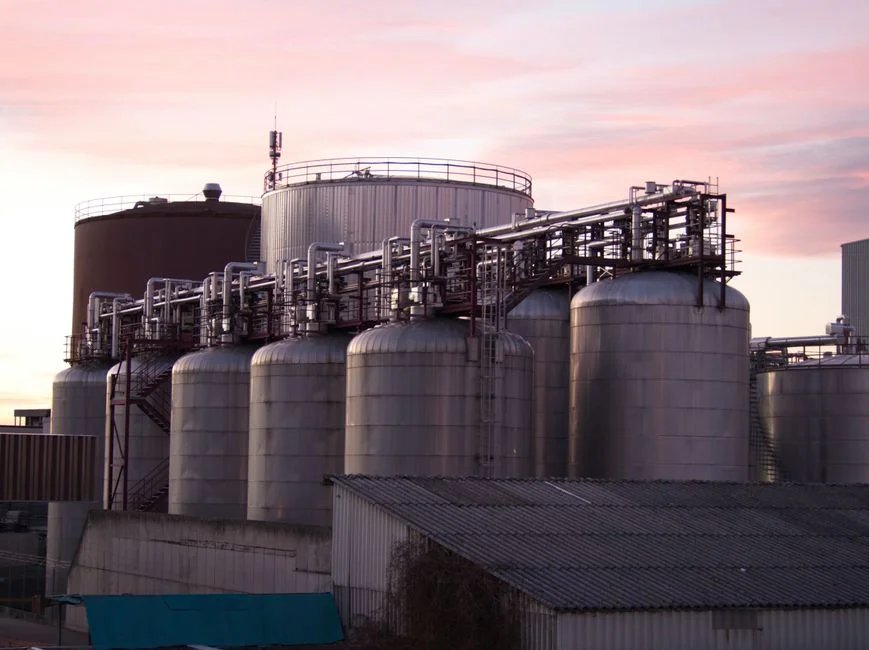
The 2026 process train for an Elkhart-area pharma or CDMO plant is a sequenced unit-operation envelope sized to clear both the 40 CFR 403.5(b) caps and the Elkhart WWTP local limits. Not every plant needs every stage, but the full train is the conservative design basis. Stage 1 is a rotary mechanical bar screen at headworks to protect downstream pumps and MBR membranes from rags, plastics, and fibrous debris. Stage 2 is an equalization tank sized for 8–24 hours of diurnal hold, dampening pH, flow, and temperature swings before the biological stage and locking the 40 CFR 403.5(b)(2) pH and (b)(5) temperature caps at the tap.
Stage 3 is a PLC-controlled automatic chemical dosing skid tied to pH and temperature probes on the IU discharge line; any out-of-band reading diverts to containment rather than the sanitary sewer. Stage 4 is a DAF unit for CIP and API wastewater equalization, floating oils, FOG, and fines before biology. Stage 5 is the biological stage — a submerged PVDF MBR system with 0.1–0.4 μm PVDF membranes producing a sub-micron filtrate, eliminating the secondary clarifier, and delivering near-reuse effluent at roughly 60% smaller footprint than conventional activated sludge (per the Des Moines pharma engineering model, 2026). For more on the MBR selection logic and membrane spec, see the MBR process and efficiency primer.
Stage 6 is an industrial RO polish at up to 95% recovery for residual API and trace TOC stripping when reuse is targeted or the Elkhart local limit is tight. Final microbial kill is handled by an on-site chlorine dioxide generator, preferred over gaseous Cl2 because ClO2 is generated on demand and does not form regulated THM byproducts. MBR waste-activated sludge is dewatered on a plate-and-frame filter press to reduce volume and keep pharma-derived contaminants out of the Elkhart WWTP's biosolids stream. For a comparable regional template with a different POTW layer, see the Austin pharma 2026 pretreatment guide and the Columbus chemical pretreatment 2026 guide.
| Stage | Unit Operation | Influent Problem | Parameter Controlled | Regulatory Driver |
|---|---|---|---|---|
| 1 | Rotary bar screen | Rags, plastics, fibrous debris | Solids capture at headworks | Protect downstream pumps and MBR |
| 2 | EQ tank (8–24 h) | Diurnal pH, flow, T swings | pH ≥ 5.0; T ≤ 40°C | 40 CFR 403.5(b)(2) and (b)(5) |
| 3 | PLC dosing skid + diversion | Out-of-band pH/T excursions | Divert to containment | 40 CFR 403.5(b); 403.8(f) slug plan |
| 4 | DAF (4–300 m³/h) | Oils, FOG, fines from CIP/API | FOG/TSS removal pre-bio | 40 CFR Part 439; local FOG/TSS |
| 5 | Submerged PVDF MBR (0.1–0.4 μm) | High BOD/COD, slowly biodegradable organics | Sub-micron filtrate, no clarifier | 40 CFR Part 439; local BOD/COD |
| 6 | Industrial RO (≤ 95% recovery) | Residual API, trace TOC | Reuse-quality polish or tight local limit | Local limit; reuse target |
| Final | ClO2 generator | Microbial load | Disinfection without THM byproducts | Local microbial limit; reuse target |
| Solids | Plate-and-frame press | MBR WAS volume | Dewatered cake; protect biosolids | 40 CFR 403.5(a) sludge quality |
Mapping Elkhart's Four Pharma Stream Archetypes to the Right Unit Operation
Pharma plants in the Elkhart region generate four recognizable stream archetypes, and each one maps to a different subset of the six-stage train. API residuals and fermentation decant carry high BOD, TSS, and slowly biodegradable organics; they route to equalization followed by a high-efficiency sedimentation tank for grit and biomass removal ahead of biology. CIP rinsates carry high pH swings, high TDS, and emulsified soils; they need pH correction plus a DAF unit to float oils and fines before biological treatment.
Solvent-bearing streams — acetonitrile, methanol, dichloromethane — cannot be sewered under 40 CFR 403.5(b)(1) and (b)(6) and must be segregated to RCRA disposal or solvent recovery; this is the rule that effectively bans solvent sewering in any Elkhart plant handling these compounds (epa.gov, 2026). Bioassay and lab waste route as hauled waste under a separate permit or to a certified RCRA collection center and should not be blended with the IU stream. The four-archetype framework is the decision tree that lets a project manager cut the six-stage train down to the two or three stages a given plant actually needs, without losing the upstream protections the Elkhart IU permit will require.
| Stream Archetype | Key Characteristics | Route / Unit Operations | Regulatory Driver |
|---|---|---|---|
| API residuals / fermentation decant | High BOD, TSS, slowly biodegradable organics | Equalization → lamella / high-efficiency sedimentation tank → MBR | 40 CFR Part 439; local BOD/TSS |
| CIP rinsates | High pH swings, high TDS, emulsified soils | pH correction + DAF before biological stage | 40 CFR 403.5(b)(2); 40 CFR Part 439 |
| Solvent-bearing streams | Flashpoint < 60°C; toxic vapors | Segregated collection, no sewer — RCRA disposal or solvent recovery | 40 CFR 403.5(b)(1) and (b)(6) (epa.gov, 2026) |
| Bioassay / lab waste | Variable composition, possible RCRA listing | Hauled-waste permit or certified RCRA collection center | RCRA; 40 CFR 403.12(p)&(j) |
The 180-Day Clock, the IU Permit, and the Slug-Load Control Plan
The clock for any new pharmaceutical discharge in the Elkhart area is set by the Industrial User Survey filed with the Elkhart WWTP pretreatment department at least 180 days before construction or new discharge. The 180-day window is non-negotiable because the POTW uses it to size headworks capacity, set sampling requirements, and write the local numeric limits that end up in the permit; quoting a shorter lead time in a project schedule is the single most common reason first discharges miss their sampling point. Step 2 is to complete the Industrial Wastewater Discharge Permit Application and submit it after IU Survey acceptance, on the Elkhart Board of Public Works schedule. Step 3 is fee payment: an annual permit fee plus a one-time application surcharge — for reference under Section 118-352 of the Des Moines Municipal Code as a comparable benchmark, Class A runs $1,500/yr with a $200 surcharge and Class B runs $750/yr with a $100 surcharge, and the current Elkhart fee class should be confirmed with the pretreatment department before budgeting. Step 4 is installation of the sampling point, discharge monitoring, and the slug-discharge notification tree before the first discharge, on the permit schedule.
On top of the local permit, the 40 CFR 403.12(p) and (j) hazardous-waste notification requires the IU to notify the POTW within 180 days of discharging ≥ 15 kg per calendar month of non-acute hazardous waste, or any amount of acute hazardous waste (epa.gov, 2026). For an Elkhart CDMO this commonly captures solvent streams, certain catalyst rinses, and RCRA-listed wastes. The slug-load control plan under 40 CFR 403.8(f) is the operational bridge: it combines adequate equalization capacity, flow and pH monitoring, and written operating procedures for batch releases. A slug is any non-routine, episodic discharge with a reasonable potential to cause pass-through or interference, and the permit's definition is the one to copy verbatim into plant SOPs because the notification clock starts the moment a release qualifies. The 40 CFR 403.12(p)&(j) hazardous-waste log must be reconciled monthly so non-acute kilogram totals and any acute releases are documented and reportable within the 180-day window (epa.gov, 2026).
Frequently Asked Questions
Who regulates pharmaceutical sewer discharge in Elkhart, Indiana?
The Elkhart WWTP, operating under an IDEM-delegated Industrial Pretreatment Program, is the receiving POTW and the enforcement authority; the IU permit is issued by the Elkhart Board of Public Works and sits on top of 40 CFR Part 403 and 40 CFR Part 439 (per EPA, 2026).
What are the 40 CFR 403.5(b) caps that apply to every Elkhart pharma stream?
Discharge pH must be ≥ 5.0 at the tap per 40 CFR 403.5(b)(2), headworks temperature must not exceed 40°C (104°F) per 40 CFR 403.5(b)(5), and any stream with a closed-cup flashpoint below 60°C (140°F) is prohibited from the sanitary sewer per 40 CFR 403.5(b)(1) (epa.gov, 2026).
When does the Elkhart IU permit clock start?
At least 180 days before construction or new discharge, the Industrial User Survey is filed with the Elkhart WWTP pretreatment department; the 40 CFR 403.12(p)&(j) hazardous-waste notification window runs in parallel, and a notification is triggered by discharging ≥ 15 kg per calendar month of non-acute hazardous waste, or any amount of acute hazardous waste (epa.gov, 2026).
Which unit operations handle which pharma stream?
API residuals and fermentation decant route to equalization plus a high-efficiency sedimentation tank ahead of biology; CIP rinsates need pH correction plus a DAF unit; solvent streams are segregated to RCRA disposal or solvent recovery and never sewered; bioassay and lab waste route as hauled waste under a separate permit (epa.gov, 2026).
Can an Elkhart CDMO sewer acetonitrile or methanol to the sanitary sewer?
No — any stream with a closed-cup flashpoint below 60°C (140°F) is prohibited under 40 CFR 403.5(b)(1) and must be segregated to RCRA disposal or solvent recovery (epa.gov, 2026).