The Three Layers of Pretreatment Limits Austin Pharma Plants Must Hit
Pharma plants discharging to the Austin metro sanitary sewer are bound by a three-layer rule stack, and the most stringent applicable number on any single pollutant controls (per EPA, 2026). Layer 1 is the general and specific prohibitions at 40 CFR 403.5(a) and 403.5(b), which ban any discharge that causes pass-through — defined at 40 CFR 403.3(p) as a discharge that exits a POTW in quantities or concentrations that cause an NPDES permit violation — or interference, defined at 40 CFR 403.3(k) as a discharge that inhibits or disrupts the POTW and is a cause of an NPDES or sludge-use violation (per EPA, 2026). Layer 1 also lists specific prohibited pollutants, including ignitable, corrosive, and toxic gases, that are banned regardless of numeric concentration. Layer 2 is the categorical pretreatment standards, and for pharmaceutical manufacturing the binding subpart is 40 CFR Part 439 — the subpart the broader chemical-sector pretreatment coverage (see our 40 CFR Part 403 walkthrough for chemical plants) lists Parts 414, 415, 417, 419, and 433 but does not specifically call out for pharma. Layer 3 is Austin Water's site-specific local limits, published in the City's approved pretreatment program, which can be more stringent than the federal floor when the receiving plant's hydraulic or biological capacity is constrained. Chapter 15-10 of the Austin City Code is the legal vehicle Austin Water uses to enforce the federal stack locally, and Industrial Waste approval is required before any new construction, plumbing, or process change that could affect the quality or quantity of industrial wastewater discharged to the City's sanitary sewer (austintexas.gov).
| Layer | Source | What it sets | Representative parameter |
|---|---|---|---|
| 1 — General & specific prohibitions | 40 CFR 403.5(a) and 403.5(b) | Pass-through/interference ban; specific prohibited pollutants | Any pollutant causing pass-through (qualitative) |
| 2 — Categorical standards | 40 CFR Part 439 (pharma) | Numeric effluent limits for pharmaceutical manufacturing | Subpart-specific COD/BOD, metals, and toxic-organic limits |
| 3 — Austin local limits | Approved pretreatment program; Chapter 15-10 | Site-specific numeric limits; can exceed federal floor | pH 6–9 typical local envelope |
How Austin Water Actually Reviews and Approves a Pharma Discharge
Austin Water's Industrial Waste program runs a two-stage plan review plus an Approval Letter before any pretreatment device, system, or process that alters discharge quality or quantity is installed, modified, or removed (austintexas.gov). Stage 1 is the Site Plan Review, where Industrial Waste staff confirm pretreatment requirements are reflected in site design against Chapter 15-10 — applicants use the IW Site Plan Review Checklist and submit site plans to Land Use Review. Stage 2 is the Building Plan Review, where Industrial Waste verifies pretreatment devices and systems and issues the Industrial Waste Approval Letter required before installation, modification, or removal of any device that alters discharge quality or quantity. Approval letters are available in the AB+C portal; applicants must log in to view and download because plan sets often change between review cycles, which can affect equipment specifications. Pretreatment devices Austin Water explicitly verifies for adequacy and design include grease traps, sand-oil interceptors, pH neutralization units, and solids interceptors. Industrial Waste review is separate from and in addition to plumbing review — both are required, and each discipline applies a different code set. Before submitting, the project manager should call the Plan Review desk at 512-974-7293 or email [email protected] (Monday–Friday, 8:30 a.m.–12:30 p.m., Planning and Development Center, Commercial Plan Review Office, 6310 Wilhelmina Delco Drive) to confirm the assigned Pretreatment Specialist for the project's zip code and to make sure Industrial Waste is added to the reviewer list on the Commercial Plan Review intake. Projects within Austin's extra-territorial jurisdiction that connect to Austin Water for sewer service still require Industrial Waste review.
What Makes Pharma Wastewater Different from Other Austin Industrial Discharges
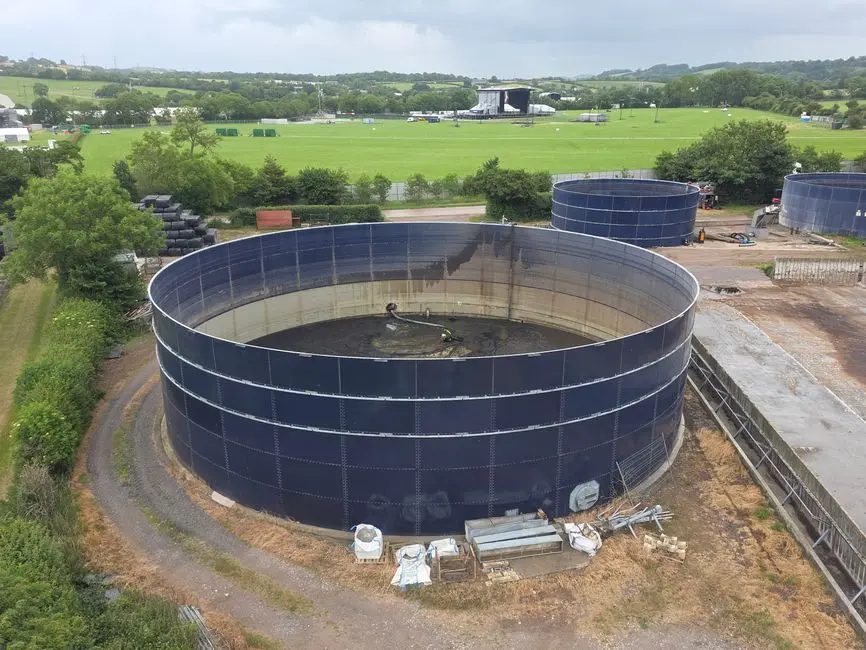
Pharmaceutical wastewater is a distinct pretreatment problem because the pollutant mix is dominated by active pharmaceutical ingredient (API) residuals, fermentation residues, cleaning-in-place chemistries, and organic solvents (acetonitrile, methanol, dichloromethane) rather than the heavy-metal profile that drives metal-finishing categorical standards. Austin Water's program is built to prevent exactly that mix from damaging the collection system or interfering with treatment, and the program's published pollutant examples include heavy metals, fluoride, cyanides, toxic organics, and acidic or basic wastes (austintexas.gov). Batch release is the norm for campaign-style API manufacturing and shared clean-in-place skids, which is why 40 CFR 403.8(f) slug load control plans are typically required for pharma Significant Industrial Users. pH swings between acid CIP rinses and caustic neutralization steps are common, so equalization plus PLC-controlled dosing is the baseline defense against 40 CFR 403.5(b) specific-prohibition violations. High BOD/COD from fermentation residues and intermediates push the design toward advanced biological polishing — an MBR (membrane bioreactor) rather than conventional activated sludge — when the local limit is tight. Total suspended solids and oil/grease from formulation and tablet-coating operations are typically handled upstream by DAF. A pharma plant is an SIU by categorical-subject status under 40 CFR Part 439 and meets the first SIU trigger at 40 CFR 403.3(v) (per EPA, 2026), which brings the baseline monitoring report, 90-day compliance reports, and slug load control plan obligations listed in the closing section.
The Six Unit Operations Austin Pharma Plants Use to Hit Discharge Limits
Six unit operations, in roughly this order, handle the vast majority of pharma wastewater streams that go to a POTW. Not every plant needs all six — the right subset is a function of the controlling pollutant. The table below links each operation to the influent problem it solves, the parameter it controls, and the regulatory driver. Specific numeric limits are set by 40 CFR Part 439 and by Austin Water's local limits — both must be consulted for the values that govern a given plant.
Equalization dampens batch swings in pH, flow, temperature, and concentration; the driver is 40 CFR 403.5(a) pass-through/interference plus 40 CFR 403.8(f) slug load control, and retention is typically hours to days for batch plants. pH neutralization handles strong acid or caustic batches to the local pH envelope, which Austin Water typically publishes in the 6–9 range; the driver is 40 CFR 403.5(b) specific prohibitions and the local limit, paired with a HydropureWater automatic chemical dosing system for stable closed-loop control. Dissolved air flotation (DAF) removes oils, FOG, and TSS; the driver is 40 CFR 403.5(a) pass-through plus the categorical standard and local limit — the HydropureWater DAF system covers 4–300 m³/h with micro-bubble generation and automatic skimming. Chemical precipitation followed by a clarifier precipitates dissolved metals (Cd, Cr, Cu, Ni, Pb, Zn) when trace metal catalysts appear in the stream; the driver is 40 CFR Part 439 for pharma and the local limit, with a HydropureWater lamella clarifier as the compact high-rate option at 20–40 m/h surface loading. Biological polishing (activated sludge or MBR) hits the categorical BOD/COD limit and Austin's local limit to the POTW; a HydropureWater MBR system delivers near-reuse effluent (<1 μm filtration) at roughly 60% smaller footprint than a conventional basin. Multimedia and carbon filtration handle final polishing for residual COD, color, and trace organics; the driver is the local limit and any reuse-quality target, again paired with the automatic dosing system for coagulant, flocculant, and pH adjustment stability.
| Unit operation | Influent problem | Parameter it controls | Regulatory driver |
|---|---|---|---|
| Equalization | Batch swings in pH, flow, temperature, concentration | Surges; slug prevention | 40 CFR 403.5(a); 40 CFR 403.8(f) |
| pH neutralization | Strong acid/caustic batches | pH (typically 6–9 local limit) | 40 CFR 403.5(b); local limit |
| DAF | Oils, FOG, TSS | Oils & grease; TSS | 40 CFR 403.5(a); Part 439; local limit |
| Chemical precipitation + clarifier | Dissolved trace metals | Cd, Cr, Cu, Ni, Pb, Zn | 40 CFR Part 439; local limit |
| Biological polishing (AS / MBR) | High BOD/COD from APIs and solvents | BOD, COD | 40 CFR Part 439; local BOD/COD limit |
| Multimedia / carbon filtration | Residual COD, color, trace organics | COD, color, trace organics | Local limit; reuse-quality targets |
Matching the Equipment Train to the Controlling Pollutant
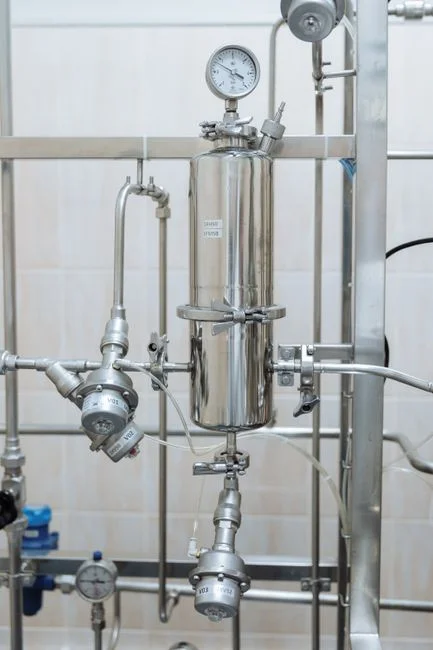
Four decision axes determine which combination of unit operations to build, and walking through them in order produces a defensible train. Axis 1 — Controlling pollutant: oils and TSS point to a HydropureWater DAF system first; dissolved metals point to chemical precipitation followed by a clarifier such as a HydropureWater lamella clarifier; high COD/BOD points to biological polishing via an HydropureWater MBR system; pH swings point to equalization plus PLC-controlled dosing with the HydropureWater automatic chemical dosing system. Axis 2 — SIU status: pharma plants are SIUs by categorical-subject status under 40 CFR Part 439, so the federal number is the floor and the Austin local limit is the binding constraint; the design must still prevent pass-through and interference under 40 CFR 403.5(a) regardless of which number is lower (per EPA, 2026). Axis 3 — Flow pattern: batch operations with long cycle times need equalization sized for hours to days; continuous operations can run 4–8 hours of retention — over-sizing equalization is cheaper than a single pass-through excursion. Axis 4 — Reuse: plants moving toward reuse should evaluate the MBR-plus-RO path described in the 2026 RO design criteria guide rather than discharge-only activated sludge; pure discharge-to-sewer operations can stay on conventional activated sludge or a simpler aerobic basin.
| If your controlling pollutant is… | Lead with… | Then add… |
|---|---|---|
| Oils, FOG, TSS | DAF | Multimedia filtration |
| pH swings (batch) | Equalization + PLC dosing | pH trim before downstream units |
| Dissolved trace metals | Chemical precipitation | Lamella clarifier; multimedia polish |
| High BOD/COD (APIs, solvents) | Equalization | DAF (if FOG present) → MBR or AS → multimedia/carbon |
| Reuse-quality target | MBR | RO per the 2026 design criteria guide |
Reporting, Inspections, and Slug Control Austin Water Will Expect
Compliance does not end at startup. An Austin pharma SIU owes a Baseline Monitoring Report (BMR) at the point of categorical standard promulgation or new-discharge startup, then 90-day compliance reports on the schedule Austin Water sets (per EPA, 2026). Routine POTW inspections and sampling fall under 40 CFR 403.12, and self-monitoring reports are reviewed by Austin Water's Industrial Waste staff. A slug load control plan under 40 CFR 403.8(f) is typically required for batch SIUs and combines equalization capacity, flow and pH monitoring, and written operating procedures for batch releases — a slug load is any non-routine pollutant release or hydraulic surge that can cause pass-through or interference at the POTW (per EPA, 2026). Austin Water's enforcement tools include the control mechanism (permit or equivalent control document), inspections, sampling, and Notice of Violation escalation; voluntary pollution-prevention work is encouraged but does not substitute for compliance (austintexas.gov).
Frequently Asked Questions
What does Chapter 15-10 of the Austin City Code actually require of a pharma plant?
Chapter 15-10 is the legal vehicle Austin Water uses to enforce the federal pretreatment stack — 40 CFR Part 403 general prohibitions and 40 CFR Part 439 categorical standards — at the local level. It requires Industrial Waste approval before any new construction, plumbing, or process change that could affect the quality or quantity of industrial wastewater discharged to the City's sanitary sewer (austintexas.gov).
When is a pharmaceutical plant a Significant Industrial User (SIU) under Austin's program?
A pharma plant is an SIU by categorical-subject status because 40 CFR Part 439 applies, which satisfies the first trigger at 40 CFR 403.3(v). It may also meet the other triggers (≥25,000 gpd of process wastewater, or ≥5% of the POTW's average dry-weather hydraulic or organic capacity), but the categorical trigger alone is sufficient (per EPA, 2026).
What does 40 CFR 403.8(f) require for slug load control?
40 CFR 403.8(f) requires SIUs to develop and implement a slug load control plan that combines adequate equalization capacity, flow and pH monitoring, and written operating procedures for batch releases. For batch pharma operations, the plan is the bridge between process design and the pass-through/interference prohibitions in 40 CFR 403.5(a) (per EPA, 2026).
Who reviews the plans before a pharma pretreatment system is installed in Austin?
Industrial Waste staff at Austin Water, reached at 512-974-7293 or [email protected] (Mon–Fri, 8:30 a.m.–12:30 p.m., 6310 Wilhelmina Delco Drive). The Pretreatment Specialist is assigned by project zip code, and Industrial Waste review is separate from and in addition to plumbing review — both are required (austintexas.gov).
What pH envelope does Austin Water apply to pharma discharges?
Austin Water's local pH envelope is typically published in the 6–9 range, applied at the discharge point to the sanitary sewer. The exact value, including any tighter subcategory limits, must be confirmed against the current Austin Water local limits and the facility's control mechanism before final design (austintexas.gov).
MBR or conventional activated sludge — which fits an Austin pharma discharge?
Both are acceptable unit operations for BOD/COD removal against 40 CFR Part 439 and Austin's local limit, but MBR delivers near-reuse-quality effluent (<1 μm filtration) at roughly 60% smaller footprint, which is decisive when the plant is moving toward reuse or when site constraints limit basin area. Pure discharge-to-sewer operations with adequate footprint can stay on conventional activated sludge. The 2026 RO design criteria guide covers the reuse-side polish step if MBR-plus-RO is the chosen path.