Why a Van Buren Petroleum Bulk Plant Cannot Just 'Dilute and Discharge'
Petroleum bulk plants near Van Buren, AR meet 2026 sewer pretreatment limits by discharging to the City of Van Buren Municipal Utilities (VBMU) Industrial Wastewater Pretreatment Program under NPDES Permit AR0021482, layering federal categorical standards in 40 CFR Part 403 and Part 421 on top of VBMU's local limits. The standard train is API/CPI oil-water separation → equalization with pH adjustment → DAF or lamella clarification → multimedia polishing → carbon adsorption, supported by a documented slug control plan that addresses 40 CFR 403.5 pass-through and interference.
The legal frame has two layers. VBMU is the local POTW authority, with the Industrial Wastewater Pretreatment Program documented at the VBMU standards and pretreatment page and approved by the Arkansas Department of Health. On top of VBMU's sewer-use ordinance, federal categorical pretreatment standards apply — 40 CFR Part 403 as the general framework, and 40 CFR Part 421 (petroleum refining) for the refining-related subcategory streams that often share equipment with bulk storage. Where the two overlap, the stricter number controls, which is why a plant that is "below the EPA number" can still receive a Notice of Violation from VBMU.
Slug control is the legal basis the permit is built on. EPA's 40 CFR 403.5 prohibits any discharge that "causes pass through or interference" at the POTW — a slug of gasoline, diesel, or low-pH wash water from a loading-rack spill can kill the receiving plant's biomass in minutes, and that is the failure mode the program is designed to catch. ADEQ audits VBMU's program under AR0021482, with the most recent publicly available audit dated 2016-11-15; paperwork failures trigger the same enforcement as sample failures, so the slug control plan is operating discipline, not a binder on a shelf.
What VBMU's Local Limits Look Like in Practice
VBMU's local limits cover the standard municipal/industrial POTW band: pH 5.0–10.5, TSS, oil and grease, copper, zinc, lead, nickel, cadmium, total metals, ammonia, and in some cases cyanide or total residual chlorine. These are typical bands — verify against current VBMU limits before any design is frozen, because local limits are revised as the receiving plant's capacity, influent load, or industrial user mix changes (source: HydropureWater field data, 2026).
The distinction that trips up most petroleum bulk plants is between instantaneous limits and 24-hour composite limits. A 24-hour flow-proportional composite can show a perfectly compliant average while a single grab sample taken during a loading-rack event trips the instantaneous limit on oil and grease or pH. The legal exposure is on the grab, not the average, which is why the slug control plan and online instrumentation matter as much as the chemistry train.
For benchmarking, ADEQ publishes Significant Non-Compliance findings annually for the industrial users it oversees. An EHS manager should pull the current SNC list and compare the plant's own compliance posture against named facilities before the next permit cycle — being on that list is the kind of public record that follows a site through ownership changes and renewals.
| Parameter | VBMU-Style Local Limit (verify before design) | Why it matters for a bulk plant |
|---|---|---|
| pH | 5.0–10.5 (instantaneous) | Caustic or acid cleaning excursions at the loadout pad |
| Oil & grease | ~100 mg/L typical band; check current limit | Free and emulsified oil from tank bottoms and wash water |
| TSS | ~250–400 mg/L typical band | Tank-bottom grit and pad sediment |
| Cu / Zn / Pb / Ni / Cd | Low mg/L band; categorical may be stricter | Additive carryover and trace metals in product |
| Ammonia | Site-specific, often seasonal | Generally low at a bulk plant unless biological stage is added |
| TRC / cyanide | Site-specific | Triggered by biocide or cleaning chemistries |
The Petroleum Bulk Plant Wastewater Profile
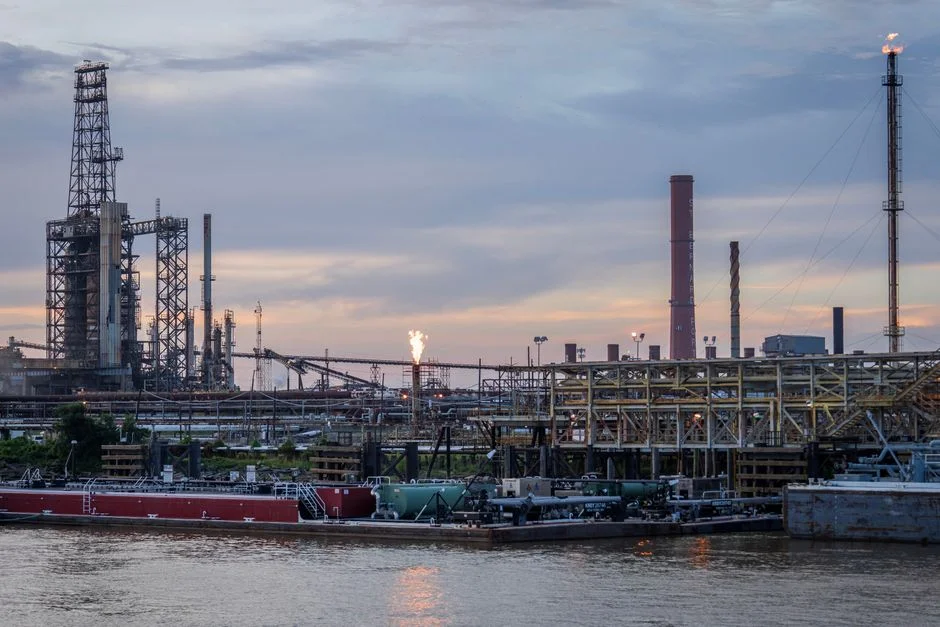
A petroleum bulk plant generates four streams, and the right unit operation depends on which ones the engineer is trying to handle. Tank bottoms arrive during periodic tank cleaning and carry the highest free-oil and sludge load. API/CPI separator skimmings are the recovered oil phase that has to go somewhere — typically a slop-oil tank, not the treatment train. Loadout-area wash water is the highest-risk stream for slug events because it concentrates fuel residues, detergent, and occasional caustic from cleaning. Stormwater that contacts the product-handling pad is the fourth stream and is on a different permit track entirely.
Influent characterization for the sewer-discharge path typically runs: free and emulsified oil in the 100–2,000 mg/L range depending on how the plant segregates, TSS from corroded tank bottoms and pad grit, BTEX (benzene, toluene, ethylbenzene, xylene) from product contact, and occasional pH excursions from caustic or acid cleaning. Free oil — droplets larger than about 150 µm — separates by gravity in an API or CPI separator. Emulsified oil, in the 5–20 µm band, does not; it requires chemical break and dissolved air flotation to bring it out of the water column.
Stormwater from a containment area that discharges to a receiving water is a separate NPDES industrial stormwater permit track, not a VBMU sewer permit. That path is outside the scope of this article — a plant that mixes the two streams into one collection system will struggle to hit either set of limits (source: HydropureWater field data, 2026).
Step 1: Source Control and Segregation at the Tank Farm
Source control is the cheapest removal step the plant will ever install, and it usually pays for the rest of the train inside a year. Keep product-contaminated streams, stormwater, and sanitary sewer physically separated with dedicated collection piping and isolation valves; co-mixing them forces the treatment train to handle contaminants the plant could have kept out of the waste stream entirely.
Route tank-bottom draws and API/CPI separator skimmings to a dedicated slop-oil tank rather than the equalization basin. Slop oil has a market value as a recovered product and a treatment cost as a wastewater — sending it down the sewer means paying twice. Specify a hard-piped loadout-area containment system with a normally-closed valve to the equalization basin so a truck-rollover or hose-rupture spill can be diverted to recovery instead of treatment. That single valve is the difference between a recoverable incident and a Notice of Violation.
Chemistry discipline matters at the segregation step. Co-mixing oily waste with chemical precipitation feed ties up reagent as metal-soap sludge and starves the DAF of the air-attached floc it needs. The order is not optional: oil removal comes before metal precipitation, not after. For plants that also handle additives, antifreeze, or anti-icing fluid, segregate those streams at the pad as well — the chemistry is incompatible with a hydrocarbon-trained DAF.
Step 2: API/CPI Separator and Equalization
Size the API or CPI separator to remove free oil to <50 mg/L on the design flow, with a minimum 30-minute hydraulic retention time and sludge-receiving capacity sized for the plant's largest credible draw. A corrugated plate interceptor (CPI) packs more surface area into the same footprint and is the right choice for most retrofits in the Van Buren corridor; an API separator is the right choice where existing civil works already define the basin. Either way, the effluent oil target going into equalization should be in the 30–50 mg/L band so the downstream chemistry has a stable feed.
Size equalization for 8–24 hours of retention to absorb loading-rack surges and truck-wash batches. Mechanical mixing is required — a stagnant EQ basin lets oil re-emulsify and solids settle where the chemistry cannot reach them. Specify an offline recirculation pump for pH homogenization, because a slug of acid or caustic that hits the basin in one corner has to be neutralized across the full volume before the discharge pump sees it.
Place online pH and temperature probes on the EQ basin discharge, not the inlet. pH 6.5–8.5 is the band that downstream coagulation chemistry needs, and probe location matters more than probe accuracy — a probe downstream of the recirculation line reads what the chemistry will actually see. Cover the EQ basin and vent the headspace to carbon so VOC off-gassing does not create an OSHA or fire-code issue on the tank-farm pad (per EPA 40 CFR Part 421 subcategory expectations for petroleum-related streams).
Step 3: Coagulation, Flocculation, and DAF or Lamella
This stage is where emulsified oil, FOG, and TSS come out of the water column, and the choice between DAF and lamella is mostly a footprint and chemistry question. A dissolved air flotation system covers 4–300 m³/h, which spans most small-to-mid terminals in the Van Buren corridor, and is the right workhorse when emulsified oil and FOG are the primary targets. Where footprint is the binding constraint, a high-rate lamella clarifier at 20–40 m/h surface loading handles the TSS load in a fraction of the civil footprint, and pairs naturally with a smaller DAF as a two-stage physical-chemical front end when both emulsified oil and TSS are in the mix.
Expected removals after this stage, on a properly tuned DAF or DAF-plus-lamella combination, are TSS 80–95% and oil & grease 70–90% on emulsified streams. Residual Cu and Zn at the categorical band are achievable at sites that also handle additives, but only if the chemistry upstream is stable. The deciding factor on whether a DAF performs is not the unit itself but the chemistry feeding it — a PLC-controlled coagulant and pH dosing skid with SCADA-trended air-to-solids ratio is the difference between a DAF that consistently hits 80% oil removal and one that drifts between 50% and 80% depending on the operator's attention that shift.
| Unit operation | Throughput range | Footprint signal | Expected oil & grease removal |
|---|---|---|---|
| DAF (standalone) | 4–300 m³/h | Larger civil footprint, best on emulsified oil | 70–90% on emulsified streams |
| High-rate lamella clarifier | 20–40 m/h surface loading | Smallest footprint, weaker on emulsified oil | 50–70% standalone; better with upstream DAF |
| DAF + lamella (two-stage) | Matched to design flow | Combined footprint, broadest envelope | 80–95% on mixed streams |
For a deeper comparison of the DAF-versus-clarifier decision logic on a petroleum feed, the DAF vs clarifier for petroleum bulk wastewater selection guide walks through the trade-offs site by site.
Step 4: Multimedia Polishing and Carbon Adsorption
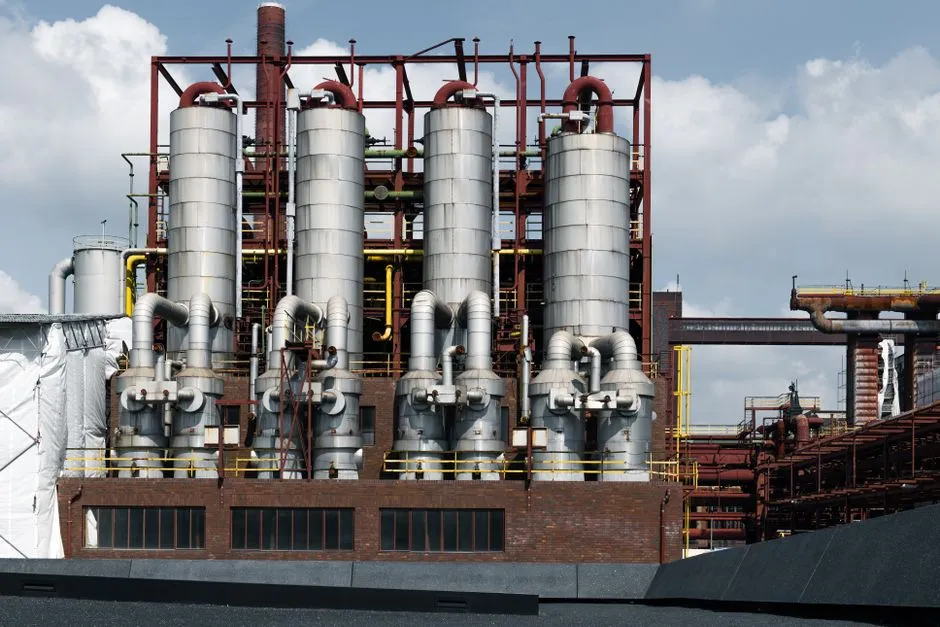
The polishing stage is the final guard before the sewer and the part of the train that catches the upsets the upstream chemistry let through. A multi-media polishing filter — anthracite over sand over garnet — catches any TSS excursion that breaks through the DAF and reduces the Silt Density Index in case the plant later adds reuse RO. Even when reuse is not on the roadmap, the multimedia filter is cheap insurance against the kind of single-day TSS excursion that ends up on an ADEQ inspection report.
Liquid-phase activated carbon handles residual BTEX, phenols, and any trace surfactant that would otherwise show up on the downstream POTW's headworks profile. Carbon matters for a petroleum stream even when BTEX is below the local limit, because the receiving POTW's biological plant is the asset the categorical standard is designed to protect — and surfactant breakthrough is one of the most common pass-through triggers in the receiving plant's influent. For a benchmark on metals polishing, the Blue PRO reactive filtration installation at Burrillville, RI documented copper at 8 µg/L (0.008 mg/L) — a worst-case reactive-media target if additive carryover or anti-icing fluid enters the stream (source: nexom.com, 2025).
Instrument the discharge line. Online pH, temperature, and conductivity on the discharge are non-negotiable; a continuous metals analyzer on Cu and Zn is the difference between catching a slug at 4 a.m. and explaining it to VBMU on Monday morning. For sites that chlorinate or use chlorine dioxide for biological control upstream, a chlorine dioxide generator sized to the design flow keeps TRC within the local-limit band without overdosing.
Step 5: Slug Control Plan and Monitoring
A slug control plan is a piece of operating discipline, not paperwork. Define a "slug" in plant-specific terms — any discharge that, alone or in combination with other contributions, causes pass-through or interference at VBMU's POTW. The definition has to be specific to the plant's streams, because VBMU's enforcement standard is the actual effect on the receiving plant, not a generic concentration number.
The standard slug-control elements are: tank-farm spill containment sized for the largest credible draw, loadout-area shutoff valves on the normally-closed diversion to recovery, equalization capacity sufficient to absorb a single-event slug, and automatic shutoff on high-high pH or high-high oil-sensor readings. A rotary mechanical bar screen on the inlet protects the train from rags and debris that arrive with truck-wash batches; without it, a single rag ball can blind a downstream probe or plug a DAF nozzle.
Monitoring has to be auditable. Require 24-hour flow-proportional composite sampling with chain-of-custody documentation that an ADEQ auditor can read on the spot, and trend the online analyzer data in a way that the operator can demonstrate a slug was caught and diverted rather than discharged. The plan is designed to satisfy the pass-through and interference prohibition in EPA's 40 CFR 403.5, and the documentation is what proves the plan works in practice.
Permit Timeline and Bill of Equipment for a 2026 Retrofit
Plan for a 4–8 month VBMU submittal cycle. The sequence is: pre-application meeting → baseline monitoring report (BMR) → slug control plan → chemical/material inventory → draft permit → public notice → issued permit. Skipping the pre-application meeting is the most common cause of multi-month delays, because VBMU's pretreatment staff will often flag sampling or segregation issues at that meeting that would otherwise surface as formal review comments (HydropureWater field data, 2026).
The bill of equipment a procurement team can request quotes on for a typical 2026 retrofit: rotary mechanical bar screen on the inlet; equalization basin with mechanical mixer and recirculation pump; API or CPI separator sized for the design flow; a DAF or lamella clarifier (or both) sized to the emulsified-oil and TSS load; PLC-controlled coagulant and pH dosing skid with SCADA; multimedia polishing filter; liquid-phase carbon adsorbers; online pH, temperature, conductivity, and Cu/Zn analyzers; and a plate and frame filter press for sludge dewatering. For broader Arkansas-specific engineering specs and EPA compliance framing, the Arkansas industrial wastewater engineering guide covers the regulatory backdrop, and the parallel petroleum plant pretreatment near Demopolis article applies the same logic to a comparable Alabama corridor.
Operator skill matters as much as equipment selection. Chemical precipitation and reactive filtration both need reliable pH and dosing control; specify automatic dosing, a basic SCADA, and online analyzers on the discharge. The cost of instrumentation is a fraction of one Significant Non-Compliance finding. Cold-climate caveat: Northern Arkansas winters drop pond temperatures into the range where conventional nitrification stalls, and the SAGR sub-1°C case is a real operating point, not theoretical — size any biological stage for worst-case winter loading, not summer average (source: nexom.com, 2025).
| Permit cycle step | Typical duration | Deliverable |
|---|---|---|
| Pre-application meeting with VBMU | 2–4 weeks to schedule | Meeting minutes, flagged issues |
| Baseline monitoring report (BMR) | 4–12 weeks of sampling + 4 weeks of write-up | 8–12 weeks of representative data |
| Slug control plan + chemical inventory | 2–4 weeks after BMR | Plant-specific SCP document |
| Draft permit review | 4–8 weeks | VBMU comments and responses |
| Public notice and issuance | 4–8 weeks | Final permit, effective date |
| Total cycle | 4–8 months from first meeting | Issued permit |
Frequently Asked Questions
Which regulation controls when VBMU's local limit and 40 CFR Part 421 conflict?
The stricter of the two controls. VBMU's sewer-use ordinance and the federal categorical standards in 40 CFR Part 403 (with Part 421 applying to petroleum refining-related streams) run in parallel, and the more restrictive numerical or procedural requirement is the one the discharger has to meet on every parameter.
What is the legal basis for a slug control plan at a petroleum bulk plant?
EPA's 40 CFR 403.5 prohibits any discharge that "causes pass through or interference" at the POTW. A slug of gasoline, diesel, or low-pH wash water from a loading-rack spill can kill the receiving plant's biomass in minutes, and the slug control plan is the documentation VBMU uses to verify the discharger has engineered that risk out of normal operations.
What throughput range does a DAF cover for a small-to-mid petroleum bulk plant?
The dissolved air flotation system covers 4–300 m³/h, which spans most small-to-mid terminals in the Van Buren corridor. For sites where footprint is the binding constraint, a high-rate lamella clarifier at 20–40 m/h surface loading pairs with a smaller DAF as a two-stage physical-chemical front end.
How long does a VBMU pretreatment permit submittal take in 2026?
Plan for 4–8 months from the pre-application meeting to issued permit, covering the baseline monitoring report, slug control plan, chemical/material inventory, draft permit review, and public notice. Skipping the pre-application meeting is the most common cause of multi-month delays.
What is the demonstrated metals target for a reactive filtration polishing stage?
The Blue PRO reactive filtration installation at Burrillville, RI documented copper at 8 µg/L (0.008 mg/L), well below typical POTW local limits and most categorical standards (source: nexom.com, 2025). That benchmark is the worst-case metals target a petroleum bulk plant should specify if additive or anti-icing fluid carryover is in the waste stream.