
What Petroleum Bulk Wastewater in Mars, PA Actually Looks Like in 2026
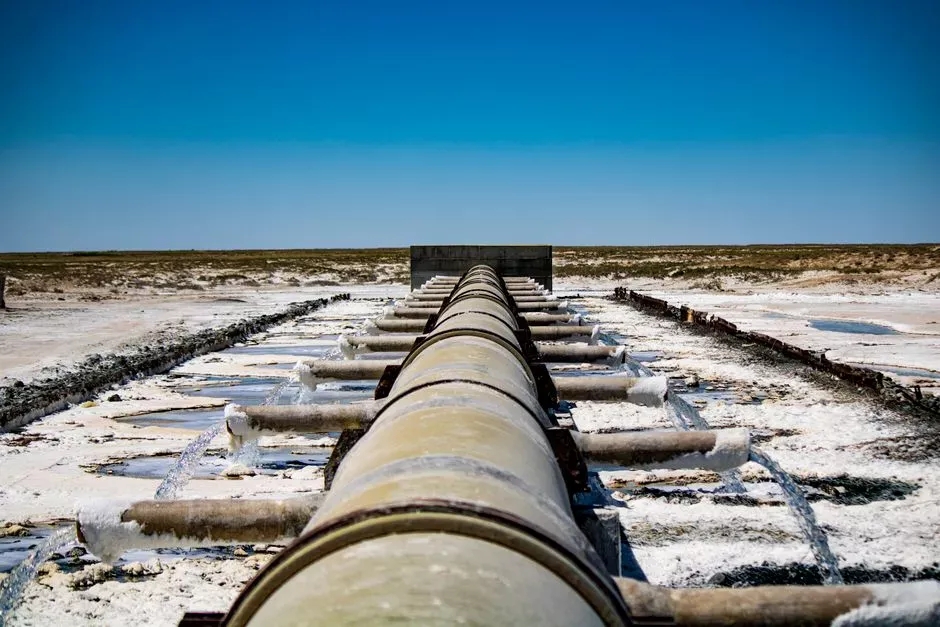
A typical petroleum bulk terminal in the Mars, PA area — Butler County — handles tank-bottom draws, rail and truck loading drip, ballast water, and periodic wash-down, and the combined wastewater stream routinely carries 100-500 mg/L TSS, 200-2,000 mg/L oil and grease, and trace hydrocarbons well above the 15 mg/L daily maximum oil and grease limit set by 40 CFR Part 437 for the petroleum bulk station subcategory (BPT, BAT). Free oil from above-ground storage tank bottoms layers fast in an API separator, but the more stubborn load is emulsified oil generated by pump shear and surfactant carryover from fuel additives — droplets typically under 20 microns that an API weir skimmer simply cannot reach. Compounding the problem, the Marcellus shale-era petroleum logistics boom in Western PA left many Mars-area terminals with legacy API 421-style concrete basins sized for the 1990s flow envelope; under 2026 loading those basins underperform, especially when winter sends influent temperatures below 5°C and oil viscosity climbs. NPDES permit renewals issued by the PA Department of Environmental Protection in 2025-2026 have tightened the local enforcement window, so a growing number of operators are now evaluating whether to add a DAF unit, replace the aging clarifier, or run a DAF + lamella clarifier train to meet pretreatment limits without sending trucked waste off-site.
How a DAF and a Conventional Clarifier Actually Separate Oil and Solids
A dissolved air flotation unit pulls a side stream of clarified effluent, pressurizes it to 60-80 psig in a saturation vessel with compressed air, then releases it through a pressure-relief valve back into the flotation tank. On depressurization, the dissolved air comes out of solution as a cloud of 20-40 micron micro-bubbles that attach to oil droplets, fine suspended solids, and FOG flocs, lifting them to the surface where a rotating skimmer scrapes them off as a 2-4% solids float (DAF Corp product data, 2025). A conventional clarifier — rectangular, circular, or lamella inclined-plate — relies on Stokes' Law settling velocity to drop heavier solids to the bottom while free oil, with a specific gravity around 0.85, rises and is skimmed from the top. The mechanism gap is the decision point. Droplets larger than roughly 60 microns will gravity-separate in a clarifier; droplets under 20 microns will not, because their buoyant rise rate is dominated by Brownian motion and Stokes drag. DAF closes that gap by giving the bubble a head-start — the bubble-droplet aggregate has an effective specific gravity far below water, so the oil rises in minutes instead of hours. Both WesTech and ClearStream note that coagulants and flocculants — typically polyaluminum chloride (PAC) or a cationic emulsion polymer — are dosed ahead of the DAF to coalesce emulsified droplets and improve float solids concentration, but the chemistry and dosage have to be jar-tested per stream, not assumed from a manual.
Side-by-Side: DAF vs Clarifier for Petroleum Bulk Wastewater
The table below is the working artifact a procurement lead can hand to operations. DAF specifications reflect manufacturer data (DAF Corp FC Maximizer and RC UniMax product sheets, 2025); clarifier ranges are typical for the petroleum bulk station subcategory and should be confirmed with jar testing and a pilot on the actual Mars-area stream.
| Parameter | Dissolved Air Flotation (DAF) | Conventional Clarifier (rectangular / circular / lamella) |
|---|---|---|
| Primary separation mechanism | Micro-bubble flotation (20-40 µm bubbles attach to oil and TSS) | Gravity settling per Stokes' Law; free-oil skimming |
| TSS removal efficiency | 92-98% (FC Maximizer, circular); 85-90% (RC UniMax, rectangular) — DAF Corp | 40-70% typical, often below 50% on emulsified load |
| Oil & grease removal | >90% with chemical conditioning; effective on emulsified oil <20 µm | 60-80% on free oil only; minimal effect on emulsified oil |
| Footprint | Compact; circular units 6-70 ft diameter; rectangular skids common | Large; lamella plate settlers at 20-40 m/h surface loading rate reduce footprint vs. conventional rectangular |
| Hydraulic retention time | 15-30 minutes typical | 2-4 hours for conventional; 30-60 minutes for lamella |
| CAPEX band (qualitative) | Low-to-mid for skidded units; mid-to-high for permanent shop-built tanks in 304SS | Low for retrofit into existing concrete; mid for new lamella |
| OPEX | Polymer/coagulant, saturated recycle pump, air compressor | Minimal chemical use; periodic sludge pump maintenance |
| Sludge / float consistency | 2-4% total solids float (DAF Corp) | 1-3% settled sludge; float often wetter and less recoverable |
| Cold-weather sensitivity (Mars, PA winters) | Robust below 10°C with chemical conditioning; enclosed tanks tolerate sub-zero | Viscosity rise cuts oil rise rate sharply; ice on weirs is a chronic issue |
| Deployment options | Permanent install, skid-mounted, or trailer-mounted mobile DAF (WesTech, 47'-6" or 51'-7" trailer) — single-day commissioning | Permanent civil structure only; lamella plates ship into existing basins |
| Retrofit friendliness | Rectangular DAF can be installed inside an existing concrete basin (ClearStream) | Lamella packs retrofit directly into rectangular clarifier shells |
If the limiting contaminant is emulsified oil, FOG, or TSS above 200 mg/L, a DAF outperforms a clarifier. If the stream is mostly free oil with settleable sand and grit and the existing civil work is already paid for, a lamella retrofit is the more economical play.
Which One Mars, PA Factories Should Choose in 2026: A Decision Framework
The decision matrix below maps the three parameters that drive a 2026 capital request at a Mars-area bulk terminal: oil character, flow rate, and civil work budget. Use it as a first-pass filter, then validate with on-site jar testing or a pilot trailer.
| Scenario | Recommended primary unit | Rationale |
|---|---|---|
| Greenfield >100 GPM, emulsified oil present, no existing civil work | Rectangular RC UniMax or circular FC Maximizer DAF | 90%+ removal on emulsified oil in 20-30 min HRT; smaller footprint than clarifier for the same flow |
| Existing API separator, mostly free oil, tight CAPEX, willing to add chemistry | Keep clarifier; add coagulant feed + lamella plates | Lowest capex; uses existing concrete; ~60-80% free-oil removal is sufficient if downstream polishing is robust |
| Variable / seasonal flow, pilot data needed, or emergency capacity | WesTech mobile DAF on 47-51 ft trailer | Single-day delivery and commissioning; can be redeployed to other sites or released after permit upgrade |
| Mars, PA winter operation (influent <10°C) | DAF with enclosed tank and chemical conditioning | Cold influent raises oil viscosity and kills clarifier performance; DAF bubble attachment is far less viscosity-sensitive |
| Downstream MBR or membrane polish | DAF (preferred) or DAF + lamella train | DAF effluent at <20 ppm TSS protects UF/MF membranes from oil fouling; clarifier alone risks more frequent CIP |
| Flow <50 GPM, batch discharge, no biological step | Lamella clarifier with API pre-separator | Acceptable when NPDES permit has generous daily-max TSS and oil & grease; minimizes OPEX and operator burden |
For the dominant case at a Mars, PA bulk terminal in 2026 — greenfield or brownfield, 50-500 GPM, mixed free and emulsified oil, NPDES-pretreatment-bound — a HydropureWater dissolved air flotation system sized 4-300 m³/h covers the flow range without forcing a custom tank. Pair it with a HydropureWater high-efficiency lamella clarifier upstream if you want a polish step before the DAF or want to reuse an existing concrete basin for free-oil pre-separation.
Integration With the Rest of the Treatment Train
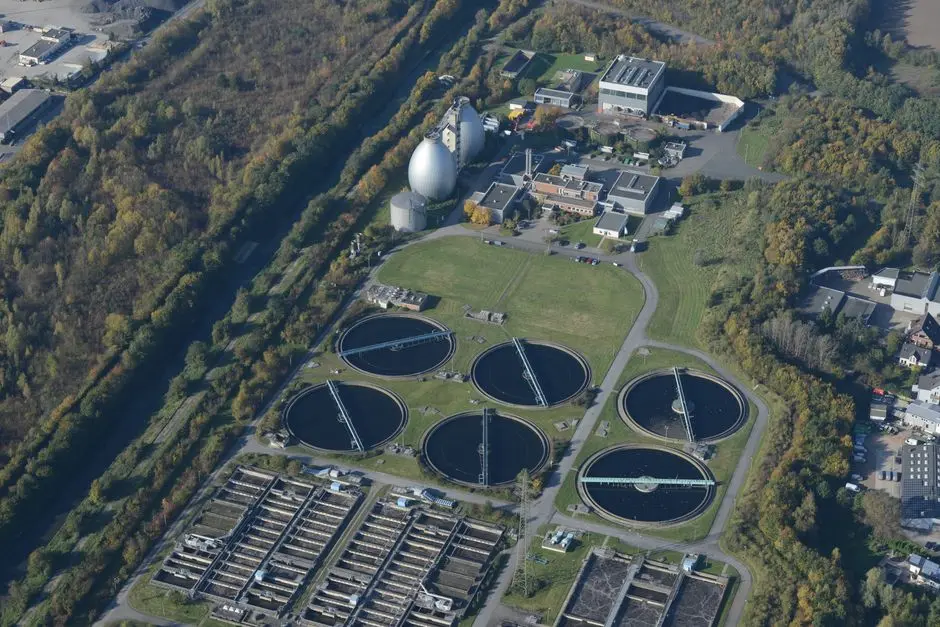
The choice between DAF and clarifier is upstream of a longer decision chain. A 2026 train for a Mars, PA petroleum bulk terminal typically reads: API oil/water separator (legacy) → equalization tank with mixing and aeration → DAF or clarifier for primary oil/TSS removal → biological step (MBR, MBBR, or conventional activated sludge) → sludge dewatering. The DAF float, at 2-4% solids per DAF Corp product data, feeds directly into a HydropureWater plate and frame filter press for oil-recovery cake handling. If the downstream biological step is an MBR integrated wastewater treatment package, the DAF's <20 ppm TSS effluent is the right quality to keep membrane fouling in check; a clarifier-only front end will push more oil and TSS into the basin and trigger earlier CIP cycles. For broader pretreatment compliance context, the petroleum pretreatment compliance guide for 2026 covers the permit-side framing, and a deeper equipment reference is in the industrial DAF system overview. On the back end, sludge dewatering design criteria for 2026 is the right read once the float and biological waste streams converge on the press.
Frequently Asked Questions
Can a DAF replace an API separator at a petroleum bulk terminal?
Functionally, yes, but the standard 2026 practice in Mars, PA is to keep the API separator as a free-oil pre-removal step and put the DAF downstream. The API basin takes out the bulk free oil cheaply; the DAF then handles the emulsified fraction, FOG, and fine TSS that the API weir cannot reach. Replacing the API with a DAF alone works only on smaller terminals (<50 GPM) where the DAF's full oil load is still manageable.
What oil and grease removal can a DAF achieve?
With proper coagulant and flocculant chemistry — typically PAC plus a cationic polymer selected by jar test — DAF routinely delivers >90% oil and grease removal, with effluent O&G below 15-30 mg/L from feeds of several hundred mg/L. Without chemistry, removal drops to the 50-70% range because emulsified droplets do not agglomerate with bubbles as readily.
Is a lamella clarifier better than a DAF for oil/water separation?
A lamella clarifier is better for free oil and settleable solids at low flow rates, and it wins on CAPEX and OPEX when chemistry is not already in the budget. A DAF is better for emulsified oil, FOG, and fine TSS because the micro-bubbles capture droplets that gravity cannot resolve. Footprint favors DAF for flows above ~100 GPM with an emulsified load; lamella wins below that threshold with a mostly-free-oil stream.
How much does a DAF system cost for a 100 GPM petroleum wastewater stream in 2026?
A 100 GPM (≈23 m³/h) packaged DAF skid typically falls in the low-to-mid six figures USD, with material of construction as the largest swing factor — carbon steel and epoxy-lined vessels sit at the low end, while all-304L stainless steel for a permanent outdoor installation in Mars, PA pushes toward the mid-to-high end. Add the saturation pump, air compressor, and PLC controls in the same