The 2026 Regulatory Stack for a South Haven Pharma Plant
Pharma plants near South Haven, Michigan meet 2026 sewer pretreatment limits by stacking three obligations: the federal 40 CFR Part 403 general and specific prohibitions (no pass-through, no interference, pH 5.0-10.0, 40 °C headworks ceiling, no flashpoint <60 °C solvents, ≥15 kg/month hazardous-waste notification), the EPA 40 CFR Part 439 Pharmaceutical Manufacturing category limits, and the local Great Lakes POTW's site-specific numeric permit. Compliance is engineered with equalization, lamella clarification, DAF, an MBR with 0.1-0.4 µm PVDF membranes, optional RO polishing at 95% recovery, and plate-and-frame sludge dewatering.
The 40 CFR Part 403 general pretreatment regulations sit at the top of that stack as the umbrella rule. Pass-through is defined at 40 CFR 403.3(p) as a discharge that exits the POTW in quantities or concentrations that cause a violation of the receiving treatment works' NPDES permit. Interference is defined at 40 CFR 403.3(k) as a discharge that inhibits or disrupts the POTW, its treatment processes, or its sludge use or disposal. For a Great Lakes POTW that land-applies biosolids or sends them to a third-party beneficial reuse program, the "sludge use or disposal" limb is the one most often missed on a first permit application. The general prohibition at 40 CFR 403.5(a) binds every stream leaving the site, and the eight specific prohibitions at 40 CFR 403.5(b) are the engineer-facing limits: (b)(1) flashpoint below 60 °C (140 °F closed-cup) prohibited, (b)(2) pH outside 5.0-10.0 prohibited, (b)(5) discharge above 40 °C (104 °F) at the headworks prohibited, (b)(6) no visible oil sheen or emulsified oils above the limit written into the local permit, and (b)(7) no toxic vapors released in quantities that threaten worker safety or POTW operations.
Layered on top is 40 CFR Part 439 (Pharmaceutical Manufacturing Effluent Guidelines), the point-source category that EPA writes for API production, fermentation, formulation, and packaging (per EPA Pharmaceutical Manufacturing Effluent Guidelines, 40 CFR Part 439). Local limits in the South Haven service area are written tighter than the federal floor in places where the receiving POTW land-applies biosolids, because ammonia, BOD, and trace metals leaving a pharma plant show up in the biosolids product. The EMD Millipore Corp. (Jaffrey, NH) 2016 Consent Decree is the clean precedent: $385,000 civil penalty for ammonia, cBOD, pH, and slug-loading violations that triggered pass-through into the Contoocook River between 2011 and 2015, even though Millipore held a locally-issued pretreatment permit (per EPA/DOJ Consent Decree, US District Court, District of New Hampshire, 2016). EPA's standing position is that federal pretreatment authority sits behind any local permit, and a South Haven discharger should size the skid to clear pass-through, interference, and local biosolids-quality tests at the same time.
The Five Waste Streams a South Haven Plant Must Map Before Any Permit Is Filed
Pharma operations near South Haven typically generate five recognizable streams, and each one maps to a different combination of unit operations and a different clause of 40 CFR Part 403. Mapping the streams before any permit is filed is what keeps the Industrial User Survey honest and the engineered train defensible.
| Stream | Key Pollutants | 40 CFR Trigger | Route |
|---|---|---|---|
| API residuals & fermentation decant | High BOD, high TSS, slowly biodegradable organics | 403.3(k) interference, 403.5(b)(2) pH excursions | Equalization → lamella clarifier on the API and fermentation decant stream |
| CIP rinsates | High pH, high TDS, emulsified soils | 403.5(b)(2) pH, 403.5(b)(6) oils | pH correction → DAF unit for CIP and API wastewater equalization |
| Solvent-bearing streams | Low flashpoint, FOG, RCRA-listed | 403.5(b)(1) flashpoint, 403.5(b)(6) oils, 403.5(b)(7) toxic vapors | Segregated collection, no sewer; RCRA disposal or solvent recovery |
| Bioassay & lab waste | Variable, often RCRA-listed | 403.12(p) and 403.12(j) hazardous-waste notification | Hauled-waste permit or licensed RCRA collection center |
| Sanitary/domestic | BOD, TSS, pathogens | Generally out of 403.5(b) scope when segregated | Sanitary sewer, kept separate to keep IU permit scope clean |
The two streams that catch engineers on a first filing are solvent-bearing streams and bioassay/lab waste. Solvents cannot be sewered at all under 40 CFR 403.5(b)(1) and (b)(6), because a single slug of a low-flashpoint solvent into the headworks can shut down a primary clarifier or strip volatile vapors through the POTW building. Bioassay and lab waste is not a sewered stream either; it is handled as hauled waste under a separate permit or routed to a licensed RCRA collection center. Segregating sanitary from process is a discipline move, not just a plumbing move: it keeps the IU permit scope clean, the slug-notification tree short, and the sampling point uncontaminated by non-process BOD.
Translating 40 CFR 403.5(b) Into a Plant-Side Setpoint Table
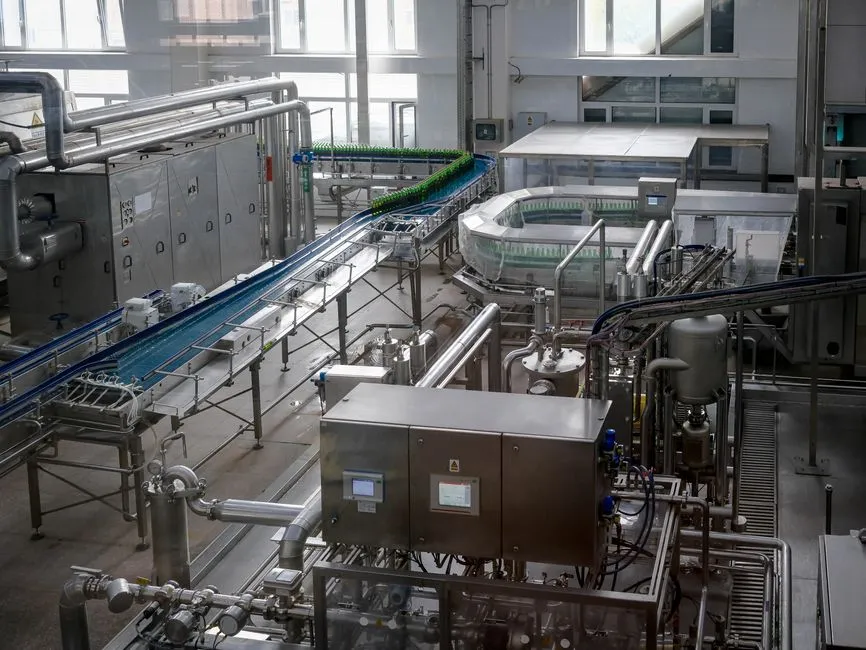
Engineers want a single table they can pin next to the PLC that controls the discharge line. The setpoints below translate the federal 40 CFR 403.5(b) prohibitions into plant-side control values a skid can actually hold. Plant-side setpoints are written tighter than the regulatory ceiling so the line never crosses the limit by the time the sample reaches the headworks.
| Parameter | Federal Limit (40 CFR 403.5(b)) | Plant-Side Setpoint / Interlock | Control Action |
|---|---|---|---|
| pH | 5.0-10.0 at the IU discharge sampling point (b)(2) | 6.0-9.0 on the discharge line probe | Out-of-band diverts to containment, not sanitary sewer |
| Temperature | ≤40 °C (104 °F) at POTW headworks (b)(5) | ≤35 °C (95 °F) on the discharge line probe | Heat-exchanger trim or full divert if probe >35 °C |
| Flashpoint | No stream <60 °C (140 °F closed-cup) (b)(1) | No low-flashpoint stream on the sewered side; dedicated RCRA tank | Hard interlock: dedicated low-flash routing upstream of EQ |
| Oil & grease / emulsified oils | No visible sheen; numeric limit set by local POTW (b)(6) | ≤local daily-max at the DAF outlet | DAF skimmer trip; recycle to RCRA tank |
| Toxic vapors | No release in quantities that threaten POTW or workers (b)(7) | LEL monitor on covered EQ tank; local exhaust on lab vents | Vent to local scrubber; alarm at 10% LEL |
| Hazardous-waste log trigger | ≥15 kg/month non-acute, or any acute (403.12(p) and 403.12(j)) | Monthly reconciliation on the same day each month | WRA notification within 180 days of crossing the threshold |
The 180-day hazardous-waste notification clock in the bottom row is the one most often missed. Under 40 CFR 403.12(p) and 403.12(j), an Industrial User must notify the POTW, the EPA Regional Waste Management Division Director, and the State hazardous waste authority within 180 days of the first discharge of a reportable hazardous waste above the threshold. At a pharma site this commonly captures solvent streams, certain catalyst rinses, and any RCRA-listed waste. The simplest defense is a monthly reconciliation of the on-site waste log, signed by the EHS lead, so the 180-day clock is never allowed to start by surprise (per EPA 40 CFR Part 403). The PLC-controlled chemical dosing skid for pH and temperature interlocks is the hardware that physically enforces the setpoint table above.
The 2026 Engineered Train: EQ → Lamella → DAF → MBR → RO → Plate-and-Frame
The engineered train below is what a 2026 pharmaceutical discharger near South Haven installs to clear the regulatory stack above while leaving room for the local POTW to write tighter limits later. Each step has a specific design envelope tied to it.
Equalization is sized 8-24 hours of diurnal hold, which is the standard envelope for dampening pH and flow swings before biological treatment at a pharma or CDMO site. The hold dampens batch pH excursions from CIP rinsates and flow spikes from fermenter decant so the downstream biology sees a feed that consistently clears the 40 °C (104 °F) and pH 5.0-10.0 caps at the IU sampling point.
Lamella clarification is the next stage, sized at 20-40 m/h surface loading on the API and fermentation decant stream to drop suspended solids before the biological stage. The lamella clarifier on the API and fermentation decant stream removes grit and biomass that would otherwise blind the downstream membranes.
DAF on the CIP and API mixed stream floats emulsified oils, fines, and FOG ahead of the bioreactor. The DAF unit for CIP and API wastewater equalization is the only reliable way to clear the 40 CFR 403.5(b)(6) oil prohibition when CIP rinsates carry emulsified soils; biology alone will not break those emulsions.
The biological stage is a submerged MBR with PVDF membranes as the 2026 baseline, fitted with a 0.1 µm PVDF flat-sheet MBR module. MBR eliminates the secondary clarifier, reduces footprint roughly 60% versus conventional activated sludge, and produces a sub-micron filtrate that reliably drops BOD/COD below the local interference threshold (per EPA pretreatment standards).
Industrial RO polishing at up to 95% recovery is the finishing step for sites that pursue water reuse or need to strip residual APIs and trace TOC before sewer discharge. The industrial RO polishing at up to 95% recovery stage also reduces the ammonia-nitrogen load that the receiving POTW would otherwise have to nitrify, which matters when the receiving POTW is a Great Lakes facility that land-applies biosolids.
Solids handling is a plate-and-frame filter press on MBR waste-activated sludge to reduce volume and keep pharma-derived contaminants out of the receiving POTW's biosolids product. Cake at 22-28% dryness is typical for an MBR WAS feed on a plate press, and the dewatered cake is the controlled waste stream, not the sewer.
Final microbial kill on the discharge side is an on-site chlorine dioxide generator for final microbial kill, preferred over gaseous Cl2 because ClO2 is generated on demand and does not form regulated trihalomethane byproducts that would complicate a future NPDES review of the receiving POTW.
Permit Path, Slug-Control Hardware, and the 2026 Compliance Calendar
Step 1 is to file the Industrial User Survey with the local POTW pretreatment department at least 180 days before construction or new discharge. The 180-day clock is non-negotiable; the POTW uses it to size headworks capacity, set sampling requirements, and write the local numeric limits that will end up in the permit. Step 2 is to complete the Industrial Wastewater Discharge Permit Application, or the Hauled Waste Discharge Permit Application where applicable, and submit it with the appropriate fees. Step 3 is fee payment. For a comparable Midwest POTW of similar size to a South Haven-area Great Lakes facility, the Class A band is $1,500/year plus a $200 application surcharge and Class B is $750/year plus $100 (illustrative for Great Lakes POTWs of comparable size; reference point: Des Moines Municipal Code 118-352 cited as a benchmark, 2025-08). Step 4 is installation of the sampling point, the discharge sampling schedule, and a slug-discharge notification tree with day-hours and after-hours phone lines per the local POTW (per the DMMWRA Industrial Pretreatment page).
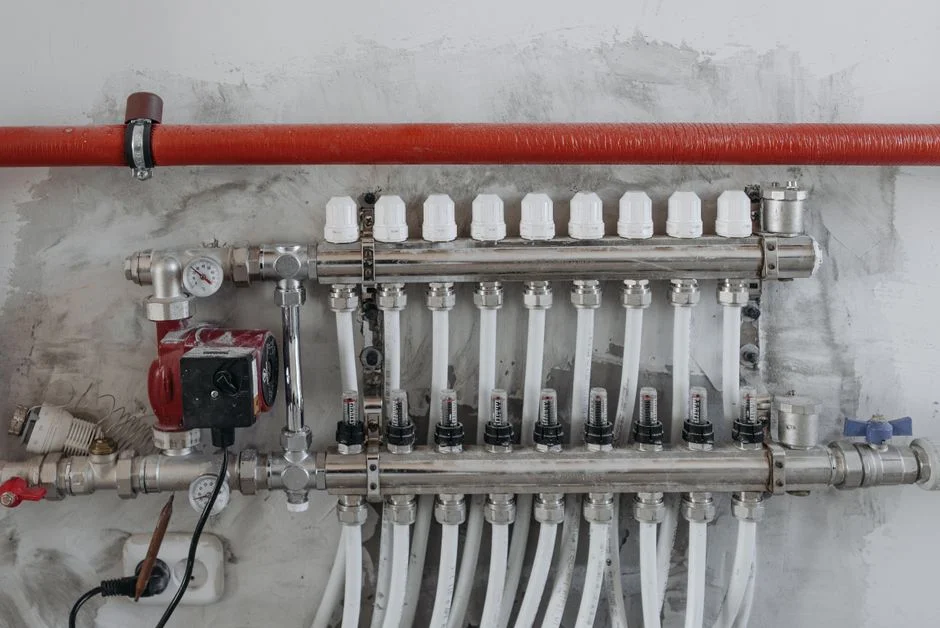
Slug-control hardware is what holds the permit on a day when operations go sideways. A PLC-controlled chemical dosing skid for pH and temperature interlocks on the IU discharge line should divert any out-of-band reading to containment rather than the sanitary sewer, locking the 40 CFR 403.5(b)(2) pH and (b)(5) temperature caps in place at the tap. For any contaminant not already on the permit, the operator must complete a Discharge Authorization Form and route it to the POTW director for written approval before release. The 40 CFR 403.12(p) and 403.12(j) hazardous-waste log should be reconciled monthly so non-acute kilogram totals and any acute releases are documented and reportable within the 180-day window.
Plan for a full year end-to-end on a greenfield project: 180 days for the IU Survey review, 90-120 days for permit drafting and signature, 90-180 days for skid fabrication and installation, and a 30-day shakedown before first discharge. The capex-defending move is to engineer the train to clear pass-through, interference, and the local POTW's biosolids-quality test at the same time, on day one.
Frequently Asked Questions
What is the 2026 pretreatment setpoint table for a pharma plant near South Haven?
Discharge pH 5.0-10.0 at the IU sampling point, temperature ≤40 °C (104 °F) at the POTW headworks, no closed-cup flashpoint below 60 °C (140 °F), no visible oil sheen or emulsified oils above the local permit limit, no toxic vapors above the 40 CFR 403.5(b)(7) threshold, and a hazardous-waste log trigger at ≥15 kg/month non-acute or any acute under 40 CFR 403.12(p) and 403.12(j).
What is the standard 2026 treatment train for a pharma discharger near South Haven?
Equalization (8-24 h hold) → lamella clarification (20-40 m/h) → DAF → submerged MBR with 0.1-0.4 µm PVDF flat-sheet membranes → optional industrial RO polishing at up to 95% recovery → plate-and-frame filter press on the MBR waste-activated sludge → on-site chlorine dioxide generator for final microbial kill. This train clears pass-through, interference, and the local POTW's biosolids-quality test at the same time. For a deeper RO train comparison, see the pharma drinking water plant design guide, and for global BOD/COD targets, the 2026 COD and BOD discharge limit guide.
When must a South Haven pharma plant notify the POTW about hazardous waste?
Within 180 days of first discharging ≥15 kg per calendar month of non-acute hazardous waste, or any amount of acute hazardous waste, under 40 CFR 403.12(p) and 403.12(j). Monthly reconciliation of the on-site log is the simplest way to keep the 180-day clock from starting by surprise.
How does the EMD Millipore 2016 Consent Decree affect a 2026 South Haven plant?
The $385,000 civil penalty for ammonia, cBOD, pH, and slug-loading violations that triggered pass-through into the Contoocook River (2011-2015) confirms that EPA enforces 40 CFR Part 403 behind any locally-issued pretreatment permit. A South Haven discharger should engineer the skid to clear the federal floor and the local POTW's numeric limits on the same day, not rely on a local permit as a shield. For trace-metal guidance relevant to the Great Lakes biosolids regime, see the 2026 chromium removal process guide and the 2026 zinc removal methods and ROI guide.
Related Equipment
- industrial RO polishing at up to 95% recovery — specifications, capacity range, and technical data