Why Des Moines Pretreatment Is Different for Pharma in 2026
Des Moines-area pharmaceutical plants face a pretreatment environment that is materially stricter than a typical POTW because the Des Moines Metropolitan Wastewater Reclamation Authority (DMMWRA) Wastewater Reclamation Facility (WRF) is converting sewage into fertilizer. A $45 million biosolids-to-fertilizer program is producing roughly 350 tons of dried biosolids per day that are land-applied as crop fertilizer (per the Des Moines Register, 2025-12). Every kilogram of nitrogen, BOD, pH excursion, or trace metal that leaves a pharmaceutical plant ends up in that land-application stream, so DMMWRA writes local numeric limits tighter than the federal floor — and enforces them.
That tight local posture sits on top of a serious compliance footprint. DMMWRA oversees more than 2,500 commercial and industrial facilities and administers over 60 active industrial wastewater discharge permits (per the DMMWRA Industrial Pretreatment page). Pharmaceutical manufacturing is the highest-risk industrial user (IU) category in that population because it generates API residuals, fermentation decant, CIP rinsates, and trace solvents that can simultaneously trigger pass-through, interference, and biosolids-quality concerns.
The two failure modes a pharma plant must understand are defined at 40 CFR 403.3. Pass-through is a discharge that exits the POTW in quantities or concentrations that cause a violation of the WRF's NPDES permit (40 CFR 403.3(p)). Interference is a discharge that inhibits or disrupts the POTW, its treatment processes, or its sludge use or disposal, and therefore is a cause of an NPDES or sludge-management violation (40 CFR 403.3(k)). At the WRF, "sludge use or disposal" means the biosolids-to-fertilizer pipeline — so any pharma load that degrades the fertilizer product is now an interference trigger as well as a permit violation. The practical question for a Des Moines engineer is therefore: which wastewater streams does my plant produce, and which DMMWRA permit class covers them?
The DMMWRA Permit Pathway Every Des Moines Pharma Plant Must Follow
Every new pharmaceutical discharger — and every existing IU expanding or modifying operations — follows the same four-step path at the WRF. Step 1 is to file an Industrial User Survey with the WRA Pretreatment Department not less than 180 days prior to construction or new discharge. The 180-day clock is non-negotiable: the WRA uses it to size headworks capacity, set sampling requirements, and write the local numeric limits that will end up in the permit. Step 2 is to complete the Industrial Wastewater Discharge Permit Application — or the Hauled Waste Discharge Permit Application if waste is trucked to the WRF — and submit it with the appropriate fees. Step 3 is fee payment, and Step 4 is installation of sampling equipment and a slug-discharge notification tree that the WRA spells out by phone number, not by email (per the DMMWRA Industrial Pretreatment page).
| Step | Action | Timing / Fee | Authority |
|---|---|---|---|
| 1 | Submit Industrial User Survey to WRA Pretreatment Department | ≥180 days before construction or new discharge | WRA Pretreatment Department |
| 2 | File Industrial Wastewater Discharge Permit Application (or Hauled Waste version) | Before permit issuance | WRA Pretreatment Department |
| 3 | Pay annual permit fee + one-time application surcharge | Class A: $1,500/yr + $200 surcharge; Class B: $750/yr + $100 surcharge | Section 118-352, Des Moines Municipal Code |
| 4 | Install sampling point, discharge sampling, and slug-discharge notification tree | Pre-discharge; on permit schedule | WRA-set, per IU Survey outcome |
For Class A and Class B fee classification purposes, expect Class A for facilities discharging process wastewater directly to the sanitary sewer at design flows above the IU Survey trigger, and Class B for lower-flow or hauled-waste-only operations. The phone tree is fixed: during day hours (7 a.m. to 4 p.m.) call 515-323-8010 or 515-323-8133 to reach the WRF Treatment Manager and Regulatory Compliance Department; outside day hours call WRF Operations at 515-323-8040. A follow-up Slug Discharge Form goes to the Regulatory Compliance Department (per the DMMWRA Industrial Pretreatment page).
Local and Federal Limits a Pharma Discharge Must Clear
The 40 CFR Part 403 framework is layered: a general prohibition, eight specific prohibitions, and then site-specific numeric limits written into the WRA permit. The general prohibition at 40 CFR 403.5(a) forbids any discharge that causes pass-through or interference at the POTW (per EPA pretreatment standards). This is the umbrella rule covering any pollutant load the WRF cannot remove — including the new biosolids-quality dimension tied to fertilizer land application. Beneath that umbrella sit the eight specific prohibitions at 40 CFR 403.5(b), which a pharma plant must engineer against at the tap:
- (1) Fire/explosion hazard — closed-cup flashpoint below 140°F (60°C) per 40 CFR 261.21.
- (2) Corrosives — pH lower than 5.0, unless the works is specifically designed to accommodate it.
- (3) Solid or viscous pollutants in amounts that obstruct flow.
- (4) Oxygen-demanding pollutants (BOD, etc.) released at a flow rate or concentration that causes interference.
- (5) Heat in quantities that exceed 40°C (104°F) at the POTW headworks, unless alternate limits are approved.
- (6) Petroleum oil, non-biodegradable cutting oil, or mineral-origin oil that causes interference or pass-through.
- (7) Toxic gases, vapors, or fumes that pose acute worker health and safety risk.
- (8) Trucked or hauled pollutants except at POTW-designated discharge points.
DMMWRA does not publish a single numeric local limit table; instead, daily-maximum and monthly-average pollutant concentrations, flow, and pH band are written into each Class A permit based on the IU Survey outcome. The pH band typically tracks 5.0–10.0, with a temperature ceiling that mirrors 40 CFR 403.5(b)(5) at 40°C (104°F), and ammonia-nitrogen or TKN limits tightened to protect the WRF's nitrification capacity and biosolids product. Hazardous-waste reporting under 40 CFR 403.12(p)&(j) is a separate but parallel obligation: any IU discharging ≥15 kg/month of non-acute hazardous waste, or any amount of acute hazardous waste, must notify the WRA within 180 days of the discharge (per the DMMWRA Industrial Pretreatment page). For pharmaceutical operations this commonly captures solvent streams, certain catalyst rinses, and RCRA-listed wastes.
| Limit Type | Source | Numeric or Definitional Threshold | Pharma Implication |
|---|---|---|---|
| General prohibition | 40 CFR 403.5(a) | No pass-through or interference at POTW | Umbrella rule; binds all streams |
| Flashpoint | 40 CFR 403.5(b)(1) | Closed-cup ≥140°F (60°C) | Segregate solvents; no sewer |
| pH | 40 CFR 403.5(b)(2) | ≥5.0 at the tap | Equalize CIP before discharge |
| Heat | 40 CFR 403.5(b)(5) | ≤40°C (104°F) at POTW headworks | Cool hot process streams |
| Local numeric limits | DMMWRA permit, Class A | Site-specific daily-max / monthly-avg | Set in permit after IU Survey |
| HW report trigger | 40 CFR 403.12(p)&(j) | ≥15 kg/mo non-acute, or any acute | 180-day notification clock |
Mapping Pharma Wastewater Streams to the Right Unit Operation
Pharma plants generate five recognizable streams, and each one maps to a different combination of unit operations. API residuals and fermentation decant — high in BOD, suspended solids, and slowly biodegradable organics — go to equalization followed by lamella clarification for grit and biomass removal. CIP rinsates carry high pH, high TDS, and emulsified soils; they need pH correction and a DAF unit for CIP and API wastewater equalization to float oils and fines before biological treatment. Solvent-bearing streams cannot be sewered at all under 40 CFR 403.5(b)(1) and (b)(6) (per EPA pretreatment standards) — segregate them and route to RCRA disposal or solvent recovery. Bioassay and lab waste goes out as hauled waste under a separate permit or to the Metro Waste Authority Regional Collection Center in Bondurant at 515-967-5512 (per the DMMWRA Industrial Pretreatment page).
Equalization is the first engineered defense. A properly sized EQ tank — typically 8–24 hours of diurnal hold — dampens pH and flow swings so the downstream biological stage sees a feed that consistently clears the 40 CFR 403.5(b)(2) pH ≥5.0 and (b)(5) 40°C (104°F) caps. The biological stage for 2026 pharma is a submerged MBR system for pharma wastewater treatment with PVDF membranes at 0.1–0.4 μm pore size. MBR produces a sub-micron filtrate, eliminates the secondary clarifier, and reliably drops BOD/COD to levels that prevent WRF interference under 40 CFR 403.3(k) (per EPA pretreatment standards). Polishing is an industrial RO polishing stage operated at up to 95% recovery for plants that pursue water reuse or need to strip residual APIs and trace TOC before sewer discharge. Solids from the MBR waste-activated sludge train are dewatered on a plate-and-frame filter press to reduce volume and keep pharma-derived contaminants out of the WRF's biosolids-to-fertilizer product (per the Des Moines Register, 2025-12).
| Pharma Stream | Key Pollutants | Primary Unit Op | 403.5(b) Tie-In |
|---|---|---|---|
| API residuals / fermentation decant | BOD, TSS, slowly biodegradable organics | Equalization + lamella clarifier | (b)(4) BOD interference |
| CIP rinsate | High pH, TDS, emulsified oils | pH correction + DAF | (b)(2) pH, (b)(6) oils |
| Solvent streams | Low flashpoint VOCs | Segregated collection, no sewer | (b)(1) flashpoint, (b)(7) toxic vapors |
| Bioassay / lab waste | Variable, often RCRA-listed | Hauled-waste permit or Bondurant RCRA | (b)(8) hauled pollutants |
| MBR WAS | Biomass, residual API | Plate-and-frame filter press | Biosolids-to-fertilizer protection |
Building the Slug-Discharge and Permit-Compliance Playbook
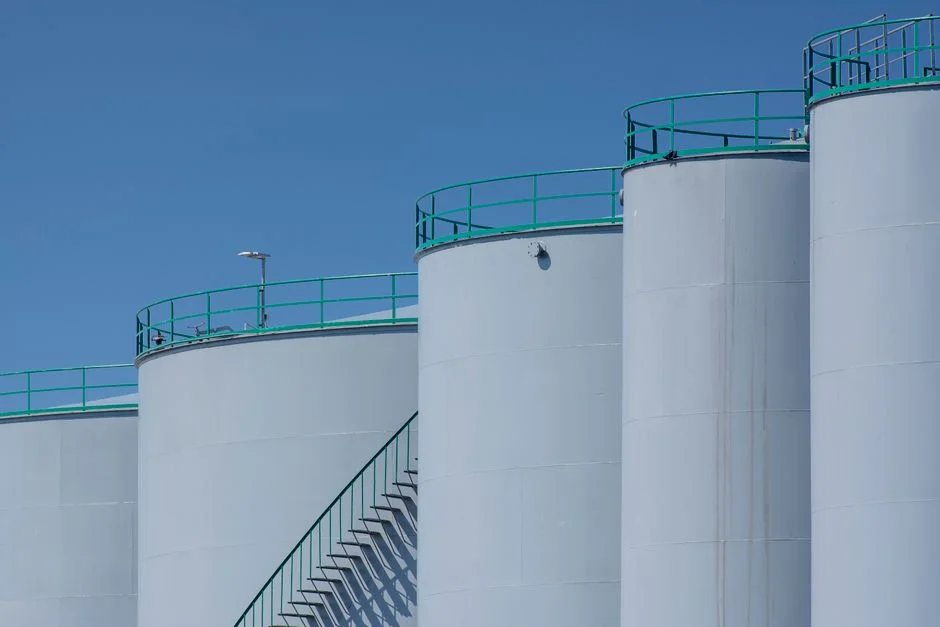
A slug is any discharge of a non-routine, episodic nature — a batch dump, a tank overflow, a solvent spill — that has a reasonable potential to cause pass-through or interference. The WRA's permit definition is the one to copy into plant SOPs, because the notification clock starts the moment a release can be defined as a slug under the permit. The phone tree is fixed: day hours 515-323-8010 or 515-323-8133, after hours 515-323-8040, followed by a Slug Discharge Form to the Regulatory Compliance Department (per the DMMWRA Industrial Pretreatment page).
Hardware interlocks do most of the work. A PLC-controlled chemical dosing skid tied to pH and temperature probes on the IU discharge line should divert any out-of-band reading to containment rather than the sanitary sewer, locking the 40 CFR 403.5(b)(2) and (b)(5) caps in place at the tap. For any contaminant not already on the permit, the operator must complete a Discharge Authorization Form and route it to the WRA Director for written approval before release (per the DMMWRA Industrial Pretreatment page). Final microbial kill on the discharge side — and on any reuse loop — is handled by an on-site chlorine dioxide generator, which is preferred over gaseous chlorine for pharma because ClO₂ is generated on demand and does not form the regulated trihalomethane byproducts that would complicate a future NPDES review. The 40 CFR 403.12(p)&(j) hazardous-waste log should be reconciled monthly so non-acute kilogram totals and any acute releases are documented and reportable within the 180-day window (per the DMMWRA Industrial Pretreatment page).
Frequently Asked Questions
How long does the DMMWRA pretreatment permit process take for a new pharmaceutical discharge?
The Industrial User Survey must be submitted to the WRA Pretreatment Department at least 180 days before construction or new discharge, and the Industrial Wastewater Discharge Permit Application follows before a permit is issued (per the DMMWRA Industrial Pretreatment page). Plan for a full year end-to-end on a greenfield project.
What is the difference between a Class A and Class B discharge permit at the WRA?
Class A carries an annual fee of $1,500 plus a one-time $200 application surcharge, and Class B is $750 annually with a $100 surcharge; classification is set by the WRA based on the IU Survey outcome and the nature of the discharge (per Section 118-352, Des Moines Municipal Code, as referenced on the DMMWRA Industrial Pretreatment page).
What pH, temperature, and flashpoint limits apply to a pharma discharge to the WRA?
Discharge pH must be ≥5.0, the temperature at the POTW headworks must not exceed 40°C (104°F), and any stream with a closed-cup flashpoint below 140°F (60°C) is prohibited from the sanitary sewer — per 40 CFR 403.5(b)(1), (b)(2), and (b)(5) (per EPA pretreatment standards).
When must a pharmaceutical IU report hazardous waste to the WRA?
Under 40 CFR 403.12(p)&(j), an IU must notify the WRA within 180 days of discharging ≥15 kg per calendar month of non-acute hazardous waste, or any amount of acute hazardous waste (per the DMMWRA Industrial Pretreatment page). This commonly captures solvent and certain catalyst streams at API and CDMO sites.
Who do I call for a slug discharge outside normal business hours?
During day hours (7 a.m. to 4 p.m.) call 515-323-8010 or 515-323-8133 to reach the WRF Treatment Manager and Regulatory Compliance Department; after hours call WRF Operations at 515-323-8040, then submit a Slug Discharge Form (per the DMMWRA Industrial Pretreatment page). Engineers sizing a new pretreatment skid for similar tight local limits can compare approaches in this related 2026 pretreatment guide for chemical plants or review a pharma-specific RO train in this pharma RO design guide.
Related Equipment
- sludge dewatering filter press — specifications, capacity range, and technical data