Why Chicago Chemical Plants Need a Three-Layer Pretreatment Strategy
Three stacked regulatory layers govern every gallon a chemical plant near Chicago discharges to a sanitary sewer, and the most stringent applicable limit controls. Layer 1 is the general and specific prohibitions at 40 CFR 403.5(a) and 403.5(b), which ban any discharge that causes pass-through or interference and list specific prohibited pollutants — for example, ignitable liquids with a closed-cup flash point below 140 °F (60 °C) per 40 CFR 261.21. Layer 2 is the federal categorical pretreatment standards in 40 CFR Parts 405–471, which set numeric effluent limits for specific industry categories. Layer 3 is the site-specific local limit set by the receiving POTW's Control Authority — for most Chicago flows, the Metropolitan Water Reclamation District of Greater Chicago (MWRDGC); for plants outside the MWRD service area, a satellite POTW such as those operating in parts of DuPage, Lake, Will, Kane, or Kendall counties. The statutory anchors are Clean Water Act §307(b) (pretreatment standards authority) and §402(n) (POTW pretreatment programs under NPDES) (per EPA, 2026).
Two legal triggers fire violations even without a numeric exceedance. Pass-through, defined at 40 CFR 403.3(p), is a discharge that exits the POTW in quantities or concentrations that, alone or with other sources, cause a violation of the POTW's NPDES permit. Interference, defined at 40 CFR 403.3(k), is a discharge that, alone or with other sources, inhibits or disrupts the POTW, its treatment processes, or its sludge processes and thereby causes an NPDES permit violation or a violation of sewage sludge use or disposal requirements under CWA §405 or RCRA (per EPA, 2026). The anti-dilution rule prohibits using process water to dilute a discharge as a partial or complete substitute for adequate pretreatment, so the only safe design path is to engineer to the most stringent applicable number and prove it with monitoring.
| Layer | What it controls | Where it lives | Who enforces |
|---|---|---|---|
| 1 — General & specific prohibitions | Pass-through, interference, ignitable/corrosive/toxic pollutants | 40 CFR 403.5(a) and (b); flash point at 40 CFR 261.21 | EPA, IEPA, Control Authority |
| 2 — Categorical standards | Numeric effluent limits for specific industry categories | 40 CFR Parts 405–471 (e.g., 414, 415, 419, 433) | EPA, Control Authority |
| 3 — Local limits | Site-specific numeric caps; can be more stringent than federal | POTW's approved pretreatment program (e.g., MWRDGC Sewage and Wastewater Ordinance or satellite POTW ordinance) | Control Authority (MWRDGC or satellite POTW) |
Which 40 CFR Subpart Applies to a Chicago Chemical Plant
Identifying the controlling subpart takes about 30 seconds once the process is mapped. Organic chemicals, plastics, and synthetic fibers — common along the Calumet corridor — fall under 40 CFR Part 414. Inorganic chemicals production falls under Part 415. Soap and detergent manufacturing falls under Part 417. Petroleum refining operations fall under Part 419. A metal finishing line on the same site triggers Part 433 in parallel. EPA revises these subparts on a multi-year cycle, so the binding numeric values must be confirmed in the current 40 CFR rather than relied on from memory (per EPA, 2026).
A plant becomes a Significant Industrial User (SIU) when any of three triggers at 40 CFR 403.3(v) is met: (1) it is subject to categorical pretreatment standards; (2) it discharges an average of 25,000 gpd or more of process wastewater; or (3) it contributes a process waste stream making up 5% or more of the POTW's average dry-weather hydraulic or organic capacity (per EPA, 2026). Chicago-area chemical plants almost always trip trigger (1) by virtue of operating under Part 414, 415, 417, 419, or 433, which is what brings the heavier monitoring and reporting bar.
SIU status carries four standard deliverables. A Baseline Monitoring Report (BMR) is required at categorical standard promulgation or new-source startup. A 90-day compliance report follows once the compliance date is reached. Periodic compliance reports are due semi-annually — on the twentieth day of January and the twentieth day of July for the preceding two calendar quarters. A slug load control plan is required under 40 CFR 403.8(f) to prevent batch releases from causing pass-through or interference at the receiving plant (per EPA, 2026).
| Process line | 40 CFR subpart | Typical Chicago corridor presence |
|---|---|---|
| Organic chemicals, plastics, synthetic fibers | Part 414 | Calumet, Stickney, surrounding corridors |
| Inorganic chemicals | Part 415 | South and southwest Chicago metro |
| Soap and detergent manufacturing | Part 417 | Scattered across the metro |
| Petroleum refining | Part 419 | Whiting/Lake County, Calumet region |
| Metal finishing (on-site line) | Part 433 | Common co-located line in mixed chemical plants |
MWRDGC and Other Local Limits That Tighten the Federal Floor
For most flows inside the MWRD service area, the Metropolitan Water Reactivation District of Greater Chicago (MWRDGC) acts as the Control Authority and administers the local Sewage and Wastewater Ordinance. For plants in DuPage, Lake, Will, Kane, or Kendall counties, the Control Authority is typically a satellite POTW with its own ordinance. The first action for any engineer in this region is to confirm the receiving POTW and request its current local limits calculation — local limits are site-specific and are the only way to know the binding number.
Satellite POTW ordinances in the Chicago metro typically incorporate 40 CFR chapter I subpart N parts 405–471 by reference and then layer site-specific numeric limits on top. The West Chicago pretreatment ordinance, for example, sets a discharge cap of 0.30 mg/L cyanide and a 0.025 mg/L receiving-water concentration criterion, and requires a large manhole or sampling chamber on each separate discharge at the user's expense (per West Chicago pretreatment ordinance, accessed 2026). The same ordinance expressly forbids using process water to dilute a discharge as a substitute for adequate pretreatment and empowers the city to reject the wastes, require pretreatment, or revoke the discharge permit and disconnect service if a violation persists.
Local-limit categories that MWRDGC-style programs typically enforce more tightly than the federal floor include heavy metals (Cd, Cr, Cu, Ni, Pb, Zn), oil and grease, phenols, sulfides, pH (typically 6–9), and total flow or loading allocations tied to the receiving plant's hydraulic or organic capacity. A plant that engineers only to the federal categorical number can still trip a local limit, and a single excursion can trigger corrective-order litigation, permit revocation, or service disconnection (per West Chicago pretreatment ordinance, accessed 2026).
The Six-Step Unit-Operation Train Most Chicago Chemical Plants Use
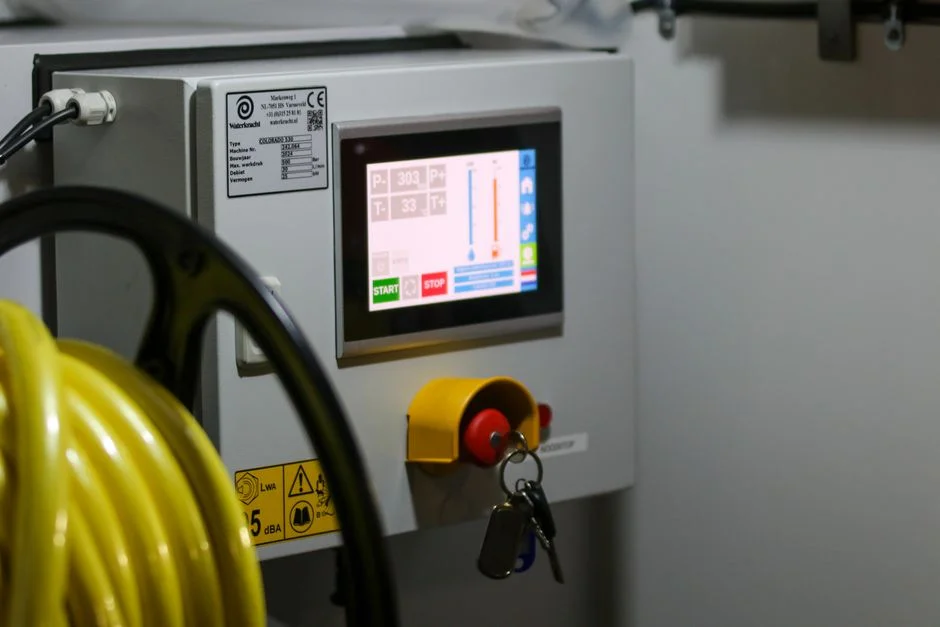
Six unit operations, in roughly this order, handle the majority of chemical plant wastewater streams that go to a POTW in this region. The right subset is a function of the controlling pollutant, not a fixed recipe. Equalization dampens batch pH, flow, and concentration swings before downstream unit operations see them, sized 4–8 hours of retention for continuous operations and hours-to-days for batch operations — this step directly addresses pass-through under 40 CFR 403.5(a) and slug-load excursions under 40 CFR 403.8(f) (per EPA, 2026). PLC-controlled pH adjustment follows, typically targeting pH 6–9 to satisfy the local limit and the 40 CFR 403.5(b) prohibition on corrosive discharges.
A dissolved air flotation system then strips free and emulsified oils, FOG, and suspended solids — the standard pick for petrochemical (Part 419) and plastic/synthetic fiber (Part 414) streams. Confirm the air-to-solids (A/S) ratio and surface-loading rate against vendor data, since those parameters drive the oil-removal guarantee. Chemical precipitation paired with a high-efficiency sedimentation tank (lamella clarifier) handles dissolved metals, with inclined-plate surface loading typically in the 20–40 m/h range; sludge-recirculation flocculation reduces coagulant dose. An automatic chemical dosing system ties coagulant, flocculant, and pH reagent feed to flow and analyzer signals so reagent stoichiometry tracks load. Biological polishing — activated sludge or an MBR membrane bioreactor system — drives COD/BOD to the categorical and local limit; an MBR delivers near-reuse-quality effluent with sub-micron filtration. Multimedia or carbon filtration finishes the train when residual limits or reuse targets apply.
| Step | Unit operation | Controlling pollutant | Regulatory driver |
|---|---|---|---|
| 1 | Equalization basin | Flow, pH, concentration swings | 40 CFR 403.5(a); 403.8(f) slug control |
| 2 | PLC-controlled pH adjustment | Strong acid/caustic batches | 40 CFR 403.5(b); local pH 6–9 |
| 3 | Dissolved air flotation (DAF) | Oil & grease, FOG, TSS | Categorical standard; local O&G limit |
| 4 | Chemical precipitation + lamella clarifier | Dissolved metals (Cd, Cr, Cu, Ni, Pb, Zn) | 40 CFR Part 433 (if applicable); local metals limits |
| 5 | Biological polishing (activated sludge / MBR) | COD, BOD | Categorical standard; local BOD/COD limit |
| 6 | Multimedia / carbon filtration or disinfection | Residual contaminants, reuse targets | Local residual limits; reuse specs |
DAF or Lamella Clarifier: Picking the Right Solids-Liquids Separator
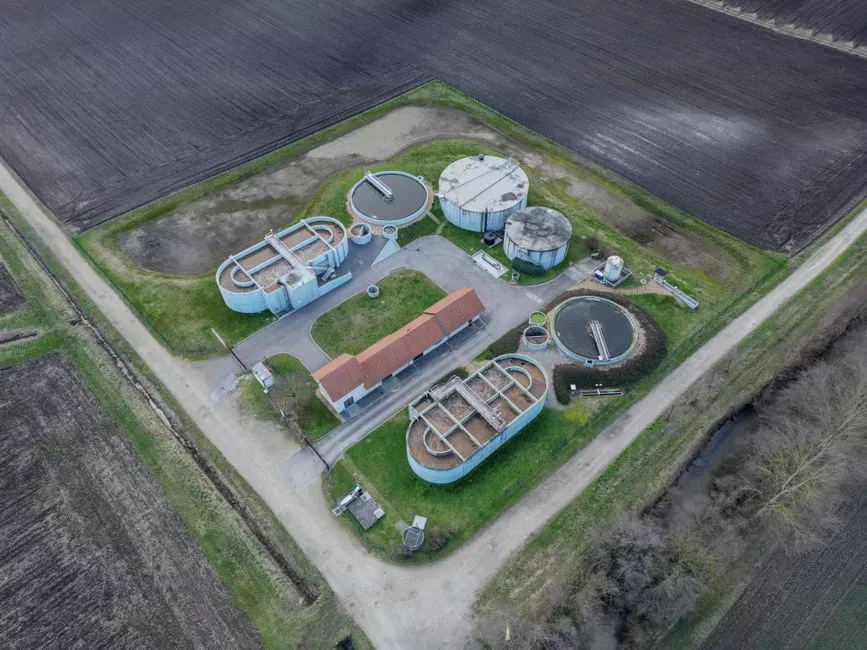
The choice is rarely either/or — most Chicago chemical plants run both, in series. Pick a dissolved air flotation system when the controlling pollutant is free or emulsified oil, FOG, or low-density suspended solids. DAF floats light-phase contaminants and is the standard pick for Part 419 refinery streams and Part 414 plastic and synthetic fiber lines. A/S ratio, hydraulic loading, and a consistent bubble size distribution are the design parameters to confirm against vendor data; see the pressure flotation system design criteria for 2026 for a working specification.
Pick a high-efficiency sedimentation tank (lamella clarifier) when the controlling pollutant is dissolved or dense suspended metals, or when footprint and chemical consumption drive CAPEX. Inclined-plate surface loading in the 20–40 m/h range cuts the tank footprint by roughly an order of magnitude versus an equivalent conventional clarifier, and sludge-recirculation flocculation reduces coagulant and flocculant dose. The DAF clarifier design criteria for 2026 cover the sizing math and the typical A/S and surface-loading ranges used in current vendor proposals.
| Decision axis | DAF | Lamella clarifier |
|---|---|---|
| Best for | Oil & grease, FOG, low-density TSS | Dissolved metals, dense TSS |
| Standard flow range (per HydropureWater catalog) | 4–300 m³/h, 13 standard models | Compact inclined-plate footprint |
| Surface/hydraulic loading | Confirm A/S ratio and hydraulic loading with vendor | 20–40 m/h on inclined plates |
| Typical placement | Upstream of metals precipitation | Downstream of chemical precipitation |
| Pairing | Run both in series for mixed oil-and-metals streams | |
2026 Cost Picture and Implementation Checklist for Chicago Plants
CAPEX scales with flow (m³/h) and pollutant loading. The line items that move the budget are equalization basin volume, DAF sizing, clarifier surface area, MBR membrane area, and the cost of a PLC-controlled automatic chemical dosing system. OPEX scales with the same two variables: coagulant and flocculant dose, MBR membrane replacement interval, sludge hauling, electricity for aeration and pumps, and the recurring cost of self-monitoring and POTW sampling. The right move on either number is to request a sized proposal from a vendor with the plant's composite sampling data in hand — rule-of-thumb figures do not survive a real influent matrix.
The cost of a single pass-through excursion almost always exceeds the cost of adequately sized equalization. Enforcement escalates from NPDES permit violation at the receiving POTW, to corrective-order litigation, to permit revocation and service disconnection under ordinances that mirror the West Chicago chain — reject the wastes, require pretreatment, or revoke the permit and disconnect service (per West Chicago pretreatment ordinance, accessed 2026). A single quarter of permit litigation and forced shutdown typically exceeds the entire installed cost of the pretreatment train.
Implementation checklist for 2026: (1) confirm the applicable categorical subpart; (2) request the local limits from the receiving POTW; (3) characterize influent with composite sampling; (4) size equalization first; (5) pair DAF with lamella clarifier for oil-plus-metals streams; (6) add biological polishing to hit COD/BOD; (7) install the sampling manhole per the local ordinance; (8) submit the BMR and discharge application before startup. Engineers in the Ohio Valley can compare against the parallel Cincinnati chemical plant pretreatment guide for cross-region validation.
Frequently Asked Questions
What pretreatment limits apply to chemical plants near Chicago?
Three layers govern every discharge: 40 CFR Part 403 general and specific prohibitions, the applicable federal categorical standard (typically 40 CFR Part 414, 415, 417, 419, or 433), and the local limits set by the receiving POTW's Control Authority — MWRDGC for most Chicago flows, or a satellite POTW for plants in DuPage, Lake, Will, Kane, or Kendall counties. The most stringent applicable limit controls.
Does my plant qualify as a Significant Industrial User?
An SIU is defined at 40 CFR 403.3(v) by three triggers: (1) subject to categorical pretreatment standards; (2) discharging 25,000 gpd or more of process wastewater; or (3) contributing a process waste stream making up 5% or more of the POTW's average dry-weather hydraulic or organic capacity. Chicago chemical plants almost always meet trigger (1).
What cyanide and pH limits should a Chicago chemical plant expect?
Satellite POTW ordinances such as West Chicago's cap cyanide at 0.30 mg/L discharge with a 0.025 mg/L receiving-water criterion, and pH limits typically run 6–9. MWRDGC-area programs enforce comparable caps. Confirm current values with the receiving POTW before engineering the train.
Can I use dilution to meet a numeric pretreatment limit?
No. The anti-dilution rule — explicit in ordinances like West Chicago's and rooted in 40 CFR Part 403 — prohibits using process water as a partial or complete substitute for adequate pretreatment. The only safe path is to engineer to the most stringent applicable limit and prove it with monitoring.
What documents does the receiving POTW require before discharge?
SIUs are typically required to submit a Baseline Monitoring Report (BMR) at categorical promulgation or new-source startup, a discharge application, a slug load control plan under 40 CFR 403.8(f), semi-annual periodic compliance reports due January 20 and July 20, and a sampling manhole on each separate discharge at the user's expense.