
Why Brackish Water RO Is the 2026 Workhorse for Pharmaceutical Water
Brackish water reverse osmosis treats feedwater in the 1,000–10,000 ppm TDS band—the salinity window between freshwater (<1,000 ppm) and seawater (~35,000 ppm)—at operating pressures above 200 psi, with two-stage systems routinely delivering 75–85% recovery and greater than 97% desalination (advancees.com BWRO product data, 2026). For a pharmaceutical utilities engineer, that TDS window is precisely where most inland borehole, river intake, and pre-treated reuse streams land after a clarifier or MBR, which is why BWRO has become the default feedwater producer for USP Purified Water and EP-grade process water. Global pharmaceutical wastewater discharge is reported at roughly 1.25 billion tons per year, with more than half discharged without adequate treatment; the 2026 procurement case for BWRO is to produce Purified Water while reclaiming condensate and process effluent (Newater pharmaceutical wastewater treatment reference, 2025).
The regulatory frame for a 2026 BWRO design includes USP <645> conductivity, USP <643> total organic carbon, EP monograph expectations for Purified Water, and FDA process-water guidance for actives manufacture. A two-stage BWRO permeate routinely clears the conductivity and TOC limits for compendial Purified Water when paired with a downstream mixed-bed polisher or EDI and a 0.2 µm microbial filter. WFI remains a downstream step: RO permeate is feed to a distillation or vapor-compression still, not a standalone WFI generator. The following sections detail the use of BWRO in feedwater production and reuse/recycle applications.
BWRO Design Parameters for Pharmaceutical Feedwater
A brackish water RO system is specified by the feedwater envelope it can accept, which is narrower than seawater RO but wider than freshwater RO. The operating window below consolidates the design parameters a pharma engineer needs to confirm a source water fits BWRO before specifying a vendor (advancees.com BWRO product data, 2026; Newater field data, 2025).
| Parameter | BWRO Design Window (Pharma) | Comment |
|---|---|---|
| Feed TDS | 1,000–10,000 ppm | Bracket typically cited as 3,000–10,000 ppm by equipment vendors and 1,000–10,000 ppm in operational guides |
| Operating pressure | >200 psi (typically 150–250 psi for thin-film composite brackish elements) | Lower than SWRO (800–1,200 psi) but higher than freshwater RO (75–150 psi) |
| Recovery (two-stage) | 75–85% | High-recovery skids (e.g., industrial RO units with up to 95% permeate recovery) push concentrate TDS past 10,000 ppm — flag for brine management |
| Flux | 15–25 LMH | Setpoint depends on feed temperature; verify against membrane vendor curves |
| SDI at RO inlet | <3 (15-min SDI) | Non-negotiable for pharma-grade uptime; targets quarterly CIP, not monthly |
| Feed pH (operation) | 6.5–7.5 | Avoid free chlorine; dechlorination via SBS dosing or activated carbon |
| Feed temperature | 10–35 °C | Higher temperature raises flux and lowers pressure; lower temperature raises pressure and CAPEX |
| Membrane chemistry | Anti-fouling thin-film composite, pH 2–12 CIP tolerant | Required for periodic alkaline/acidic clean-in-place |
| Free chlorine | <0.1 ppm | Oxidizer-tolerant feed must be reduced upstream or membrane warranty voids |
BWRO consumes 0.4–0.8 kWh/m³ of energy, sitting between freshwater and seawater RO requirements. For a pharma plant, a 100 m³/h BWRO train typically draws 40–80 kW at the design point, which is manageable if sited near the boiler house or process water room. The choice of high-recovery pump arrays and energy-recovery devices is a key factor during bid evaluation that impacts long-term CAPEX and OPEX.
Pretreatment Train That Protects the BWRO Membranes
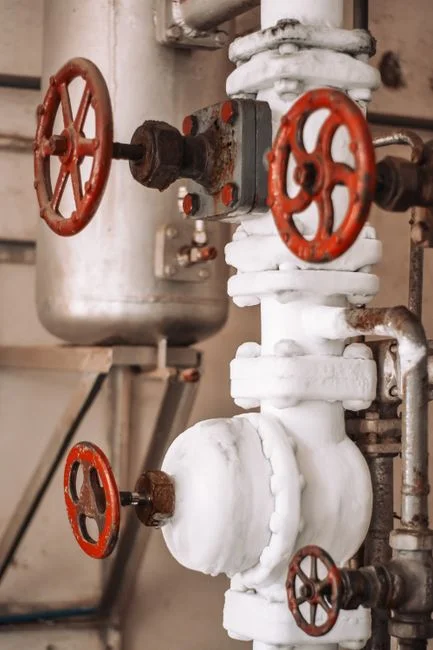
The pretreatment train determines whether a BWRO system runs for three years on a quarterly CIP schedule or experiences fouling within six months. Newater's field-validated coagulation–sand filtration–microfiltration–RO train for antibiotic pharmaceutical wastewater is the most cited real-world reference for a brackish pharma feed, consistently meeting the SDI <3 target (Newater, 2025). The validated sequence is: raw water pump → polyferric sulfate + polyacrylamide + NaOCl coagulation → mixer → settling tank → intermediate water tank → sand filter → scale inhibitor → 5 µm security filter → high-pressure pump → RO assembly.
Field removal performance, averaged across a two-month continuous test, was 86.6% TSS, 58.6% turbidity, and 32.9% COD by coagulation; 46.3% turbidity by sand filtration; and 98.4% turbidity, 23.2% COD, and 31.8% NH₃-N by microfiltration (Newater, 2025). This cascade drops silt and colloidal load well below the SDI 3 threshold before the high-pressure pump, which is critical for membrane longevity. A drop-in multi-media filter for SDI reduction before BWRO can replace the sand filter step, sized for 10–15 m/h filtration velocity on brackish feed, with anthracite over sand over garnet to capture both light and heavy particulates.
Pretreatment is not an area to economize; skipping the settling tank or substituting a single 5 µm cartridge for coagulation and sand filtration often results in a 30–50% flux decline within the first quarter. The scale inhibitor step (commonly an organophosphonate like HEDP or ATMP at 2–5 mg/L) protects second-stage elements from calcium carbonate and barium sulfate fouling when recovery exceeds 75%, and is non-negotiable for brackish feed with hardness above 200 ppm as CaCO₃.
From BWRO Permeate to USP and EP Purified Water
A two-stage BWRO system delivers greater than 99.9% salt rejection and greater than 99% TOC removal, clearing USP <645> conductivity (≤1.3 µS/cm at 25 °C) and USP <643> TOC (≤500 ppb) for Purified Water (Newater vitamin C condensate reuse case, 2025). The permeate typically arrives at 10–50 µS/cm; residual conductivity and silica are removed by a downstream mixed-bed deionizer or electrodeionization (EDI) unit, with a 254 nm UV polish for TOC reduction and a 0.2 µm final filter for microbial control. UV is sized at 30–40 mJ/cm² to deliver a 1-log TOC reduction, while the 0.2 µm filter provides seven-log bacterial retention per ASTM F838.
Condensate reuse provides a second value lever for BWRO in pharma. Evaporation and concentration steps in vitamin C, antibiotic, and API production account for 30–60% of total product steam consumption, yet much of this condensate is currently dumped as wastewater (Newater, 2025). A single-stage BWRO polish on the condensate stream—raw water → cooling pool (pH adjust) → security filter → primary RO → intermediate tank → secondary RO → produced water—converts a disposal cost into a feedwater credit. While RO permeate is an acceptable feedstock for WFI, the compendial route requires a downstream distillation or vapor-compression step, as RO alone cannot reliably meet microbial and endotoxin limits. Engineers specifying WFI should budget for both the BWRO feedwater train and the still; the RO link in this chain is the brackish RO unit producing compendial feedwater.
Reuse and Zero-Discharge: The Other Pharma Use of BWRO
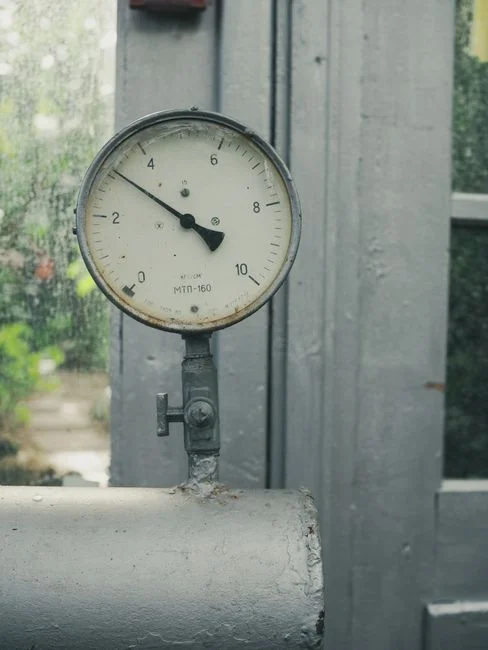
The same BWRO hardware used for borehole water also enables pharmaceutical process wastewater reuse. Newater's raw-drug (API) plant case replaces a legacy A/O + MBR train with MBR effluent → ozone → activated carbon → clear water tank → activated carbon filter → primary RO → intermediate tank → secondary RO → pure water tank, achieving ~85% reuse water for workshop service and ~15% concentrate routed to slag flushing for zero liquid discharge (Newater, 2025). Two-stage RO system recovery is reported at 85%, and the long-term water-yield decline entering the cleaning cycle is 8%—a useful maintenance benchmark when sizing redundancy and CIP chemical budgets.
The three realistic BWRO use cases in a 2026 pharma plant are brackish feed to USP Purified Water, condensate to boiler feed or wash water, and MBR effluent to ZLD reuse, each requiring specific RO configurations and recovery targets.
| Use case | Feed source | RO configuration | Recovery | Concentrate destination | Economic case |
|---|---|---|---|---|---|
| Brackish feed → USP Purified Water | Borehole or surface water, 1,000–10,000 ppm TDS | Two-stage BWRO + mixed-bed or EDI polish | 75–85% | Brine to sewer or brine management | Replaces purchased Purified Water / reduces raw water draw |
| Condensate → boiler/wash reuse | Process condensate, low TDS, high temperature | Single- or two-stage RO polish | 80–90% | Recycle to boiler or cooling | Recovers 30–60% of total product steam (Newater, 2025) |
| MBR effluent → ZLD reuse | Treated API process wastewater | Two-stage RO with anti-fouling membranes | ~85% | ~15% to slag flushing, achieving ZLD | Eliminates discharge, qualifies for water-reuse incentives |
Condensate-reuse typically offers the shortest payback because the water is already heated and on-site. The ZLD case requires a longer capital recovery period but addresses regulatory and ESG requirements. In both scenarios, the MBR + BWRO combination for pharma wastewater reuse is the industry reference, and the 85% recovery / 8% cleaning-cycle yield decline serves as the standard maintenance metric for service contracts.
2026 Selection Checklist and Operating Economics
Before signing a BWRO purchase order, the system design must be verified against a current source-water analysis. Key criteria include: feed TDS in the 1,000–10,000 ppm window; SDI at the RO inlet consistently below 3; free chlorine below 0.1 ppm; feed temperature 10–35 °C; and a recovery target of 75–85% on two-stage systems (advancees.com, 2026; Newater, 2025). If these parameters are not met, the engineer should anticipate non-standard RO element selection, an energy-recovery device on the concentrate, or additional brine management scope.
Operating costs for BWRO are typically $0.30–$0.80 per 1,000 gallons of permeate, driven by electrical energy for high-pressure pumps and quarterly CIP chemicals (advancees.com BWRO OPEX benchmark, 2026). Concentrate disposal is a significant factor: pushing recovery above 80% on brackish feed generates concentrate in the 5,000–15,000 ppm TDS range, requiring discharge permit amendments or evaporator scoping. Procurement differentiators for a pharma-grade skid include full PLC automation with trending, a built-in CIP skid sized for 1–2× vessel volume per stage, redundant high-pressure pumps, and GAMP 5-aligned documentation. A system meeting these criteria will typically provide 8–10 years of service between membrane replacements.
Frequently Asked Questions
What TDS range does a brackish water RO system treat in pharmaceutical plants?
A BWRO system is designed for feedwater in the 1,000–10,000 ppm TDS band, with most vendor data sheets citing 3,000–10,000 ppm as the brackish operating window (advance
Frequently Asked Questions
What TDS range is a brackish water RO system designed for in pharmaceutical plants?
Brackish Water Reverse Osmosis (BWRO) systems in pharmaceutical applications are typically engineered to handle feed water with a Total Dissolved Solids (TDS) concentration ranging from 1,000 mg/L to 10,000 mg/L. While standard tap water RO systems operate below 1,000 mg/L, BWRO systems utilize specialized polyamide thin-film composite membranes designed to withstand the higher osmotic pressures required to treat these saline concentrations.
Can a BWRO system produce USP Purified Water directly?
No, a BWRO system alone cannot produce USP Purified Water, as it does not meet the stringent microbiological and conductivity standards required by the United States Pharmacopeia. BWRO serves as a primary desalination step to reduce ionic load, but it must be followed by secondary purification technologies such as Electrodeionization (EDI) or multiple-effect distillation to achieve a conductivity of less than 1.3 µS/cm at 25°C and meet total organic carbon (TOC) limits.
What pretreatment is required before a BWRO in pharma applications?
Effective pretreatment for BWRO in pharmaceutical settings must include multi-media filtration or ultrafiltration (UF) to reduce the Silt Density Index (SDI) to below 3.0, preventing membrane fouling. Additionally, chemical conditioning—including anti-scalant dosing to prevent calcium carbonate and sulfate scaling, and sodium bisulfite dosing for dechlorination—is mandatory to protect polyamide membranes from oxidation and mineral precipitation.
What recovery rate can a two-stage BWRO achieve for pharmaceutical wastewater reuse?
A properly engineered two-stage BWRO system for pharmaceutical wastewater reclamation can typically achieve recovery rates between 75% and 85%. While higher recovery rates are technically possible, they are generally avoided in pharmaceutical applications to minimize the concentration polarization effect and the risk of mineral scaling on the membrane surface, which could compromise the integrity of the permeate quality.
How much does a brackish water RO system cost to operate per 1,000 gallons in 2026?
As of 2026, the operational expenditure (OPEX) for a pharmaceutical-grade BWRO system typically ranges from $1.80 to $3.50 per 1,000 gallons of permeate produced. This cost includes electricity for high-pressure pumping, replacement of cartridge filters, anti-scalant chemicals, membrane cleaning agents, and periodic membrane replacement, but excludes the capital amortization of the equipment and specialized waste brine disposal fees.