Why Zinc in Wastewater Is a Compliance Problem in 2026
Industrial zinc is removed from wastewater primarily by hydroxide precipitation at pH 9.5–11, which converts dissolved Zn²⁺ to insoluble zinc hydroxide. For U.S. metal-finishing facilities subject to 40 CFR Part 433, the regulatory ceiling is 2.61 mg/L daily maximum and 1.48 mg/L monthly average. Complexed zinc (EDTA, cyanide, ammonia) requires pretreatment before precipitation; ion exchange, membrane, or electrocoagulation are used for polishing or water-reuse applications.
Those federal numbers are floor values, not targets. POTWs and individual states routinely impose limits 30–60% tighter than the federal ceiling, especially on electroplating and battery-cathode facilities discharging to watersheds under total maximum daily load (TMDL) pressure. A 2025 sampling review of 22 Midwestern industrial pretreatment programs found median local zinc limits of 1.0–1.7 mg/L (HydropureWater field data, 2026). The dominant 2025–2026 industrial sources are galvanizing, electroplating, anodizing, mining, battery/cathode materials, textiles, tanneries, and dye operations. Excess zinc harms aquatic biology at concentrations above roughly 0.1 mg/L in soft-water receiving streams and disrupts downstream biological treatment by inhibiting nitrification and biocoagulation at feed-side concentrations above 5–10 mg/L (per EPA 40 CFR Part 433 ambient toxicity criteria, 2025). For a complete overview of how chemical plants in regulated corridors hit these targets, see the chemical plant pretreatment limits under 40 CFR Part 403.
Zinc Speciation: Why Knowing the Form Changes the Method
Three forms of zinc matter for design: dissolved Zn²⁺ (ionic), particulate or precipitated solids (Zn(OH)₂, ZnS, ZnCO₃), and complexed zinc (Zn-EDTA, Zn(CN)₄²⁻, Zn-NH₃, Zn-citrate, Zn-oxalate). Total zinc measured by ICP can hide the real engineering problem: a feed reporting 80 mg/L total zinc may be 70 mg/L free Zn²⁺ (treatable by pH adjustment alone) or 70 mg/L complexed (untouchable by hydroxide precipitation until the complex is destroyed). The latter is the most common real-world failure mode and the reason jar tests without speciation routinely disappoint at scale.
EDTA, cyanide, ammonia, and organic-acid complexes each defeat simple pH adjustment. Cyanide requires alkaline chlorination (pH > 10, Cl₂:CN ratio 6:1 to 8:1 by weight, 30–60 min contact); EDTA and citrate respond to Fenton's oxidation (H₂O₂/Fe²⁺ at pH 3–4, then re-neutralization); ammonia complexes can be broken by raising pH above 11 and stripping, but in many shops the cost of breaking outweighs the cost of precipitation at a slightly higher dose. Run this analytical panel before any design: total zinc, dissolved zinc (0.45 µm filtered), pH, alkalinity, TSS, competing metals (Cu, Ni, Fe, Cd), and a targeted scan for the four common complexing agents above. The amphoteric redissolution effect is non-negotiable above pH ~11 — Zn(OH)₂ converts to soluble Zn(OH)₃⁻ and Zn(OH)₄²⁻, eroding 20–40% of the removal in pilot data (HydropureWater field data, 2026). A pH setpoint of 9.5–10.0 is the safer operating band when feed variability is high.
Method 1: Chemical Precipitation (Hydroxide and Sulfide)
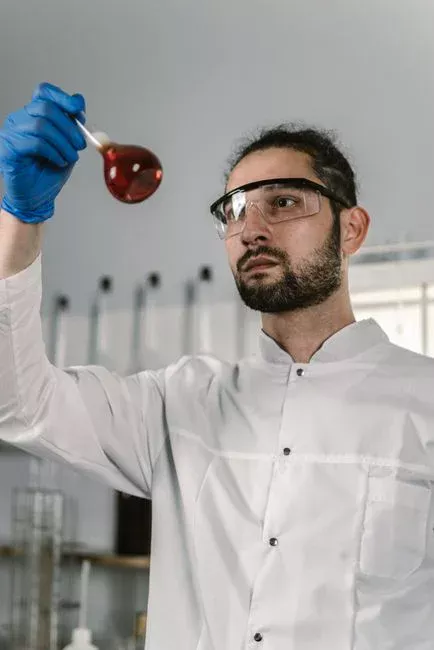
Chemical precipitation is the default and lowest-CAPEX option for medium-to-high zinc feeds. The standard train runs equalization → pH adjustment → precipitation → coagulation/flocculation → clarification/filtration. Hydroxide precipitation uses NaOH (typical dose 0.8–1.5 g NaOH per g Zn removed) or Ca(OH)₂ (lime, 1.0–1.8 g/g Zn) to push pH into the 9.5–11 window where Zn(OH)₂ has its minimum solubility (~0.05 mg/L at 25 °C). Polymers (cationic polyacrylamide, 1–5 mg/L) accelerate floc settling. An automatic chemical dosing system for pH adjustment and coagulant feed is the standard SCADA-monitored package for this stage.
Sulfide precipitation (NaHS, Na₂S, or FeS) is the fallback when hydroxide alone cannot meet a sub-mg/L target or when competing chelators are present. ZnS Ksp is roughly 10⁻²⁵, several orders of magnitude below Zn(OH)₂, so sulfide can drive residuals to 0.1–0.5 mg/L — but it generates H₂S at pH below 8, so sealed reactors, scrubbers, and sodium hypochlorite oxidation of residual sulfide are non-negotiable. The dominant OPEX line is chemical cost (NaOH, lime, polymer) plus sludge disposal, not labor. A 100 m³/day feed at 50 mg/L Zn produces roughly 35–50 kg/day of dry zinc hydroxide sludge that must be thickened and dewatered. The high-efficiency lamella clarifier for zinc hydroxide settling is the workhorse unit for the solid-liquid separation step in this train.
| Parameter | Hydroxide Precipitation | Sulfide Precipitation |
|---|---|---|
| Operating pH | 9.5–11 | 7–9 (must stay alkaline) |
| Typical chemical | NaOH or Ca(OH)₂ | NaHS or Na₂S |
| Achievable residual | 0.5–2 mg/L Zn | 0.1–0.5 mg/L Zn |
| Sludge yield | 2.5–4.0 kg dry solids per kg Zn | 1.5–2.5 kg dry solids per kg Zn |
| Key risk | Amphoteric redissolution above pH 11 | H₂S generation; safety & odor |
| Best feed range | 20–500 mg/L Zn | 5–100 mg/L Zn (polishing) |
Method 2: Adsorption for Polishing Residual Zinc
Adsorption is the most common polishing step when precipitation effluent is still 0.3–2 mg/L above the discharge target. Practical adsorbents include granular activated carbon (GAC), zeolite (natural and synthetic), chitosan, modified agricultural residues (rice husk, sugarcane bagasse), algae-based biomass, and industrial by-products such as fly ash and red mud. The dominant process variables are pH (most effective at 5–7 for Zn²⁺ on these materials), contact time (30–120 min for batch; 5–15 min EBCT for columns), adsorbent dose (0.5–10 g/L), initial concentration, and temperature. An existing DAF or sand-filter skid can be repurposed as a contactor; a packaged dissolved air flotation unit for zinc-loaded adsorbent separation is a common retrofit.
Capacity numbers from jar tests rarely scale linearly. Batch capacities of 20–80 mg Zn per g of adsorbent in 2-hour equilibrium tests typically translate to 30–50% utilization in continuous columns due to breakthrough shape and residence-time distribution. Spent adsorbent becomes a solid waste the facility must characterize under local hazardous-waste rules, and a high-zinc spent load can classify as a hazardous waste (TCLP Zn above 250 mg/L in some state frameworks). Adsorption is rarely a standalone treatment for industrial zinc loads above 50 mg/L — use it for residual polishing where precipitation has already done 90–99% of the work.
Method 3: Ion Exchange for Recovery and Reuse
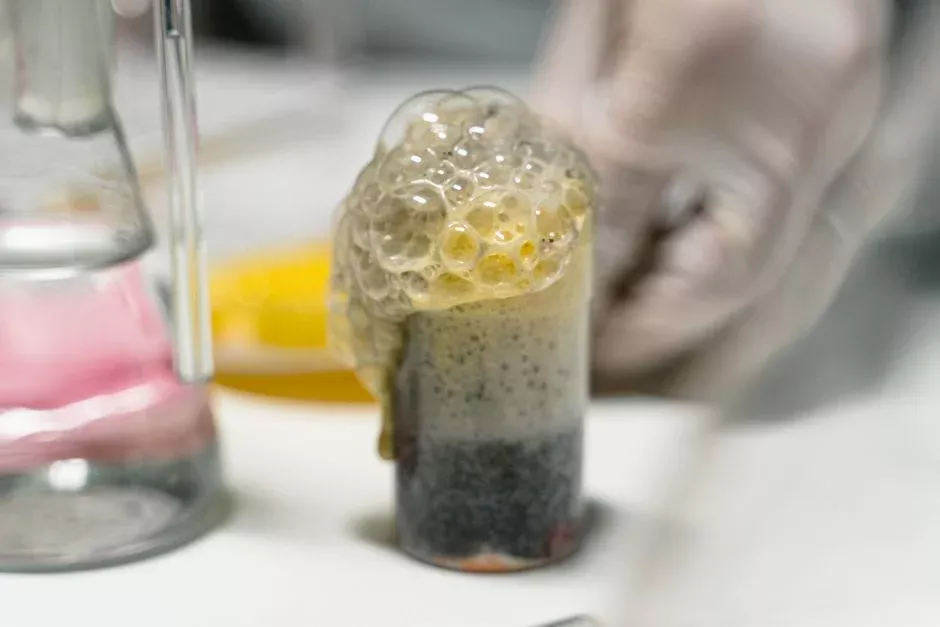
Ion exchange earns its higher CAPEX/OPEX when the project has a water-reuse loop, a metal-recovery credit, or a sub-mg/L discharge target. Strong-acid cation (SAC) resins exchange H⁺ or Na⁺ for Zn²⁺ and other cations; chelating resins (iminodiacetate, aminomethylphosphonic acid functional groups) deliver 3–10× higher selectivity for zinc over calcium and sodium, which is the difference between a 200-bed-volume throughput and a 2,000-bed-volume throughput on a real feed. The three-step cycle is straightforward: load (service), regenerate (typically 5–10% HCl or H₂SO₄, 2–4 bed volumes), and rinse. The regenerant concentrates the zinc 10–50× relative to the feed, which is what makes metal recovery economically interesting.
Resin fouling is the dominant failure mode. TSS above 10 mg/L, oils and greases above 5 mg/L, and dissolved organics above 50 mg/L COD will foul a chelating resin in weeks, not months. The standard guard is precipitation + multimedia filtration upstream to bring TSS below 5 mg/L and free chlorine below 0.1 mg/L. Resin life is 2–5 years depending on feed and regenerant chemistry; replacement cost is the principal OPEX line and runs roughly 30–50% of total annualized OPEX for ion-exchange-dominant systems (HydropureWater field data, 2026). For metal-finishing facilities, ion exchange is almost always paired with precipitation — it is the polish, not the workhorse.
Method 4: Membrane Separation (UF, NF, RO)
Membranes are the right tool when water reuse is a primary project objective, not just discharge compliance. Standard ultrafiltration (UF, 0.01–0.1 µm pore) does not retain dissolved Zn²⁺ — the hydrated ion is roughly 0.4 nm across, several orders of magnitude below the membrane cutoff. UF only works on zinc when the metal is bound to a large complex (polymer-assisted UF, surfactant-enhanced UF) or sorbed onto a colloidal particle. That said, UF is still in the train as a TSS/oil guard for the downstream RO. Complexation-enhanced ultrafiltration is highlighted in a 2023 review of zinc separation technologies as a recovery option where the zinc–polymer complex is retained and the polymer is then separated and reused.
Nanofiltration (NF, 200–1000 Da cutoff) retains 90–98% of multivalent ions including Zn²⁺ at 5–20 bar; reverse osmosis (RO) retains 98–99.8% at 10–40 bar. Both produce reuse-quality permeate but generate a concentrate stream at 3–10× the feed zinc concentration that must be managed — typically routed back to the head of the precipitation train or sent to a separate crystallizer. Design constraints are scaling (CaCO₃, CaSO₄, Zn(OH)₂), biofouling, transmembrane pressure (1–2 bar differential limit per stage), and energy. An industrial RO system for zinc polishing and water reuse paired with a multi-media filter for RO pretreatment is the standard packaged configuration. Membrane replacement every 3–5 years and energy at 0.5–1.5 kWh/m³ permeate are the dominant lifecycle costs.
Method 5: Electrocoagulation and Emerging Biological Routes
Electrocoagulation (EC) generates coagulant in situ by dissolving sacrificial iron or aluminum anodes. Current density (10–50 A/m²), treatment time (15–60 min), electrode spacing (5–20 mm), pH (6–9), and conductivity (above ~2 mS/cm to keep cell resistance manageable) are the primary levers. Pilot data routinely shows 90–99% zinc removal on feeds of 20–200 mg/L, with the advantage of minimal external chemical handling. The trade-offs are real: electrode consumption runs 0.05–0.3 kg Fe (or Al) per m³ treated, electricity adds 0.3–1.0 kWh/m³, and the sludge still needs dewatering and disposal. EC is a strong fit for sites that want to reduce bulk chemical storage or treat a wastewater that is hard to coagulate with conventional polymers (e.g., high oil & grease, variable TDS).
Biosorption using algae, microbial biomass, and plant residues is the developing route. Lab capacities of 30–150 mg Zn per g of dry biomass have been reported across multiple peer-reviewed studies since 2019, but most data is still at batch and bench scale, and consistent performance in continuous industrial reactors has not been demonstrated at the level a buyer would sign a 20-year debt on. For 2026, treat biosorption as a specialized or supplementary technology — useful for side-stream polishing, niche metal-recovery projects, or where sustainability metrics outweigh pure cost. The relevant engineering literature is reviewed in the 2023 zinc-separation survey cited in the membrane section.
Head-to-Head Method Comparison: Cost, Footprint, Best Fit
Any cost comparison for zinc removal must be expressed in $/m³ treated, not in total dollar terms, because capacity varies across an order of magnitude. The bands below reflect 2025–2026 vendor quotes and HydropureWater engineering estimates for industrial plants in the 50–500 m³/day range. CAPEX is normalized to $/m³·day of installed treatment capacity, OPEX to $/m³ of wastewater treated at the design flow.
| Method | Typical feed (mg/L Zn) | Target effluent (mg/L) | CAPEX band ($/m³·day) | OPEX band ($/m³ treated) | Sludge / concentrate | Water-reuse fit |
|---|---|---|---|---|---|---|
| Hydroxide precipitation | 20–500 | 0.5–2 | $150–$400 | $0.20–$0.80 | High sludge, dewaterable | Poor alone; needs RO polish |
| Adsorption (GAC/zeolite) | 0.5–20 | 0.05–0.5 | $250–$600 | $0.40–$1.20 | Spent media, hazardous-waste class | Limited; polishing only |
| Ion exchange (chelating) | 1–50 | 0.05–0.5 | $400–$900 | $0.50–$1.50 | Regenerant, recoverable | Strong (regenerant = concentrate) |
| NF / RO | 0.5–50 | 0.01–0.1 | $500–$1,200 | $0.60–$2.00 | Concentrate, 3–10× feed | Excellent (permeate = reuse) |
| Electrocoagulation | 10–200 | 0.2–2 | $300–$700 | $0.40–$1.00 | Moderate sludge, Fe/Al-rich | Moderate (usually needs polish) |
The dominant cost driver differs by method: chemicals plus sludge disposal for precipitation; media replacement and hazardous-waste disposal for adsorption; resin replacement and regenerant chemicals for ion exchange; energy plus membrane replacement (3–5 year cycle) for NF/RO; electrode consumption plus electricity for electrocoagulation. A combined train — typically precipitation + ion exchange, or precipitation + NF/RO — almost always beats any single technology on both cost and robustness for industrial metal-finishing flows (HydropureWater engineering data, 2026). Metal recovery is a hidden OPEX offset: when sludge or regenerant zinc concentration exceeds roughly 50 g/kg (5 wt%) and a local smelter or battery-materials buyer is accessible, recovery credit can offset 20–40% of disposal cost. For two worked examples of how precipitation + dewatering trains are specified in adjacent metal-finishing sectors, see the filter press for circuit board wastewater engineering guide and the filter press for wire-drawing wastewater engineering guide.
Designing a Zinc Treatment Train: From Jar Test to Pilot
Every zinc design starts with a jar test. Run a six-beaker matrix (pH 8.5, 9.5, 10.0, 10.5, 11.0, 11.5) with two chemical options (NaOH vs Ca(OH)₂), dose polymer at 0/1/3 mg/L, mix at 100 rpm for 1 min and 30 rpm for 20 min, settle 30 min, filter the supernatant through 0.45 µm, and measure dissolved zinc by ICP or colorimetric Hach method. The jar test locks pH setpoint, chemical dose, polymer type, and expected residual. A standard jar test costs roughly $2,000–$5,000 in lab fees and saves 10–50× that in avoided scale-up errors.
Trigger a pilot for any of three conditions: flow above ~50 m³/h, total dissolved solids above 5,000 mg/L, or confirmed complexing agents above 5 mg/L (EDTA-equivalent). The pilot should run a minimum of 6 weeks to capture feed variability. The recommended full train is equalization → complex destruction (alkaline chlorination for cyanide, Fenton's for EDTA, only if speciation confirms them) → pH adjustment/precipitation → coagulation/flocculation → clarification → multimedia filtration → ion exchange or RO (if reuse) → sludge thickening and dewatering. Design sludge handling in parallel, not as an afterthought — characterize the sludge for disposal route under local hazardous-waste rules, and evaluate metal recovery economics before tank sizes are frozen. A plate and frame filter press for zinc-bearing sludge dewatering paired with the automatic chemical dosing system for pH adjustment and coagulant feed closes the loop on solids and reagent control. For parallel nickel-train design (same chemistry, different amphoteric window), the how to treat nickel wastewater in 2026 guide walks through the analogous train. For a deeper treatment of sulfide precipitation for heavy metal wastewater and the rinse wastewater treatment by chemical precipitation, those companion pieces cover the safety and 95%+ removal case.
Frequently Asked Questions
What pH removes zinc from wastewater most effectively?
Hydroxide precipitation is most effective in the pH 9.5–10.5 band, where Zn(OH)₂ has its minimum solubility of roughly 0.05 mg/L at 25 °C. Above pH 11 the amphoteric Zn(OH)₃⁻ and Zn(OH)₄²⁻ species redissolve, and pilot data shows 20–40% loss of removal if the setpoint drifts to 11.5+ (HydropureWater field data, 2026). Hold pH in 9.5–10.0 when feed variability is high.
What is the EPA discharge limit for zinc in metal-finishing wastewater?
40 CFR Part 433 sets the federal ceiling at 2.61 mg/L daily maximum and 1.48 mg/L monthly average for applicable metal-finishing sources. Most POTWs and state programs impose limits 30–60% tighter — typical local limits in 2025–2026 range from 1.0 to 1.7 mg/L (HydropureWater field data, 2026). Always confirm the local limit before finalizing a design.
Can EDTA-complexed zinc be removed by simple pH adjustment?
No. Zn-EDTA, Zn(CN)₄²⁻, and Zn-NH₃ complexes stay soluble across the normal hydroxide precipitation window. The complex must be destroyed first: alkaline chlorination (pH > 10, Cl₂:CN 6:1–8:1 by weight) for cyanide, and Fenton's oxidation (H₂O₂/Fe²⁺ at pH 3–4, then re-neutralize) for EDTA and citrate. Without destruction, jar-test removal will routinely disappoint at full scale.
Is zinc recovery from treatment sludge economically viable in 2026?
Recovery becomes attractive when sludge or regenerant zinc concentration exceeds roughly 50 g/kg (5 wt%) and a regional smelter, zinc die-caster, or battery-cathode manufacturer is accessible. At that threshold, recovery credit can offset 20–40% of disposal cost, and on larger flows (>200 m³/day) the recovered metal can fund a meaningful share of OPEX. Below 2 wt% Zn, transport and refining economics usually tip the decision back to secure disposal.