How Chemical Precipitation Removes Heavy Metals from Rinse Wastewater
Chemical precipitation removes 95%+ of heavy metals like Cr(VI) from rinse wastewater, achieving effluent concentrations as low as 0.18 mg/L—meeting EPA’s 40 CFR 433 limits for electroplating discharges. The process converts dissolved metals into insoluble hydroxides or sulfides via reagents (e.g., lime, sodium hydroxide), followed by sedimentation or filtration. Combined with electrodialysis (CP-ED), it also eliminates residual ions (Na+, Cl−) from precipitants, enabling water recycling. Key parameters: pH 8.5–11 for hydroxide precipitation, 30–60 minutes reaction time, and 10–30% sludge volume reduction with optimized dosing.
For an industrial engineer managing an electroplating line, the primary challenge is the transition of metallic ions from a stable aqueous state to a solid phase that can be physically removed. Hydroxide precipitation is the industry standard for treating rinse streams containing Chromium (Cr), Nickel (Ni), Copper (Cu), and Zinc (Zn). The fundamental reaction follows the formula: M²⁺ + 2OH⁻ → M(OH)₂↓. For trivalent chromium, the reaction Cr³⁺ + 3OH⁻ → Cr(OH)₃↓ occurs most efficiently at a pH range of 9.5–10.5 (HydropureWater field data, 2025). If the influent contains hexavalent chromium (Cr6+), a preliminary reduction step using sodium metabisulfite at pH 2.0–3.0 is mandatory to convert it to Cr3+ before precipitation can occur.
Sulfide precipitation offers an alternative for facilities facing ultra-low discharge limits or dealing with chelated metals. By using reagents like sodium sulfide (Na₂S) or sodium hydrosulfide (NaHS), engineers can achieve significantly lower residual metal concentrations due to the extremely low solubility of metal sulfides. For instance, the solubility product constant (Ksp) of Cadmium Sulfide (CdS) is 1.0 × 10⁻²⁸, compared to 2.5 × 10⁻¹⁴ for Cadmium Hydroxide (Cd(OH)₂). Sulfide precipitation typically operates at a near-neutral pH (7.0–9.0), reducing the need for extensive pH adjustment post-treatment.
Effective precipitation requires precise hydraulic control. Rapid mixing (coagulation) requires a G-value of 500–1000 s⁻¹ to ensure reagent dispersion, followed by slow-mix flocculation to build settleable solids. According to EPA technical fact sheets, a reaction time of 30–60 minutes is necessary for hydroxide formation, while sulfide kinetics are faster, often completing in 15–30 minutes. Clarifiers must be sized for a hydraulic retention time (HRT) of 2–4 hours to ensure that fine precipitates do not carry over into the effluent.
| Metal Ion | Precipitation Type | Optimal pH Range | Residual Concentration (mg/L) | Solubility Product (Ksp) |
|---|---|---|---|---|
| Chromium (Cr³⁺) | Hydroxide | 9.5 – 10.5 | < 0.10 | 6.3 × 10⁻³¹ |
| Nickel (Ni²⁺) | Hydroxide | 10.0 – 11.0 | < 0.15 | 2.0 × 10⁻¹⁵ |
| Copper (Cu²⁺) | Hydroxide | 9.0 – 10.3 | < 0.05 | 4.8 × 10⁻²⁰ |
| Cadmium (Cd²⁺) | Sulfide | 7.0 – 9.0 | < 0.01 | 1.0 × 10⁻²⁸ |
| Zinc (Zn²⁺) | Hydroxide | 9.0 – 10.0 | < 0.10 | 1.2 × 10⁻¹⁷ |
Reagent Selection Guide: Lime vs. Sodium Hydroxide vs. Sulfide for Rinse Wastewater
Reagent selection dictates both the operational expenditure (OPEX) and the physical footprint of the sludge handling system. Hydrated lime (Ca(OH)₂) remains the most cost-effective reagent, priced between $0.10 and $0.30 per kg. Beyond cost, lime acts as a coagulant aid, producing a high-density sludge with 10–15% solids content. This results in 30–50% less total sludge volume compared to sodium hydroxide (NaOH), which produces a voluminous, gelatinous sludge that is difficult to dewater. However, lime requires PLC-controlled chemical dosing skids for precise reagent injection to prevent mechanical scaling in reactors and piping.
Sodium hydroxide (NaOH) is preferred for smaller rinse flows or systems where automated control is paramount. While more expensive ($0.40–$0.80/kg), NaOH is highly soluble and reacts faster (15–30 min) than lime. The trade-off is the sludge quality; NaOH-generated sludge often contains only 15–25% solids after pressing, leading to higher disposal costs, which typically range from $150 to $300 per ton depending on local hazardous waste regulations. For high-volume electroplating lines, the transition from NaOH to lime can often result in a 20% reduction in annual OPEX through sludge cost savings alone.
Sulfide reagents (Na₂S, NaHS) are specialized tools for polishing or treating complexed rinse water. While the reagent cost is high ($1.00–$2.50/kg), the removal efficiency for mercury, lead, and silver is unmatched. The primary engineering constraint for sulfide systems is safety; the reactor must be strictly maintained at a pH above 7.0 to prevent the evolution of toxic Hydrogen Sulfide (H₂S) gas (OSHA PEL 10 ppm). Many modern facilities utilize a dual-stage approach: hydroxide precipitation for bulk metal removal followed by sulfide polishing to meet stringent "non-detect" discharge permits.
| Reagent | Avg. Cost ($/kg) | Sludge Volume (L/kg Metal) | Reaction Speed | Main Disadvantage |
|---|---|---|---|---|
| Lime (Ca(OH)₂) | $0.10 – $0.30 | 15 – 25 | Moderate (45 min) | Scaling & Dusting |
| Caustic (NaOH) | $0.40 – $0.80 | 40 – 60 | Fast (15 min) | High Disposal Cost |
| Sulfide (Na₂S) | $1.00 – $2.50 | 5 – 12 | Very Fast (<15 min) | H₂S Gas Risk |
Engineering Specs for Chemical Precipitation Systems in Rinse Wastewater
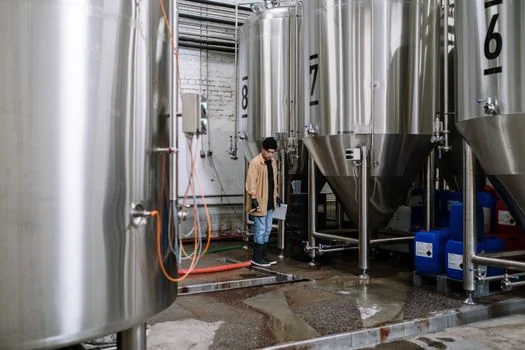
Sizing a chemical precipitation system requires balancing the volumetric flow rate of the rinse tanks with the reaction kinetics of the specific metal contaminants. Standard industrial systems are designed for flow rates of 5–50 m³/h, though modular configurations can scale to 200 m³/h for large-scale semiconductor or automotive finishing plants. The reactor volume must provide a minimum HRT of 30–60 minutes for hydroxide systems. For example, a facility with a 10 m³/h rinse flow requires a minimum effective reactor volume of 5–10 m³ to ensure complete metal complex breakage and crystal growth.
The separation of the precipitate is the most common point of failure in system design. Clarifier surface loading rates must be conservative: 0.8–1.2 m/h for hydroxide-based sludge and slightly higher (1.2–1.8 m/h) for the denser sulfide precipitates. Many engineers now specify lamella clarifiers for compact sludge separation in rinse wastewater treatment, as they provide up to 10x the settling area of a conventional circular clarifier in the same footprint. This is particularly critical in urban manufacturing centers where floor space is at a premium.
Sludge generation is a critical metric for procurement teams. Lime-based systems typically yield 5–15 kg of dry solids per m³ of treated rinse water, whereas NaOH systems can reach 20 kg/m³ due to the higher water retention of the floc. When designing the dewatering stage, engineers should assume a filter press cycle time of 4–6 hours to achieve a cake dryness of 30–35% (HydropureWater engineering standards, 2024).
| Flow Rate (m³/h) | Reactor Volume (m³) | Clarifier Area (m²) | Sludge Output (kg/day)* | Power Demand (kW) |
|---|---|---|---|---|
| 5 | 2.5 – 5.0 | 4.2 – 6.3 | 150 – 300 | 3.5 |
| 20 | 10.0 – 20.0 | 16.7 – 25.0 | 600 – 1200 | 8.0 |
| 50 | 25.0 – 50.0 | 41.7 – 62.5 | 1500 – 3000 | 15.0 |
*Assumes average metal loading of 50-100 mg/L in influent.
Compliance Benchmarks: Meeting EPA, EU, and China Discharge Limits for Rinse Wastewater
Compliance managers must navigate a tiered regulatory environment where removal efficiency is the only safeguard against heavy fines. In the United States, the EPA 40 CFR 433 (Metal Finishing Point Source Category) sets the daily maximum for Total Copper at 3.38 mg/L and Total Nickel at 3.98 mg/L. Chemical precipitation comfortably meets these limits, typically achieving residual concentrations below 0.5 mg/L. For Chromium (VI), the limit is 1.0 mg/L; however, standard precipitation can reach 0.18 mg/L, providing a significant safety margin for operators.
The European Union’s Industrial Emissions Directive (2010/75/EU) and associated BAT (Best Available Techniques) conclusions are more stringent, often requiring Total Nickel and Total Chromium to be below 0.5 mg/L. In these jurisdictions, sulfide precipitation or the addition of an organosulfide polisher is frequently necessary. China’s GB 21900-2008 (Emission Standard of Pollutants for Electroplating) represents the global peak of stringency for "Table 3" regions, where Cr(VI) must be ≤0.1 mg/L and Nickel ≤0.1 mg/L. Meeting these standards requires a hybrid approach, such as chemical precipitation followed by RO systems for polishing rinse wastewater after chemical precipitation.
| Pollutant | EPA 40 CFR 433 (mg/L) | EU 2010/75/EU (mg/L) | China GB 21900 (mg/L) | CP Capability (mg/L) |
|---|---|---|---|---|
| Total Chromium | 2.77 | 0.50 | 0.50 | 0.15 – 0.30 |
| Chromium (VI) | 1.00 | 0.10 | 0.10 | 0.05 – 0.18 |
| Nickel (Ni) | 3.98 | 0.50 | 0.10* | 0.10 – 0.40 |
| Copper (Cu) | 3.38 | 0.50 | 0.30 | 0.05 – 0.20 |
*Requires advanced polishing or CP-ED hybrid systems.
Cost Analysis: CapEx, OPEX, and ROI for Chemical Precipitation Systems
The financial justification for a chemical precipitation system is built on its low CapEx relative to membrane-based alternatives. A standard 5–50 m³/h system, including the reaction tanks, lamella clarifier, and PLC-controlled chemical dosing skids, typically ranges from $50,000 to $200,000. For facilities in high-compliance zones (like China or the EU), adding an electrodialysis (ED) module for ion removal adds approximately $30,000–$80,000 but enables up to 90% water reuse, significantly shortening the payback period.
OPEX is dominated by reagent consumption and sludge disposal, totaling $0.80–$2.50 per m³ of treated water. Reagents account for 40–60% of this cost ($0.30–$1.50/m³), while hazardous sludge disposal adds $0.20–$0.50/m³. Labor and maintenance are relatively low, contributing $0.10–$0.30/m³. The ROI is driven primarily by three factors: the avoidance of regulatory fines (which can reach $50,000 per violation in the U.S.), the reduction in fresh water intake costs, and the lower cost of sludge disposal compared to untreated hazardous liquid waste.
| Technology | CapEx (50 m³/h) | OPEX ($/m³) | Water Recovery | Payback (Years) |
|---|---|---|---|---|
| Chemical Precipitation | $150k – $200k | $0.80 – $1.50 | 0% (Discharge) | 1.5 – 2.5 |
| CP + Electrodialysis | $230k – $280k | $1.20 – $2.00 | 80% – 90% | 2.0 – 3.0 |
| Ion Exchange (IX) | $180k – $250k | $2.00 – $4.00 | 95% | 3.0 – 4.5 |
| MBR System | $300k – $450k | $1.50 – $3.00 | 90% | 4.0 – 5.5 |
When to Choose Chemical Precipitation vs. MBR or Ion Exchange for Rinse Wastewater
Selecting the correct technology depends on the influent metal concentration and the desired end-use of the water. Chemical precipitation is the "workhorse" solution, best suited for rinse streams with high metal loads (>50 mg/L) and where pH adjustment is easily integrated into existing plant infrastructure. It is the most robust choice for meeting EPA/EU discharge limits at the lowest possible CapEx. For facilities also managing nitrogen-rich streams, engineers may consider chemical precipitation for ammonia removal in rinse wastewater as a pre-treatment step.
In contrast, MBR systems for low-metal, high-organic rinse wastewater requiring reuse-quality effluent are superior when the wastewater contains significant organic cleaning agents or surfactants (common in semiconductor rinse). MBR provides a much higher quality effluent (<1 mg/L metals and low BOD/COD) but at a higher operational cost and sensitivity to metal toxicity. Ion Exchange (IX) should be reserved for low-flow applications (<10 m³/h) where the recovery of precious metals like gold or silver is economically viable, or where ultra-low discharge limits (<0.05 mg/L) are mandated.
A simple decision framework: If the goal is compliance with standard discharge permits at the lowest cost, choose Chemical Precipitation. If the goal is 100% closed-loop water recycling in a high-tech facility, choose a hybrid CP-RO or CP-ED system. If the goal is selective recovery of high-value metals from a dilute stream, Ion Exchange is the optimal path.
Troubleshooting Common Issues in Chemical Precipitation Systems
Operational uptime is often threatened by three common issues: incomplete precipitation, excessive sludge volume, and reactor scaling. Incomplete precipitation is almost always a result of pH drift or inadequate mixing. Operators should perform daily jar tests to confirm the optimal set point, as rinse water chemistry can fluctuate with production cycles. If metals remain in the effluent, check the G-value of the rapid mixer; a value below 500 s⁻¹ will fail to provide the energy needed for effective reagent-metal contact.
Excessive sludge volume is typically caused by over-dosing reagents. While a stoichiometric excess of 1.1–1.3x is necessary for lime, exceeding 1.5x provides no additional removal benefit and simply increases disposal costs. If scaling in the reactors becomes a maintenance burden, switching from lime to NaOH can alleviate the issue, though at a higher reagent cost. Alternatively, dosing small amounts of polyacrylate-based antiscalants can extend the time between acid washes (typically 5% citric acid every 3–6 months).
Poor clarifier performance, characterized by "pin floc" carryover, can be mitigated by optimizing the flocculant dose. Adding 0.5–2.0 mg/L of high-molecular-weight polyacrylamide (PAM) can significantly increase settling rates. If the clarifier is hydraulically overloaded, consider diverting a portion of the flow to a buffer tank or upgrading to a lamella-style internal pack to increase effective settling area. For phosphorus-heavy streams, refer to chemical precipitation for phosphorus removal in industrial wastewater for specific dosing strategies.
Frequently Asked Questions
What is the optimal pH for Cr(VI) removal via chemical precipitation?
The process requires two stages: first, reduce Cr(VI) to Cr(III) at pH 2.0–3.0 using a reducing agent like sodium metabisulfite. Second, raise the pH to 8.5–10.5 to precipitate Cr(OH)₃. Standard hydroxide precipitation alone cannot remove Cr(VI) without this reduction step.
How much sludge does chemical precipitation generate per m³ of rinse wastewater?
Generation rates vary by reagent: 5–15 kg of dry solids/m³ for lime, 8–20 kg/m³ for NaOH, and 3–10 kg/m³ for sulfide reagents. These figures assume a typical electroplating rinse concentration of 50–100 mg/L of total metals.
Can chemical precipitation alone meet EPA discharge limits for electroplating?
Yes. Chemical precipitation typically achieves 95% removal of Cr(VI), resulting in an effluent of ~0.18 mg/L, which is well below the EPA’s 1.0 mg/L limit for 40 CFR 433 compliance. However, for stricter local limits, a polishing step may be required.
What are the alternatives to chemical precipitation for rinse wastewater?
The primary alternatives are MBR (for high-organic streams), ion exchange (for selective metal recovery or ultra-low limits), and reverse osmosis (for high-purity water reuse). Each has a higher CapEx than chemical precipitation.
How do I reduce reagent costs in chemical precipitation?
Switching from NaOH to lime can reduce reagent costs by 50% and sludge disposal costs by 30%. Additionally, implementing automated PLC-controlled chemical dosing skids ensures that reagents are not wasted through over-dosing.