Ammonia-Nitrogen Wastewater Treatment by Chemical Precipitation: 2026 Engineering Specs, Cost Models & Zero-Risk Compliance
Chemical precipitation via struvite (magnesium ammonium phosphate, MAP) removes 90–95% of ammonia-nitrogen (NH₄⁺-N) from industrial wastewater at pH 9 and a Mg²⁺:NH₄⁺-N:PO₄³⁻-P molar ratio of 1:1:1.1. This method is ideal for high-strength streams (NH₄⁺-N >500 mg/L) like pharmaceutical, coking, and fertilizer wastewater, achieving EPA’s 10 mg/L discharge limit in a single 15-minute reaction step. Costs range from $0.80–$2.50/m³ treated, depending on reagent sourcing and sludge disposal. Unlike biological systems that require days of retention time, chemical precipitation offers a compact footprint and immediate scalability for plants facing sudden compliance pressure or high-load shocks (HydropureWater field data, 2025).
Why Chemical Precipitation Outperforms Alternatives for High-Strength Ammonia Wastewater
Selecting the correct nitrogen removal strategy depends primarily on the influent concentration and the available facility footprint. For industrial engineers managing high-strength streams—such as 7-ACA pharmaceutical mother liquor or coal gasification wastewater—biological nitrification-denitrification often fails due to ammonia toxicity inhibiting microbial activity. Chemical precipitation, specifically struvite crystallization, bypasses this biological inhibition by converting soluble ammonium into a stable, solid mineral.
Compared to air stripping, which requires massive towers and significant energy for air-to-liquid ratios of 2000:1 or higher, chemical precipitation operates in standard stirred-tank reactors with a retention time of only 15 to 30 minutes. Ion exchange, while effective for polishing, becomes cost-prohibitive at concentrations above 500 mg/L due to rapid resin exhaustion and high regeneration frequencies. Chemical precipitation fills the gap for "mid-to-high" range concentrations where other methods become physically or economically unviable.
| Treatment Method | Optimal Influent NH₄⁺-N | Removal Efficiency | Retention Time | OPEX (per m³) |
|---|---|---|---|---|
| Chemical Precipitation | >500 mg/L | 90–95% | 15–30 min | $0.80–$2.50 |
| Air Stripping | 500–2,000 mg/L | 85–90% | 1–2 hours | $1.20–$3.00 |
| Biological (N/D) | <200 mg/L | 95–98% | 6–24 hours | $0.50–$1.50 |
| Ion Exchange | 10–100 mg/L | 90–95% | Variable | $2.00–$5.00 |
While biological treatment offers lower OPEX for municipal-strength waste, the CapEx required for massive aeration basins and the risk of "washout" during toxic spikes make chemical precipitation the preferred choice for industrial risk management. the ability to implement MAP pyrolysate recycling can reduce reagent costs by up to 40% (per industry benchmarks), narrowing the price gap with biological methods.
Struvite Precipitation Mechanism: How Mg²⁺, NH₄⁺, and PO₄³⁻ Form Insoluble MAP
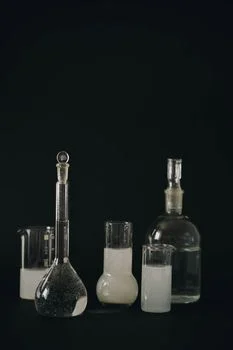
The core of this process is the controlled crystallization of magnesium ammonium phosphate hexahydrate (MgNH₄PO₄·6H₂O), commonly known as struvite. The reaction follows a strict stoichiometric path: Mg²⁺ + NH₄⁺ + PO₄³⁻ + 6H₂O → MgNH₄PO₄·6H₂O↓. For the reaction to proceed efficiently, the ion product of the three species must exceed the solubility product (Ksp), which is approximately 7.08 × 10⁻¹⁴ at 25°C.
pH optimization is the most critical operational lever. At pH levels below 8.0, the ammonium ion (NH₄⁺) is the dominant species, but the phosphate exists primarily as H₂PO₄⁻, which does not readily form struvite. Conversely, at pH levels above 10.0, magnesium begins to precipitate as Mg(OH)₂, which consumes the magnesium reagent without removing any nitrogen. Engineering data confirms that a pH of 9.0 ± 0.2 provides the optimal balance where all three ions are available in their reactive states. In pharmaceutical applications, such as post-precipitation COD removal for pharmaceutical wastewater, maintaining this pH narrow-band is essential to prevent secondary contamination.
The process flow typically involves: 1. Influent equalization to stabilize NH₄⁺ concentrations. 2. pH adjustment using NaOH or Ca(OH)₂. 3. Precise dosing via a PLC-controlled chemical dosing system for precise struvite precipitation. 4. Rapid mixing for nucleation followed by slow mixing for crystal growth. 5. Sedimentation where the heavy struvite crystals settle at a rate of 3–5 m/h.
Optimal Operating Parameters for Maximum NH₄⁺-N Removal
Design engineers must calibrate four primary variables to ensure the system meets discharge limits without wasting expensive reagents. While the theoretical molar ratio is 1:1:1, real-world industrial wastewater contains competing ions (like calcium or carbonates) that interfere with crystallization. Therefore, a slight excess of phosphate is standard practice.
1. Molar Ratio: A ratio of Mg²⁺:NH₄⁺-N:PO₄³⁻-P = 1:1:1.1 is recommended. The 10% excess of phosphate ensures that the limiting reagent is the ammonia-nitrogen, pushing the reaction toward 95% completion. However, exceeding 1.1 risks high residual phosphate in the effluent, which may trigger secondary compliance issues with local EPA phosphorus limits.
2. pH Control: pH 9.0 is the "sweet spot." At this level, the solubility of struvite is at its minimum. Deviating to pH 8.5 can drop removal efficiency to 75%, while pushing to pH 10.5 increases sludge volume significantly due to magnesium hydroxide formation.
3. Mixing Dynamics: A two-stage mixing approach is required. Initial flash mixing (G > 300 s⁻¹) for 1–2 minutes initiates nucleation. This must be followed by 15 minutes of flocculation-style mixing (G ≈ 50–70 s⁻¹). Over-mixing after crystals have formed will shear the struvite, resulting in "pin-floc" that escapes the sedimentation tank.
| Parameter | Engineering Specification | Impact of Deviation |
|---|---|---|
| Molar Ratio (Mg:N:P) | 1 : 1 : 1.1 | Low P = Residual N; High P = Effluent P violations |
| Operating pH | 9.0 ± 0.2 | <8.5 = Soluble MAP; >10.0 = Mg(OH)₂ waste |
| Reaction Time | 15–20 Minutes | <10 min = Incomplete crystallization |
| Mixing Speed (G-value) | 50–70 s⁻¹ (Flocculation) | >100 s⁻¹ = Crystal shearing |
| Temperature | 20°C – 30°C | >40°C = Increased MAP solubility |
Reagent Selection: MgCl₂ vs. MgO vs. Seawater for Cost and Efficiency
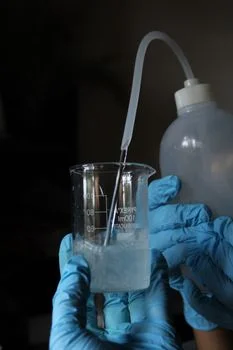
Procurement managers often face a trade-off between reagent cost and reaction speed. Magnesium chloride (MgCl₂·6H₂O) is the industry standard for high-performance systems because it dissolves almost instantly, allowing for precise dosing and high removal rates. However, it is the most expensive magnesium source.
Magnesium oxide (MgO) is a cost-effective alternative but presents significant engineering challenges. Because MgO is poorly soluble, it requires a longer reaction time and vigorous mixing to convert to Mg²⁺. In large-scale operations, using MgO can reduce reagent costs by 30% but may require a reactor volume 50% larger than one using MgCl₂. For coastal facilities, seawater can be used as a "free" magnesium source (containing ~1,300 mg/L Mg²⁺), though the high volume required increases the hydraulic load on the plant and introduces chlorides that may corrode stainless steel components.
| Reagent Source | Cost per kg N Removed | Removal Efficiency | Pros/Cons |
|---|---|---|---|
| MgCl₂·6H₂O | $1.20 | 95% | Fast dissolution; High chloride byproduct |
| MgO (Magnesia) | $0.80 | 90% | Low cost; Slow reaction; High sludge volume |
| Seawater | $0.50 | 85% | Lowest cost; Requires large reactor volumes |
| Mg(OH)₂ Slurry | $0.90 | 92% | Safe handling; Moderate reaction speed |
In a case study involving 7-ACA pharmaceutical wastewater (Top 3), the combination of MgCl₂ and 85% H₃PO₄ achieved 95% NH₄⁺-N removal with residual phosphate levels consistently below 5 mg/L, proving that high-grade reagents are often more economical when effluent compliance penalties are factored into the ROI.
Sludge Handling and Byproduct Recovery: Turning Struvite into a Revenue Stream
Unlike traditional chemical sludge (like alum or ferric sludge), struvite is a valuable crystalline mineral. It contains nitrogen, phosphorus, and magnesium in a slow-release form, making it a premium fertilizer. Struvite sludge typically settles well, reaching 5–10% solids in the sedimentation underflow. Its density (1.7 g/cm³) and relatively large particle size (50–200 μm) make it ideal for mechanical dewatering.
To maximize the value of the byproduct, engineers should use a high-efficiency filter press for struvite sludge dewatering. This equipment can produce a filter cake with 45–55% solids content. This cake can be air-dried and sold to fertilizer blenders for $200–$500 per ton. Under EPA 40 CFR Part 503, struvite is generally classified as non-hazardous, simplifying its transport and sale compared to biological sludge.
For facilities looking to close the loop, CPRT (Chemical Precipitation Recycle Technology) is an emerging trend. By heating the struvite at 110°C in a NaOH solution (Top 2), the MAP decomposes into a pyrolysate that can be recycled back into the influent. This "pyrolysate recycling" recovers both the magnesium and phosphate, reducing the need for virgin chemical dosing by up to 40% and drastically lowering the total volume of sludge for disposal.
Cost Breakdown: CapEx, OPEX, and ROI for a 100 m³/h System
A 100 m³/h system treating 1,000 mg/L ammonia-nitrogen requires a robust investment in both equipment and chemicals. While the initial CapEx is higher than a simple air stripper, the reliability and footprint advantages often justify the cost for high-risk industrial sites.
CapEx Estimates ($120K–$250K total):
- Reaction Tanks (316L Stainless Steel): $50,000
- Dosing Skids (Mg, P, NaOH): $30,000
- Lamella clarifier for struvite crystal separation: $40,000
- Sludge Dewatering System: $30,000
- PLC Automation and Sensors: $20,000
OPEX Breakdown ($0.80–$2.50/m³): Chemical reagents represent the largest share of OPEX, typically 50–60%. For a system treating 1,000 mg/L NH₄⁺-N, reagent costs average $1.50/m³. Energy consumption is low ($0.15/m³) as the process relies on simple mixing and gravity settling. Labor costs are minimized through the use of an PLC-controlled chemical dosing system, requiring only periodic calibration and reagent replenishment.
| Cost Component | Annual Expense (100 m³/h) | % of Total OPEX |
|---|---|---|
| Chemical Reagents | $1,314,000 | 65% |
| Electricity/Energy | $131,400 | 6% |
| Maintenance & Parts | $87,600 | 4% |
| Labor | $175,200 | 9% |
| Sludge Disposal/Revenue | ($43,800) [Revenue] | -2% |
The ROI for high-strength wastewater is typically 3 to 5 years. This is calculated based on the avoidance of environmental non-compliance fines and the reduced footprint compared to biological systems which would require massive land acquisition and civil works.
Compliance Thresholds: Meeting EPA, EU, and China GB Standards for Ammonia Discharge
Regulatory limits for ammonia-nitrogen are tightening globally. In the United States, the EPA sets limits under 40 CFR Part 417 (Pharmaceuticals) and Part 420 (Iron and Steel), often mandating a 10 mg/L daily maximum for direct discharge. The European Union’s Urban Waste Water Directive (91/271/EEC) maintains similar 10–15 mg/L thresholds. However, China’s GB 18918-2002 Class IA standard is among the strictest, requiring 5 mg/L in sensitive watersheds.
One challenge with chemical precipitation is the "phosphate trade-off." To reach 5 mg/L NH₄⁺-N, you must dose excess phosphate, which may result in effluent PO₄³⁻-P levels of 10–20 mg/L—far exceeding the typical 0.5 mg/L limit. To solve this, a two-stage approach is used: 1. Stage 1: Struvite precipitation at pH 9.0 to remove 90% of ammonia. 2. Stage 2: Ferric chloride or PAC dosing at pH 7.0 to precipitate residual phosphate. This dual-stage approach was successfully implemented in India’s CPCB ammonia discharge standards and compliance strategies, allowing plants to meet both nitrogen and phosphorus limits simultaneously.
| Region/Standard | NH₄⁺-N Limit | PO₄³⁻-P Limit | Precipitation Strategy |
|---|---|---|---|
| EPA (USA) | 10 mg/L | 1.0 mg/L | Single stage + Polishing |
| EU Directive | 10–15 mg/L | 1.0–2.0 mg/L | MAP + Alum dosing |
| China GB Class IA | 5 mg/L | 0.5 mg/L | Two-stage Staged Precipitation |
Troubleshooting Guide: 5 Common Problems and How to Fix Them
Even a well-designed system can experience performance drift. Use this checklist to diagnose and resolve operational issues in real time.
1. Low NH₄⁺-N Removal (<80%): Usually caused by pH drift or incorrect molar ratios. Check the pH probe calibration immediately. If pH is below 8.5, the struvite will not form. Verify the concentration of your magnesium reagent; if using MgO, ensure the mixing is vigorous enough to facilitate dissolution.
2. High Residual Phosphate (>5 mg/L): This indicates an over-dosing of H₃PO₄ or poor crystal settling. Reduce the P:N ratio slightly toward 1.05:1. If settling is the issue, add 1–2 mg/L of an anionic polyacrylamide (PAM) flocculant to the effluent of the reaction tank to aggregate fine crystals.
3. Scaling in Reactors and Pipes: Struvite is naturally "sticky." If pH exceeds 9.5, scaling will accelerate on sensor tips and pipe bends. Implement a weekly "acid wash" using a 5% citric acid solution or install an automated pH control system that maintains a strict 9.0 setpoint.
4. Poor Sludge Settling: If the sludge blanket in the lamella clarifier for struvite crystal separation is rising, the crystal size is likely too small. This is caused by over-mixing. Reduce the RPM of your flocculator or consider "seeding" the reactor with 5% recycled struvite sludge to provide nucleation sites for larger crystal growth.
5. High Reagent Costs: If OPEX is exceeding budget, evaluate the purity of your reagents. Switching from technical-grade MgCl₂ to a magnesium-rich industrial byproduct or seawater can slash costs. Alternatively, investigate CPRT (pyrolysate recycling) to recover and reuse reagents from the produced sludge.
Frequently Asked Questions
What is the best pH for ammonia nitrogen removal by chemical precipitation? The optimal pH for struvite (MAP) precipitation is 9.0 ± 0.2. At this level, the solubility of magnesium ammonium phosphate is minimized, ensuring 90–95% removal efficiency. Operating below pH 8.5 results in incomplete crystallization, while pH levels above 10.0 cause magnesium to wastefully precipitate as magnesium hydroxide.
Can chemical precipitation reach EPA discharge limits for ammonia? Yes. Chemical precipitation can achieve effluent NH₄⁺-N concentrations below 10 mg/L, meeting most EPA and EU discharge standards. For stricter limits, such as China’s Class IA (5 mg/L), a two-stage process or a secondary polishing step (like ion exchange or biological treatment) may be required to handle residual concentrations.
What are the main reagents used in struvite precipitation? The primary reagents are a magnesium source (MgCl₂, MgO, or Mg(OH)₂) and a phosphate source (H₃PO₄ or NaH₂PO₄). Sodium hydroxide (NaOH) is also used for pH adjustment. MgCl₂ is favored for its fast reaction time, while MgO is selected for lower-cost operations despite its slower dissolution rate.
Is struvite sludge hazardous? No, struvite (magnesium ammonium phosphate) is generally classified as a non-hazardous mineral and is widely used as a slow-release fertilizer. It contains essential nutrients (N, P, Mg) and has significant commercial value, often selling for $200–$500 per ton, which helps offset wastewater treatment OPEX.
How does chemical precipitation compare to air stripping for ammonia removal? Chemical precipitation is superior for high-strength wastewater (>500 mg/L) due to its smaller footprint and lack of air pollution issues. Air stripping requires massive towers and significant energy to heat the water or move air, and it merely transfers ammonia from liquid to air, requiring a secondary "scrubber" to capture the gas.