What Memphis Fabricated Metals Wastewater Actually Looks Like in 2026
A Memphis-area stamping, machining, or fabrication shop rarely runs one uniform wastewater stream — it runs two co-existing ones, and that fact drives the entire equipment decision. The first stream is oily machine coolant and parts-washer wastewater, loaded with tramp oil, stamping lubricants, and emulsified semi-synthetic cutting fluids at 100–2,000 mg/L oil & grease. The second is metal-rich rinse water, carrying swarf, fines, stamping draw compounds, and the metal hydroxide floc produced when pH adjustment precipitates dissolved metals at 500–5,000 mg/L TSS. pH swings from 4 to 11 during batch dumps are routine, and any plant running a stainless passivation line may also discharge hexavalent chrome-bearing rinse water, which carries its own categorical ceiling.
Both streams ultimately have to clear the federal categorical standards at 40 CFR Part 433 Metal Finishing — daily maximum oil & grease 52 mg/L, lead 0.69 mg/L, cadmium 0.69 mg/L, total chromium 2.77 mg/L, nickel 3.98 mg/L, zinc 2.61 mg/L (per 40 CFR §433.13). In practice, the MLGW Industrial Pretreatment Program and the TDEC KPDES-equivalent discharge permit run tighter than the federal categorical numbers on TSS and O&G for Significant Industrial Users, so a plant engineer should plan for the local number, not the federal ceiling. The right unit depends on which of the two sub-streams dominates: oil/grease-heavy feeds favor dissolved air flotation, while metal-fines and hydroxide-floc feeds favor gravity or lamella clarification. For more on how a parallel decision plays out in mining-influenced flows, see the mining wastewater DAF vs clarifier 2026 guide.
DAF vs Clarifier: How Each Technology Actually Separates Solids
The two technologies attack fundamentally different physics, which is why no single unit wins on every stream. A dissolved air flotation (DAF) unit saturates a side stream with air at 60–90 psi, then releases it through needle valves to generate 20–80 micron micro-bubbles (per DAF Corp's published FC Maximizer spec) that attach to oil droplets and pre-flocculated fines and float them to the surface for skimming. A gravity clarifier relies on Stokes-law settling — denser particles drop to a sludge bed while clarified water overflows a peripheral launder. EPA's Process Design Manual for Suspended Solids Removal (1975) cites 600–1,000 gpd/ft² overflow rates for primary settling, 800–1,200 gpd/ft² for secondary, and 2–4 gpm/ft² for DAF — a 5–10× higher loading rate, which is why DAF tanks are so much smaller for a given flow.
The lamella plate clarifier is a gravity unit with inclined plates at 55–60° that compress the effective settling distance, allowing surface loading of 20–40 m/h per the HydropureWater high-efficiency sedimentation tank spec and roughly 1/5–1/10 the footprint of a conventional circular clarifier. The selection logic that matters most for fabricated metals: DAF struggles with dense metal fines (specific gravity > 2.5 do not attach efficiently to bubbles) while clarifiers struggle with emulsified oils (specific gravity near 1.0, residence times of 1–2 hours simply do not settle them). That mismatch is the entire reason a hybrid often beats either unit alone.
| Parameter | Dissolved Air Flotation | Gravity Clarifier | Lamella Plate Clarifier |
|---|---|---|---|
| Separation mechanism | Micro-bubble flotation (20–80 μm) | Gravity settling (Stokes law) | Inclined-plate settling (55–60°) |
| Surface loading | 2–4 gpm/ft² (EPA, 1975) | 600–1,000 gpd/ft² primary | 20–40 m/h (lamella spec) |
| Best target contaminant | Oils, grease, emulsified coolant, light floc | Dense metal fines, hydroxide sludge | Metal hydroxide floc, post-DAF polish |
| Typical footprint (100 gpm) | ~50–80 ft² | ~250–400 ft² | ~40–70 ft² |
| Sludge consistency | 2–4% (DAF Corp) | 1–2% | 1–2% |
Removal Performance Benchmarks for Each Contaminant Class

Match your influent numbers to the right column and you can predict your compliance margin. On oily coolant, the DAF Corp FC Maximizer is rated for 92–98% TSS removal and supports a 50 ppm effluent target from 2,000 ppm loading with coagulant aid — the 90–95% oil & grease removal figure that Ecologix documents on analogous food streams applies to tramp oil in a metalworking parts washer. On metal hydroxide floc, a lamella clarifier delivers 85–92% TSS removal, with <20 ppm effluent achievable with polymer dosing (per the HydropureWater high-efficiency lamella clarifier spec). A conventional circular clarifier without chemical aid lands at 70–85% TSS on the same feed, and pushes to roughly 90% with flocculant but at 5–10× the footprint.
For chrome, nickel, and zinc — precipitated as hydroxides at controlled pH 9–9.5 — gravity or lamella clarification after chemical precipitation is the workhorse step. DAF alone rarely drops total metals to 40 CFR Part 433 limits without that upstream precipitation stage. The cross-reference that matters for compliance: DAF effluent on FOG typically clears the 52 mg/L daily maximum with chemical aid, while clarifier effluent on TSS typically lands at 20–50 mg/L after polymer dosing, well below a 60 mg/L monthly average metal-finishing ceiling that most MLGW permits apply. For guidance on the metal-removal side of the train, see the HydropureWater DAF system and the HydropureWater high-efficiency lamella clarifier product pages.
| Contaminant class | DAF removal | Lamella clarifier removal | Conventional clarifier removal | 40 CFR Part 433 ceiling |
|---|---|---|---|---|
| Oil & grease (coolant) | 90–95% | 50–70% (poor) | 40–60% (poor) | 52 mg/L daily max |
| TSS (metal fines / floc) | 70–85% | 85–92% | 70–85% (90% w/ floc) | ~60 mg/L monthly avg |
| Total chromium (post-precip.) | 80–90% | 85–95% | 80–90% | 2.77 mg/L |
| Nickel (post-precip.) | 80–90% | 85–95% | 80–90% | 3.98 mg/L |
| Zinc (post-precip.) | 80–90% | 85–95% | 80–90% | 2.61 mg/L |
Memphis Compliance Fit: MLGW, TDEC, and 40 CFR Part 433
Most Memphis fabricators discharge to the MLGW sanitary sewer under the Memphis Light, Gas and Water Industrial Pretreatment Program, which incorporates the 40 CFR Part 433 metal-finishing categorical standards and may run local limits tighter than the federal ceiling. TDEC, through its KPDES-equivalent industrial pretreatment authority, inspects Significant Industrial Users on the same basis — typically 24-hour composite sampling for TSS, O&G, and the heavy-metal panel. Both DAF and lamella clarifier are accepted technologies under the EPA Process Design Manual for Suspended Solids Removal (1975) and remain in current EPA wastewater treatability guidance, so neither is exotic to a control authority reviewer. What the local authority wants to see is a defensible design basis: influent characterization, jar-test or pilot data, and a chemistry program that holds at peak flow.
For a 2026 capex commitment in the 50–500 gpm range, recommend a 90-day on-site jar test or pilot trailer before sign-off. Mobile DAF pilot units (WesTech) and bench-scale lamella testing from HydropureWater's lab can both validate the chosen configuration against the local control authority's expectations and the actual seasonal swings in your coolant and rinse streams — a step that pays back in avoided non-compliance risk long before it pays back in operating savings.
2026 Cost and Footprint Comparison for a 50–500 gpm Memphis Plant
The 50–500 gpm envelope is the realistic sizing band for a mid-size Memphis stamping, machining, or fabrication plant; equipment must be sized for batch dumps from parts washers that can 2–3× the average flow. The 2026 equipment-only capex band (USD, FOB supplier) lands roughly as follows: circular clarifier $80k–$300k, lamella clarifier $120k–$450k, and packaged DAF $200k–$900k, with the spread driven by stainless vs. carbon construction, automation, and flow rating. Skidded mobile DAF units (per the WesTech mobile DAF spec) are a lower-CAPEX option for sub-100 gpm flows or for pilot validation prior to permanent installation.
OPEX is where the decision actually moves. DAF requires consistent coagulant and polymer spend, typically 15–25% above clarifier OPEX for chemical dosing alone, but the trade is that DAF float sludge runs at 2–4% dry solids (DAF Corp) versus 1–2% for clarifier underflow, which roughly halves sludge hauling cost per pound of dry solids removed. The lamella clarifier cuts tank area to roughly 1/5–1/10 of a conventional unit of equal flow — a decisive constraint in older Memphis industrial buildings where the equipment room is already small. A DAF-primary + lamella-polishing hybrid adds roughly $150k–$400k over single-unit capex but delivers the most defensible compliance margin for plants with both sub-streams. Don't forget to size the automatic PLC-controlled chemical dosing skid to peak flow — coagulant underfeed is the single most common cause of failed compliance in 2026 inspections, as documented in our DAF clarifier troubleshooting guide.
| Configuration (50–500 gpm) | Capex band (USD, 2026) | Footprint | OPEX driver | Sludge consistency |
|---|---|---|---|---|
| Circular clarifier | $80k–$300k | Largest (250–400 ft² @ 100 gpm) | Polymer + hauling | 1–2% |
| Lamella clarifier | $120k–$450k | ~1/5–1/10 of circular | Polymer + hauling | 1–2% |
| Packaged DAF | $200k–$900k | Compact (50–80 ft² @ 100 gpm) | Air, coagulant, polymer (+15–25%) | 2–4% |
| DAF + lamella hybrid | + $150k–$400k over single unit | Sum of both | Combined chemicals + hauling | 2–4% float + 1–2% underflow |
| Skidded mobile DAF pilot | Lease or sub-$200k purchase | Trailer-mounted | Pilot-scale chemicals | 2–4% |
Decision Framework: Which Unit Should Your Memphis Plant Choose?
Use the influent numbers you already have. If oil & grease > 200 mg/L or your dominant stream is machine coolant and parts-washer overflow, choose DAF as the primary, with a small lamella polishing stage if metal fines also exceed 500 mg/L TSS. If TSS > 1,000 mg/L and oil & grease < 100 mg/L, with pH-controlled metal hydroxide precipitation already in place, choose a lamella clarifier as the primary for lower OPEX and a tighter footprint in your existing building. If both streams coexist in roughly equal measure and your plant is generating chrome-, nickel-, or zinc-bearing rinses, choose a DAF-primary, lamella-polishing hybrid with chemical dosing controlled by an automatic PLC-controlled chemical dosing skid sized to peak flow.
Always pair the unit with that dosing skid — coagulant/polymer underfeed is the single most common cause of failed compliance in 2026 inspections, not the separator hardware itself. Before signing a capex commitment, run a 90-day pilot with a mobile DAF trailer (WesTech reference) or an on-site jar test program; the payback is typically 6–12 months in avoided non-compliance risk alone, and the data is exactly what MLGW expects to see in a capacity review. For a parallel decision path on a similar Mid-South site, the Lyman fabricated metals 2026 selection guide walks through the same logic. If the limiting metal in your stream is zinc, the zinc removal 2026 guide walks through the chemistry; for nickel, see the nickel removal 2026 guide.
2026 Hybrid Configuration: DAF + Lamella as the New Default
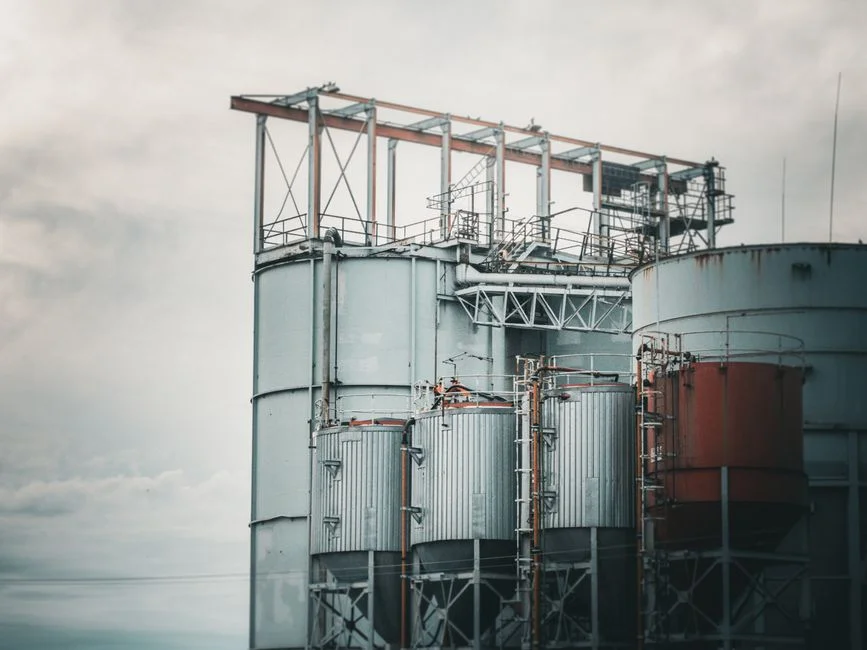
The 2026 best practice for a Memphis-area fabricator running both oily coolant and metal-bearing rinses is a DAF-primary, lamella-polishing hybrid, not a binary choice. The DAF handles 90–95% of the oil, grease, and floating coolant load — the floating fraction that would otherwise overwhelm a clarifier's surface and ride straight through to the sewer. The lamella clarifier polishes the DAF underflow, capturing entrained metal fines and any post-precipitation hydroxide floc, and protects against 40 CFR Part 433 excursions during batch dumps when influent spikes. Chemical dosing — coagulant to the DAF stage, flocculant to the lamella — is the single control lever that ties the two units together; pair it with an automatic PLC-controlled dosing skid for 24/7 compliance stability.
On the sludge side, DAF float at 2–4% solids (DAF Corp) plus clarifier underflow at 1–2% can be co-thickened on a small plate-and-frame filter press to 18–25% dry cake for economical hauling — a meaningful OPEX line for a plant generating 1–3 tons of dry sludge per week. The hybrid configuration also gives the local control authority a single, documented process train to review rather than two parallel systems to reconcile. A comparable hybrid on a different Mid-South site is laid out in the Powhatan fabricated metals DAF vs clarifier guide.
Frequently Asked Questions
What is the main difference between DAF and a clarifier for fabricated metals wastewater?
DAF floats oil, grease, and emulsified coolant to the surface on 20–80 micron micro-bubbles, achieving 90–95% oil & grease removal and 92–98% TSS removal on oily streams. A gravity or lamella clarifier settles dense metal fines and hydroxide floc under Stokes-law settling, typically hitting 85–92% TSS removal at lower chemical cost but failing on emulsified oils because their specific gravity (~1.0) does not settle in a practical residence time.
Which is cheaper to operate, DAF or a lamella clarifier, for a 100 gpm Memphis shop?
For a 100 gpm flow, a lamella clarifier typically runs 15–25% lower OPEX than a comparably sized DAF because DAF requires consistent coagulant and polymer dosing plus an air-saturation system. The trade is that DAF float sludge lands at 2–4% solids (DAF Corp) versus 1–2% for clarifier underflow, which roughly halves hauling cost per pound of dry solids — a meaningful offset for plants generating 1–3 tons of dry sludge per week.
Will MLGW and TDEC accept a DAF or lamella clarifier for 40 CFR Part 433 metal finishing compliance?
Yes. Both DAF and lamella clarifier are accepted technologies under the EPA Process Design Manual for Suspended Solids Removal (1975) and remain in current EPA wastewater treatability guidance. The Memphis Light, Gas and Water Industrial Pretreatment Program and the TDEC KPDES-equivalent authority expect a defensible design basis — influent characterization, jar-test or pilot data, and a chemistry program that holds at peak flow — and either technology can clear the 40 CFR Part 433 daily maximum of 52 mg/L oil & grease and 2.77 mg/L total chromium when sized and operated correctly.
Should a Memphis metal finisher choose DAF, clarifier, or a hybrid in 2026?
For a plant running both oily coolant and metal-bearing rinse streams, the 2026 best practice is a DAF-primary, lamella-polishing hybrid with PLC-controlled chemical dosing. Equipment-only capex lands at roughly $350k–$1.3M for the 50–500 gpm envelope, and a 90-day pilot before capex sign-off typically pays back in 6–12 months from avoided non-compliance risk alone.