Why Nickel Removal Matters in 2026
To remove nickel from industrial wastewater, plants need a dedicated unit—precipitation, ion exchange, electrocoagulation, adsorption, or RO—because activated sludge has low Ni²⁺ affinity. Design targets are sewer discharge at a few mg/L Ni or closed-loop reuse after polish. Hydroxide precipitation runs at pH 9.0–10.0; selective resins or sacrificial electrodes handle competing co-metals.
Global nickel production reached 2.7 million tonnes in 2019 and continues to climb with battery cathode and stainless-steel demand (LePan 2020, cited in Chemosphere 2021). That growth expands Ni-laden wastewater from electroplating shops, metal-finishing lines, and precursor plants. Nickel is a confirmed carcinogen and a leading cause of allergic contact dermatitis in exposed workers (Cempel and Nikel 2006, cited in Springer 2022), so discharge rules keep tightening. Earlier industry summaries often cited a WHO industrial effluent ceiling near <3 mg/L Ni; WHO's drinking-water guideline value is 0.07 mg/L (70 µg/L) as retained in the 2021 assessment (WHO nickel fact sheet, 2022). According to US EPA 40 CFR Part 433 pretreatment standards for existing metal-finishing sources (PSES), Nickel (T) is limited to 3.98 mg/L maximum for any 1 day and 2.38 mg/L as a monthly average. Many POTWs tighten those numbers with local limits. China's GB 25467 rules and EU Industrial Emissions Directive expectations also push plants toward sub-1 mg/L discharge or reuse. Conventional activated-sludge systems have low affinity for Ni²⁺ (Padmavathy 2008, cited in Chemosphere 2021), so biological polishing alone is unreliable. Ni-resistance genes also co-occur with antibiotic-resistance genes (Chemosphere 2021), so a loose biological tail can widen a plant's antimicrobial-resistance footprint. Nickel control therefore needs chemistry-aware equipment, not a side effect of BOD/COD treatment.
Nickel Chemistry in Wastewater: What You Must Know Before Choosing a Process
Nickel speciation is pH-driven and unforgiving for any treatment train. Below roughly pH 8, Ni²⁺ stays soluble as the free hexaaqua ion. Hydroxide precipitation dominates between pH 9 and 10, with the theoretical solubility minimum near pH 9.5. Above pH 11, amphoteric redissolution as nickelate ions pulls Ni back into solution and wrecks removal efficiency. In the Springer 2022 electrocoagulation (EC) study, the window that drove 99.9% Ni removal from synthetic feed was a current density of 10 mA/cm², a pH of 9.2, and an inter-electrode spacing of 4 cm. That same reactor only achieved 99.4% on real plating wastewater—a 0.5-point gap you should bake into vendor guarantees. Mixed-metal finishing streams make life harder: Cu²⁺, Zn²⁺, and Cr³⁺ compete for the same hydroxide lattice, chelating resins, and sorption sites. A "selective" Ni process can become first-come-first-served once co-ions rise above a few tens of mg/L. The Chemosphere 2021 review is explicit that Ni²⁺ needs a selective adsorbent because the ion has low affinity for conventional pathways. That is why ion exchange, EC, and tailored biosorbents outperform generic activated sludge or lime softening for trace polishing.
| Parameter | Operating window | Engineering implication |
|---|---|---|
| pH for Ni(OH)₂ precipitation | 9.0–10.0 (minimum solubility near 9.5) | Hold pH in band; avoid pH > 11 to prevent redissolution |
| EC current density (Springer 2022) | 10 mA/cm² with Zn electrodes | Anchor pilot trials at this density before scaling |
| EC electrode spacing (Springer 2022) | 4 cm | Tighter spacing raises current efficiency but complicates scaling |
| Synthetic vs real EC removal gap | 99.9% vs 99.4% | Discount vendor quotes by ~0.5 percentage points for real wastewater |
| Common competing ions | Cu²⁺, Zn²⁺, Cr³⁺ | Drive choice toward selective resin or EC with sacrificial Zn/Fe anodes |
| WHO industrial effluent ceiling | <3 mg/L Ni | Sets the floor for any discharge-bound design |
Most plants we size for plating and battery-precursor wastewater hold precipitation pH at the lower end of 9.0–9.5 when sludge haulage costs dominate. Raise toward 9.5–10.0 only when residual soluble Ni after settling still misses the permit. Keep the WHO <3 mg/L Ni row in the table as the historical design floor many vendors still quote, while anchoring US metal-finishing compliance to the EPA Part 433 PSES figures above.
The Five Main Technologies to Remove Nickel from Wastewater
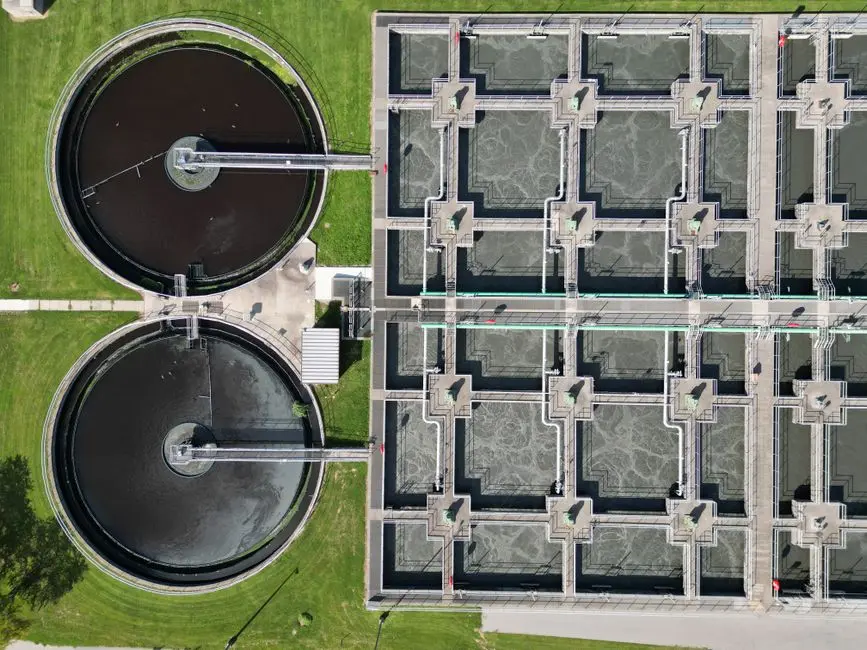
Five technologies carry the load in 2026: chemical precipitation, ion exchange, electrocoagulation, adsorption, and reverse osmosis. Each section below pairs mechanism, operating window, and a 2022–2023 removal number you can put on a vendor scorecard.
Chemical precipitation. Raising pH to 9–10 with NaOH or hydrated lime drives Ni²⁺ into Ni(OH)₂, which settles as a dense hydroxide sludge. At optimized pH and dose, removal lands in the 95–99% range from typical electroplating feeds. The reactor is simply an agitated tank feeding a HydropureWater lamella clarifier for nickel hydroxide settling. The trade-off is sludge volume: every kilogram of Ni precipitated drags down 3–5 kg of dry hydroxide solids. That sludge must be dewatered and shipped to a hazardous-waste facility in most jurisdictions.
Ion exchange. Selective cation or chelating resins (iminodiacetic, aminomethylphosphonic) load Ni²⁺ onto functional sites and polish to <1 mg/L when the feed is pre-filtered and hardness-controlled. Resins foul fast on oil, grease, and calcium, so an upstream multimedia filter and softener are effectively mandatory. Regeneration produces a small, high-Ni brine that is easier to recover than bulk hydroxide sludge.
Electrocoagulation. Sacrificial Zn or Fe anodes dissolve into the water, forming coagulants in situ that sweep Ni²⁺ out of solution. The Springer 2022 study reported 99.9% Ni removal from synthetic feed and 99.4% from real plating wastewater, with a 50% COD reduction as a co-benefit on real effluent. CAPEX is high (rectifiers, electrode racks, sludge handling). The technology has a 20-year track record under tightening discharge rules (Springer 2022), and the sludge is more settleable than chemical-precipitation sludge.
Adsorption. Low-cost biosorbents—activated wheat husk, pigeon pea husk, rice straw, modified chitosan—pull Ni²⁺ out of dilute streams. The EM International 2023 study recorded 72.50% Ni removal with activated wheat husk and 74.17% with pigeon pea husk on a 6 mg/L Ni feed. After a third adsorption circulation the residual dropped to 1.65 mg/L and 1.55 mg/L, satisfying the historical WHO <3 mg/L ceiling. Real industrial streams rarely run at 6 mg/L total Ni, so adsorption is best framed as a polishing or surge-load buffer, not a primary workhorse. Peer-reviewed 2025 work on ultrasound-treated citrus peels for Ni and Zn removal points the same way: agro-sorbents suit dilute polish, not bulk metal finishing.
Reverse osmosis. Thin-film composite RO membranes reject >99% of Ni²⁺ in single-pass tests, but membranes scale rapidly on co-precipitating hardness, iron, and silica. RO is a polish step, not a primary Ni-removal workhorse. For plants that need reuse quality, an HydropureWater industrial RO for nickel polishing to reuse quality is typically paired with an MBR flat-sheet module upstream. McGraw-Hill 2020 found that advanced tertiary steps consistently outperform primary/secondary treatment for trace contaminants.
Side-by-Side Comparison: Removal Efficiency, Cost, Sludge, Footprint
The comparison table below is built for a vendor-evaluation deck from Springer 2022 EC data, EM International 2023 adsorption data, the Chemosphere 2021 review, and standard plant-engineering cost bands for 2026. CAPEX is normalized to a 10 m³/h metal-finishing line. OPEX drivers are listed in descending order of impact.
| Technology | Typical influent (mg/L Ni) | Best-case removal | CAPEX band (USD, 10 m³/h) | OPEX driver | Sludge volume | Operator skill |
|---|---|---|---|---|---|---|
| Chemical precipitation + lamella | 10–500 | 95–99% | $40k–$90k | NaOH/lime dose, sludge hauling | High (3–5 kg dry solids per kg Ni) | Low |
| Ion exchange (selective resin) | 1–50 | <1 mg/L effluent | $60k–$140k | Resin replacement, regenerant chemicals | Low (concentrated brine) | Medium |
| Electrocoagulation (Zn/Fe) | 10–300 | 99.9% synthetic / 99.4% real (Springer 2022) | $120k–$260k | Electrode consumption, kWh | Moderate, more settleable | Medium–high |
| Adsorption (agro-biosorbent) | 1–25 | 72.5–74.2% single pass; <3 mg/L after 3rd circulation (EM International 2023) | $20k–$50k | Adsorbent replacement, mixing energy | Spent biosorbent (solid waste) | Low |
| Reverse osmosis (polish) | <10 (post-pretreatment) | >99% | $80k–$180k | Membrane replacement, CIP chemicals, energy | Concentrate (5–25% of feed) | High |
Electrocoagulation CAPEX is the highest of the five, but its 20-year track record under tightening rules (Springer 2022) and its 99.4% real-wastewater removal make it the safest specification when discharge limits are non-negotiable. RO is the most expensive to operate per cubic meter treated. Never size RO as a primary Ni-removal workhorse—membrane scaling by co-precipitating hardness will cripple a standalone RO train within weeks.
Decision Tree: Which Nickel Removal Method Fits Your Influent
Influent concentration, reuse intent, and stream complexity shortlist the method. If your feed runs <10 mg/L Ni and you only need sewer discharge, run precipitation to pH 9.5 with PLC-controlled NaOH and lime dosing for nickel precipitation, then settle in a lamella clarifier. That path has the lowest CAPEX and the lowest operator-skill demand. For 10–100 mg/L Ni, choose between ion exchange (low flow, reuse intent, oil-free stream) and electrocoagulation (higher flow, mixed-metal stream, need for COD co-removal). For >100 mg/L Ni, or any closed-loop reuse target, precipitation or EC for bulk removal followed by HydropureWater industrial RO for nickel polishing to reuse quality is the defensible train. Mixed-metal streams (Cu, Zn, Cr co-present) should prefer selective chelating resin or EC with Zn/Fe electrodes, both of which tolerate competing ions better than straight hydroxide precipitation. For strict reuse on a battery or semiconductor line, design the RO polish against the RO design criteria for the nickel reuse polish step. Place a DAF system for nickel-laden wastewater pre-treatment ahead of it to strip oils and floated hydroxides that would otherwise foul membranes.
Selection checklist before you freeze the P&ID:
- Measured Ni²⁺ range at peak hour, not only daily average (mg/L)
- Co-ions Cu²⁺, Zn²⁺, Cr³⁺, hardness, oil & grease, and silica
- Permit basis: EPA 40 CFR Part 433 categorical numbers vs local POTW limit
- Discharge vs reuse; if reuse, conductivity and silica targets for RO
- Sludge class and haulage cost per dry tonne
- Available footprint for clarifier, resin duplex, or EC rectifier skid
- Operator skill and night-shift coverage for pH and electrode maintenance
Designing the Full Treatment Train for 2026 Compliance
A nickel-removal reactor does not stand alone in a 2026 compliance train. Start with a rotary bar screen for gross solids, an equalization tank for flow and pH dampening, and an automatic chemical dosing skid for pH adjustment to the precipitation setpoint. The core reactor is the chosen Ni unit: a precipitation tank feeding a lamella clarifier, a duplex ion-exchange column, or an EC cell with rectifier and electrode-rack skid. Downstream, a multimedia filter guards the RO membranes from TSS carryover, and an RO bank polishes to reuse quality where the plant needs it. The back end is a filter press for nickel hydroxide sludge dewatering, which cuts sludge volume for hazardous-waste haulage—a useful reference for plants already familiar with copper and nickel sludge dewatering in circuit-board fabs. The historical WHO <3 mg/L ceiling was only met by the wheat and pigeon pea husk adsorbents after the third adsorption circulation in the EM International 2023 study. That is a useful precedent for sizing any tertiary polish: design for two to three contact stages, not one. Plants bound by EPA categorical standards should also anchor compliance to the EPA 40 CFR Part 403 pretreatment compliance for heavy metals framework. Bake monitoring, reporting, and self-inspection cadence in from day one.
Who This Is For / Next Step
This guide is for plant engineers, EPC contractors, and procurement managers sizing Ni treatment on electroplating, metal-finishing, battery-precursor, or circuit-board wastewater. When you have influent Ni, co-ion, and permit data ready, request a HydropureWater nickel wastewater treatment quote with flow (m³/h), peak Ni (mg/L), and the governing limit so the skid list matches your permit.
Frequently Asked Questions
What pH is best for nickel removal by chemical precipitation?
Hold pH between 9.0 and 10.0; the theoretical Ni(OH)₂ solubility minimum is near pH 9.5. Above pH 11, amphoteric redissolution pulls Ni back into solution as nickelate and destroys removal efficiency. Most plating plants we commission start at pH 9.2–9.5, then trim upward only if residual soluble Ni after clarification still misses the daily maximum.
Can electrocoagulation hit 99.9% nickel removal on real wastewater?
No. The Springer 2022 Zn-electrode study reported 99.9% on synthetic feed but 99.4% on real plating wastewater. Write that 0.5-point gap into vendor guarantees and pilot acceptance criteria before you freeze CAPEX. Real streams with competing Cu²⁺, Zn²⁺, and oil will usually land closer to the lower figure unless pretreatment is strong.
Which nickel removal method is cheapest for a dilute stream under 10 mg/L?
Chemical precipitation to pH 9.5 followed by a lamella clarifier is the lowest CAPEX and operator-skill path. Typical CAPEX for a 10 m³/h line sits in the $40,000–$90,000 band in 2026 dollars. Ion exchange or adsorption may still win on OPEX when sludge haulage is expensive and the stream is oil-free.
Is reverse osmosis enough for nickel without pretreatment?
No. RO rejects >99% of Ni²⁺ in single-pass tests, but co-precipitating hardness, iron, and silica scale the membrane within weeks. Pair RO with precipitation or EC pretreatment and a multimedia guard filter. Size RO only as polish after bulk Ni is already below about 10 mg/L.
What nickel limit does US EPA Part 433 set for metal finishing?
According to US EPA 40 CFR Part 433 PSES for metal finishing, Nickel (T) is 3.98 mg/L maximum for any 1 day and 2.38 mg/L as a monthly average. Local POTW ordinances often set tighter numbers, so design against the stricter of the categorical standard and the sewer-use permit.