The Göd Ruling Changes Everything for Hungary M&A
When International Paper acquires a pulp & paper plant in Hungary in 2026, the buyer inherits the seller's IPPC permit status — including any pending annulment — per the October 2025 Göd ruling. Four regimes apply: IED/IPPC (Gov Decree 314/2005) with Pulp & Paper BAT-AELs (COD 150–300 mg/L, AOX ≤0.5 kg/ADt, total N 10–20 mg/L, total P 1–2 mg/L), NHKV 28/2004 for surface water, 27/2008 Annex 2 for sewer/sensitive zones, and REACH/PFAS. A pulp-optimized 500 m³/day retrofit ETP (fiber-recovery DAF → anaerobic/aerobic MBR → tertiary AOX/color polishing → RO reuse) costs EUR 3.2–4.8M capex with 20–28% OPEX/yr; design/procurement must run parallel to the 60–105 day IPPC re-permitting.
To determine what wastewater requirements apply when International Paper acquires a plant in Hungary, engineering and legal leads must analyze the Hungarian permit-transfer doctrine. Under Hungarian administrative law, the buyer inherits the target's operating permit status exactly as it stands at the moment of asset or share transfer. This transfer includes any active litigation, unresolved compliance notices, or pending procedural challenges. On October 10, 2025, the Hungarian court annulled the operating permits of Samsung SDI's battery plant in Göd after nearly two years of litigation, establishing that substantive defects in the public consultation and Best Available Techniques (BAT) assessment phases are grounds for immediate permit revocation (per the precedent analysis of the Göd ruling, hydropurewater, 2025-10). A signed Share Purchase Agreement (SPA) cannot cure a defective Integrated Pollution Prevention and Control (IPPC) permit; the new operator must step into the regulatory process as the applicant of record from day one.
The limitation period for filing a substantive administrative challenge against an IPPC permit in Hungary is 2 years from the date of permit notification. This means any permit issued to a target pulp facility in 2024 or 2025 remains vulnerable to third-party or non-governmental organization (NGO) challenges in 2026. If a permit is challenged or found deficient, the county-level Government Office (Kormányhivatal), acting as the competent authority, alongside the National Water Authority (Országos Vízügyi Főigazgatóság) as the technical commenting body, will mandate a complete permit review. This review window ranges from 60 to 105 days, during which the facility risk profile increases significantly unless engineering and procurement designs are executed in parallel with the regulatory application.
Four Hungarian Regulatory Regimes — Pulp & Paper Filter Applied
Pulp and paper mills operating in Hungary with a production capacity exceeding 20 tonnes per day are classified as Annex I Activity 6.1 installations under Government Decree 314/2005, subjecting them to mandatory Integrated Pollution Prevention and Control (IPPC) licensing. This framework transposes the European Union Industrial Emissions Directive (IED) 2010/75/EU, binding the facility to the strict Best Available Techniques Associated Emission Levels (BAT-AELs) defined in the Commission Implementing Decision 2014/687/EU. For integrated kraft pulp mills and chemical pulp operations, these limits govern parameters like Adsorbable Organic Halogens (AOX), Chemical Oxygen Demand (COD), Biochemical Oxygen Demand (BOD), Total Suspended Solids (TSS), nutrients, and color. Unlike general industrial manufacturing, pulp wastewater contains complex organic structures, chlorinated compounds, and lignins that require dedicated treatment pathways.
Beyond the IPPC permit, the facility must comply with three additional regulatory regimes. Government Decree 28/2004 (NHKV) establishes non-hazardous wastewater quality limits for direct discharge to surface waters, typically capping COD at 200 mg/L and BOD at 25 mg/L at the discharge point. If the mill discharges to a public sewer or is located within a sensitive watershed (such as the Lake Balaton or Tisza River basins), Government Decree 27/2008 Annex 2 imposes much tighter thresholds, reducing allowable phosphorus to 0.5 mg/L and nitrogen to 10 mg/L. Finally, chemical inputs are restricted under EU REACH (EC 1907/2006) and the ongoing 2026 phase-in of per- and polyfluoroalkyl substances (PFAS discharge limits and treatment 2026) regulations, which directly impact the use of wet-strength resins, sizing agents, and barrier coatings in paper production.
| Parameter | EU BAT-AEL (2014/687/EU) | Gov Decree 28/2004 (Surface Water) | Gov Decree 27/2008 Annex 2 (Sewer/Sensitive) |
|---|---|---|---|
| Chemical Oxygen Demand (COD) | 150 – 300 mg/L | 200 mg/L | 150 mg/L (100 mg/L in sensitive zones) |
| Biochemical Oxygen Demand (BOD5) | 15 – 40 mg/L | 25 mg/L | 15 mg/L |
| Total Suspended Solids (TSS) | 10 – 30 mg/L | 30 mg/L | 30 mg/L (15 mg/L in sensitive zones) |
| Adsorbable Organic Halogens (AOX) | ≤ 0.5 kg/ADt (Air-Dry Ton) | 0.5 mg/L (concentration-based) | 0.1 – 0.5 mg/L |
| Total Nitrogen (TN) | 10 – 20 mg/L | 15 mg/L | 10 mg/L |
| Total Phosphorus (TP) | 1 – 2 mg/L | 1.5 mg/L | 0.5 mg/L |
Compliance inspections and penalty enforcement are executed by the regional Environmental Protection Inspectorate (KTVF). Following the Göd ruling, civil-society standing is interpreted broadly, meaning local NGOs can challenge the technical validity of a mill's BAT assessment even if the facility is operating within its historical permit values. For a detailed comparison of industrial permitting risks in Hungary, engineers can consult the Hungary acquisition compliance guide for pharma, which outlines the administrative mechanisms of the KTVF.
International Paper's 2030 Vision Sets the Real Design Envelope
International Paper's public 2030 Vision commits the corporation to a 35% reduction in freshwater usage per metric ton of product against a 2010 baseline, requiring engineering design margins that exceed local European regulatory minimums (source: International Paper 2023 Sustainability Report). To achieve this goal, any Hungarian plant acquisition must implement high-recovery wastewater recycling systems rather than relying on conventional "treat-and-discharge" configurations. IP's water stewardship policy mandates 100% water-risk mapping for mills located in water-stressed basins. Because Hungary is located entirely within the drought-prone Carpathian Basin, local water authorities (vízügyi igazgatóság) are increasingly restricting freshwater abstraction licenses, making wastewater reclamation a operational necessity.
Under its CDP Water Security disclosures, International Paper tracks priority substances including AOX, chlorinated organics, resin acids, and nutrient discharges. To defend against Göd-style third-party permit challenges, the internal engineering design envelope must be set 15% to 20% below the upper limit of the EU BAT-AEL band. For example, while the legal limit for AOX may be 0.5 kg/ADt, the design target for the treatment train must be established at ≤0.35 kg/ADt. Additionally, freshwater offset requirements are becoming standard in Hungarian industrial permits. Siting a high-water-demand pulp mill requires negotiating a water-use offset envelope with the regional water authority, similar to the 377,000 m³/year freshwater offset precedent established at other major European industrial sites (source: ilovetesla.com, 2025). Right-of-way easements for discharge pipelines crossing public or municipal land must also be secured independently of the IPPC permit, requiring separate administrative filings with the local municipality.
Pulp-Optimized 500 m³/day Treatment Train for Hungary 2026
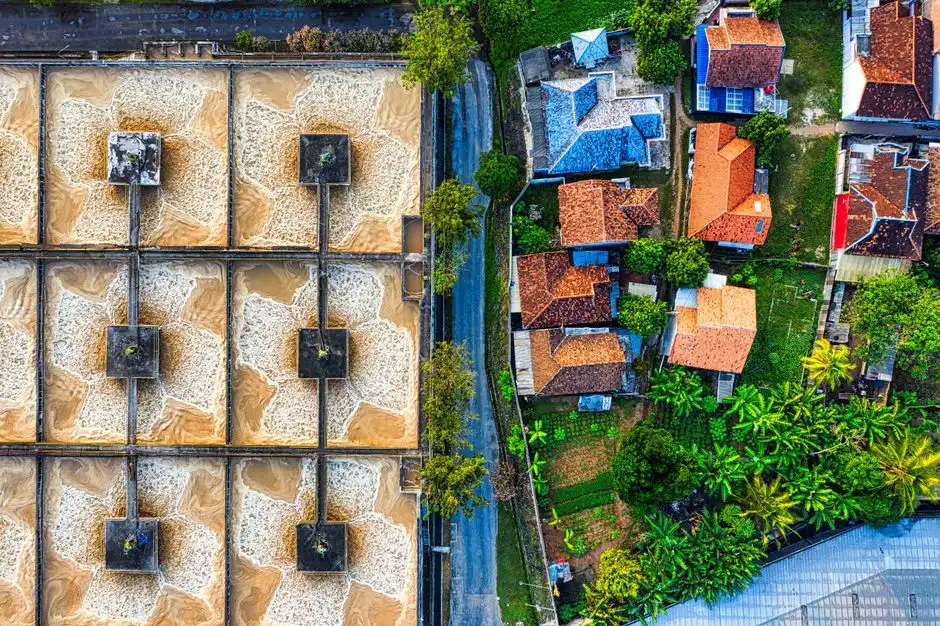
A 500 cubic meters per day pulp-and-paper wastewater stream typically exhibits chemical oxygen demand (COD) concentrations between 1,500 and 3,000 mg/L and total suspended solids (TSS) exceeding 800 mg/L, requiring a multi-stage physical, biological, and membrane-based treatment train (source: HydropureWater engineering design data, 2026). The raw effluent first enters a pretreatment stage where a GX Series rotary bar screen 2–6 mm aperture removes coarse debris, wood chips, and large fiber bundles to prevent downstream pump clogging. The screened wastewater is pumped to a primary clarification stage utilizing a DAF for fiber recovery. This DAF system uses micro-bubble flotation to recover 85% to 95% of suspended cellulose fibers, which are recycled back to the paper machine, while simultaneously reducing the primary COD load by 60% to 80%.
Following fiber recovery, the wastewater flows into an 8 to 24-hour hydraulic residence time (HRT) equalization tank to balance diurnal flow and chemical load fluctuations. The biological treatment stage consists of an anaerobic Upflow Anaerobic Sludge Blanket (UASB) reactor followed by an aerobic membrane bioreactor. The anaerobic stage digests highly biodegradable organic compounds, converting them into biogas while reducing the COD load by 70% to 85%. The effluent then enters an Integrated MBR with DF Series PVDF modules. The 0.1 µm flat-sheet PVDF membranes completely retain biomass, yielding a highly polished effluent with BOD5 <10 mg/L and TSS <5 mg/L, which serves as the ideal feed for downstream desalination.
To eliminate chlorinated organic compounds (AOX) and recalcitrant lignin-derived color, the MBR permeate passes through a tertiary ozone-based Advanced Oxidation Process (AOP) combined with activated carbon adsorption. This reduces the color value to ≤200 Pt-Co. The final polishing stage utilizes an Industrial RO 95% recovery for water reuse system. The RO permeate is recycled directly back into the mill's process water loop or boiler feed system, directly supporting IP's 35% water reduction target. The generated biological and chemical sludges are combined and dewatered using a Plate-and-frame filter press >22% DS, maximizing water recovery and producing a dry cake suitable for land application or biomass incineration.
| Treatment Stage | Equipment Specification | Target Contaminants | Removal Efficiency / Target Outlet |
|---|---|---|---|
| Pretreatment | GX Series Rotary Screen (2–6 mm) | Coarse fibers, bark, trash | Protects downstream pumps |
| Primary Treatment | DAF | Suspended fibers, TSS, insoluble COD | 85–95% TSS removal; fiber recovery |
| Secondary (Anaerobic) | High-rate UASB Reactor | Soluble COD, BOD | 70–85% COD reduction; biogas generation |
| Secondary (Aerobic) | DF Series PVDF MBR (0.1 µm) | Residual BOD, Nutrients (N, P) | BOD <10 mg/L; TSS <5 mg/L |
| Tertiary Polishing | Ozone AOP + Carbon Adsorption | AOX, Lignin-derived color | Color ≤200 Pt-Co; AOX ≤0.35 kg/ADt |
| Desalination / Reuse | Industrial RO System | TDS, conductivity, residual organics | ≥90% recovery; permeate recycled to mill |
| Sludge Dewatering | Plate-and-Frame Filter Press | MBR waste sludge, DAF solids | >22% Dry Solids (DS) cake |
2026 Hungary Capex & OPEX Bands — Pulp Mill Scale
The capital expenditure for a 500 m³/day pulp-optimized retrofit effluent treatment plant (ETP) in Hungary in 2026 ranges from EUR 3.2M to EUR 4.8M, driven by the addition of high-rate anaerobic digestion and tertiary AOX adsorption stages (source: HydropureWater field data, 2026). This capital cost is higher than a standard industrial ETP due to the corrosive nature of pulp wastewater, which requires extensive use of duplex stainless steel (grade 2205 or higher) and chemical-resistant polymer coatings. Annual operating expenses (OPEX) are estimated at 20% to 28% of the initial CAPEX, encompassing electrical power for aeration, chemical dosing (coagulants, polymers, and pH adjusters), membrane cleaning agents, and periodic membrane replacement cycles (typically 5 to 7 years for MBR and 3 to 5 years for RO).
Operating costs can be optimized through modular design and resource recovery. Utilizing pre-assembled, skid-mounted DAF, MBR, and RO systems reduces installation timelines by 30% to 40% and lowers on-site construction costs, yielding a 10% to 15% reduction in overall project OPEX (source: HydropureWater 2026 field data). the high-rate anaerobic stage generates 0.3 to 0.4 Nm³ of biogas per kilogram of COD removed. For a 500 m³/day stream with an inlet COD of 2,500 mg/L, this yields approximately 1,200 to 1,600 Nm³/day of biogas, equivalent to 1.0 to 1.3 MW of thermal energy, which can be combusted to offset 15% to 20% of the mill's steam generation costs. Additionally, reclaiming 90% of the treated wastewater via RO saves approximately 164,000 m³ of freshwater annually, substantially reducing Hungarian water abstraction fees and municipal discharge tariffs.
| Cost Category (500 m³/day Capacity) | Lower Band (EUR) | Upper Band (EUR) | Key Cost Drivers / Cost Mitigation |
|---|---|---|---|
| Equipment Capex | 2,100,000 | 3,100,000 | Duplex stainless steel construction, PVDF MBR cassettes, RO skids |
| Engineering & Civils Capex | 1,100,000 | 1,700,000 | Excavation, piling, local Hungarian construction labor |
| Total CAPEX | 3,200,000 | 4,800,000 | Skid-mounted modular configurations reduce installation costs |
| Annual OPEX (Power & Chemicals) | 640,000 | 1,344,000 | Aeration energy, polymer dosing, ozone generation |
| Biogas Energy Offset (Value) | (90,000) | (150,000) | Combustion of anaerobic biogas in mill boiler |
| Freshwater Fee Savings (Value) | (80,000) | (120,000) | 164,000 m³/year recycled water replacing municipal supply |
Pre-Close ETP Due-Diligence Checklist for the SPA
A comprehensive ETP due diligence review must be conducted prior to signing the Share Purchase Agreement (SPA) to identify latent environmental liabilities and permit vulnerabilities that could suspend operations under Hungarian administrative law (source: HydropureWater transaction advisory protocol, 2026). The following step-list outlines the essential engineering and legal verifications required during the due-diligence phase:
- Permit Defect Audit: Review the complete administrative record of the existing IPPC permit, including public consultation minutes, BAT assessment reports, and submissions to the KTVF. Identify any procedural gaps that could expose the permit to Göd-style annulment actions by local NGOs. Refer to the ETP due-diligence framework for plant acquisitions for structured liability assessment.
- Discharge History Analysis: Obtain 24 months of continuous monitoring data for COD, BOD5, TSS, AOX, total Nitrogen, total Phosphorus, and heavy metals. Cross-reference these values against both the current permit limits and the strict EU 2014/687/EU BAT-AEL ranges to identify historical exceedances and potential enforcement risks.
- Influent Characterization: Conduct a 7-day composite sampling campaign of the raw mill effluent during peak production. Measure COD fractions (soluble vs. particulate), fiber content, temperature, pH, conductivity, and specific priority substances (such as chlorophenols and resin acids) to verify that the existing treatment plant is properly sized.
- Asset Condition Assessment: Inspect the mechanical integrity and remaining operational life of all ETP assets, including the screens, DAF systems, biological reactors, and sludge presses. Document the replacement history of MBR and RO membranes and evaluate the current spare parts inventory.
- Water Balance & Easement Verification: Audit the mill's freshwater intake permits, water-use efficiency metrics, and discharge routing. Verify that all discharge pipelines crossing public or private land are backed by formal, registered property easements, and that the regional vízügyi igazgatóság has approved the discharge location.
- Chemical Compliance Audit: Review the Safety Data Sheets (SDS) and annual consumption records of all wet-end chemicals, sizing agents, biocides, and retention aids. Ensure full compliance with EU REACH and emerging PFAS regulations, identifying any high-risk chemicals that must be substituted post-acquisition.
- SPA Drafting & Risk Allocation: Insert specific representations and warranties into the SPA confirming that the seller has disclosed all environmental notices, permit challenges, and water-use disputes. Establish an escrow account funded by the seller to cover any CAPEX required to upgrade the ETP to meet IP's internal 2030 Vision standards.
Frequently Asked Questions
Does the Hungarian IPPC permit transfer automatically with the asset purchase?
No, the transfer is not automatic or risk-free. Under Hungarian administrative law, the buyer inherits the seller's permit status exactly as it exists at the time of the transaction, including any pending litigation or procedural defects. The October 2025 Göd ruling established that substantive defects in the public consultation or BAT assessment phases survive ownership changes, meaning a third party can challenge and potentially annul the permit post-acquisition. The acquiring entity must file a formal transfer and modification application with the county-level Government Office (Kormányhivatal) to establish themselves as the operator of record.
What are the pulp & paper BAT-AEL discharge limits in Hungary?
The applicable limits are determined by the EU Commission Implementing Decision 2014/687/EU, transposed into Hungarian law via Government Decree 314/2005. For chemical pulp and integrated paper mills, the typical BAT-AEL ranges are: COD 150–300 mg/L, BOD5 15–40 mg/L, TSS 10–30 mg/L, AOX ≤0.5 kg/ADt, total Nitrogen 10–20 mg/L, and total Phosphorus 1–2 mg/L. If the facility discharges to a sensitive water body, local authorities can impose tighter limits under Government Decree 27/2008 Annex 2, such as capping total Phosphorus at 0.5 mg/L.
How much does a 500 m³/day pulp wastewater retrofit ETP cost in Hungary in 2026?
According to HydropureWater 2026 field data, a 500 m³/day pulp-optimized retrofit ETP utilizing fiber recovery DAF, anaerobic digestion, aerobic MBR, tertiary AOX polishing, and RO reuse costs between EUR 3.2M and EUR 4.8M in capital expenditure. Annual operating expenses (OPEX) run between 20% and 28% of the CAPEX. Implementing pre-assembled, skid-mounted equipment packages can compress OPEX by 10% to 15% and reduce installation times by up to 40%.
What is the IPPC re-permitting timeline for a new operator in Hungary?
The competent county-level Government Office typically requires 60 to 105 days to review and approve a new or modified IPPC permit application. Because this administrative window can delay operations, acquiring companies must run their engineering, wastewater characterization, and equipment procurement processes in parallel with the permit application rather than sequentially.
Does International Paper's 2030 water target affect the Hungarian plant design?
Yes, International Paper's 2030 Vision requires a 35% reduction in freshwater usage per ton of product against a 2010 baseline. Meeting this commitment in a drought-prone region like Hungary requires a high-rate water recycling system, such as a closed-loop RO system achieving ≥90% recovery. Additionally, to protect against Göd-style permit challenges, the treatment system must be designed with a 15% to 20% safety margin below the legal BAT-AEL limits.