Why ETP Due Diligence Is the Deal-Killer in CDMO Acquisitions
ETP due diligence for a WuXi AppTec factory acquisition must cover four workstreams: a Phase I ESA reviewing effluent permits and spill history; a Phase II investigation sampling soil, groundwater, and ETP inlet/outlet for BOD, COD, TDS, heavy metals, APIs, and ARGs; an ETP retrofit audit covering preliminary, primary, secondary, and tertiary stages against pharma discharge limits; and an indemnity/escrow pricing of the capex gap. The deliverable is a closed list of compliance, technical, and financial risks before signing.
Legacy effluent systems at brownfield CDMO sites typically fail modern pharma discharge limits on three parameters before any other test runs: total APIs, total nitrogen, and salinity. Even when a plant appears to be discharging "in spec" against an old permit, influent characterization often reveals a 2–5x mismatch between current API/solvent loads and the original design basis (typical industry range for synthesis and fermentation plants: COD 200–10,000 mg/L, BOD/COD ratio <0.3, TDS 5,000–30,000 mg/L). That mismatch is what converts a routine acquisition into a six-to-nine-month retrofit project with mid-single to low-double-digit USD million capex.
A standard ETP runs through four sequential stages (per PPS Thane's operational framework): preliminary (screens, oil/grease removal), primary (clarifier for settleable solids), secondary (biological BOD removal), and tertiary (polishing for residual/dissolved solids). Each stage carries its own retrofit risk for a pharma brownfield because a CDMO's solvent, API, and salt loads routinely exceed the hydraulic and biological capacity the asset was built for. Skipping periodic maintenance and neglecting microbial health in the biological stage rank among the top five reasons ETPs fail compliance (PPS Thane, 2026), which makes them a critical red flag during any Phase II walk-through.
The four diligence workstreams therefore map directly to deal-execution tools: (1) regulatory history → reps & warranties; (2) baseline sampling → price chip and escrow sizing; (3) engineering audit → capex line item in the model; (4) financial structuring → indemnity, holdback, and environmental insurance. Treat them as a single integrated workstream, not four parallel studies.
Phase I Environmental Site Assessment: The Document and Permit Request List
Phase I is a paper and records exercise, not a sampling exercise. The deal team should demand the following six document families before issuing an LOI, because each one either confirms clean permit status or surfaces a future liability: (1) the current wastewater discharge permit or equivalent (China MEE permit, local equivalent, or India CPCB/SPCB consent for cross-border CDMO deals); (2) at least five years of ETP operating logs; (3) spill and incident reports including any unreported releases; (4) prior ESA or environmental audit reports; (5) hazardous-waste manifests for the preceding five years; and (6) any Notice of Violation (NOV) or consent order, including settled ones. For industrial pretreatment framing on a comparable brownfield, the transportation-equipment pretreatment compliance walkthrough shows the kind of permit-chain documentation reviewers should expect.
Operating logs must show the four core ETP inlet/outlet parameter families: pH (range 6.5–8.5 typical, 6–9 discharge band), BOD and COD (mass balance across the plant), TDS and TSS, color, and the heavy-metal suite Pb, Hg, Cd, Cr, As (PPS Thane, 2026). Missing monthly lab analyses, absent chemical dosing logs, or no record of jar testing on current influent are all standard audit findings that signal an under-disciplined ETP — and an under-disciplined ETP is rarely a clean liability. Cross-check the chemical list against actual influent: PPS Thane (2026) flags the common failure mode of copying chemical names from other plants without jar-testing them on the actual waste stream.
Staffing records deserve the same scrutiny as process records. PPS Thane's minimum staffing benchmark is a Plant Manager with an environmental engineering or science background and at least three years on a similar plant, qualified shift Operators, and a B.Sc. Chemistry Lab Analyst trained in wastewater analysis. Understaffing — particularly a missing or unqualified Lab Analyst — is a leading indicator that compliance gaps already exist in the data the seller is handing over.
| Document Family | What to Demand | Red Flag |
|---|---|---|
| Discharge permit | Current valid permit, all amendments, design basis vs. current load | Permit predates current product mix; capacity < 80% of current COD/TDS load |
| Operating logs (5 yr) | Daily inlet/outlet pH, BOD, COD, TDS, TSS, heavy metals; jar-test records | Missing monthly entries; no jar-test logs; chemical list unchanged for 3+ years |
| Spill / incident reports | All reportable and non-reportable releases; remedial actions | No log at all; "no incidents" claim without supporting records |
| Prior ESAs / audits | All Phase I/II reports, third-party audits, regulator inspections | Reports older than 3 years; refusal to share; selective redaction |
| Hazardous-waste manifests | 5-year manifests, sludge disposal records, licensed haulier details | Manifest gaps; unlicensed haulier; sludge mass not reconciled with throughput |
| NOVs / consent orders | All violations, even settled, including warning letters | Any undisclosed NOV; settled NOV without documented closure |
Typical Phase I turnaround runs 30–45 days, which is also the typical exclusivity window in a CDMO acquisition. Sequence the document request inside the first week of exclusivity so the deal team has findings in hand before the Phase II scope is finalized.
Phase II Baseline Sampling: Parameters and Decision Criteria
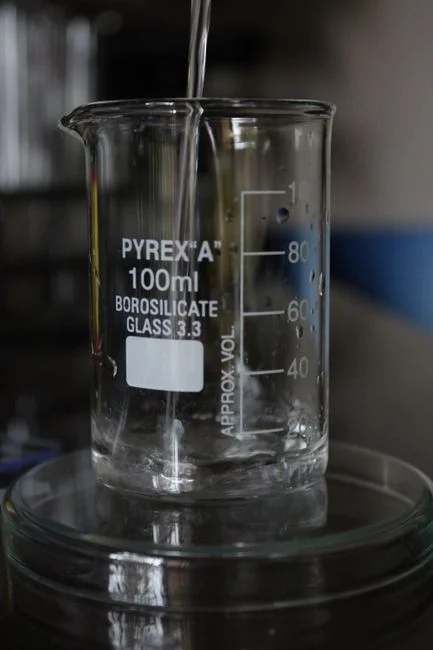
Phase II converts a paper review into a defensible price chip. The standard parameter panel covers pH, BOD, COD, TDS, TSS, oil & grease, color, fecal coliforms, and the heavy-metal suite Pb, Hg, Cd, Cr, As (PPS Thane, 2026). For a CDMO target, that panel is necessary but not sufficient. WuXi AppTec's own corporate EHS disclosures and standard CDMO diligence practice require four pharma-specific additions: total nitrogen (TN), total phosphorus (TP), residual chlorine, sulfates and chlorides (for salinity and brine characterization), and a targeted API and ARG (antibiotic-resistance gene) screen using LC-MS/MS and qPCR respectively. For a comparable inorganic-chemicals pretreatment benchmark, the Houston inorganic chemicals pretreatment compliance guide shows the level of parameter granularity a Phase II lab scope should reach.
Benchmark every result against the relevant local standard before triggering a price chip. For a China-located target, soil action levels map to GB 36600-2018 Series A (residential) and Series B (industrial) screening values; discharge limits map to the integrated wastewater discharge standard (GB 8978-1996) or sector-specific MEE standards. For an India-located CDMO asset, benchmark against CPCB effluent standards as reframed in PPS Thane's 2026 reference. The point is to write a single decision rule the deal team can apply mechanically:
- Any inlet parameter exceeding the ETP's design basis by >20% → trigger Phase II expansion, or request a price chip equal to the marginal retrofit capex.
- Any API detection above the LOQ (typically 0.1–1 µg/L) in effluent or any ARG detection in downstream receptor → minimum holdback equal to the chosen retrofit capex band, regardless of measured concentration.
- Any heavy metal in soil above GB 36600-2018 Series B (or local equivalent) → site-specific risk assessment and likely Phase II expansion.
The sampling plan itself should be production-representative: 24-hour composite samples plus 4 grab samples at the ETP inlet, the ETP outlet, and the downstream receptor (surface water or groundwater monitoring well), collected over a 7-day production cycle that includes at least one batch campaign of the highest-COD product family. Anything less under-samples the variability that drives the 20% design-basis decision rule.
| Parameter Group | Specific Analytes | Trigger Threshold |
|---|---|---|
| Conventional | pH, BOD, COD, TDS, TSS, oil & grease, color, fecal coliforms | Inlet > 120% of design basis |
| Nutrients | Total nitrogen, total phosphorus, residual chlorine | Outlet above permitted limit |
| Salinity / brine | Sulfates, chlorides, conductivity | TDS > 5,000 mg/L triggers RO/MEE evaluation |
| Heavy metals | Pb, Hg, Cd, Cr, As (plus Ni, Zn, Cu if electroplating co-located) | Soil > GB 36600-2018 Series B (or local equivalent) |
| Pharma-specific | Targeted API screen (LC-MS/MS); ARG screen (qPCR); trace solvents (methanol, acetonitrile, DCM) | Any detection above LOQ |
Engineering Audit of the Existing ETP
The engineering audit scores the existing asset so the deal team can price the capex gap. Walk the plant stage by stage. The preliminary stage (screens, grit removal, oil/grease) is usually the cheapest to assess: check for channel corrosion, screen integrity, and DAF performance if dissolved air flotation is installed — the DAF process flow walkthrough is a useful reference for what a properly functioning oil/grease stage should look like. The primary stage (clarifier) needs surface overflow rate, weir condition, and sludge scraper torque verified against original specs. The secondary stage (biological BOD removal) is where most CDMO brownfields fail: check MLSS, F/M ratio, SVI, and dissolved oxygen profiling, then compare against the current API and salt loads. The tertiary stage (polishing) determines whether the existing asset can meet modern TDS, heavy-metal, and trace-organic limits, or whether RO/AC/MEE add-ons are mandatory.
Score each stage on a 1–5 readiness scale across five dimensions: hydraulics (peak flow vs. design), biological capacity (BOD/COD load vs. design), sludge handling (thickener + dewatering capacity + disposal route), instrumentation (online probes, flow meters, SCADA), and redundancy (spare blowers, standby pumps, bypass capability). A target that scores 4 or 5 across the board is rare; a 2 or 3 on biological capacity combined with a 2 on instrumentation is the most common pattern at brownfield CDMO sites and is the trigger for a material capex line in the model.
Cross-reference the audit against the top-five ETP failure modes (PPS Thane, 2026): skipped maintenance, neglected microbial health, poor sludge handling, improper chemical dosing, and no performance audits. Any two of these five findings at the same site is enough to put the asset in the "major retrofit" category rather than the "minor upgrade" category. Also confirm whether the ETP was originally designed for pharma loads or for a different prior use (textile, dye, agrochemical) — a frequent legacy issue when a CDMO acquires a general-chemicals plant and inherits an asset that has never handled APIs or ARGs. For instrumentation upgrades, the AI-based ETP process control guide describes the kind of online monitoring and control loop retrofit that often goes into the Phase II recommendation.
Pharma-Specific Red Flags: APIs, ARGs, Salinity, and Solvents
Generic ETP checklists miss the pollutants that actually trip up CDMO deals. Pharma effluent commonly runs COD 200–10,000 mg/L with a BOD/COD ratio below 0.3, which signals toxic or non-biodegradable organics that conventional activated sludge cannot fully metabolize (typical industry range, PPS Thane 2026 framework). TDS at synthesis and fermentation plants routinely sits between 5,000 and 30,000 mg/L, driven by salt discharges from reaction quenching, chromatography eluents, and buffer preparation. None of this is what a default ETP is designed to remove.
Trace organics are the real deal-killers. The standard targeted API screen should cover at minimum: antibiotics (β-lactams, fluoroquinolones, tetracyclines, macrolides, sulfonamides), hormones and endocrine-active compounds, and cytotoxic/oncology actives if the target runs an oncology API line. ARG screening by qPCR should target sul1, tetM, ermB, blaTEM, intI1, and 16S rRNA as a normalization control. Solvents — methanol, acetonitrile, dichloromethane, toluene, DMF — should appear on the volatile organic compound (VOC) scan. Each of these classes is poorly removed by conventional biological treatment, and each forces a specific tertiary add-on into the retrofit design.
Conventional biological treatment struggles with high salinity and inhibitory compounds, which is why many CDMO brownfields end up on a ZLD or MEE path rather than a simple biological upgrade. The screening logic for the deal team is: if the Phase II result shows TDS > 5,000 mg/L with concurrent API or ARG detection, the ETP cannot be fixed with a biological upgrade alone — RO (for salts and large APIs), activated carbon plus advanced oxidation (for trace APIs), and MEE/crystallization (for brine concentration to ZLD) must all be on the retrofit shortlist. The same logic drives the matrix in the next section.
Retrofit Decision Matrix: From Quick Wins to Full ZLD
The retrofit decision matrix below is the tool a procurement or corporate-development lead uses to negotiate escrow instead of post-close surprises. Four options, ordered by ascending capex and regulatory closure:
- Option A — Biological upgrade only. Minor capex (low single-digit USD million), lowest removal of APIs and salts. Suitable only if influent is predominantly biodegradable, BOD/COD > 0.4, TDS < 3,000 mg/L, and discharge limits are local sewer (not surface water). A PLC-controlled chemical dosing skid is usually the highest-leverage sub-investment here.
- Option B — MBR + RO polishing. Better TSS/BOD removal, partial salt and API rejection, mid-single-digit USD million capex, produces reuse-quality water. The MBR membrane bioreactor system paired with an industrial RO system is the standard configuration for a CDMO looking to drop COD < 50 mg/L and TDS < 200 mg/L in the reuse stream.
- Option C — Multiple Effect Evaporator (MEE) + crystallization. Handles high TDS and brine streams, eliminates liquid discharge from the brine sidestream, higher opex but closes the legacy brine liability. Engineering detail is in the MEE retrofit and upgrade guide.
- Option D — Full ZLD. Highest capex (low-double-digit USD million) and opex, zero liquid discharge, lowest long-term regulatory risk. Typically required when local water-stress rules apply (e.g., northern China, western India) or when the site is in a zero-discharge industrial park.
| Option | Core Scope | Capex Band (USD M) | Reuse / Recovery | Closure of Legacy Brine Liability |
|---|---|---|---|---|
| A — Biological upgrade | Aeration tank expansion, MBBR/MBR swap, dosing upgrade | 1–4 | 20–40% reuse | None |
| B — MBR + RO | MBR + two-pass RO + UV | 5–8 | 60–75% reuse | Partial (brine sidestream remains) |
| C — MEE + crystallization | MEE + salt crystallizer + ATFD | 8–15 | 85–95% reuse | Full brine closure |
| D — Full ZLD | MBR + RO + MEE + crystallizer + dryer | 12–25 | > 95% reuse, zero liquid discharge | Full |
For benchmarking against a comparable M&A deal in another regulated sector, the food-sector M&A wastewater compliance guide shows how a different brownfield category priced a similar retrofit decision.
Financial Structuring: Indemnity, Escrow, and the Compliance Insurance Question
Translate the technical findings into deal terms the corporate development lead can negotiate. Three financial tools cover the legacy-liability spectrum: specific indemnity (uncapped, survival-based, used for known API/ARG hits), escrow holdback (typically 10–20% of purchase price held for 18–36 months, sized to the retrofit capex band), and environmental insurance (cost-of-capex coverage for unknown conditions). Tie the sizing mechanically to the Phase II findings: a single API detection, or any single parameter > 120% of the ETP's design basis, should trigger a minimum holdback equal to the Option B or Option C capex band depending on the salinity result. Two or more API detections, or any ARG hit, should trigger uncapped specific indemnity for the API/ARG exposure on top of the holdback.
Build a low-cost risk-reduction item into the close conditions. IoT-based effluent monitoring has been associated with up to 50% improvement in compliance accuracy (PPS Thane, 2026), and a real-time monitoring retrofit at the existing ETP outlet is a defensible condition of close that materially de-risks the holdback period. The seller should also provide rep & warranty language covering: clean permit status with no undisclosed NOV, full ETP operating log disclosure, five-year historical compliance certification, and confirmation that no solvent or API mass-balance reconciliation has identified unreported releases.
30/60/90-Day Post-Close Action Plan
Day 0–30: lock the ETP SOPs against the current influent, not the historical design basis. Confirm operator and lab analyst credentials against PPS Thane's staffing benchmark (Plant Manager with environmental engineering background, qualified shift Operators, B.Sc. Chemistry Lab Analyst), and backfill any gaps as a condition of close. Install interim flow and pH monitoring at the ETP inlet and outlet if any of these are missing. The heavy-metals online monitoring buyer's guide is a useful reference for the instrumentation shortlist.
Day 31–60: run jar tests on the current influent to validate the chemical dosing program — generic chemicals and copied chemical lists are a top-five ETP failure mode (PPS Thane, 2026). Perform a microbial health check on the biological stage (MLSS, SVI, F/M, microscopy) and re-seed if necessary. Issue a non-conformance report for every item flagged in the engineering audit scoring 2 or lower on the 1–5 readiness scale.
Day 61–90: issue the ETP retrofit RFP against the option selected in the deal model (A, B, C, or D from the retrofit matrix). Commission the upgrade design with a binding performance guarantee on outlet BOD, COD, TDS, and API/ARG removal. Stand up IoT-based real-time monitoring tied to permitted discharge limits. Define success metrics for the first 12 months: zero NOV, full compliance with permitted discharge limits, and on-time commissioning of the selected retrofit option. A missed NOV inside the holdback period is the most common trigger for indemnity drawdowns — instrument for it from Day 0.
Frequently Asked Questions
What documents should the deal team request before signing an LOI?
Six document families: the current wastewater discharge permit and all amendments, five years of ETP operating logs (pH, BOD, COD, TDS, TSS, heavy metals), spill and incident reports, prior ESA or audit reports, hazardous-waste manifests, and any NOV or consent order including settled ones. A 30–45 day Phase I turnaround is typical, so the request must go out inside the first week of exclusivity (PPS Thane, 2026).
Which parameters trigger a price chip or escrow holdback?
Any inlet parameter > 120% of the ETP's design basis, or any API or ARG detection above the analytical LOQ, should trigger a price chip and minimum holdback equal to the chosen retrofit capex band. Heavy metals in soil above GB 36600-2018 Series B (or local equivalent) trigger a site-specific risk assessment and likely Phase II expansion.
When does a CDMO brownfield need ZLD rather than a biological upgrade?
When Phase II shows TDS > 5,000 mg/L with concurrent API or ARG detection, conventional biological treatment cannot close the liability. MBR + RO handles partial salt and API rejection, but full brine closure requires MEE + crystallization, and a complete ZLD stack (MBR + RO + MEE + crystallizer) is required for zero-discharge parks or water-stressed jurisdictions.
How should escrow be sized against retrofit capex?
Match the holdback to the chosen retrofit option's capex band: Option A biological upgrade (low single-digit USD M) maps to a smaller holdback, while Option C MEE + crystallization (8–15 USD M) or Option D full ZLD (12–25 USD M) require a 10–20% purchase-price holdback held for 18–36 months, plus uncapped specific indemnity for any documented API or ARG release (PPS Thane, 2026).