Why a WuXi AppTec Hungary Deal Has a Parallel EU Compliance Workstream
A WuXi AppTec acquisition of a Hungarian manufacturing site triggers a new IPPC proceeding under Act LVII of 2016 — the vendor's permit does not transfer. The county Kormányhivatal reassesses discharge against EU IED 2010/75/EU, CWW BREF (2016) BAT-AEL bands, and Decree 220/2004, with a 12–18 month timeline for brownfield sites and a 0.5–1.5 million m³/year freshwater offset obligation at full ramp. The US Biosecure Act framing dominates the headlines, but the European workstream is what the share-purchase agreement has to absorb.
WuXi AppTec was added to the US Department of Defense's 1260H list of "Chinese military companies," which under the Biosecure Act exposes the firm to restrictions beginning in 2028 with a 5-year transition window that could extend to 2033 (ACS C&EN, Volume 104 Issue 7, 2026-02). RBC Capital Markets analyst Charles Weston notes that "customers would need to make supply decisions several years earlier" — work that will progressively shift to European sites including Hungary. WuXi generates roughly three-quarters of its revenue from the US, which accelerates the redirection of API and intermediate manufacturing capacity into the EU.
Two transactions shape the remaining CRDMO footprint. WuXi AppTec signed a definitive agreement on 2024-12-24 to divest WuXi Advanced Therapies (cell and gene therapy) to Altaris, LLC (WuXi AppTec press release, 2024-12-24), and on 2025-10-26 to divest its China-based clinical research services business (WuXi Clinical and WuXi MedKey) to Hillhouse Investment (WuXi AppTec press release, 2025-10-26). Both deals sharpen the CRDMO core — but they do not extinguish European environmental obligations on retained sites. A Hungary plant acquirer inherits a four-instrument EU compliance envelope that must be mapped before signing. For a parallel cross-sector M&A view, see this Hungary M&A wastewater guide for Tyson Foods.
The Hungarian Regulatory Stack: IED, IPPC, CWW BREF, and Decree 220/2004
IPPC in Hungary consolidates wastewater, air emissions, noise, and waste into a single integrated permit issued by the county Kormányhivatal — unlike the US where NPDES/TPDES and air permits run in parallel. Four binding instruments define the envelope any deal team must read first.
EU Industrial Emissions Directive 2010/75/EU (IED) is the umbrella instrument and the legal basis for IPPC permitting. Act LVII of 2016 on water management is Hungary's national transposition, with Government Decrees 28/2004 (IPPC procedure), 219/2004 (pollution charges), 220/2004 (emission limit values), and 314/2005 (EIA procedure) sitting underneath. The CWW BREF (2016) defines BAT-AEL daily-average bands; the Fine Organic Chemicals BREF conclusions also apply for API and intermediate streams. Water Framework Directive 2000/60/EC requires lower-end permit values when the receiving water is a WFD Article 5 listed sensitive area — the Danube and Tisza sub-basins are both listed, and Hungary is operating under an Article 4(4) extension for several heavily modified water body reaches.
The permit-issuing authority is the county Kormányhivatal. OVF (Országos Vízügyi Főigazgatóság) provides technical comment on BAT-AEL compliance. The local vízügyi igazgatóság comments separately on pipeline easements crossing public drainage assets. Three distinct roles that must be sequenced on the deal Gantt.
| Instrument | Reference | Scope | Issuing/Commenting Body |
|---|---|---|---|
| IED | 2010/75/EU | Integrated permit umbrella (wastewater, air, waste, noise) | European Commission → transposed nationally |
| Act LVII of 2016 | Hungarian water management | National transposition; change-of-operator trigger | Hungary Parliament |
| Decree 220/2004 | Emission limit values | Numeric discharge limits per parameter | Ministry-level |
| Decree 28/2004 | IPPC procedure | Permit application and reassessment process | Kormányhivatal |
| CWW BREF (2016) | BAT-AEL bands | Daily-average discharge envelopes | EU BAT reference |
| Fine Organic Chemicals BREF | BAT conclusions | API and intermediate stream BAT | EU BAT reference |
| WFD 2000/60/EC | Article 5 sensitive areas | Tighter limits on listed receiving waters | OVF technical comment |
The Six Wastewater Streams a Pharma CRDMO Site Must Permit

A pharma CRDMO site discharges six discrete streams, each with its own BAT-AEL envelope. The deal team should compare the target's existing treatment train against the stream-by-stream table below before relying on a vendor representation that "the permit covers everything."
Stream 1 — Sanitary wastewater must meet UWWTD 91/271/EEC Annex I thresholds: BOD₅ ≤25 mg/L, COD ≤125 mg/L, TSS ≤60 mg/L, with E. coli <100 CFU/100 mL microbiological target for sensitive-area discharge. Stream 2 — API mother liquor and synthesis effluent is the heaviest stream for COD, AOX, Hg, cyanides, and residual solvents; the BAT-AEL is the CWW BREF (2016) daily-average band, with Hungarian permit writers typically imposing the lower bound for WFD-listed receiving waters. Stream 3 — Fermentation and biotech effluent carries BOD₅ 150–300 mg/L and NH₃-N 20–40 mg/L, with the biological stage typically an MBR membrane bioreactor for the biological stage delivering effluent TSS <5 mg/L. Stream 4 — Cleaning-in-place (CIP) and sanitiser streams carry pH swings, QACs, and peracetic acid; equalization at 8–12 hours of average dry-weather flow is standard pre-treatment. Stream 5 — Scrubber and air-emission control blowdown carries dissolved metals and VOC traces — segregated handling protects the biological stage. Stream 6 — Cooling tower and boiler blowdown runs TDS 500–2,000 mg/L with low organic load and is an RO polishing train for API mother liquor reuse candidate that minimizes freshwater draw.
NMP (N-methyl-2-pyrrolidone) and DMF solvent residues in API streams drive VOC and COD loading. Confirm whether the target operates a solvent recovery column, because without it the API stream drives COD well above the 75 mg/L envelope. For legacy brownfield polish and recovery retrofits, see this ion exchange retrofit guide for legacy brownfield sites.
| Stream | Source | Key Parameters | BAT-AEL / Permit Driver | Treatment Path |
|---|---|---|---|---|
| 1. Sanitary | Washrooms, kitchens, changing rooms | BOD₅, COD, TSS, E. coli | UWWTD 91/271/EEC Annex I | Biological + disinfection |
| 2. API mother liquor | Synthesis, crystallization, isolation | COD, AOX, Hg, cyanides, residual solvents | CWW BREF (2016) lower bound; WFD sensitive area | Precipitation + RO + advanced oxidation |
| 3. Fermentation/biotech | Bioreactor bleed, harvest residues | BOD₅ 150–300 mg/L, NH₃-N 20–40 mg/L | CWW BREF biological envelope | MBR → polishing |
| 4. CIP and sanitiser | Equipment cleaning, sanitization | pH swings, QACs, peracetic acid | Equalization pre-treatment | EQ basin + biological |
| 5. Scrubber blowdown | Air-emission control wet scrubbers | Dissolved metals, VOC traces | Segregated handling | Precipitation + biological |
| 6. Cooling/boiler blowdown | Heat rejection, steam generation | TDS 500–2,000 mg/L, low organic | RO-reject reuse | RO with concentrate recovery |
The Five M&A Due-Diligence Workstreams Before Signing
The regulatory stack above converts into five actionable items the deal team must verify at the target before signing the share-purchase agreement. None of these are optional; each maps to a specific instrument or authority.
Workstream 1 — Permit reassessment trigger. Under Act LVII of 2016 a change of operator initiates a new IPPC proceeding; the vendor's permit does not transfer wholesale. Budget 18–36 months for greenfield and 12–18 months for brownfield with a live IPPC. Workstream 2 — Freshwater offset. Plan 0.5–1.5 million m³/year at full ramp, deliverable as watershed-restoration funding or treated-water release. Benchmark against the 377,000 m³/year WSE offer extended to Tesla at Giga Berlin. Workstream 3 — Easements. Separate property easements are required for any discharge pipeline crossing public drainage assets; the local vízügyi igazgatóság is a formal commenting party and must be sequenced in parallel with the IPPC. Workstream 4 — Solvent and AOX gap. Pull the target's last 12 months of API-line effluent data; if AOX or residual solvent runs above the CWW BREF band and the existing plant has no RO or advanced oxidation, capex must be priced into the deal model. Workstream 5 — Legacy soil and groundwater. Phase I/II ESA must test for chlorinated solvent plumes from legacy API operations, Hg from catalyst handling, and petroleum hydrocarbons from on-site fueling — these ride with the share purchase under Hungarian environmental liability law and survive the IPPC reassessment.
| Workstream | Legal Anchor | Verification Action | Budget / Time |
|---|---|---|---|
| 1. Permit reassessment | Act LVII of 2016 | Hungarian counsel letter; Kormányhivatal pre-meeting | 12–18 months brownfield |
| 2. Freshwater offset | WFD 2000/60/EC | Watershed-restoration scoping; WSE benchmark | 0.5–1.5 Mm³/year |
| 3. Easements | Local drainage law | Vízügyi igazgatóság pipeline routing | Parallel to IPPC |
| 4. Solvent/AOX gap | CWW BREF (2016) | 12-month API-line effluent data review | Capex if no RO/AOP |
| 5. Legacy soil/groundwater | Hungarian environmental liability law | Phase I/II ESA; Hg, chlorinated solvents, PHC | Survives closing |
Treatment Train and Permit Sequence for a Hungary Brownfield Closing
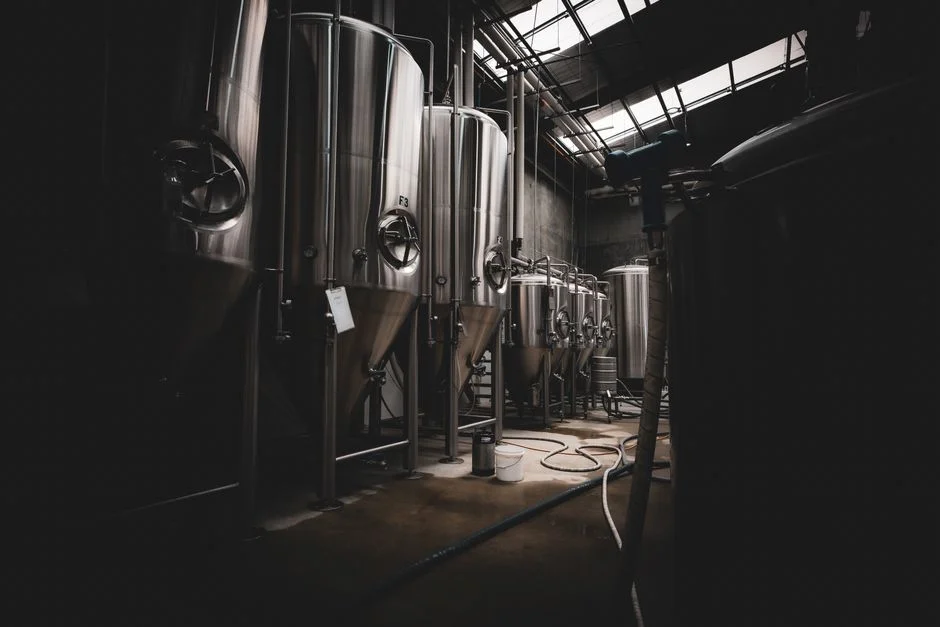
The equipment-side translation of the regulatory envelope below is what a procurement reader takes to a vendor shortlist. Each stage carries a numeric outcome the permit will defend.
Stage 1 — Headworks. A rotary mechanical bar screen for headworks at 2–6 mm aperture protects downstream biological stages; equalization basin sized at 8–12 hours of average dry-weather flow smooths diurnal peaking. Stage 2 — Physico-chemical. A DAF system for FOG and floatable solids with polyaluminum chloride and anionic polymer dosing at pH 6.5–7.5 handles residual FOG and floatable solids; chemical precipitation handles residual metals on the API line. For a process walkthrough, see this DAF system process flow diagram walkthrough. Stage 3 — Biological. An MBR membrane bioreactor delivers MLSS 8,000–12,000 mg/L, sludge age 20–40 days, and effluent TSS reliably below 5 mg/L; MBR occupies 40–60% less plot area than equivalent CAS + clarifier, which matters on a footprint-constrained brownfield. Stage 4 — Tertiary polishing and resource recovery. Multi-media filtration followed by RO for API-stream polishing with concentrate routed to Ni/Co or solvent precipitation; on-site on-site chlorine dioxide generator for sanitary disinfection at 0.5–1.5 mg/L residual. Stage 5 — Sludge handling. A plate-and-frame filter press for sludge dewatering brings cake to >22% dry solids for off-site disposal or cement-kiln co-incineration; filtrate returns to headworks.
Permit sequence: 12–18 months brownfield if BAT-conclusion verification is uncontested. Buffer 2–6 months for OVF objection cycles. The upper end applies when the site sits inside a WFD-listed sensitive area or the freshwater offset negotiation runs long. A representative Gantt for a 12–18 month Hungary brownfield closing:
- Months 0–2: Hungarian counsel letter on permit reassessment; Phase I/II ESA kickoff; easement routing study.
- Months 2–4: Kormányhivatal pre-application meeting; OVF informal comment; baseline influent sampling program.
- Months 4–8: IPPC application submission; vízügyi igazgatóság easement comment; freshwater offset negotiation.
- Months 8–12: Public consultation; OVF objection cycles; equipment procurement long-lead items released.
- Months 12–18: Kormányhivatal permit issuance; commissioning; first compliance monitoring quarter.
Frequently Asked Questions
Does the vendor's IPPC permit transfer automatically when WuXi AppTec acquires a Hungary plant?
No. Under Act LVII of 2016 a change of operator triggers a new IPPC proceeding at the county Kormányhivatal; the vendor's permit does not transfer wholesale. The deal team should budget 12–18 months for a brownfield reassessment and 18–36 months for greenfield, with the upper end applying inside WFD-listed sensitive areas.
What BAT-AEL envelope applies to API mother liquor under Hungarian permit practice?
The CWW BREF (2016) daily-average band applies, and Hungarian permit writers typically impose the lower bound for WFD Article 5 sensitive-area discharge on the Danube and Tisza sub-basins. Pull the target's last 12 months of API-line effluent data and price RO or advanced oxidation capex into the deal if AOX or residual solvent runs above the band.
What is the realistic freshwater offset obligation for a Hungary CRDMO at full ramp?
Plan 0.5–1.5 million m³/year, deliverable as watershed-restoration funding or treated-water release. Authorities benchmark against the 377,000 m³/year WSE offer extended to Tesla at Giga Berlin and scale the obligation to the site's full-ramp production volume and the sensitivity of the receiving water body.
Which three authorities must be sequenced on the Hungary permit Gantt?
The county Kormányhivatal issues the IPPC permit; the OVF (Országos Vízügyi Főigazgatóság) provides technical comment on BAT-AEL compliance; the local vízügyi igazgatóság separately comments on pipeline easements crossing public drainage assets. All three roles run in parallel, not in series.