Why a Hungarian acquisition collapses into one IPPC permit
A Panasonic Energy share-purchase in Hungary consolidates every environmental obligation into a single integrated (IPPC) permit, unlike the US where NPDES/TPDES and air permits run in parallel. Four binding instruments define the envelope: EU Industrial Emissions Directive 2010/75/EU (IED), Urban Waste Water Treatment Directive 91/271/EEC, Water Framework Directive 2000/60/EC, transposed nationally through Act LVII of 2016 on water management and Government Decrees 28/2004 (IPPC procedure), 219/2004 (pollution charges), 220/2004 (emission limit values), and 314/2005 (EIA procedure).
IPPC (Integrated Pollution Prevention and Control) means one permit governs wastewater, air emissions, noise, and waste on a single site. BAT-AEL (Best Available Techniques Associated Emission Levels) sets the numeric discharge bands derived from the Common Waste Water and Waste Gas Treatment/Management Systems BREF (CWW BREF, 2016), the Large Volume Inorganic Chemicals–Solids BREF (LVIC-S) for cathode precursors, and the Surface Treatment of Metals BREF (STS) for body-in-white lines.
The permit-issuing authority is the county-level Government Office (Kormányhivatal), the technical commenting body is the National Water Authority (Országos Vízügyi Főigazgatóság, OVF), and the local water directorate (vízügyi igazgatóság) comments on pipeline easements crossing public drainage assets. For Panasonic specifically, a change-of-operator event in Hungary automatically triggers a permit reassessment under Act LVII of 2016 — the vendor's existing IPPC does not transfer wholesale. The due-diligence team must treat the permit as a deliverable, not an inherited right, which mirrors the structural findings in an LG Energy Solution M&A legacy wastewater audit checklist.
The numeric permit envelope Panasonic will be measured against
Hungarian permit writers set emission limit values at the lower end of the CWW BREF (2016) BAT-AEL band when the receiving water is a Water Framework Directive–listed sensitive area — the Danube and Tisza sub-basins are both listed under WFD Article 5, and Hungary is currently operating under an Article 4(4) extension for several heavily modified water body reaches. A Panasonic cathode-and-anode plant will be sized to the lower-bound column below.
| Parameter | BAT-AEL daily-average range (CWW BREF, 2016) | Typical Hungarian permit value (Decree 220/2004) | Note |
|---|---|---|---|
| COD | 30–130 mg/L | ≤75 mg/L | Sensitive-area lower bound |
| TSS | 10–45 mg/L | ≤35 mg/L | MBR effluent comfortably below |
| Total nitrogen | 5–25 mg/L | ≤15 mg/L | WFD good-status driver |
| Total phosphorus | 0.5–3 mg/L | ≤2 mg/L | Paint-shop phosphate source |
| Zinc | 0.1–1.0 mg/L | ≤0.5 mg/L | From stamping and conversion coating |
| Nickel | 0.05–0.5 mg/L | ≤0.2 mg/L | Historical legacy in auto plants |
| Hydrocarbons (total) | 0.2–5 mg/L | ≤2 mg/L | BIW FOG breakthrough risk |
| Lithium | Not listed in CWW BREF | 0.5–2 mg/L (by analogy) | Imposed from battery-sector BAT and WFD watch-list concentrations |
Lithium is not in the Decree 220/2004 tables, but Hungarian authorities are increasingly applying a 0.5–2 mg/L ceiling by analogy to CWW BREF battery-sector conclusions and to lithium concentrations flagged in the WFD priority-substances watch list. Sanitary streams must additionally meet UWWTD 91/271/EEC Annex I thresholds: BOD5 ≤25 mg/L, COD ≤125 mg/L, TSS ≤60 mg/L after secondary treatment. The total flow envelope, scaled from the 377,000 m³/year freshwater offer extended to Tesla at Giga Berlin (source: ilovetesla.com, 2025), lands at 5,000–15,000 m³/day for a 500,000–1,000,000-vehicle/year Hungarian footprint.
Six wastewater streams Panasonic must characterize before close
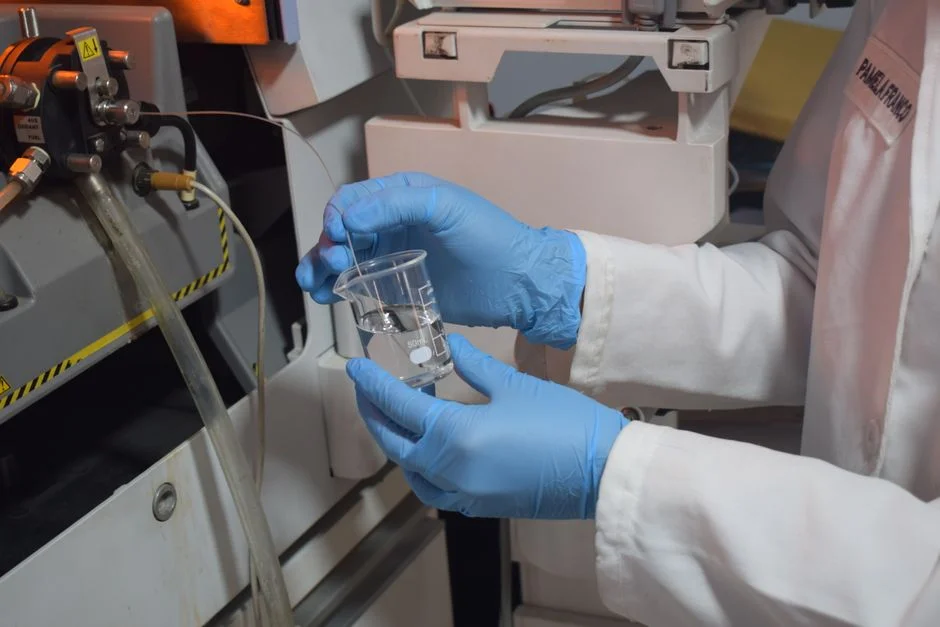
For an automotive or battery plant, the discharge envelope is not homogeneous — it is six streams, each with its own permit condition, and cathode/anode production water is the stream that breaks the budget for a battery operator.
| Stream | Source | Key parameters | Treatment driver |
|---|---|---|---|
| 1. Sanitary | Offices, kitchens, toilets | BOD5 150–300 mg/L, NH3-N 20–40 mg/L | UWWTD 91/271/EEC biofilm and microbiological targets |
| 2. BIW and stamping wash water | Welding, stamping, metalworking fluids | TSS 200–800 mg/L, FOG 50–500 mg/L, trace Zn/Ni/Cu | DAF + chemical precipitation; protect biological stage |
| 3. Paint shop | Conversion coating, electrodeposition, overspray | VOCs, pigments, phosphates, Zn from zinc-phosphate | Fenton + DAF + biological polishing; most variable stream |
| 4. Cathode and anode production | Coating, drying, solvent recovery, binder prep | Li, Ni, Co, Mn, NMP solvent traces, PFAS-bearing binder residues | Precipitation + ion exchange + RO; heaviest metal-specific permit burden |
| 5. Cooling-tower and boiler blowdown | Heat rejection, steam generation | TDS 500–2,000 mg/L, low organic load | RO-reject reuse candidate; minimize freshwater draw |
| 6. Stormwater | Paved yards, rooftops, logistics areas | TSS, oil sheen, seasonal first-flush metals | Segregation + TSS/oil removal under BAT-AEL envelope |
NMP (N-methyl-2-pyrrolidone) is the cathode-slurry solvent that drives VOC and COD loading in stream 4, and the binder residues carry PFAS compounds that are now under EU-wide scrutiny. Lithium loading on stream 4 typically runs 5–50 mg/L before treatment — two orders of magnitude above the 0.5–2 mg/L analogical limit — which is why RO or selective ion exchange is non-negotiable on the cathode line. Discharge volumes per stream at full ramp typically split as: sanitary 8–12%, BIW 20–30%, paint 15–25%, cathode 10–20%, cooling blowdown 20–30%, stormwater 5–10%.
The five-stage treatment train a Hungarian reviewer will accept as BAT-compliant
Translating the regulatory envelope into equipment is what a procurement reader takes to a vendor shortlist. Each stage carries a numeric outcome the permit will defend.
Stage 1 — Headworks. A rotary mechanical bar screen for headworks solids removal at 2–6 mm aperture protects downstream biological stages from ragging and grit damage. Flow-equalization basins upstream of the biological stage smooth the diurnal peaking typical of single-shift stamping; equalization volume is sized at 8–12 hours of average dry-weather flow.
Stage 2 — Physico-chemical. A DAF system for BIW and paint-shop FOG removal with polyaluminum chloride and anionic polymer dosing at pH 6.5–7.5 handles the oil/grease and floatable solids load. Air-to-solids ratios of 0.02–0.05 Nm³/m² are typical for the FOG loads seen in body-in-white operations; emulsion-breaking chemistry is sized for the 50–500 mg/L FOG range on stream 2.
Stage 3 — Biological. An MBR membrane bioreactor for combined industrial and sanitary wastewater delivers MLSS of 8,000–12,000 mg/L, sludge age 20–40 days, and effluent TSS reliably below 5 mg/L — comfortably inside the CWW BREF lower bound. MBR beats MBBR when the project driver is >80% reuse or the site is footprint-constrained; for a 5,000–15,000 m³/day Hungarian plant the MBR train typically occupies 40–60% less plot area than an equivalent CAS + clarifier layout.
Stage 4 — Tertiary polishing and resource recovery. Multi-media filtration (sand + anthracite + garnet) followed by an RO system for cathode-production water polishing targeting >90% recovery, with Ni/Co precipitation from the concentrate and optional Li recovery by selective ion exchange when project economics support it. The concentrate stream is the single most expensive waste to manage on the cathode train and is where the ZLD calculus turns — see the parallel EV battery zero-liquid-discharge process design guide for concentrate volume minimization strategies.
Stage 5 — Sludge handling and disinfection. A plate-and-frame filter press for combined biological and DAF sludge brings cake to >22% dry solids for off-site disposal or cement-kiln co-incineration; filtrate returns to headworks. An on-site chlorine dioxide generator for sanitary effluent disinfection produces ClO2 at 0.5–1.5 mg/L residual to meet UWWTD microbiological criteria — typically E. coli <100 CFU/100 mL for discharge to sensitive areas. For plants targeting a >80% reuse loop, this stage is followed by a polishing carbon filter and breakpoint chlorination on the recycle line.
M&A due-diligence checklist: legacy contamination, easements, and offset obligations
Reframing the regulatory stack as an M&A workstream, the deal team has to verify five items at the target before signing. First, vendor liability on the permit: under Act LVII of 2016 a change of operator triggers a new IPPC proceeding, not a transfer. Confirm whether the target's existing permit will be reassessed at zero or carried across — and budget 18–36 months for the new proceeding per the runway below.
Second, freshwater offset. Hungarian authorities routinely impose watershed-restoration funding or treated-water release as a permit condition. A Panasonic cathode-and-anode plant at full ramp should plan a 0.5–1.5 million m³/year offset obligation, benchmarked against the 377,000 m³/year WSE offer extended to Tesla at Giga Berlin (source: ilovetesla.com, 2025). The same logic drives vendor-diligence questions on a target's PCB wastewater discharge standards and compliance blueprint history.
Third, easements and pipeline right-of-way. The Robstown TPDES precedent (source: kristv.com, 2026-01) — where a discharge pipe was discovered crossing a drainage-district easement without notification — is a cautionary parallel. In Hungary, separate property easements are required for any discharge pipeline crossing public drainage assets, and the local vízügyi igazgatóság is a formal commenting party. Treat the easement workstream as parallel to the IPPC, not downstream.
Fourth, the lithium and NMP gap. Legacy Decree 220/2004 does not list either parameter, but the analogical ceiling is now 0.5–2 mg/L Li. Pull the target's last 12 months of cathode-line effluent data; if influent Li runs 5–50 mg/L and the existing plant has no RO or ion exchange, the BAT-AEL gap is real and the capex must be priced into the deal model. NMP is a separate gap — confirm whether the target operates an NMP solvent recovery column, because without it the cathode stream drives COD well above the 75 mg/L envelope.
Fifth, legacy soil and groundwater liability. Phase I/II ESA at the target should explicitly test for petroleum hydrocarbons from legacy fueling, PFAS from binder handling, and heavy metals from prior metalworking operations — these ride with the share purchase under Hungarian environmental liability law and survive the IPPC reassessment.
18–36 month permit runway: the Gantt a Hungarian reviewer will follow
The permit sequence below is the deliverable M&A teams will copy into steering-committee decks. Total elapsed time on a Panasonic cathode-and-anode greenfield runs 18–36 months from kickoff to Kormányhivatal issuance; an existing brownfield with a live IPPC can compress to 12–18 months if BAT-conclusion verification is uncontested.
- Step 1 — Environmental impact assessment (KHV) under Government Decree 314/2005. Scoping decision, baseline studies, public announcement. Typical 4–8 months.
- Step 2 — Integrated IPPC permit application under Government Decree 28/2004, with the technical documentation package covering BAT-conclusion verification against CWW BREF (2016), LVIC-S BREF, and STS BREF. Typical 3–6 months for document preparation.
- Step 3 — Public consultation with the affected municipality and the receiving water utility; 30-day public comment window. Typical 1–2 months.
- Step 4 — BAT-conclusion verification by the National Water Authority (OVF) as technical commenting body; the county Kormányhivatal weighs OVF findings, public input, and the KHV. Typical 3–8 months.
- Step 5 — Permit issuance by the county Kormányhivatal, with OVF technical sign-off and vízügyi igazgatóság comment on discharge easements. Typical 1–3 months after step 4 closes.
Buffer 2–6 months for OVF objection cycles and Kormányhivatal back-and-forth; the upper end of the 18–36 month range applies when the site sits inside a WFD-listed sensitive area or when the freshwater offset negotiation runs long.
Frequently Asked Questions
Does a Hungarian IPPC permit transfer automatically when Panasonic acquires the plant?
No. Under Act LVII of 2016 a change of operator triggers a new IPPC proceeding at the county Kormányhivatal; the vendor's permit does not transfer wholesale. The deal team should budget 18–36 months for the reassessment per the Gantt above.
Why is lithium limited at 0.5–2 mg/L when Decree 220/2004 does not list it?
Hungarian permit writers are imposing the 0.5–2 mg/L Li ceiling by analogy to CWW BREF battery-sector BAT conclusions and to lithium concentrations on the WFD priority-substances watch list. The legacy decree is being back-filled sector-by-sector, and cathode production is the trigger.
How is the freshwater offset obligation calculated for a Hungarian battery plant?
Authorities benchmark against the 377,000 m³/year WSE offset extended to Tesla at Giga Berlin (source: ilovetesla.com, 2025) and scale to the Hungarian site's full-ramp vehicle or cell volume. A 0.5–1.5 million m³/year offset is a realistic planning range, deliverable as watershed-restoration funding or treated-water release to the receiving system.
What is the role of the National Water Authority versus the county Kormányhivatal?
The county Kormányhivatal issues the IPPC permit as the competent authority; the OVF (Országos Vízügyi Főigazgatóság) provides technical comment on BAT-AEL compliance and discharge conditions. The local vízügyi igazgatóság separately comments on pipeline easements — three distinct roles that must be sequenced.