Why LG Energy Solution Factory Acquisitions Carry Hidden Wastewater Risk
An acquirer of a US battery-component or cell-assembly plant inherits the prior tenant's environmental footprint, including any unresolved wastewater, soil, and groundwater liability, regardless of purchase price or share-purchase structure. The US Supreme Court's 1980 ruling in United States v. Bestfoods and the long line of CERCLA successor-liability decisions that followed make this doctrine non-negotiable: the corporate veil does not protect a buyer from cleanup cost recovery actions brought by the EPA, a state agency, or a private party under 42 USC §9607. In practice, a Phase II ESA finding of NAPL in a former coating-area floor drain or VOC-contaminated groundwater beneath a former solvent store can translate into a 10–30% capex uplift for ETP retrofit versus a greenfield build of equivalent hydraulic capacity (engineering estimate; site-specific).
Outside the US, parallel exposure exists. The South Korean Waste Management Act (Act No. 4224, as amended) imposes cleanup liability on the "polluter" and on subsequent operators of a contaminated facility, and the EU Environmental Liability Directive 2004/35/EC obliges operators to remediate historical damage where the original polluter cannot be identified. For LG Energy Solution's deal team evaluating targets in Michigan, Ohio, Poland, Indonesia, or Gumi, the diligence framework has to satisfy all three regimes in parallel — a requirement that generic ETP explainer articles never address.
The second layer is operational, not legal. A target's ETP may be holding a valid NPDES permit on paper, yet operating 20% above its design flow, with biological-stage MLSS crashing twice a quarter and a sludge disposal contract that expired 11 months ago. Each of those gaps is a deal-day red flag, and the cost to remediate is rarely visible from a CIM or a virtual data room.
Phase 1: ASTM E1527-21 Phase I ESA — The Mandatory Baseline
ASTM E1527-21 is the current US standard for "all appropriate inquiry" (AAI) under 40 CFR §312, and completion of a conforming Phase I is the threshold for the innocent-landowner, contiguous-property-owner, and bona-fide-purchaser defenses to CERCLA liability. The Phase I must be re-issued or re-certified within 180 days of deal close; a Phase I that is more than six months old on signing day is a deal protection gap.
For a battery or EV-component target, the Phase I cannot be a generic commercial-due-diligence product. The historical-use review has to go back to the 1950s, covering any prior plating, chemical, semiconductor, or printed-circuit-board tenants whose NAPL, hexavalent chromium, trichloroethylene, and 1,4-dioxane liabilities may still be present in the vadose zone. The interview roster must include former ETP operators, the local fire department (for solvent storage and chemical incident records), and the state environmental agency file room. The regulatory database search has to include RCRA, NPDES, UST/LUST, Tribal lands, and any state voluntary cleanup program (VCP) or brownfield agreement file.
Battery-specific recognized environmental conditions (RECs) that must be flagged include: legacy use of N-methyl-2-pyrrolidone (NMP) in electrode coating, with potential soil impact under coating-line floor drains; LiPF6 hydrolysis products (HF, fluoride) in electrolyte-mixing trench drains; nickel, cobalt, manganese, and lithium-bearing wastewater streams in cathode-production areas; and black-mass processing residuals. The contamination mechanism is the same: slab cracks, floor drains, drum storage pads. If any of these RECs is identified, a Phase II ESA with targeted subsurface sampling is required before close — that is industry-standard practice (per ASTM E1903-19 Phase II guidance).
Phase 2: The 6-Section ETP Audit Checklist (adapted from industry-standard templates)

The following template adapts the publicly circulated ETP Assessment Audit Checklist structure for an M&A diligence setting. Each section should be completed on-site by the acquirer's engineer with seller-side cooperation; "not available" or "yet to receive" responses are not acceptable for closing.
| Section | Key Documents to Demand | Diligence Red Flag |
|---|---|---|
| I — General | Equipment list, spare parts inventory, water meter locations, discharge permit, drainage plan, production and future production plan | "Future production plan not available" — blocks mass-balance verification |
| II — Design | ETP flow process chart, designed flow rate, initial analysis from ETP constructor, regulator-filed design | Flow chart not filed with regulator, or "not available" |
| III — Water & Volume | 12-month water bills, breakdown consumption by process, ETP inlet/outlet flow records | No breakdown data — mass balance impossible |
| IV — Operations | O&M manual, chemical dosing log, on-site quality tests, instrument calibration certificates, action plan for out-of-spec effluent, advanced-treatment manual (MBR/RO/ZLD) | Missing MBR/RO commissioning records for sites claiming ZLD capability |
| V — External | Sludge disposal contractor authorization, ISO/IEC 17025-accredited lab reports, disposal method, manifests | Expired or missing manifests — single most common gap in legacy audits |
| VI — Organization & Emergency Response | Org chart, operator certifications, internal and external training records, ETP emergency response plan, drill records | No drill records in 24 months — operator competency unverified |
Sections I, II, and III establish whether the asset can be modeled at all; sections IV, V, and VI establish whether the existing ETP can be trusted to run until a retrofit decision is made. Both questions must be answered before the deal team can set a credible capex number.
Phase 3: Influent & Effluent Compliance Review — What to Demand From the Seller
The acquirer must obtain a minimum of 12 months of influent and effluent analytical data with chain-of-custody on every lab certificate; data older than 12 months is unreliable for trending because process chemistry typically changes within a production year. Parameters to demand against the local discharge standard include BOD, COD, TSS, pH, oil and grease, and the battery-specific heavy-metal suite — nickel, copper, cobalt, manganese, and lithium — which reflects the cathode-coating and black-mass process baseline. A typical ETP design envelope is built around simultaneous BOD/COD/TSS reduction and heavy-metal precipitation, so any parameter list missing one of these categories signals either a sampling gap or a process change the seller has not disclosed.
Three specific checks separate a passing ETP from a failing one. First, compare actual daily flow to the design flow rate from Section II; operation above design capacity is a hydraulic-overload red flag that usually masks chronic biological-stage failure. Second, verify NPDES or local discharge permit validity period and pull the past five years of notices of violation or administrative consent orders — these are public records and often omitted from the seller data room. Third, cross-check the on-site quality-test records in Section IV against the ISO/IEC 17025-accredited external lab reports in Section V; the two should agree within typical analytical variance (roughly 10–15% for BOD/COD, tighter for metals).
Phase 4: Soil, Groundwater & NAPL Mass-Balance Assessment
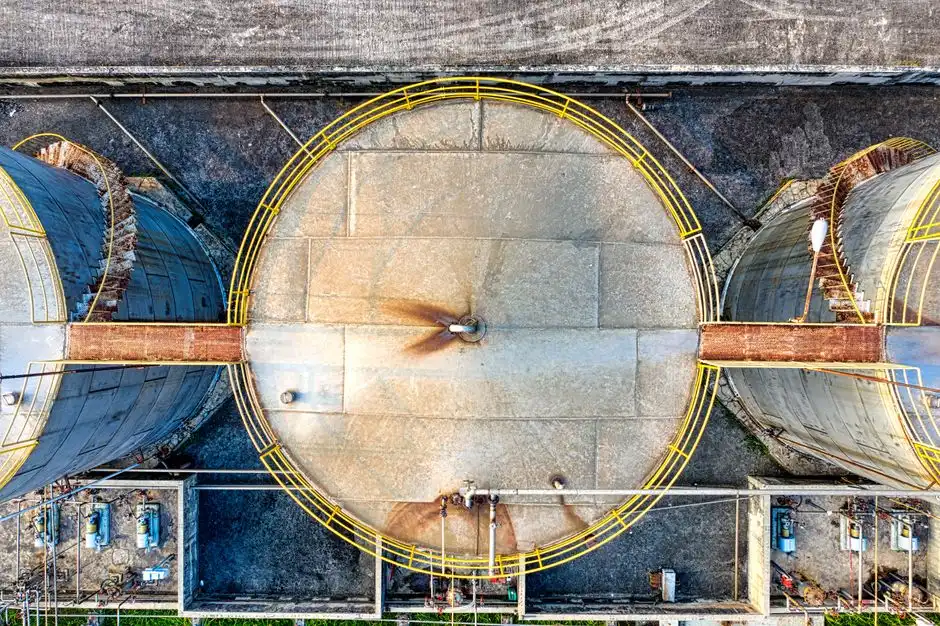
Subsurface liability is the line item that can dwarf the ETP retrofit cost. The deal team must require a NAPL mass-balance and a conceptual site model (CSM) from the seller's environmental consultant, and must commission an independent third-party peer review of both. This is non-negotiable for any site older than 15 years or any site where a Phase II ESA has returned even a single exceedance of a state groundwater protection standard.
The CSM has to integrate the groundwater monitoring well network and the most recent groundwater monitoring report against the local contaminated-site registry. Historical leak sources specific to battery plants include: floor drains in cell-coating areas (NMP and PVDF binder carriers), trench drains in electrolyte-mixing rooms (LiPF6 hydrolysis to HF and fluoride), drum storage pads for LiPF6 and NMP, and the ETP sludge drying beds themselves, which can become a long-term leachate source if the pad liner is compromised. Once the CSM is complete, the deal team should establish a remediation reserve equal to the midpoint of the seller's estimated cleanup cost and the independent third-party estimate, plus a 25–50% contingency for unforeseen conditions encountered during remediation fieldwork (typical engineering practice).
Phase 5: ETP Retrofit vs. Greenfield Rebuild — Capex Decision Framework
The retrofit-versus-rebuild decision turns the diligence findings into a defensible capex envelope the deal team can carry into price negotiation. Build the envelope across the standard project phases — site survey, influent characterization, process design, BOQ, equipment supply, installation, and full commissioning — without committing to a single dollar figure at this stage. Apply the ETP + RO + ZLD reference for high-purity water reuse, since LG's cell-coating process routinely demands this train and ZLD adoption for battery plants is now an industry standard rather than a differentiator (per Green Mark Engineering, 2026).
Score each ETP problem category against trigger thresholds drawn from the standard troubleshooting matrix. High COD/BOD after the biological stage triggers an AOP or MBR upgrade; excessive sludge production triggers aeration optimization and review of the sludge dewatering press duty cycle; foaming or residual color triggers coagulant dosing and carbon polishing upstream of a DAF pre-treatment unit. For a complete MBR installation and commissioning scope, the MBR installation and commissioning guide provides the reference task list. The final retrofit-versus-rebuild decision is then made on a 5-year OPEX comparison covering chemical dosing, sludge disposal, energy, and labor, not on capex alone — a cheaper retrofit that doubles OPEX rarely survives a battery plant's first five-year plan.
| ETP Problem Indicator | Trigger Threshold (typical) | Recommended Retrofit Action | Decision Driver |
|---|---|---|---|
| COD/BOD above biological-stage outlet target | > site discharge permit limit for 3 consecutive months | Add AOP upstream of MBR, or replace with new MBR | Capex vs. NOV risk |
| Excess sludge production | Sludge handling exceeds 80% of dewatering press capacity | Aeration optimization, polymer dosing review, press upgrade | Sludge disposal OPEX |
| Foaming or color not removed | Visible foaming or APHA color > 50 in clarifier effluent | Coagulant dose tuning, activated carbon polish, DAF pre-treatment | Effluent quality & reuse fit |
| Hydraulic overload | Daily flow > 110% of design flow for 30 days | Flow equalization, split-stream treatment, or greenfield parallel train | Lost production vs. capex |
For an in-region pretreatment compliance reference relevant to EV-component plants, the EV plant pretreatment compliance guide offers a useful side-by-side of municipal discharge limits versus typical battery-process wastewater profiles.
Phase 6: Contractual Protections — Environmental Indemnities, Escrows & Reps
The technical findings must be transposed into deal-document language that survives closing. The first instrument is a specific environmental indemnity for pre-closing contamination, with a survival period of 5–7 years aligned to the longest regulatory monitoring cycle (often the groundwater monitoring period under a state VCP or RCRA permit). The indemnity should be uncapped for fraud or intentional misrepresentation, and capped at the purchase price for ordinary pre-closing contamination.
Second, establish a remediation escrow funded at 100–150% of the third-party cleanup estimate, released against milestone-based deliverables (Phase II completion, remedial action plan approval, completion of removal, no further action letter). Third, include compliance representations and warranties tied to the specific NPDES or local discharge permit limits and to the ETP's design-basis parameters — these are the numbers the buyer can actually verify in a 12-month lookback. Finally, for any site with documented groundwater impact, add a "no new release" covenant with a right-to-inspect and a right-to-stop-work clause, so that any post-close release triggers seller responsibility before it becomes a successor-liability problem for the buyer.
Frequently Asked Questions
What is the difference between an ETP audit and a Phase II ESA?
An ETP audit reviews the operational performance, design basis, and compliance status of the wastewater treatment plant against its discharge permit. A Phase II ESA (per ASTM E1903-19) is a subsurface investigation involving soil, groundwater, and NAPL sampling to characterize contamination in the vadose and saturated zones. The two are complementary: the ETP audit tells you whether the plant is fit for service; the Phase II ESA tells you whether the site itself is fit for ownership.
How long does a wastewater due diligence take for a battery plant acquisition?
A Phase I ESA typically takes 4–6 weeks; a Phase II ESA adds 6–10 weeks depending on well installation and laboratory turnaround. The 6-section ETP audit, influent/effluent review, and NAPL mass-balance can run in parallel and add 3–5 weeks. Plan for 12–16 weeks total to signing.
Who pays for legacy contamination discovered after closing?
Under CERCLA successor liability (42 USC §9607), the buyer is strictly liable as the current owner regardless of innocence. The seller's contractual obligation to pay is governed by the environmental indemnity, escrow terms, and reps and warranties — which is why a specific indemnity with a 5–7 year survival period and a funded escrow is non-negotiable.
What capex should be budgeted for ETP retrofit at a legacy battery plant?
Benchmark the retrofit against a greenfield build of equivalent hydraulic capacity, then apply a 10–30% uplift for legacy conditions (tie-ins, demolition, contaminated soil management, permit re-issuance). Refine the number with a Phase II ESA outcome and a 5-year OPEX comparison before committing.
Does LG Energy Solution have a public EHS standard for acquired assets?
LG Energy Solution publishes a Sustainability Report covering EHS management at operated sites, but the binding standard for any acquired asset is the negotiated purchase agreement, including the environmental indemnity, the ETP design basis reps, and the discharge permit compliance covenants. Treat any public standard as a floor, not a ceiling.