PCB Discharge Standards Plants Must Design Against
PCB discharge standards require aqueous effluent below 0.5 ppb under EPA 40 CFR 761. EU surface-water objectives sit near 0.1 ppb, while China GB 8978-1996 lists 0.003 mg/L (3 ppb) for industrial discharge. GAC plus NF or RO polishing is the usual compliance train, with EPA Method 608.3 sampling rules for hold time and preservation.
Treatment trains combining activated carbon adsorption (99.9% removal near 100 ppb influent) and membrane filtration remain industry practice for those limits. Sampling must keep pH 5.0–9.0, refrigeration ≤6°C, and extraction within 7 days. A Midwest transformer recycling plant paid a $1.2M EPA fine in 2024 after routine samples exceeded the 0.5 ppb threshold.
Polychlorinated biphenyls challenge EHS managers because they are chemically stable and bioaccumulate. EPA 2023 data used in plant briefings note that about 1 ppb in water can drive tissue concentrations above 10,000 ppb, which aligns with IARC Group 1 carcinogenicity concern. Regulatory triggers follow concentration bands: remediation waste >50 ppm PCB must go to a TSCA-approved chemical waste landfill, while 1–50 ppm material is restricted to specified industrial landfills under rules such as 9VAC20-81-630.
Plants also face a detection-versus-limit gap. EPA Method 1668C can resolve congeners near 0.01 ppb, while discharge permits still tighten. Most plants we size for PCB rinse water therefore design the polish stage for the stricter of today’s permit and the next published revision, not only the 2020-era 0.5 ppb comfort zone. EU discussions have pointed toward surface-water objectives near 0.05 ppb by 2026.
Global PCB Wastewater Discharge Limits: EPA vs. EU vs. China GB vs. Japan
The United States Environmental Protection Agency enforces a 0.5 ppb discharge limit for PCB remediation waste under 40 CFR 761, excluding only “totally enclosed” in-service equipment such as operating transformers. That figure is the baseline many multinational permits still reference, yet watershed sensitivity and infrastructure maturity create regional gaps. The EU Water Framework Directive (2000/60/EC) and priority-substance rules under 2008/105/EC push surface-water objectives toward 0.1 ppb to protect aquatic ecosystems from persistent organic pollutants.
| Region / Regulation | Industrial Discharge Limit | Surface/Drinking Water Limit | Sampling Frequency | Primary Enforcement Agency |
|---|---|---|---|---|
| USA (EPA 40 CFR 761) | 0.5 ppb (µg/L) | 0.0005 ppb (MCLG) | Quarterly / Event-based | US EPA / State DEP |
| European Union (2008/105/EC) | 0.1 ppb (µg/L) | 0.01 ppb (Proposed 2026) | Monthly | EEA / National Agencies |
| China (GB 8978-1996) | 0.003 mg/L (3 ppb) | 0.00002 mg/L (0.02 ppb) | Weekly for Class I | MEE (Ministry of Ecology) |
| Japan (Water Pollution Act) | 0.0005 mg/L (0.5 ppb) | Not Detectable (ND) | Monthly (>1kg handling) | Ministry of the Environment |
In China, GB 8978-1996 mandates 0.003 mg/L (3 ppb) for industrial discharge. That value sits alongside broader global wastewater discharge standards for electronics manufacturing, though it often lacks the congener-resolved sampling detail used in Western PCB programs. Many multinational sites in China therefore run EPA Method 608.3 internally to meet ESG audit trails. Japan mirrors the 0.5 ppb aqueous limit but adds administrative load: monthly sampling when a facility handles more than 1 kg of PCBs per year. Penalties across these jurisdictions range from fines to criminal action and immediate shutdowns.
What are water discharge standards for PCBs?
Water discharge standards for PCBs are aqueous concentration limits in the permit or national rule at the outfall. Typical industrial figures are 0.5 ppb under EPA 40 CFR 761, 0.1 ppb for EU surface-water objectives, 0.003 mg/L under China GB 8978-1996, and 0.0005 mg/L in Japan. Drinking-water and MCLG values can be far lower and must not be used as industrial effluent design caps.
What are CPCB effluent discharge standards?
CPCB effluent discharge standards are India’s Central Pollution Control Board industry-wise limits under the Environment (Protection) Rules, enforced through State Pollution Control Board consents. This guide does not invent a single universal CPCB PCB ppb number. PCB-bearing remediation and rinse streams are usually controlled by hazardous-waste rules plus site-specific consent conditions. Plants shipping into the US or EU often adopt EPA 0.5 ppb or EU 0.1 ppb as an internal design floor when the local consent is silent on a PCB-specific aqueous value.
When you benchmark global programs, keep PCB-specific limits separate from general country pages. Examples include industrial wastewater discharge limits – hungary and broader wastewater effluent discharge standards.
Nutrient frameworks such as nom-001-semarnat-2021 (wastewater discharge limits) also address different pollutants. Those sibling guides are useful context, not PCB design bases. PCB trains still need the ppb-scale adsorption and membrane stages described below.
PCB Treatment Technologies: Engineering Specs, Removal Rates & Cost Breakdown
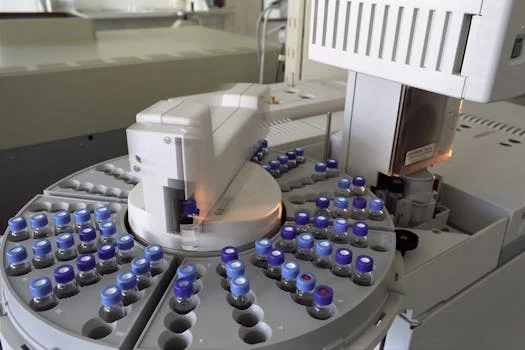
Selecting a treatment technology starts with influent PCB concentration versus the permit limit. Granular activated carbon remains the common primary stage because PCBs are hydrophobic and adsorb strongly. EPA 2024 benchmarks referenced in design packages show about 99.9% removal when influent sits near 100 ppb, provided empty bed contact time stays in the 10–20 minute band. When influent exceeds about 1,000 ppb, membranes or chemical oxidation are needed to stop rapid media exhaustion.
| Technology | Removal Efficiency | Influent Range | CAPEX ($/m³/day) | OPEX ($/m³) | Best Use Case |
|---|---|---|---|---|---|
| GAC Adsorption | 99.9% | 10–1,000 ppb | $500 – $1,200 | $0.50 – $1.00 | Bulk removal / Polishing |
| Nanofiltration (NF) | 99.95% | <500 ppb | $1,500 – $2,500 | $1.20 – $1.80 | Strict <0.1 ppb limits |
| Reverse Osmosis (RO) | 99.99% | <2,000 ppb | $2,000 – $3,500 | $1.50 – $2.50 | Zero-risk compliance |
| UV/H₂O₂ Oxidation | 95–99% | 100–10,000 ppb | $3,000 – $5,000 | $2.00 – $4.00 | High-strength waste |
| MBR (Biological) | 85–95% | <10 ppb | $1,200 – $2,000 | $0.80 – $1.20 | Pre-treated streams |
Membrane stages give the highest margin against ultra-low permits. Installing RO membranes for PCB polishing to 0.5 ppb also cuts dissolved solids and many metals, but RO needs disciplined pre-treatment: TSS below 50 mg/L and oil/grease below 10 mg/L. For dilute streams, MBR systems for low-PCB wastewater (<10 ppb) can help when specialized organisms such as Dehalococcoides are supported. Those biological steps need hydraulic retention times of 24–48 hours and biphenyl co-metabolism to stay active, so they are rarely used alone for compliance.
Designing a PCB Wastewater Treatment Train: Step-by-Step Engineering Blueprint
A durable PCB train must handle the compound’s tendency to ride on solids and oils. Step 1 is influent characterization under EPA Method 608.3: amber glass bottles, no plastic that scavenges PCBs, and oil/grease checked against the 10 mg/L fouling threshold. Step 2 is pre-treatment. Most oily rinse waters we see need DAF systems for PCB wastewater pre-treatment to strip emulsified oil and PCB-laden suspended solids before carbon or membranes.
Step 3, primary treatment, is usually GAC. For 100 m³/day at 500 ppb, a dual-vessel lead-lag layout lets operators change media without stopping discharge. Step 4, secondary polishing, uses NF or RO to finish below 0.5 ppb or 0.1 ppb. Clean-in-place with citric acid or NaOH keeps RO transmembrane pressure inside a typical 15–40 bar operating window.
Step 5, sludge management, is where many projects fail audits. Physical separation concentrates PCBs; it does not destroy them. Sludge above 50 ppm PCB is TSCA remediation waste and should be dewatered on a high-pressure plate and frame filter press before licensed hazardous-waste landfill disposal. Step 6 is validation: lab Method 608.3 results still govern the permit, while online TOC or GC-MS surrogates give early breakthrough warning between grab samples.
This blueprint also matters when the site mixes PCB-bearing rinses with other electronics chemistries, including wastewater treatment for PCB manufacturing byproducts, where fluoride, acids, and swing flows can upset a carbon-only layout.
Compliance Decision Framework: How to Choose the Right PCB Treatment Strategy
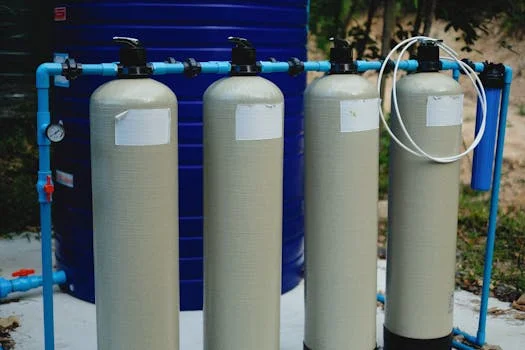
Treatment strategy selection sits at the intersection of influent load, permit stringency, and capital budget. A site facing a 0.5 ppb limit with low influent may run dual-stage GAC alone. A plant aiming at EU-class 0.05–0.1 ppb objectives almost always needs membrane polishing. The matrix below is a starting point based on HydropureWater field sizing data (2025).
| Scenario | Influent PCB | Flow Rate | Target Limit | Recommended Train | Est. CAPEX |
|---|---|---|---|---|---|
| Small Lab / Site | <10 ppb | <50 m³/day | 0.5 ppb | Dual-Stage GAC | $50K – $100K |
| Electronics Plant | 10–500 ppb | 100–500 m³/day | 0.1 ppb | DAF + GAC + NF | $250K – $600K |
| Transformer Recycle | >1,000 ppb | >500 m³/day | 0.5 ppb | DAF + GAC + RO | $1M – $2.5M |
| Chemical Remediation | >5,000 ppb | Variable | 0.5 ppb | Oxidation + GAC + RO | $2M+ |
Cost control favors a bulk-then-polish sequence. Dropping 500 ppb to about 10 ppb on GAC is cheaper than pushing the full load through RO. Regenerating GAC off-site can cut OPEX by up to 30% versus virgin carbon replacement on many service contracts. At high flow, RO permeate reuse for cooling-tower makeup can offset raw-water purchase when local codes allow non-potable recycle.
PCB treatment selection checklist
Before freezing the P&ID, confirm these seven items in writing:
- Permit limit in ppb (or mg/L) and whether it is total PCB or congener-specific.
- Influent PCB range in ppb, including upset peaks, not only the average.
- Oil/grease and TSS in mg/L against the 10 mg/L and 50 mg/L pre-treatment gates.
- Design flow in m³/day (and US gpd) at average and peak hour.
- Sludge PCB in ppm versus the 50 ppm TSCA landfill threshold.
- Sampling method (EPA 608.3 hold times, amber glass, pH 5.0–9.0, ≤6°C).
- Polish technology margin if EU moves surface objectives toward 0.05 ppb by 2026.
Case Study: PCB Wastewater Treatment for a Transformer Recycling Plant (0.5 ppb Compliance)
A US Midwest transformer recycling facility needed to treat 1,200 m³/day of rinse water and floor washings. Influent averaged about 2,000 ppb PCB with oil/grease up to 45 mg/L, and a consent decree required continuous compliance with the EPA 0.5 ppb limit. HydropureWater engineers specified coarse screening, DAF for oil removal, three-stage GAC, and final RO polishing.
In the first six months, DAF removed about 85% of oil and grease, which protected the carbon beds. GAC then delivered about 99.5% PCB removal, leaving roughly 10 ppb ahead of RO. The RO stage held effluent near 0.4 ppb, under the 0.5 ppb ceiling. Capital cost was $2.1M ($1,750 per m³/day of capacity) with OPEX near $1.80/m³.
Two operating lessons stood out. Holding RO feed near pH 6.5 limited calcium carbonate scaling and extended membrane life by about 40% versus the unadjusted baseline. An online PCB analyzer cut expensive Method 608.3 lab frequency by about 60% because surrogate trends proved continuous control between official grabs.
Who This Is For / Next Step
This guide is for EHS managers, process engineers, and EPC leads sizing PCB remediation or transformer-recycling wastewater to 0.5 ppb or stricter EU-class targets. Look elsewhere if your permit covers only conventional BOD/COD with no PCB clause, or if you need only municipal sanitary design. If you already have influent PCB, oil/grease, and flow data, request a train size check through our PCB wastewater treatment inquiry form so CAPEX and media life can be estimated against your permit.
Frequently Asked Questions
What is the EPA PCB wastewater discharge limit?
The EPA requires PCB concentrations below 0.5 ppb in wastewater under 40 CFR 761 for remediation waste, including transformer fluids and contaminated rinse water. Totally enclosed in-service equipment is treated differently from discharge streams. Compliance sampling should follow EPA Method 608.3: pH 5.0–9.0, refrigeration ≤6°C, and extraction within 7 days after collection in amber glass.
How do I sample PCB wastewater for compliance testing?
Use EPA Method 608.3 end to end. Collect samples in amber glass bottles, adjust pH to 5.0–9.0 with NaOH or H₂SO₄ as required, refrigerate at ≤6°C, protect from light, and extract within 7 days. Do not use polyethylene containers, because PCBs adsorb to many plastics and bias the result low before the lab ever sees the bottle.
What treatment reaches PCB below 0.1 ppb?
A two-stage train is the practical answer: granular activated carbon for bulk removal (about 99.9% near 100 ppb influent at 10–20 min EBCT), then nanofiltration or reverse osmosis to finish below 0.1 ppb. DAF or equivalent oil removal ahead of carbon and membranes is required when oil/grease approaches or exceeds 10 mg/L, or fouling will erase the design margin.
Can biological treatment remove PCBs from wastewater?
Biological treatment can help mainly at low concentrations below about 10 ppb. Organisms such as Dehalococcoides need anaerobic conditions, biphenyl co-substrate, and hydraulic retention times of 24–48 hours. Kinetics are slow and incomplete dechlorination remains a residual risk, so biology is seldom the sole compliance barrier for a 0.5 ppb or 0.1 ppb permit.
How much does PCB wastewater treatment cost?
Unit costs track concentration and flow. GAC-only operation often lands near $0.50–$1.00/m³, GAC plus NF near $1.00–$2.00/m³, and oxidation plus RO near $2.00–$4.00/m³. Capital ranges from about $50K for small dual-GAC skids to more than $3M for large industrial plants, with transformer-recycling examples near $1,750 per m³/day of installed capacity.