Why Monocrystalline Silicon Wastewater Compliance Is a Global Challenge
Monocrystalline silicon wastewater discharge standards vary globally, with China’s GB 8978-1996 setting strict limits for fluoride (<10 mg/L), COD (<100 mg/L), and heavy metals (e.g., nickel <1 mg/L). In contrast, India enforces a fluoride limit of <2 mg/L, while the EU’s BAT Reference Document for Waste Treatment (2021) targets <5 mg/L for fluoride and <50 mg/L for COD. Compliance requires tailored treatment systems: high-concentration wastewater (e.g., from PSG etching) typically undergoes chemical precipitation, while low-concentration streams use DAF or MBR for 95%+ contaminant removal. This guide compares global standards, details engineering parameters, and provides a zero-risk compliance blueprint for solar cell manufacturers.
A 2023 audit of a Jiangsu solar cell plant found fluoride levels at 18 mg/L, nearly double China’s GB 8978-1996 limit, which triggered an immediate three-month production halt and significant regulatory fines. This scenario is increasingly common as environmental agencies transition from periodic sampling to real-time sensor monitoring. Monocrystalline silicon production is chemically intensive, generating complex wastewater streams characterized by fluoride (50–300 mg/L), high Chemical Oxygen Demand (COD) from organic additives (500–2,000 mg/L), Total Suspended Solids (TSS) from silicon fines (200–800 mg/L), and heavy metals like nickel or copper from metallization processes. The pH of these streams often fluctuates between extremes of 2 and 12, complicating the stabilization of biological treatment units.
The challenge for EHS managers lies in the regional divergence of enforcement. In India, extreme water scarcity has driven the Central Pollution Control Board (CPCB) to enforce a fluoride limit of <2 mg/L, a threshold that cannot be met by conventional calcium precipitation alone. In the European Union, the Best Available Techniques (BAT) framework emphasizes resource recovery and low-COD discharge (<50 mg/L) to protect sensitive watersheds. China’s dual-standard system—distinguishing between direct discharge into the environment and indirect discharge into municipal sewers—further complicates the engineering design, as plants must often over-engineer systems to accommodate future regulatory tightening, such as the anticipated 2025 revisions that may align fluoride limits with EU BAT standards.
Global Discharge Standards for Monocrystalline Silicon Wastewater: China GB vs EU, US, and India Limits
Regulatory frameworks for photovoltaic wastewater are becoming increasingly stringent, with India's <2 mg/L fluoride limit representing the most aggressive global benchmark for monocrystalline silicon manufacturers. To design a compliant system, engineers must first identify the specific discharge category (Direct vs. Indirect) and the local sensitivity of the receiving water body. While China’s GB 8978-1996 remains the primary reference for domestic plants, many multinational corporations apply EU BAT standards globally to ensure long-term operational viability across multiple jurisdictions.
| Parameter | China (GB 8978-1996, Table 2) | EU (BAT Reference 2021) | US (EPA Effluent Guidelines) | India (CPCB Standards) |
|---|---|---|---|---|
| Fluoride (F-) | <10 mg/L (Direct) | <5 mg/L | <10-20 mg/L (Varies by State) | <2 mg/L |
| COD (Chemical Oxygen Demand) | <100 mg/L | <50 mg/L | <120 mg/L | <250 mg/L |
| TSS (Total Suspended Solids) | <70 mg/L | <35 mg/L | <30 mg/L | <100 mg/L |
| pH Value | 6.0–9.0 | 6.0–9.0 | 6.0–9.0 | 5.5–9.0 |
| Nickel (Ni) | <1.0 mg/L | <0.5 mg/L | <1.0 mg/L | <3.0 mg/L |
| Copper (Cu) | <0.5 mg/L | <0.2 mg/L | <1.0 mg/L | <3.0 mg/L |
| TDS (Total Dissolved Solids) | Not Specified | <1,500 mg/L (Site specific) | Varies by locality | <2,100 mg/L |
India’s fluoride limit of <2 mg/L is five times stricter than China’s standard, necessitating the use of advanced adsorption (activated alumina) or membrane processes like Reverse Osmosis (RO) following primary chemical treatment. China’s 2025 regulatory roadmap suggests a move toward "Class A" standards in sensitive regions, potentially lowering fluoride limits to <5 mg/L and COD to <50 mg/L. This shift aligns with the EU’s BAT philosophy, which prioritizes the reduction of total pollutant load rather than just concentration. For procurement leads, this means that a system designed today for <10 mg/L fluoride may require a modular upgrade path for polishing stages to avoid future obsolescence.
Wastewater Sources in Monocrystalline Silicon Production: Process Steps and Contaminant Profiles
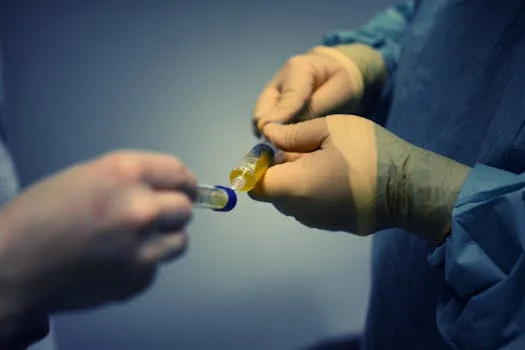
High-concentration wastewater from PSG etching and saw damage removal accounts for only 20% of the total volume but contains over 80% of the total fluoride and COD load. Understanding the segregation of these streams is critical for optimizing treatment costs. If high-concentration acids are mixed with low-concentration rinse water, the resulting volume becomes too large for cost-effective chemical precipitation, leading to massive chemical consumption and sludge production.
| Process Step | Wastewater Volume (m³/ton Si) | Primary Contaminants | Typical Concentrations (mg/L) |
|---|---|---|---|
| Saw Damage Removal / Texturing | 15–25 | TSS, Alkali, COD | TSS: 400–800; COD: 500–1,000 |
| PSG Etching (Phosphosilicate Glass) | 5–10 | Fluoride, Phosphorus, COD | F: 200–500; COD: 1,500–3,000; P: 50–100 |
| Silicon Nitride (Si3N4) Deposition | 2–5 | Ammonia, TSS | NH3-N: 50–150; TSS: 100–200 |
| Screen Printing & Metallization | 1–3 | Heavy Metals (Ni, Cu, Ag), COD | Ni: 5–20; Cu: 10–30; COD: 500–1,500 |
| Rinse Water (General) | 50–100 | Low-level F, Low-level COD | F: 10–20; COD: 50–100 |
PSG etching wastewater is the most challenging stream, containing up to 3,000 mg/L COD and significant phosphorus levels, requiring a dedicated pretreatment stage. Phosphorus removal in solar cell wastewater treatment often involves a two-stage precipitation process using calcium hydroxide followed by aluminum sulfate. Meanwhile, saw damage removal generates significant silicon fines (TSS), which can clog downstream membranes if not removed via high-efficiency clarification. By segregating these "hot" streams, manufacturers can apply targeted chemical dosing to a small volume, achieving 90% contaminant removal before the water is blended with rinse streams for final polishing.
Treatment Process Engineering: How to Meet Discharge Standards for Fluoride, COD, and Heavy Metals
Chemical precipitation remains the foundational technology for fluoride removal, but achieving limits below 10 mg/L requires precise control of pH and dosing ratios. For high-concentration streams, calcium chloride (CaCl2) is typically dosed at 200–500 mg/L, with pH adjusted to 8.5–9.2 using lime or NaOH. This process forms calcium fluoride (CaF2) precipitates, which require a minimum settling time of 2 to 4 hours. While this can reduce fluoride to 15 mg/L, achieving the <2 mg/L India limit or <5 mg/L EU limit requires secondary polishing using chemical dosing systems for fluoride precipitation in silicon wastewater that incorporate polyaluminum chloride (PAC) as a coagulant.
For the removal of silicon fines and organic COD, Dissolved Air Flotation (DAF) is the engineering standard. DAF systems for monocrystalline silicon wastewater treatment utilize microbubbles (30–50 μm) to float suspended solids to the surface. Operating at hydraulic loading rates of 5–10 m/h, DAF units achieve 95% TSS removal and up to 70% COD removal when paired with appropriate flocculants. This is particularly effective for treating texturing wastewater where silicon particles are too light for traditional sedimentation.
When high-quality effluent is required for reuse or to meet ultra-low COD limits, MBR systems for fluoride and COD removal in silicon wastewater offer a compact solution. MBR technology combines biological degradation with membrane filtration (0.1 μm pore size). By maintaining a high Mixed Liquor Suspended Solids (MLSS) concentration of 8,000–12,000 mg/L, MBR systems can reduce effluent COD to <10 mg/L. For residual fluoride polishing, adsorption tanks filled with activated alumina or bone char provide a final safety net, with an adsorption capacity of 1–3 mg F/g, ensuring compliance even during influent spikes.
| Treatment Process | Target Contaminant | Engineering Parameter | Efficiency / Effluent Quality |
|---|---|---|---|
| Two-Stage Precipitation | Fluoride, Phosphorus | pH 8.5–9.2; Ca:F ratio 1.5:1 | F <15 mg/L; P <0.5 mg/L |
| DAF (Dissolved Air Flotation) | TSS, Insoluble COD | Microbubble 30–50 μm; 5–10 m/h | TSS <20 mg/L; 70% COD removal |
| MBR (Membrane Bioreactor) | Soluble COD, Ammonia | 0.1 μm Pore; MLSS 10k mg/L | COD <10 mg/L; NH3-N <1 mg/L |
| Activated Alumina Adsorption | Residual Fluoride | SV: 2–5 h⁻¹; pH 5.5 | F <1.5 mg/L |
Technology Selection Matrix: Matching Treatment Systems to Local Discharge Limits
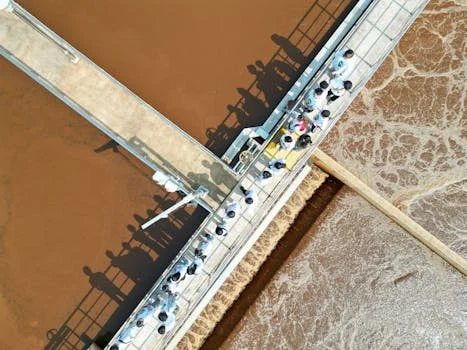
Selecting the appropriate wastewater system requires balancing local discharge limits with CapEx and OpEx constraints. A plant in a region with lax enforcement may prioritize low-CapEx DAF systems, whereas a facility in a water-stressed area like the US Southwest or India will benefit from water reuse strategies for monocrystalline silicon wastewater. The following matrix provides a decision framework based on 2025 industrial performance benchmarks (HydropureWater field data).
| System Type | Best For... | Effluent Quality (F / COD) | CapEx ($/m³/day) | OpEx ($/m³) | Footprint |
|---|---|---|---|---|---|
| Chemical + DAF | China GB Indirect Discharge | <15 mg/L / <100 mg/L | $800–$1,200 | $0.40–$0.60 | Medium |
| Chemical + MBR | EU BAT / China Direct | <10 mg/L / <30 mg/L | $1,500–$2,200 | $0.70–$0.90 | Small |
| DAF + RO + Adsorption | India CPCB / Water Reuse | <1.5 mg/L / <10 mg/L | $2,500–$3,500 | $1.10–$1.50 | Large |
| ZLD (Zero Liquid Discharge) | Total Compliance / No Sewer | No Discharge | $8,000–$12,000 | $3.50–$5.00 | Very Large |
For a standard 50 m³/h capacity, a DAF-based system offers the lowest entry cost, typically ranging from $150,000 to $250,000 in CapEx. However, if the plant must meet India’s <2 mg/L fluoride limit, adding an adsorption or Reverse Osmosis (RO) system for silicon wastewater is mandatory. While zero liquid discharge (ZLD) systems for silicon wastewater represent the highest cost tier, they eliminate the risk of regulatory fines entirely and are increasingly favored by large-scale manufacturers (2,000 m³/day+) where the cost of water procurement outweighs the OpEx of evaporation and crystallization.
Zero-Risk Compliance Roadmap: Step-by-Step Implementation for Solar Cell Manufacturers
Achieving zero-risk compliance is a systematic process that begins with a granular audit of every chemical input in the production line. Engineering leads should follow this six-step roadmap to ensure the selected treatment system meets both current and future regulatory requirements while optimizing operational costs.
- Step 1: Audit Wastewater Streams. Conduct a 7-day composite sampling of all discharge points. Use ICP-OES for heavy metals and ion-selective electrodes for fluoride. Identify flow variations between peak production and maintenance cycles.
- Step 2: Benchmark Against Local Limits. Create a compliance checklist comparing your current influent levels to China GB 8978-1996, India CPCB, or EU BAT. Determine if you are aiming for direct discharge or water reuse.
- Step 3: Select Treatment Technology. Use the Technology Selection Matrix to match your effluent requirements. If fluoride is >200 mg/L, prioritize a dedicated chemical dosing system for fluoride precipitation.
- Step 4: Pilot Testing. Run a 30-day pilot on a 1 m³/h scale for DAF or MBR. Target 90% COD removal and establish the optimal coagulant-to-contaminant ratio to minimize sludge volume.
- Step 5: Full-Scale Deployment. Install skid-mounted units for faster commissioning. For a 50 m³/h plant, expect a CapEx of approximately $200,000 and an OpEx of $0.65/m³. Integrate a disinfection system for wastewater reuse if feeding back into cooling towers.
- Step 6: Continuous Monitoring. Install online fluoride, COD, and pH sensors with automated data logging. This provides a legal defense in case of municipal "false positive" audits and allows for real-time dosing adjustment.
Frequently Asked Questions
Q: What is the fluoride discharge limit for monocrystalline silicon wastewater in China?
A: China’s GB 8978-1996 sets a fluoride limit of <10 mg/L for direct discharge. For indirect discharge to municipal sewers, the limit is often <20 mg/L, though local industrial park rules may be stricter. Compliance typically requires chemical precipitation with calcium chloride, achieving 80–90% removal efficiency before secondary treatment.
Q: How do I treat high-COD wastewater from PSG etching?
A: PSG etching wastewater contains 1,500–3,000 mg/L COD. Engineers should treat it with a combination of chemical oxidation or precipitation (pH 8.5, 300–500 mg/L FeCl₃) followed by DAF or MBR. DAF systems remove up to 70% of insoluble COD, while MBR units can achieve effluent COD levels <50 mg/L, suitable for reuse.
Q: What’s the cost of a DAF system for 50 m³/h of silicon wastewater?
A: A 50 m³/h DAF system typically involves a CapEx of $150,000–$250,000. OpEx ranges from $0.50–$0.80/m³, covering electricity, polymers, and sludge disposal. Annual savings from reduced municipal discharge fees and potential water reuse can often offset 20–30% of the annual OpEx.
Q: Can I reuse treated monocrystalline silicon wastewater?
A: Yes, by using MBR followed by Reverse Osmosis (RO), plants can achieve reuse-quality effluent with <10 mg/L COD and <1 mg/L fluoride. MBR-RO systems for 50 m³/h cost between $300,000 and $500,000 but can reduce fresh water consumption by 30–50%, which is vital for plants in water-scarce regions.
Q: What are the penalties for non-compliance with silicon wastewater discharge standards?
A: Penalties are severe. In China, fines range from ¥100,000 to ¥1M ($14,000–$140,000) for first offenses, with potential production halts. In the EU, fines can reach up to 5% of annual revenue or €500,000, while India’s CPCB can issue "closure notices" for repeated fluoride exceedances.