Why Residential Wastewater in Turkey Is a 2026 Priority
Turkey's renewable supply sits at 1,460 m³ per capita per year, below the UN water-stress threshold of 1,700 m³ per capita, while total consumption jumped from 43 BCM in 2010 to 112 BCM in 2023, with irrigation claiming roughly 64% of that draw (SESRC, 2024). Despite operating 1,170 domestic wastewater treatment facilities that handle 10.5 MCM per day, the country reuses only 0.78% of treated municipal effluent, and only 15 of 26 reuse-equipped plants actually produced reusable water in 2017 due to broken tertiary trains (Fanack, 2024; MoEU/SU 2018). Konya's dual-use scheme, where treated wastewater supplements irrigation canals, has already cut freshwater abstraction by 15%, and Turkish State Meteorological Service projections show Central Anatolia precipitation falling up to 12% by 2050, adding an estimated 9 BCM of agricultural water demand (TSMS, 2024). The EU–Turkey Water Cooperation Framework 2024–2029 has earmarked €120M for capacity building and pilot green-infrastructure projects, and residential developers who front-load reuse-ready designs into 2026 builds position themselves to capture that funding. The macro picture is unambiguous: for a villa cluster, housing estate, or rural community, a packaged wastewater treatment plant is no longer a compliance chore but a water-security asset.
The 2026 Regulatory Stack for Residential Developers
The Urban Waste Water Treatment Regulation (Official Gazette 26047, 08/01/2006) is the primary instrument: settlements above 2,000 PE must meet secondary treatment standards, and any discharge into a sensitive zone requires tertiary polishing. In residential terms, "sensitive" means drinking-water reservoirs, closed basins, and designated bathing waters — almost every gated community built near the Bosphorus, the Gulf of İzmir, or the Konya Closed Basin falls into this bracket. The 2004 Water Pollution Control By-Law layers on industrial-style ceilings for BOD, COD, and heavy metals when a residential complex adds commercial kitchens, in-house laundries, or pool backwash, while the Industrial Wastewater Control Regulation triggers sector-specific BAT references for those side streams. For unrestricted irrigation reuse, the Ministry of Agriculture enforces a microbiological ceiling of 1,000 faecal coliform per 100 mL, TSS below 20 mg/L, and turbidity under 5 NTU; high-value crops drop to TSS ≤ 10 mg/L, and cooling-tower make-up water requires a 0.5 mg/L chlorine residual (MoEU, 2024). Enforcement is real: Provincial Directorates run quarterly inspections, fines range from 10,000 TL to 1,000,000 TL, new builds must submit a compliance schedule within six months of commissioning, and non-conforming plants have a 30-day corrective action window. The stack is dense, but the practical reading is simple: if the site is above 2,000 PE or near a sensitive water body, design for tertiary from day one.
Sizing a Residential System: Flows, Loads, and PE Tiers
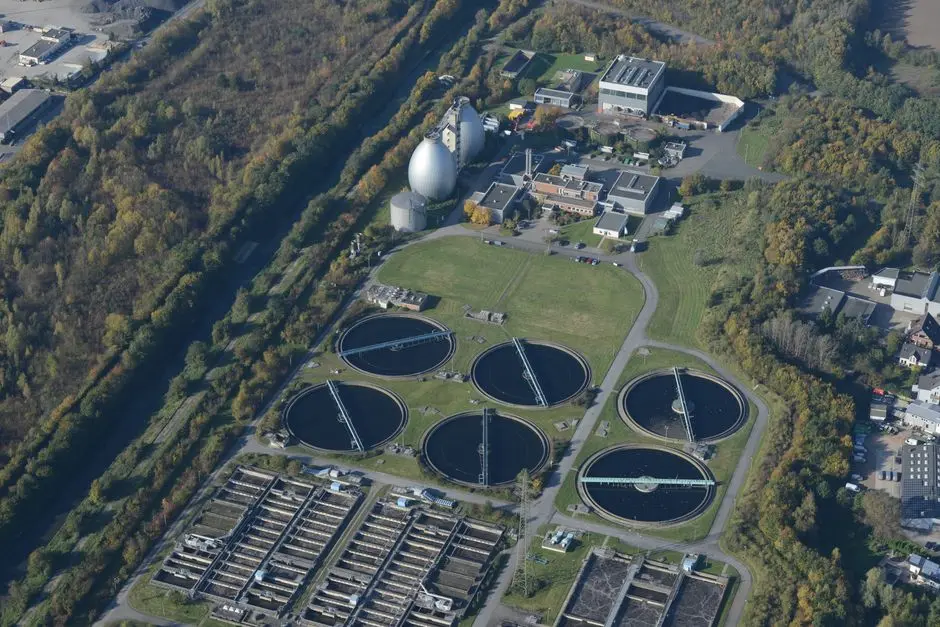
Turkish gated communities typically generate 150–200 L per capita per day of domestic flow, while rural villages with outdoor standpipes and conservative fixtures sit closer to 100–130 L per capita per day. Apply a peaking factor of 2.0–2.5 to capture morning and evening peaks; ignoring that multiplier is the most common reason package plants overflow in July. Per-capita loadings convert to influent concentrations of 250–400 mg/L BOD₅ and 300–450 mg/L TSS, derived from 40–55 g/capita/day BOD₅ and 60–80 g/capita/day TSS (ASTM E2717-18 ranges adapted for Turkish occupancy patterns). At the equipment tier, 200 PE maps to 30–40 m³/day and fits a WSZ-25 buried buried A/O package sewage treatment plant; 500 PE needs 75–100 m³/day (WSZ-50); 1,000 PE needs 150–200 m³/day and starts to justify a skid MBR; 2,000 PE sits at 300–400 m³/day and almost always specifies a containerized MBR. Every reuse-bound plant also needs a GX rotary mechanical bar screen at the headworks (6 mm aperture, 0.5–1.0 m/s approach velocity) and a chlorine dioxide disinfection generator sized to hold 0.5 mg/L residual at peak flow. That headworks-plus-disinfection envelope is the minimum defensible train a permitting consultant will accept.
Technology Comparison: A/O Package, MBR, and Constructed Wetland
Three process trains actually get permitted for Turkish residential sites in 2026: the buried A/O package, the MBR membrane bioreactor, and the constructed wetland paired with A/O polishing. The head-to-head parameters sit below.
| Parameter | A/O Package (WSZ) | MBR | Constructed Wetland + A/O |
|---|---|---|---|
| Capacity range | 1–80 m³/h (25–2,000 PE) | 10–2,000 m³/day (50–8,000 PE) | 100–2,000 PE |
| Footprint | Smallest (fully buried) | ~60% of A/O at same load | Largest (2–5 m²/PE) |
| Effluent BOD₅ | ≤ 30 mg/L | < 5 mg/L | < 20 mg/L |
| Effluent COD | 60–80 mg/L | < 30 mg/L | 40–80 mg/L |
| Effluent TSS | 30–50 mg/L | < 5 mg/L | < 30 mg/L |
| Turbidity | 15–30 NTU | < 1 NTU | 5–15 NTU |
| Total nitrogen | 30–40 mg/L | < 15 mg/L | 10–20 mg/L |
| Total phosphorus | 4–6 mg/L | 2–4 mg/L (chemical polish to ≤ 2 mg/L) | 2–4 mg/L |
| Faecal coliform (post-ClO₂) | 1,000–10,000 CFU/100 mL | < 100 CFU/100 mL | 1,000–10,000 CFU/100 mL |
| Reuse readiness | Restricted landscape only | Unrestricted irrigation, cooling tower | Non-restricted landscape |
| Operator skill | None (buried, PLC) | Membrane CIP trained (1–2 hr/week) | Manual valve/level checks |
| CAPEX (relative) | 1.0× | 1.8–2.5× | 0.7–1.0× |
| OPEX (relative) | 0.8× | 1.2× (membrane replacement every 7–10 yr) | 0.5× |
The A/O buried A/O package sewage treatment plant remains the workhorse for 50–500 PE sites where unrestricted reuse is not planned; it disappears under a car park and needs no operator presence. The MBR membrane bioreactor is the only train that consistently meets the 1,000 FC/100 mL and TSS < 20 mg/L reuse thresholds in a single step, with typical faecal coliform counts below 100 CFU/100 mL after membrane filtration and disinfection. Constructed wetlands deliver the lowest OPEX and handle 100–2,000 PE well, but their 5–15 NTU turbidity disqualifies them from unrestricted irrigation under MoEU guidance; for a fuller discussion of the trade-offs, see our constructed wetland engineering trade-offs article. The economic trade-off is sharp: MBR costs 1.8–2.5× the A/O CAPEX, but it unlocks irrigation reuse revenue and removes the 30-day corrective-action exposure that an under-performing A/O plant would carry in a sensitive catchment.
Process Train for a 500–1,000 PE Turkish Housing Estate
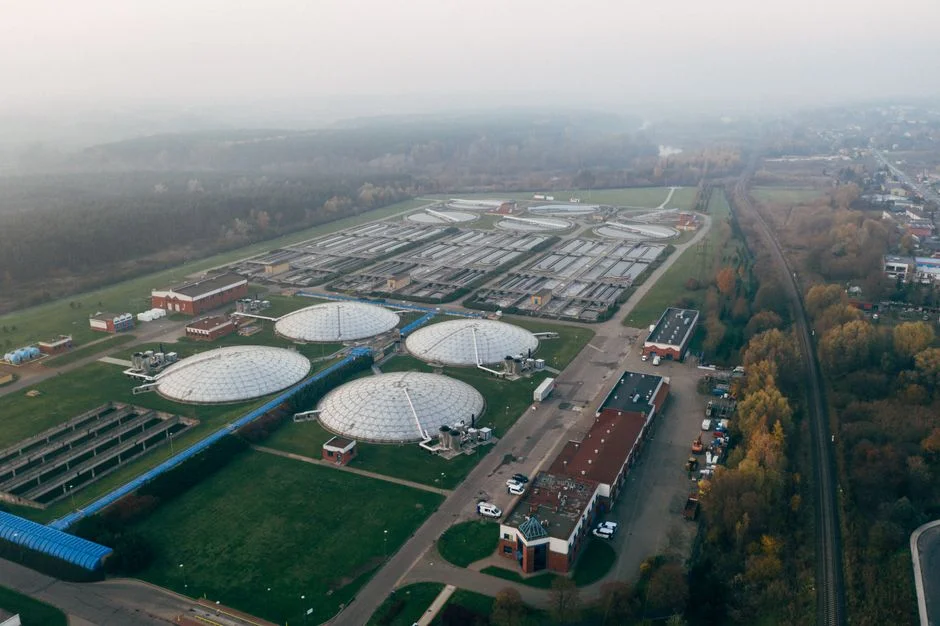
A working 2026 reference design for a 500–1,000 PE housing estate runs: GX rotary mechanical bar screen → equalization (6–8 h HRT) → A/O biological stage (anoxic + oxic, ~10 days SRT) → MBR cassette (0.1 μm PVDF hollow fibre, flux 15–20 LMH) → chlorine dioxide disinfection generator → reuse buffer tank, with a parallel sludge line feeding a plate-and-frame sludge dewatering press. The Gaziantep food-cluster precedent — where MBR effluent cut freshwater draw by 42% and saved 1.2 MCM per year — uses the same membrane logic and translates directly to a residential estate feeding landscape or golf-course irrigation (MoEU, 2024). Specify the sludge press to deliver ≤ 60% moisture, clearing the 65% landfill ceiling and the fecal coliform ≤ 1,000 MPN/g limit for permitted agricultural reuse. Add an automatic chemical dosing system for pH correction, and where the receiving catchment is EU-style sensitive (TN ≤ 15 mg/L, TP ≤ 2 mg/L), polish with chemical precipitation and a high-efficiency sedimentation tank acting as a lamella clarifier ahead of the MBR. That train is a copy-and-adapt specification, not a concept sketch.
Regional Selection Matrix: Where in Turkey Your Plant Has to Work Hardest
Turkey's climate and water-stress map forces different process choices in different provinces. The matrix below maps technology to region for 2026 builds.
| Region | Representative Sites | Climate Driver | Preferred Train | Key Design Lever |
|---|---|---|---|---|
| Marmara | Istanbul, Bursa, Kocaeli | High-density 1,000+ PE, moderate climate | MBR | Footprint < 0.5 m²/PE; TSS < 20 mg/L for Bosphorus-adjacent reuse |
| Aegean | İzmir, Muğla, Aydın | Hotel/resort clusters, peak summer load 1.5–2× | A/O + equalization, or MBR for reuse | Equalization ≥ 8 h; overflow redundancy at 2× design flow |
| Mediterranean | Antalya, Mersin, Hatay | Long hot season, high tourist occupancy | MBR + reuse buffer | Reuse for golf-course/landscape; 25–30 °BOD peaks |
| Central Anatolia | Konya, Ankara, Kayseri | Water-stress epicentre, –12% precipitation by 2050 | MBR + dual-use irrigation | Konya-style 15% freshwater-avoidance target; reuse tank sized for shoulder irrigation |
| Black Sea | Trabzon, Rize, Samsun | High rainfall, rural dispersion | A/O package below 500 PE | Rural-cluster design; stream-discharge compliant |
| Southeast (GAP) | Gaziantep, Şanlıurfa | Drought-prone, drip-irrigation reuse proven | MBR for reuse sites; A/O package elsewhere | Şanlıurfa precedent: 30% tomato yield uplift with treated wastewater drip |
Two climate facts drive most of these choices. First, Aegean and Mediterranean resort zones see summer flows 1.5–2× the annual average, so equalization and overflow redundancy are non-negotiable; constructed wetlands are viable for landscape irrigation but not for unrestricted vegetable or golf-course reuse. Second, Central Anatolia's projected 12% precipitation decline by 2050 and the documented Konya dual-use benchmark make MBR + reuse the default for any new build in Konya, Ankara, or Kayseri. In the Black Sea and rural Southeast, A/O packages dominate below 500 PE; MBR is reserved for sites pushing into drip-irrigation reuse where the 30% tomato yield uplift has been documented around Şanlıurfa (TSMS, 2024).
Costs, Compliance, and ROI in 2026
2026 ballpark CAPEX for a Turkish residential plant runs $25,000–$60,000 for a 200 PE A/O package, $120,000–$250,000 for a 500 PE MBR skid, and $400,000–$900,000 for a 1,500–2,000 PE MBR with dewatering and disinfection. On the reuse side, a 500 PE estate reusing 60 m³/day for irrigation avoids roughly 22,000 m³ per year of potable water at Turkey's tiered municipal tariffs, and the MBR premium pays back in 3–5 years on water-stressed sites. Compliance is the cheaper hedge: a single 100,000 TL fine plus a 30-day shutdown covers 5–10% of a residential plant's annual OPEX, so designing for the 1,000 FC/100 mL and TSS < 20 mg/L thresholds up front is cheaper than retrofitting. For a broader view of how reuse revenue stacks against industrial buyers, our circular water economy buyer's guide walks through the same payback math from the industrial side. If you are also sizing a Polish site in parallel, the residential wastewater treatment in Poland guide is a useful cross-check on PE-tier assumptions.
Frequently Asked Questions
Does a 200-unit housing estate in Turkey need tertiary treatment?
Yes, in most cases. A 200-unit estate typically lands around 800–1,000 PE, which sits below the 2,000 PE secondary-treatment threshold but still triggers tertiary requirements if the receiving environment is a sensitive zone — drinking-water reservoir, closed basin, or designated bathing water. Add the 1,000 faecal coliform per 100 mL, TSS < 20 mg/L, and turbidity < 5 NTU limits whenever unrestricted irrigation is planned, and design accordingly.
What is the realistic 2026 cost of an MBR package plant for 500 PE?
A 500 PE MBR skid in Turkey lands between $120,000 and $250,000 in 2026, depending on effluent targets and reuse buffer sizing. Add a plate-and-frame press and ClO₂ disinfection and the fully-equipped train sits closer to $280,000–$400,000. The MBR premium pays back in 3–5 years on water-stressed sites where irrigation reuse displaces 22,000 m³ per year of municipal water.
Can a constructed wetland meet Turkey's 1,000 faecal coliform per 100 mL reuse rule?
Usually not on its own. Constructed wetlands consistently deliver BOD < 20 mg/L and TSS < 30 mg/L, but turbidity in the 5–15 NTU range and faecal coliform counts above 1,000 CFU/100 mL disqualify them from unrestricted irrigation under the Ministry of Agriculture criteria. Pair the wetland with a polishing MBR cassette or UV/ClO₂ disinfection if vegetable or golf-course reuse is the target.
How much potable water can a 1,000 PE residential estate realistically save through reuse?
At 150 L per capita per day, a 1,000 PE estate generates about 150 m³/day, of which 40–60% (60–90 m³/day) is typically reusable for landscape irrigation, toilet flushing, or cooling-tower make-up. Over a year that is 22,000–33,000 m³ of displaced municipal water, and at Turkey's tiered tariffs the avoided cost alone covers the MBR premium in 3–5 years for water-stressed sites.