Turkey wastewater discharge permit requirements 2026 sit inside the Urban Waste Water Treatment Regulation and the Water Pollution Control By-Law. Plants above 2,000 PE need secondary treatment, landfill sludge stays at 65% moisture, and irrigation reuse is capped at 1,000 faecal coliform per 100 mL.
Turkey is a water-stress country with under 1,500 m³ of renewable water per person each year. An industrial waste discharge permit in Turkey sits inside the 2006 Urban Waste Water Treatment Regulation (Official Gazette No. 26047) and the 2004 Water Pollution Control By-Law. Those statutes set discharge limits, including 1,000 faecal coliform per 100 mL for agricultural reuse. Sector-specific rules still differ even where the framework mirrors EU directives.
Turkey Wastewater Discharge Permit Requirements 2026
Turkish discharge consents rest on two Official Gazette statutes. The Water Pollution Control Regulation was published on 31 December 2004 as Gazette No. 25687. The Urban Waste Water Treatment Regulation was published on 8 January 2006 as Gazette No. 26047. Collection is required above 2,000 PE, and Gazette No. 33056 of 23 October 2025 amended sea disposal and Table 20.7.
Record the industrial waste discharge permit number in turkey on each laboratory chain of custody, next to the outfall it covers. The Water Pollution Control Regulation ties every source to a permit and bars untreated discharge. A source is significant above 50 m³/day, above 1% of the sewer load, or when the wastewater contains hazardous waste. Most food and textile lines we size in western Turkey sit above that 50 m³/day line.
The two statutes do not share one population-equivalent base. The urban regulation uses 45 g of BOD₅ per person per day. The by-law, amended on 17 December 2022 in Gazette No. 32046, divides flow times BOD₅ by 60 g per person per day. A wrong base can push a town across the 2,000 PE line.
Turkey Water Pollution Control By-Law Compliance
The Water Pollution Control Regulation's 23 October 2025 amendment, Official Gazette No. 33056, is already in force. Outside protected areas, non-hazardous inorganic waste may go by seabed pipeline into the anoxic layer where depth exceeds 250 m, and carbon storage is allowed there. The by-law's Article 26 continues to ban discharging treatment sludge and septic sludge to receiving waters.
Table 20.7 now covers water softening, demineralization, regeneration, and activated-carbon washing, and sea discharge needs no chloride or sulfate limit. The same amendment replaced Annex Table 1. The new Table 1 values sit in the gazette annex, not in the article text.
Article 26 still bans dilution with rainwater, cooling water, or lightly polluted wash water. Where one site runs several sectors, the sector with the highest industrial wastewater flow sets the discharge table, and missing parameters from a smaller sector are added. Domestic sewage treated in the same plant does not relax those industrial ceilings. Irrigation-canal discharge needs a favorable opinion from State Hydraulic Works.
Compliance samples under this by-law are two-hour composites, and the limits are ceilings on those composites. A grab sample exceeding the standard by more than 20% can support a sanction; pH and temperature have no such band. Plants above 500 m³/day need a sampling manhole, an automatic sampler, and a flow meter. Plants from 200 to 500 m³/day need the manhole and sampler, and results are kept five years.
Why does water stress change a 2026 permit file?
Turkey's renewable water resources equal 1,460 m³ per capita, below the UN 1,700 m³ water-stress threshold, and total water use rose from 43 billion m³ in 2010 to 112 billion m³ in 2023. Irrigation takes 64% of that volume and industry takes 20% (SESRC, 2024). Arid growth in Central Anatolia and the Southeast pushes the Ministry of Environment and Urbanisation toward reuse and high-efficiency treatment.
The Turkish State Meteorological Service projects Central Anatolia precipitation could fall by up to 12% by 2050. Higher temperatures would raise evapotranspiration and add about 9 billion m³ of agricultural demand. Konya's dual-use pilots already cut freshwater abstraction by 15% when treated effluent supplements irrigation canals. Utilities track reuse with online flow-meters and water-balance dashboards that flag missed reuse targets.
How Do Wastewater Systems Contribute to Discharge Compliance?
The Urban Waste Water Treatment Regulation (Official Gazette No. 26047, 08/01/2006) governs municipal wastewater. The Water Pollution Control By-Law (2004) caps industrial pollutants to sewers and surface water. The Industrial Wastewater Control Regulation adds sector ceilings for textiles, food processing, chemicals, and other priority industries. Plants above 2,000 PE need secondary treatment for fresh-water and estuary discharges, and for every discharge above 10,000 PE.
Collection systems are required above 2,000 PE. Below those thresholds, smaller coastal discharges may be allowed appropriate treatment instead of full secondary.
| Regulation | Year / Gazette No. | Scope | Key Requirement |
|---|---|---|---|
| Urban Waste Water Treatment Regulation | 2006 / 26047 | Municipal wastewater | Secondary treatment for >2,000 PE; tertiary in sensitive zones |
| Water Pollution Control By‑Law | 2004 / 3123 | Industrial effluents to sewers & surface water | Maximum concentrations for BOD, COD, heavy metals, pH |
| Industrial Wastewater Control Regulation | 2012 / 4007 | Sector‑specific (textile, food, chemicals, etc.) | Priority pollutant limits & BAT references |
The comparison table still shows the legacy citation 2004 / 3123. The consolidated text is Official Gazette No. 25687 of 31 December 2004. Provincial Directorates of Environment and Urbanisation run quarterly inspections. Fines range from 10,000 TL to 1 million TL for repeated violations.
In 2022, Denizli's textile cluster paid a collective 8 million TL penalty after chromium exceedances. Ion-exchange units then cut effluent Cr by 85%. New plants must file a compliance schedule within six months of commissioning. Non-conforming plants must submit a corrective action plan within 30 days of a notice.
Sensitive-water areas are reviewed every four years, and a newly listed area has seven years to meet the tighter rule. Operators comparing plant design options often review Industrial Wastewater Treatment in Turkey: 2026 Engineering Specs, Hyb alongside permit conditions. Municipal intake and sewer interfaces are covered under turkey water/wastewater intake facilitys guidance when a site feeds a public network.
Industrial Wastewater Effluent Limits Turkey
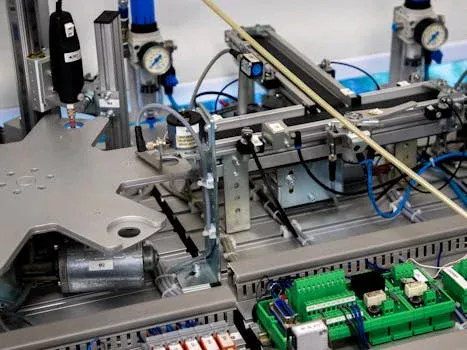
Turkish law sets explicit concentration limits for municipal and industrial effluents. Numeric ceilings for BOD, COD, nutrients, and metals appear in the table below.
| Parameter | Municipal Limit (General) | Municipal Limit (Sensitive Areas) | Typical Industrial Limit (Sector) |
|---|---|---|---|
| BOD₅ (mg/L) | ≤ 30 | ≤ 20 | Food: ≤ 200; Textile: ≤ 150 |
| COD (mg/L) | ≤ 120 | ≤ 80 | Food: ≤ 200; Chemical: ≤ 250 |
| TSS (mg/L) | ≤ 35 | ≤ 25 | All: ≤ 50 (pre‑treatment) |
| Total Nitrogen (TN, mg/L) | ≤ 15 | ≤ 10 | Food: ≤ 30; Chemical: ≤ 25 |
| Total Phosphorus (TP, mg/L) | ≤ 2 | ≤ 1 | Food: ≤ 3; Textile: ≤ 2 |
| pH | 6.5 – 9.0 | 6.5 – 9.0 | 6.5 – 9.0 (all sectors) |
| Chromium (Cr, mg/L) | — | — | ≤ 0.5 (textile) |
| Color (Pt‑Co units) | — | — | ≤ 150 (textile) |
pH monitoring must run continuously. BOD, COD, TSS, and nutrients need monthly sampling under Ministry technical annexes. The urban regulation sets a floor of 12 samples in year one for 2,000 to 9,999 PE, then four samples a year if that year passed. Plants at 10,000 to 49,999 PE take 12 samples a year, and plants at 50,000 PE or more take 24.
A failed concentration may not deviate from the parametric value by more than 1.00 times that value, and TSS deviations of up to 1.50 times the limit are acceptable. For a full 2025 compliance overview, see the 2025 wastewater compliance best practices guide. Sector ceilings are detailed further in the Turkey Industrial Effluent Limits: Compliance and Treatment guide.
Earlier permit sheets quote municipal BOD₅ at or below 30 mg/L and COD at or below 120 mg/L, and those figures stay in the comparison table. Official Gazette No. 32393 of 8 December 2023 printed secondary limits of BOD₅ 25 mg/L, COD 125 mg/L, and TSS 35 mg/L, with TSS noted at 60 mg/L for 2,000 to 10,000 PE. The consolidated text now carries a note that the Council of State 4th Chamber, on 8 December 2025, decision E.2024/118, K.2025/6454, annulled the amended table and related wording.
The amended Table 2 used 2 mg/L P or 1 mg/L P and 15 mg/L N or 10 mg/L N by PE band, plus a daily mean of 20 mg/L N at or above 12°C. Article 11 still allows an alternative showing a minimum 75% removal in total phosphorus and total nitrogen. Annex III food plants at 4,000 PE or more must meet by-law Tables 5 and 6 if they skip the municipal works.
İzmir utilities cut monthly report prep from eight days to under 24 hours after adding inline BOD and COD analyzers linked to cloud platforms. Operators should calibrate online probes each quarter. Keep a backup manual sampling kit on site to check sensor drift in extreme weather.
Turkey Sludge Dewatering Landfill Moisture Rules
Landfill sludge must stay at or below 65% moisture, meaning at least 35% solids under Turkish land-filling rules. Agricultural sludge must meet pathogen limits: fecal coliform ≤ 1,000 MPN g⁻¹ and helminth eggs < 1 kg⁻¹. Land application also needs a Provincial Directorate permit, an annual soil-monitoring plan, and Ministry of Agriculture no-crop-restriction zoning. The urban regulation points land application to the Soil Pollution Control Regulation, which is the standard the permit should name.
Dewatering is the practical path to the moisture ceiling. Many plants use high-efficiency sludge dewatering equipment such as plate and frame filter presses. Those units can cut moisture to 60% or lower for landfill disposal or agronomic reuse.
Other outlets include cement-kiln co-combustion of dried sludge and pyrolysis bio-char. A 2023 Aegean pilot showed pyrolysed sludge bio-char raising soil organic carbon by 2.8% while immobilising heavy metals. Transport should use sealed, leak-proof containers with a chain-of-custody log for environmental and safety checks. Article 26 still forbids dumping treatment sludge into receiving waters, so a sea outfall is not a sludge plan.
Treated Wastewater Reuse Standards Turkey Agriculture
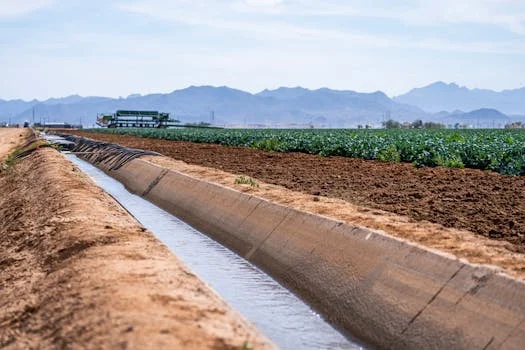
The Ministry of Agriculture sets 1,000 faecal coliform per 100 mL for irrigation reuse. Unrestricted vegetable and fruit irrigation also needs TSS below 20 mg/L and turbidity under 5 NTU. Regional boards may require TSS ≤ 10 mg/L for high-value crops. Article 28 sends the numeric irrigation criteria to the technical communiqué published in Official Gazette No. 27527 of 20 March 2010.
A provincial commission of the environment directorate, the agriculture directorate, and State Hydraulic Works decides if effluent is fit to irrigate. Reuse volume and purpose go into the wastewater information system, and concentrate still needs a Ministry-set receiving-water limit.
Cooling-tower make-up reuse needs secondary disinfection, usually chlorine at a 0.5 mg/L residual, plus Legionella monitoring. MBR systems for high-quality effluent meet microbiological and solids criteria in one train. That supports closed-loop water use and lower freshwater intake. A Gaziantep food-processing cluster recirculated MBR-treated effluent for boiler feed, cutting freshwater use by 42% and saving about 1.2 million m³ each year.
In Şanlıurfa, drip irrigation of tomatoes with treated wastewater raised yield by 30% from residual nitrogen and phosphorus. Site risk assessments, reuse flow-meters, and a quality logbook remain standard operator practice. The 17 December 2022 amendment also added a greywater definition and reuse encouragement to the by-law.
Are Indonesia and Vietnam Tightening 2026 Industrial Emission Rules Faster?
Export-facing factories often ask how Turkey's permit path compares with markets where emission rules are tightening in 2026. Turkey still starts from the same discharge limits, quarterly inspections, and corrective-action timelines described above. Plants that already meet BOD, COD, chromium, and pathogen ceilings reduce rework when buyers request stricter buyer audits.
What Do Saudi Compliance Regulations Change for Turkish Exporters?
Buyers referencing Saudi compliance regulations still evaluate Turkish effluent data against local permit numbers first. Documented records travel better than verbal claims, so keep sample logs aligned with Ministry annex methods.
Alignment with EU Environmental Directives
Turkey has absorbed major parts of the EU Urban Waste Water Treatment Directive (91/271/EEC). Alignment shows in agglomeration classes, secondary treatment above 2,000 PE, and tertiary treatment in sensitive water bodies.
| EU Directive Element | Turkish Implementation | Compliance Gap |
|---|---|---|
| Secondary treatment for >2,000 PE | Urban Waste Water Treatment Regulation (2006) | Full compliance in urban areas |
| Tertiary treatment in sensitive zones | Mandatory for drinking‑water reservoirs, closed basins | Limited enforcement in rural catchments |
| Nutrient removal (TN/TP) | TN ≤ 15 mg/L, TP ≤ 2 mg/L (general); stricter in EU‑designated zones | EU requires ≤ 10 mg/L TN and ≤ 0.5 mg/L TP in all sensitive waters |
| Industrial Emissions Directive (2010/75/EU) | Reference to BAT conclusions in sectoral standards | BAT not legally binding; limits may be less stringent |
For mapping Turkish standards to EU requirements and related technical options, consult the EU wastewater directive compliance strategies article. The EU-Turkey Cooperation Framework on Water (2024-2029) earmarks €120 million for capacity-building, including green-infrastructure pilots that combine constructed wetlands with advanced oxidation. Participating municipalities can seek assistance to upgrade nutrient-removal systems toward EU thresholds.
Who This Is For / Who Should Look Elsewhere / Next Step
This guide is for plant managers, EHS officers, and EPC teams sizing treatment trains against Turkish discharge and reuse rules. Municipal planners will also find the tables usable. Pure drinking-water process design without effluent permits is outside this scope.
- Name the outfall: sewer, surface water, canal, or sea.
- Use the sector table of the highest industrial flow.
- State PE as 45 g or 60 g BOD₅ per person-day.
- Fit a sampler and flow meter above 500 m³/day.
- Keep landfill cake at or below 65% moisture.
- Book the three-office commission before irrigation reuse.
Next step: match your sector limits to the tables, confirm sludge moisture and pathogen paths, then lock sampling frequency into the compliance schedule. If the permit file needs one train for BOD, chromium, and pathogen ceilings, request a technical review of the process train against your sector table and reuse target.
Frequently Asked Questions
Which flow needs an automatic sampler on a Turkish industrial outfall?
An industrial outfall above 500 m³/day needs a manhole, an automatic sampler, and a flow meter. From 200 m³/day to 500 m³/day the duty is the manhole and sampler only. Inspectors judge a two-hour composite, and records are kept five years.
Do the December 2023 urban discharge tables still bind a 2026 permit?
The consolidated text now marks the amended table as annulled by the Council of State 4th Chamber, decision of 8 December 2025, E.2024/118, K.2025/6454. Gazette No. 32393 had printed secondary BOD₅ at 25 mg/L, COD at 125 mg/L, and TSS at 35 mg/L. Use the live permit numbers until the Ministry prints a replacement table.
What composite sample does a Turkish discharge permit use?
A Turkish discharge permit uses a two-hour composite against the Water Pollution Control Regulation ceilings. A shorter discharge is sampled across its actual release. Reporting runs 12 samples a year from 10,000 PE and 24 from 50,000 PE, kept five years.
Who approves treated wastewater for agricultural irrigation in Turkey?
A provincial commission approves treated wastewater for agricultural irrigation in Turkey, not the plant alone. Members are the environment directorate, the agriculture directorate, and State Hydraulic Works. Article 28 points quality numbers to the technical communiqué in Official Gazette No. 27527 of 20 March 2010. The plant must log reused volume and purpose in the wastewater information system.