Why 2026 Is the Inflection Point for Industrial Water Circularity
A circular water economy in 2026 means designing industrial facilities so every litre of wastewater is either reclaimed for reuse, recovered as a byproduct, or sent to zero liquid discharge (ZLD) — replacing the old take-use-discharge model. The water reuse equipment market is growing at 9.3% CAGR through 2030 (per the 2026 water reuse market size outlook), driven by tighter EU UWWTD enforcement, China GB discharge cuts, and CBAM water-intensity reporting. Practically, this means MBR + RO trains delivering >95% recovery, with ZLD reserved for high-TDS streams.
Three regulatory threads converge in 2026 and make deferral expensive. First, the EU Carbon Border Adjustment Mechanism now requires exporters to disclose embedded water intensity alongside embedded carbon, which means a Chinese textile mill shipping to Rotterdam can face a tariff premium calculated partly on litres consumed per kilogram of fabric. The disclosure framework sits inside the broader EU Industrial Emissions Directive 2010/75/EU, the same statute that governs BAT-AEL for FGD scrubbers and other source-control equipment. Second, China's 2026 tightening of GB 8978 — plus the sector-specific GB 4287 (textile), GB 21900 (electroplating), and GB 18918 envelopes — lowers COD, BOD, total nitrogen, and total phosphorus ceilings by an estimated 15–25% versus 2022 baselines, putting thousands of discharge permits up for renewal in 2026 (per the regulatory analysis in the 2026 EPA/EU/China discharge standards breakdown). Third, the US EPA Effluent Limitations Guidelines 2024–2026 update cycle tightens PFAS, TDS, and trace metals limits — covered in detail in the PFAS removal technology trends 2026 guide. A facility that signs a 2026 equipment order locks in compliance for the next 10–15 years; one that waits pays double — once in penalty exposure, again in deferred capex inflation running 6–9% annually on fabricated stainless skids.
Conceptually, the circular water economy is the water-and-wastewater slice of the broader circular economy: keep resources in use at their highest utility, extract value during use, then recover and regenerate at end-of-life. In industrial practice, that abstract framing translates into four engineering pillars — and skipping the first one is the single most expensive mistake a buyer can make.
The Four Engineering Pillars of a Circular Water System
Source reduction is the cheapest m³ you'll ever save. Counter-current rinsing cascades, drag-out minimization, and chemical substitution (chelating agents for EDTA, for example) routinely cut influent flow 20–40% in textile and metal finishing lines before a single pipe is added to the treatment train. Most facilities discover 15–25% savings inside the first audit week with no capex at all — only process changes. This is the pillar with the shortest payback (often under 6 months) and the lowest technical risk, and it should always be exhausted before sizing any downstream equipment.
Reclamation is the workhorse. An MBR membrane bioreactor system paired with an industrial RO system typically delivers 95% overall recovery, with the MBR stage handling organics and suspended solids down to 0.1 μm via PVDF flat-sheet modules and the RO polishing dissolved salts to produce reusable process water. MBR skid capacities of 10–2,000 m³/day are standard, and the integrated design cuts civil footprint roughly 60% versus a conventional activated-sludge train followed by clarification. For semiconductor and pharma fabs, the RO permeate is good enough for non-critical utility loops; a downstream mixed-bed polisher closes the gap to UPW grade.
ZLD is the insurance policy for high-TDS brine streams that no RO can economically handle — typically >5,000 mg/L TDS concentrates, FGD blowdown, or RO reject. A mechanical vapor recompression (MVR) evaporator plus crystallizer reaches 99.9% water recovery, leaving only dry solids for landfill or, in better cases, saleable salt cake. The decision threshold is economic, not technical: ZLD is justified when high-TDS brine exceeds roughly 2,000 m³/day and either disposal costs or compliance risk outweigh the energy bill.
Resource recovery closes the loop. A plate and frame filter press in the 1–500 m² filter-area range dewatered biological sludge to 25–35% dry cake, cutting hauling volume and tipping fees by 70–80%. FGD scrubber blowdown yields marketable gypsum; electrocoagulation recovers nickel, copper, and zinc from metal-finishing rinse water at purities that re-enter the plating bath. These four pillars — source reduction, reclamation, ZLD, resource recovery — map cleanly onto the CECE 2026 conference's stated scope across water, energy, waste, and resource recovery, which is why facility engineering teams now treat them as a single integrated design problem rather than four separate vendor purchases.
Technology Comparison: MBR, RO, DAF, Lamella, and ZLD at a Glance
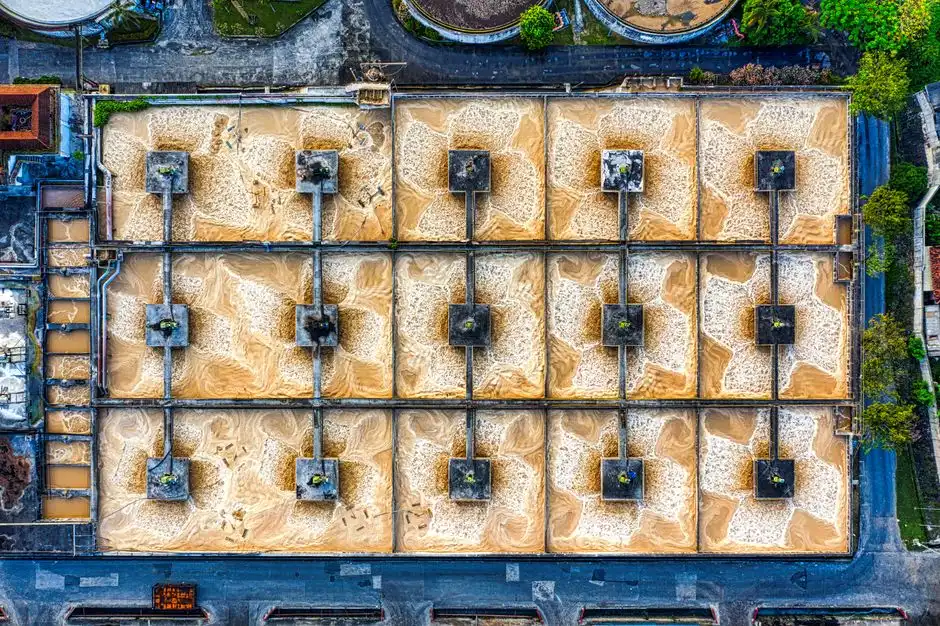
Before any vendor meeting, the buyer needs to locate their own influent profile — flow rate, TDS, FOG, suspended solids — against a shortlist of unit operations. The table below uses verified equipment ranges from current HydropureWater product specifications; treat the CAPEX bands as order-of-magnitude for budget approval, not as binding quotations.
| Technology | Influent tolerance | Recovery / removal | Typical CAPEX band (USD per m³/day treated) | Best-fit industry / position in train |
|---|---|---|---|---|
| MBR (PVDF flat-sheet) | BOD up to ~5,000 mg/L; TSS up to ~10,000 mg/L | Effluent TSS <1 mg/L; BOD <5 mg/L | $250–$600 | Core biological step for textile, F&B, chemical, landfill leachate |
| Industrial RO | Feed TDS up to ~10,000 mg/L (with pretreatment) | 95% recovery; 99.5% salt rejection | $400–$900 | Polishing for reuse loops; pharma, semiconductor, boiler feed |
| DAF (dissolved air flotation) | FOG 50–3,000 mg/L; TSS 200–4,000 mg/L | 90–95% FOG/TSS removal | $60–$180 | Pre-treatment in food, dairy, pulp & paper, textile desize |
| Lamella clarifier | TSS up to ~1,000 mg/L; low FOG | 80–90% TSS removal at 20–40 m³/h surface loading | $30–$90 | Low-capex first step under 200 m³/h; mining, stormwater |
| ZLD (MVR + crystallizer) | Brine TDS >5,000 mg/L; flow >2,000 m³/day for economic viability | 99.9% water recovery | $2,500–$6,000 | Brine minimization; FGD blowdown, RO reject, landfill leachate |
The MBR modules referenced in current equipment catalogues span 80–225 m² per unit with 32–135 m³/day per skid, and consume roughly 10–20× less energy than cross-flow UF at equivalent throughput. The DAF range — covered by DAF standard models — runs 4–300 m³/h, which is the right envelope for FOG and colloidal removal ahead of biological treatment. Lamella clarifiers sit upstream of any MBR or RO when flow rates stay under 200 m³/h and a low-capex first step is required. Full ZLD economics — including the OPEX breakdown that drives 60% of the lifecycle cost — are detailed in the MVR evaporator OPEX breakdown guide.
2026 Regulatory Snapshot: What You Must Comply With
For plant managers, the abstraction of "circular water" resolves into a list of specific limits on a discharge permit. The table below summarizes the binding instruments in the three jurisdictions that matter for cross-border industrial buyers in 2026.
| Jurisdiction | Instrument | Scope | 2026 action |
|---|---|---|---|
| EU | Urban Waste Water Directive 91/271/EEC | Municipal-equivalent discharges >2,000 PE | Verify sampling point compliance; tertiary treatment required for >10,000 PE in sensitive areas |
| EU | Drinking Water Directive 98/83/EC | Reclaimed water touching human-use loops | ClO₂ or UV disinfection validation; parameter list expanded in 2020 recast, enforced through 2026 |
| EU | Industrial Emissions Directive 2010/75/EU | Chemicals, textiles, pulp & paper BAT-AEL | Review BAT conclusions for your sector; permit revisions triggered |
| China | GB 8978 + GB 18918/4287/21900 | Central + sector-specific (municipal, textile, electroplating) | COD/BOD/TN/TP ceilings tightened 15–25% vs 2022 |
| US | EPA NSPS / ELG 2024–2026 update | PFAS, TDS, trace metals across 30+ industry categories | Confirm category-specific limits; PFAS MCL enforcement phase-in |
For the EU Drinking Water Directive, a ClO₂ generator is the most common compliance bridge for reclaimed water loops. For medical and pharmaceutical facilities where the discharge profile overlaps the municipal-equivalent threshold, the compliance path is detailed in the medical wastewater equipment specification. On the China side, the tightening of GB limits in 2026 is the single most cited reason EPC consultants now specify MBR + RO trains as default rather than conventional activated sludge — the older trains cannot meet the new TN/TP envelopes without tertiary chemical precipitation, which raises OPEX above the MBR + RO alternative. In the US, the PFAS removal technology trends 2026 guide covers the full ELG schedule and the technology combinations (granular activated carbon + ion exchange + RO concentrate management) that satisfy it.
CAPEX, OPEX, and ROI: The 2026 Decision Framework
For board-level approval, the engineering specification has to translate into a number. The semiconductor-sector benchmark documented in the semiconductor wastewater resource recovery ROI breakdown shows a hybrid MBR + RO + electrocoagulation + selective ion-exchange train returning roughly $2.8M in net present value over a 7-year horizon at a 300 mm fab, driven by UPW-grade water reuse credit, copper and tin recovery, and avoided wastewater surcharges. That is one documented facility; the same engineering logic generalizes to any plant where process water cost exceeds $1.50/m³ and discharge surcharges exceed $0.80/m³.
The dominant operating cost in any ZLD system is energy for the MVR evaporator, running $0.08–$0.14 per m³ evaporated depending on feed temperature, vapor compression ratio, and electricity tariff. Sludge handling is the second-largest line — a plate and frame filter press in the 1–500 m² range typically cuts sludge disposal volume 70–80%, but the polymer conditioning chemicals and cake haulage still run $0.02–$0.06 per m³ treated. For low-flow polishing under 500 m³/day, a constructed wetland finishing step can drop polishing OPEX to $0.026–$0.08/m³, making it a strong choice for remote sites and food-and-beverage discharges with biodegradable residuals.
On the maintenance side, predictive maintenance for wastewater plants typically reduces unplanned downtime 8–15% by catching membrane fouling, pump bearing wear, and RO scaling before they trigger an emergency shutdown — a meaningful lever when each unplanned outage at a continuous process plant costs $20,000–$80,000 per shift in lost production. The decision rule most EPC firms now apply in 2026 is straightforward: model total compliance-penalty exposure over an 18-month window (penalty rate × probability of non-compliance × 18 months of discharge volume) and compare it to the all-in capex of the proposed circular water train. When penalty exposure exceeds capex — which is now the default outcome for textile, electroplating, and chemical facilities in tier-1 Chinese provinces and EU member states with active enforcement — the investment is defensible. The detailed MVR economics behind the largest single line item in that capex are covered in the MVR evaporator OPEX breakdown.
Frequently Asked Questions
What is a circular water economy in industrial practice?
A circular water economy in industry means designing facilities so every litre of wastewater is reclaimed for reuse, recovered as a byproduct, or sent to zero liquid discharge — replacing the take-use-discharge model with an MBR + RO train typically delivering 95% recovery and ZLD reserved for high-TDS brine.
Which equipment defines a circular water system in 2026?
The standard 2026 equipment stack is an MBR membrane bioreactor system for organics, an industrial RO system for desalination polishing, a DAF pre-treatment system for FOG and TSS, a plate and frame filter press for sludge dewatering, and an MVR evaporator for high-TDS brine.
What regulations drive circular water investment in 2026?
EU CBAM water-intensity disclosure, EU Industrial Emissions Directive 2010/75/EU BAT-AEL, China GB 8978 plus GB 4287/21900/18918 with 15–25% tighter limits, and the US EPA ELG 2024–2026 update cycle covering PFAS, TDS, and trace metals.
How much does a ZLD system cost to operate?
MVR evaporator OPEX runs $0.08–$0.14 per m³ evaporated as the dominant cost, with sludge handling adding $0.02–$0.06 per m³ and constructed-wetland polishing as low as $0.026–$0.08 per m³ for small flows.
What ROI can a circular water project defend in 2026?
The documented semiconductor benchmark shows roughly $2.8M NPV over 7 years at a 300 mm fab, with the rule of thumb that any facility with process water cost above $1.50/m³ and discharge surcharges above $0.80/m³ hits the investment-justified threshold within 18 months of penalty-exposure modeling. For procurement teams needing the macro view, the 2026 water reuse market size outlook is the next read.
Related Equipment
- DAF pre-treatment system — specifications, capacity range, and technical data