Why Residential Wastewater in Poland Still Needs Engineering in 2026
Rural Poland is home to roughly 15.3 million people — 39.9% of the national population as of 2017 — and the Polish engineering community still estimates that about 700,000 additional household treatment systems are required to close the rural sanitation gap (per MDPI, 2019). The legacy figure is striking: 80.5–99.9% of sewage in the analysed rural communes was being discharged untreated as recently as the late 2010s, and much of that informal infrastructure is either still operating or has been replaced like-for-like with septic+drainage units that no longer meet current effluent rules. Between 1998 and 2017 Poland cut the main organic and inorganic pollutant loads in treated sewage by 53.5% to 84.2%, and since 2003 it has committed roughly €10 billion to rural water and sewerage works (MDPI, 2019).
What changed the rules in 2019 is the binding regulation Dz.U. 2019 poz. 1491, which set numerical effluent ceilings for plants up to 2,000 PE and tightened the discharge conditions to soil and water. Enforcement in 2026 is no longer theoretical: WIOŚ (Voivodeship Environmental Inspectorate) audits are flagging under-performing septic+drainage systems, and the Water Framework Directive 2000/60/EC still requires that receiving waters achieve good ecological status by defined deadlines. For a working-class rural household, a compliant biological plant (przydomowa oczyszczalnia ścieków) costs roughly PLN 15,000–40,000, and that spend unlocks both regulatory certainty and access to FEnIKS 2021–2027 and KPO co-financing streams — a 50–100% subsidy that can halve the owner's net outlay.
The 2026 Legal Framework for a Household Treatment Plant in Poland
The compliance hierarchy reads from the top down. At the apex sits Council Directive 91/271/EEC (the EU Urban Waste Water Treatment Directive), which obliges Poland to apply enhanced nutrient removal for agglomerations above 10,000 PE (MDPI, 2019) and to define the Population Equivalent (PE) as 60 g BOD₅ per capita per day.
Statute is the Water Law Act of 20 July 2017 (Prawo wodne), consolidated as Dz.U. 2024 poz. 1087. It defines the water-legal permit (pozwolenie wodnoprawne) and the notification route (zgłoszenie wodnoprawne) used for plants below 5 m³/day. Technical parameters come from the Regulation of the Minister of Maritime Economy and Inland Navigation of 12 July 2019 on wastewater discharged into waters or soil — Dz.U. 2019 poz. 1491. For plants up to 2,000 PE discharging to surface water, it sets BOD₅ ≤40 mg/L, COD ≤150 mg/L, and total suspended solids ≤50 mg/L; discharge to soil requires a geohydrological opinion under §17 of the same regulation. For design methodology cross-checks, ASTM E2717-18R25 provides a useful framework for estimating residential environmental load, but its North American parameters must be re-mapped onto Polish per-capita values before being used in any Polish design submission (ASTM, E2717-18R25).
Below statute, the Building Law Act 1994 (Prawo budowlane), as amended in 2022, allows a packaged treatment plant up to roughly 35 m³/day to proceed by notification rather than a full construction permit when the structural envelope stays within single-storey, fire-categorised limits. The local commune's zoning plan (miejscowy plan zagospodarowania przestrzennego) is the final layer: it controls setbacks to wells, surface water and property boundaries, and it can override the technical regulation if it imposes tighter setbacks than the regulation itself.
Sizing a Polish Residential Plant: PE, Flow and Load Calculations
The Polish working numbers are 150 L per capita per day of domestic flow and 60 g BOD₅ per capita per day of organic load — the value that defines 1 PE under EU Directive 91/271/EEC Article 2(6). Influent concentrations run higher than the EU average: design should be based on COD 700–900 mg/L and TSS 350–500 mg/L rather than the textbook 500/250 mg/L, because Polish household waste streams are typically more concentrated than Western European comparables (MDPI, 2019). Engineers who use 60 g BOD₅/PE·d as the conversion anchor can flip the calculation in either direction: a known population gives load, a known load gives the design PE.
Worked example — 4-person single home. Daily flow = 4 × 150 L = 0.6 m³/d, organic load = 4 × 60 g = 240 g BOD₅/d = 4 PE. With a peak factor of 1.3, the inlet screen and biological tank must be sized for ~0.8 m³/d. Worked example — 30-home cluster at 3.5 residents/home. Population = 105, so design flow = 105 × 150 L = 15.75 m³/d (round to 16 m³/d) and BOD₅ = 105 × 60 g = 6.3 kg/d = 105 PE. Inlet works should be sized for a hydraulic peak factor of 1.5–2.0 to handle morning simultaneity.
| Design block | Population | PE (60 g BOD₅/PE·d) | Average flow (m³/d) | Peak flow (m³/d) | BOD₅ load (kg/d) | COD load @ 800 mg/L (kg/d) |
|---|---|---|---|---|---|---|
| Single 4-person home | 4 | 4 | 0.6 | 0.8 (×1.3) | 0.24 | 0.48 |
| 4-home terrace | 14 | 14 | 2.1 | 3.2 (×1.5) | 0.84 | 1.68 |
| 30-home estate | 105 | 105 | 15.75 | 31.5 (×2.0) | 6.30 | 12.60 |
Reassure the client: a properly sized 4-PE biological plant (e.g. an SBR or MBR unit in the 0.8–1.0 m³/d hydraulic class) comfortably achieves the regulation's BOD₅ ≤40 mg/L and COD ≤150 mg/L envelopes when operated to design.
Technology Options for Polish Residential Sites in 2026
Four technology families are realistic for a Polish residential project in 2026. The cheapest is the septic tank + filtering drainage (drenaż rozsączający) at roughly PLN 8,000–15,000 installed. About 63% of Polish household plants still use this configuration (MDPI, 2019, citing Błażejewski). It does not nitrify, however, and it routinely fails the BOD₅ ≤40 mg/L and TSS ≤50 mg/L limits in tight soils or when the groundwater table sits within 1.5 m of the drain. The sand filter / hydrobotanic (constructed wetland) bed is a passive polish step: simple O&M, no aeration, but it needs 20–30 m² of land per 4-PE home and the biological activity drops sharply below 5 °C in a Polish winter.
The engineered options are SBR (sequencing batch reactor) package plants and MBR (membrane bioreactor) package plants. An SBR unit in the 5–50 PE class delivers BOD₅ ≤25 mg/L and total N ≤40 mg/L in a footprint of 3–5 m², runs on a PLC timer with no daily operator intervention, and is the workhorse for Polish small clusters. An MBR package plant, such as the WSZ underground integrated sewage treatment plant in the 0.8–80 m³/d class, adds 0.1 µm PVDF ultrafiltration to deliver TSS <10 mg/L — effluent that is reusable for green-space irrigation under a separate permit. The MBR premium is real: CAPEX runs PLN 35,000–60,000 for a 4-PE system, with a membrane replacement at year 7–10.
| Technology | Footprint (4 PE) | Effluent BOD₅ / TSS (typical) | CAPEX (PLN, 4 PE) | Power | Reaches Dz.U. 2019 limits? |
|---|---|---|---|---|---|
| Septic + filtering drainage | 30–50 m² (drain field) | 60–120 / 80–150 mg/L | 8,000–15,000 | None | Often no |
| Sand filter / wetland bed | 20–30 m² | 20–40 / 20–40 mg/L | 12,000–22,000 | None | Yes (site-dependent) |
| SBR package plant | 3–5 m² | 15–25 / 20–30 mg/L | 18,000–32,000 | ~0.4 kW | Yes |
| MBR package plant | 2–3 m² | <5 / <2 mg/L | 35,000–60,000 | ~0.6 kW | Yes + reuse |
Decision rule: for a sub-300 m² lot with sandy subsoil, no surface-water discharge within 100 m, and a perched water table below 1.5 m, a sand filter or hydrobotanic bed remains defensible. For any cluster housing (≥4 homes), any surface-water discharge, or any lot where the soil percolation test fails, specify an SBR or MBR to guarantee compliance with Dz.U. 2019 poz. 1491. For a baseline reference on a comparable tropical-residential application, see the residential wastewater treatment in Panama guide.
HydropureWater Package Plants Built for the Polish Residential Market
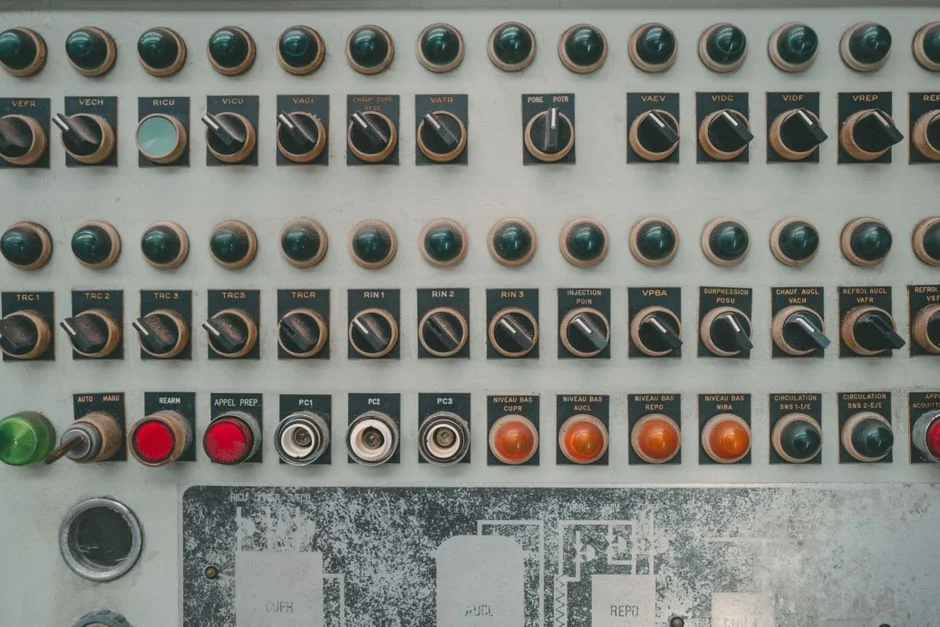
Two HydropureWater product lines map cleanly onto the 2026 Polish duty envelope. The WSZ underground integrated sewage treatment plant covers 1–80 m³/d with A/O biological contact oxidation, integrated sedimentation, and chlorination in a single buried tank — no surface superstructure, PLC automation, and quiet enough to install inside a 4-home terrace boundary. It is the right pick for rural hamlets and multi-home clusters in the 4–80 PE range.
The MBR membrane bioreactor system covers 10–2,000 m³/d with 0.1 µm PVDF membranes and is the correct choice when the local commune requires <10 mg/L TSS or where a reuse permit for green-space irrigation is realistic. For sites discharging to a watercourse in a Polish winter, integrate a chlorine dioxide generator in the 50–500 g/h class instead of a UV unit — UV transmittance drops sharply below 10 °C, while ClO₂ dosing remains effective down to 4 °C. For larger-cluster municipal scaling, the methodology in the municipal sewage treatment plant design reference is directly portable.
2026 Procurement and Funding Checklist
Four steps move the project from paper to commissioning. Step 1 — Permit route: file a water-legal notification (zgłoszenie) for plants below 5 m³/day; for larger or surface-water-discharging plants, apply for a pozwolenie wodnoprawne. Step 2 — Site characterisation: commission a geohydrological opinion (opinia geohydrologiczna), which is mandatory for any discharge to soil under §17 of Dz.U. 2019 poz. 1491. Step 3 — Financing: submit to FEnIKS 2021–2027 (priority FENX.02, "Water and sewage management") and the KPO component B3.G, both of which co-finance 50–100% of CAPEX for compliant household plants in unserved rural areas; the Voivodeship Environmental Funds (WFOŚiGW) are the secondary route if the EU windows are closed. Step 4 — O&M: lock in a service contract that covers annual aerator/blower service, desludging every 12–18 months, and membrane integrity testing every 2 years for MBR units; budget PLN 800–1,500/year for a 4-PE SBR and PLN 1,500–2,500/year for a 4-PE MBR (HydropureWater field data, 2026).
Frequently Asked Questions
What are the binding effluent limits for a Polish household treatment plant in 2026?
For plants up to 2,000 PE discharging to surface water, Dz.U. 2019 poz. 1491 sets BOD₅ ≤40 mg/L, COD ≤150 mg/L, and total suspended solids ≤50 mg/L. Plants discharging to soil must meet the same ceilings plus the conditions set out in §17 of the regulation, including a minimum 1.5 m separation from the groundwater table.
How many new household treatment systems does rural Poland still need?
Engineering estimates place the remaining rural sanitation gap at roughly 700,000 household systems to service the 15.3 million people (39.9% of the national population) who lived in rural Poland as of 2017 (MDPI, 2019). The same study found that between 80.5% and 99.9% of sewage in the analysed rural communes was being discharged untreated as recently as the late 2010s.
Which technology is the most common in Poland, and does it still comply?
About 63% of installed household plants in Poland are septic-tank-plus-filtering-drainage units (MDPI, 2019, citing Błażejewski). The configuration is the cheapest at roughly PLN 8,000–15,000 but it often fails the BOD₅ ≤40 mg/L and TSS ≤50 mg/L limits of Dz.U. 2019 poz. 1491 in tight soils or near the groundwater table, so engineers specify SBR or MBR package plants for new builds where the regulation must be met reliably.
Do I need a full construction permit for a packaged residential plant?
Under the 2022 amendment to the Building Law Act (Prawo budowlane), a packaged biological plant up to roughly 35 m³/day can usually proceed by notification rather than a full construction permit, provided the structural envelope stays within single-storey, fire-categorised limits and the local zoning plan allows it. The water-legal notification or permit is a separate procedure under the Water Law Act.
What funding covers a household treatment plant in 2026?
FEnIKS 2021–2027 (priority FENX.02) and the KPO component B3.G are the two principal EU streams, offering 50–100% co-financing for compliant plants in unserved rural areas. Where the EU windows are exhausted, the Voivodeship Environmental Funds (WFOŚiGW) run parallel national grants at typically 30–50% co-financing for the same eligible scope.