
Why Residential Wastewater Treatment in Panama Demands a Decentralized Playbook
The Cuenca de Panamá wastewater treatment plant, commissioned in 2009 by the SUEZ–Odebrecht consortium under a Ministry of Health contract, treats 238,000 m³/day of sewage for roughly one million Panama City residents using biological reactors and anaerobic sludge digestion (SUEZ Water Handbook). Outside of this urban asset, the institutional gap forces every new residential subdivision to engineer its own solution. The Instituto de Acueductos y Alcantarillados Nacionales (IDAAN) only holds the legal mandate for water and sanitation in urban areas with more than 1,500 inhabitants under the 1997 Water Law, and the only decentralized exception in the entire country is the municipality of Boquete (Water supply and sanitation in Panama, Wikipedia/WSS source, 2012 dataset). Approximately 3,300 rural water systems exist, of which about 1,800 are run by Juntas Administrativas de Acueductos Rurales (JAARs) and the remainder by Health Committees, and an estimated 7.5–31% of Panama's population lives in isolated rural areas with minimal sewage treatment. Given IDAAN's 27 million PAB operating deficit in 2011 and a residential tariff of 7.92 PAB per 30 m³ in Panama City, municipal sewer extension is not keeping pace with subdivision development, requiring developers to own, size, and defend their own treatment systems.
Panama Residential Design Loads: Flow, BOD, TSS, NH₃-N
Design flows of 180–250 L per person per day are defensible for a 50–500-home Panamanian community, anchored by IDAAN's Panama City residential tariff block of 30 m³/month for a family of four (≈250 L/p/d) and consistent with Latin American tropical development standards. Raw influent characteristics for sizing biological reactors fall in the 200–300 mg/L BOD, 250–350 mg/L TSS, and 30–50 mg/L NH₃-N range; the ASTM E2717 framework cautions that its load parameters reflect North American averages and require modification for local use (ASTM E2717-18R25, §1.1), so Panama field calibration is recommended before final hydraulic design. The 25–32°C ambient temperature envelope significantly impacts kinetics: biological rates roughly double every 10°C in the mesophilic range, meaning a 28°C Panama reactor can drop nitrification HRT by ~30% versus a 15°C reference (typical 5–7 days reduced to 3.5–5 days), while warmer water also drives higher sulfide generation in collection sewers. Peak hourly flow runs 2.5–3.0× average diurnal flow because residential patterns concentrate morning and evening usage; allocate a 10–15% infiltration allowance because the 3,000 mm/yr rainfall envelope can overwhelm joints during the wet season (May–December).
| Parameter | Symbol | Design Value | Source / Basis |
|---|---|---|---|
| Average per-capita flow | Qavg | 180–250 L/p/d | IDAAN tariff block (30 m³/family of 4); LATAM tropical range |
| Peak factor (hourly) | PF | 2.5–3.0× | Residential diurnal pattern, Morning/evening peak |
| Infiltration allowance | I | 10–15% | Panama rainfall up to 3,000 mm/yr (WSS source) |
| Raw BOD5 | S0 | 200–300 mg/L | ASTM E2717 typical residential; Panama field calibration recommended |
| Raw TSS | X0 | 250–350 mg/L | ASTM E2717 typical residential envelope |
| Raw NH₃-N | N0 | 30–50 mg/L | TKN split for tropical residential sewage |
| Nitrification HRT (28°C) | HRTn | 3.5–5.0 d | ~30% reduction vs 15°C reference (5–7 d) |
| Ambient temperature | T | 25–32°C | Panama national annual range |
MINSA and ASEP Discharge Limits for Residential Systems
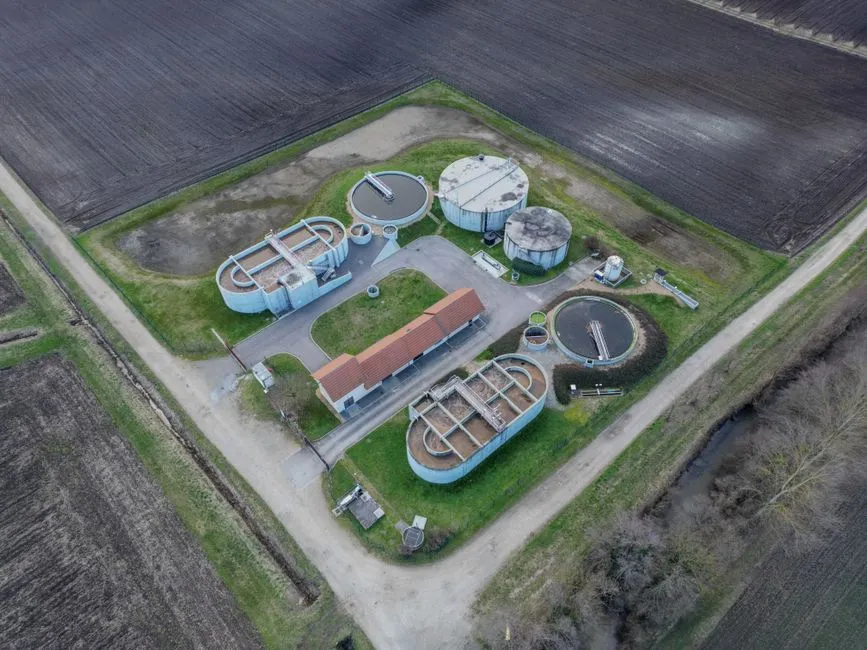
Panama's regulatory ceiling is established by the Ministerio de Salud (MINSA) and the Autoridad Nacional de los Servicios Públicos (ASEP) under the 1997 Water Law. For surface discharge into rivers, lakes, or the Bay of Panama watershed, the engineering baseline for permit approval is BOD ≤50 mg/L, TSS ≤50 mg/L, and fecal coliforms ≤1,000 MPN/100 mL, aligning with MINSA quality expectations and Bay of Panama cleanup commitments. For on-site disposal by subsurface irrigation or drain field, MINSA rural guidance requires a percolation test and a minimum 1.2 m vertical separation from the discharge point to the seasonal high groundwater table, with a 30 m setback from any potable well. Developers of a 50+ home project should expect a dual-permit path: an environmental impact study (EsIA) approved by MiAmbiente for construction, plus an ASEP operating permit before commissioning. These permits address the national sanitation gap, as WHO/UNICEF JMP 2009 data cites 75% urban and 50% rural improved sanitation access despite 97% improved water access, meaning properly engineered treatment systems directly reduce national infrastructure debt.
Three Technology Options for Panama Residential Plants
Three package-plant architectures are viable for 50–500-home Panamanian projects, differing by site size, land cost, and reuse intent. A submerged MBR (PVDF, 0.1 μm nominal pore) reliably produces BOD ≤10 mg/L and TSS ≤5 mg/L, which is near-reuse quality and fits high-end, land-constrained sites at ~60% of a conventional activated-sludge footprint; the trade-off is aeration plus membrane scouring at 0.6–0.9 kWh/m³, higher CAPEX, and specialized membrane cleaning requirements. A buried A/O package plant such as the WSZ underground A/O package plant integrates anoxic/aerobic contact oxidation, sedimentation, and disinfection in a single buried tank delivering BOD ≤20–30 mg/L and TSS ≤20 mg/L with minimal operator attention and no odor or visual impact; capacities from 1 to 80 m³/h cover 50–500 homes and the buried configuration suits tropical subdivisions where aesthetics are a priority. A septic tank followed by a subsurface constructed wetland is the lowest CAPEX, near-zero energy option, capable of reaching BOD ≤30 mg/L with proper sizing at ~5–10 m² per person, but requires significant land and works best in the dry Pacific lowlands rather than the high-rainfall Caribbean coast. For projects with a reuse mandate, the MBR membrane bioreactor system is the only option that hits reuse thresholds without polishing; a deeper retrofit path for existing wetland-based sites is available in the 2026 constructed wetland retrofit guide. Procurement context for these systems is covered in the modular sewage treatment system selection guide.
| System | Effluent BOD (mg/L) | Effluent TSS (mg/L) | Footprint (m²/p·e) | Energy (kWh/m³) | CAPEX band | Best fit in Panama |
|---|---|---|---|---|---|---|
| Submerged MBR (PVDF 0.1 μm) | ≤10 | ≤5 | ~0.15 | 0.6–0.9 | High | 300–500 homes, land-constrained, reuse mandate |
| WSZ A/O package plant (buried) | ≤20–30 | ≤20 | ~0.20 | 0.3–0.5 | Mid | 50–300 homes, buried aesthetic, HOA community |
| Septic + subsurface constructed wetland | ≤30 | ≤30 | 5–10 | ≈0 (gravity/solar) | Low | Interior dry-zone sites, >1,000 m² land available |
Tropical Climate Design Adjustments Every Panama Plant Needs
Four tropical-specific requirements distinguish functional Panama plants from temperate-climate designs. First, cover every biological tank: with 3,000 mm/yr rainfall and direct sun, uncovered basin water temperatures can exceed 35°C in the dry season, causing nitrifier populations to crash; buried or covered tanks maintain an optimal 25–30°C. Second, specify chloride-resistant materials for coastal zones — HDPE-lined concrete, FRP, or 316L stainless steel for all tankage, piping, and air-release components, as hydrogen sulfide and chloride pitting destroy mild steel within 3–5 years. Third, engineer mosquito and vector control using sealed covers, fine-mesh vent filters, and submerged weirs to prevent standing water, as MINSA inspectors prioritize these for residential occupancy permits. Fourth, size standby power for blowers and UV disinfection to maintain biological processes and meet targets during frequent power outages in interior provinces like Coclé, Veraguas, or Chiriquí. Upstream of these reactors, protect pumps and membranes with a GX rotary mechanical bar screen sized to handle peak wet-weather flows and the high leaf load typical of Panama's residential surroundings.
Selecting and Sizing a Package Plant for a 50–500 Home Community
The following five-step procedure provides a baseline for the project Engineer of Record. Step 1: Calculate average daily flow (e.g., 100 homes × 4 people/home × 200 L/p/d = 80 m³/d, plus 10% infiltration = 88 m³/d). Step 2: Apply a peak factor of 2.5–3.0× to size equalization and hydraulic capacity (9.2–11.0 m³/h for the 100-home example). Step 3: Select the technology; buried A/O package plants like the WSZ series suit 50–300-home communities with HOA aesthetic requirements, while MBRs are better for 300+ homes or projects requiring reuse. Step 4: Disinfect with a chlorine dioxide generator, as ClO₂ retains efficacy across the 25–32°C Panama temperature range and is more stable against UV decay than sodium hypochlorite. Step 5: Process solids by routing secondary sludge through a high-efficiency sedimentation tank for thickening, then dewater with a plate-and-frame filter press to 18–22% DS for landfill or land application. Anaerobic digestion theory is summarized in the anaerobic digester engineering primer, and broader procurement context is available in the modular sewage treatment system selection guide.
Frequently Asked Questions
How do I size a package plant for a 100-home Panamanian community?
Calculate 100 homes × 4 people per home × 200 L/p/d = 80 m³/d, add 10% infiltration to reach 88 m³/d average design flow, then apply a 2.5–3.0× peak factor to size equalization, hydraulic capacity,
Frequently Asked Questions
What is the average residential wastewater flow per person in Panama?
In Panama, the average residential wastewater generation is typically estimated between 150 and 200 liters per person per day. This figure accounts for standard household activities including kitchen, laundry, and sanitary use, though fluctuations occur based on local water availability and the presence of high-efficiency plumbing fixtures.
Which government body regulates residential wastewater discharge in Panama?
The primary regulatory authority is the Ministerio de Ambiente (MiAmbiente), which enforces the national discharge standards established under Resolution No. DE-01-2002. Additionally, the Ministry of Health (MINSA) oversees the sanitary permitting process for onsite systems to ensure public health safety and compliance with environmental quality protocols.
What is the best small sewage treatment system for a tropical climate?
For tropical climates like Panama, Aerobic Treatment Units (ATUs) or Moving Bed Biofilm Reactors (MBBR) are highly effective due to their ability to handle high organic loading rates and rapid biological degradation. These systems are preferred over traditional septic tanks because they provide superior BOD5 (Biochemical Oxygen Demand) reduction and pathogen removal, which is critical given the high ambient temperatures that can accelerate odor production in anaerobic systems.
How much does a residential wastewater treatment plant cost in Panama?
The cost for a small-scale residential wastewater treatment plant in Panama typically ranges from $3,500 to $8,000 USD, depending on the system capacity, material (concrete vs. polyethylene), and site-specific installation requirements. This price generally includes the treatment unit and basic primary filtration, but excludes specialized tertiary treatment or advanced remote monitoring systems.
Can residential wastewater be reused for irrigation in Panama?
Yes, residential wastewater can be reused for non-potable irrigation provided it undergoes secondary or tertiary treatment to meet MiAmbiente standards for reuse. Treated effluent must typically demonstrate a fecal coliform count of less than 1,000 MPN/100mL and low turbidity levels to be safely applied to landscape irrigation, ensuring that no direct human contact with the water occurs during the process.