Why Chemical Plants in Wathena Are Rethinking Primary Clarification in 2026
Wathena sits on the Kansas–Missouri border inside the St. Joseph metropolitan area, and every gallon a chemical plant sends to the local POTW flows through Kansas Department of Health and Environment (KDHE) pretreatment oversight with categorical standards anchored in 40 CFR Part 414 for organic chemicals, plastics, and synthetic fibers. The 2026 daily-maximum bar most chemical plants on this corridor are designing against is oil & grease below 50 mg/L, TSS below 50 mg/L, and pH held inside 6.0–9.0 (per 40 CFR 414.91). The recurring failure mode is not under-designed pumps or failed mixers — it is the existing circular clarifier losing its blanket when emulsified oils, solvent carryover, and pH swings between 2 and 12 hit the feed well in a single shift. A DAF system handles those emulsions and floatable FOG by floating them rather than asking them to settle, which is why chemical-plant engineers in northeast Kansas are re-evaluating primary clarification rather than rebuilding another gravity basin. For comparison with a parallel industrial decision, see how DAF vs clarifier for mining wastewater in Luverne resolves the same mechanism question on a different influent.
How a DAF System Works in a Chemical Plant Influent
A dissolved air flotation unit clarifies by attaching micro-bubbles to flocculated oil droplets and low-specific-gravity solids and lifting them to the surface, where a skimmer sweeps the resulting blanket into a collection trough. The saturator circuit pulls clarified effluent, pressurizes it to 60–80 psig, and dissolves air into the recycle stream; when that stream is depressurized through the release valve, micro-bubbles form in the 30–50 micron range on standard circular DAF designs and 20–40 micron on systems fitted with a DAF Corp-style Micro Bubble Generator (per Clearwater Industries and DAF Corp product literature, 2025). The micro-bubbles nucleate on conditioned floc and pull emulsified oil, FOG, and fine TSS upward in roughly three to five minutes of hydraulic residence. Chemical conditioning is required; an automatic polymer and coagulant dosing skid typically feeds ferric chloride or PAC, pH adjustment, and a polymer flocculant through a flocculation tube at 15–45 seconds flash-mix residence time (Clearwater, 2025). The performance envelope chemical plants in 2026 should design to is 92–98% TSS removal on circular FC-style DAF and approximately 95% FOG removal, with effluent TSS routinely below 50 mg/L on streams loaded at 2,000 mg/L (per DAF Corp FC Maximizer data, 2025).
How a Gravity Clarifier Works in a Chemical Plant Influent
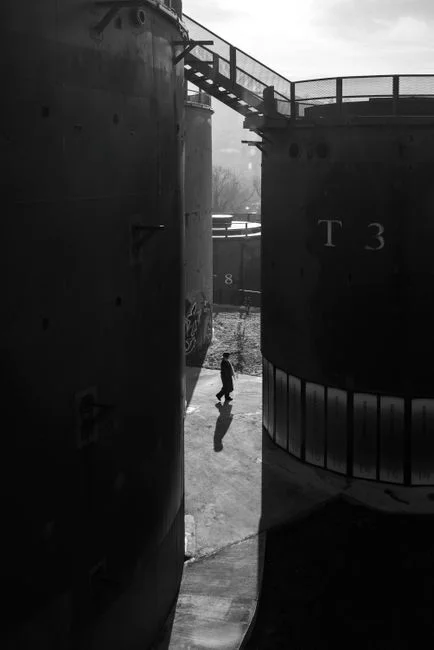
A gravity clarifier removes contaminants by sedimentation: influent enters a center feed well, disperses radially, and quiescent settling drops heavier particles to a bottom hopper while clarified water overflows a peripheral launder. A HydropureWater lamella clarifier raises the effective surface loading to 20–40 m/h by stacking inclined plates at 55–60°, which compresses the footprint roughly 70% versus a conventional clarifier of the same throughput (HydropureWater catalog data, 2026). On rectangular clarifiers the realistic 2026 TSS removal envelope is 85–90%, and circular thickener/clarifier hybrids reach 90% on heavy mineral or catalyst-fines streams (per DAF Corp and Ecologix field references, 2025). The failure mode on chemical-plant influent is well documented: FOG removal collapses to about 70% on emulsified oils, and performance deteriorates sharply outside pH 4–10 because the floc structure breaks down and the blanket rises rather than settles. These performance gaps necessitate a careful review of pretreatment requirements, such as those detailed in chemical-plant pretreatment compliance near Goldsmith.
DAF vs Clarifier: 2026 Parameter Comparison for Chemical Wastewater
The table below consolidates the operating envelope, capital cost, and chemical-stream fit for a 50–250 GPM chemical-plant duty point. CAPEX and OPEX figures reflect 2026 U.S. market ranges for skid-mounted, pre-piped equipment delivered to a Midwest site; OPEX includes electricity, polymer, coagulant, and sludge handling but excludes labor.
| Parameter | Dissolved Air Flotation (Circular FC) | Rectangular Gravity Clarifier | Lamella Clarifier |
|---|---|---|---|
| Removal mechanism | Micro-bubble floatation + skimming | Gravity sedimentation | Inclined-plate sedimentation |
| TSS removal | 92–98% | 85–90% | 80–88% |
| FOG / emulsified oil removal | ~95% | ~70% | ~70% |
| Footprint (m² per 100 GPM) | 4–6 | 18–25 | 5–8 |
| CAPEX 2026 USD per 100 GPM | $90K–$180K (skid) | $80K–$250K (field-built) | $60K–$150K (skid) |
| OPEX USD per 1,000 gal | $1.50–$2.20 | $1.10–$1.60 | $1.10–$1.50 |
| Sensitivity to pH 2–12 swings | High tolerance with dosing skid | Poor; floc breaks outside pH 4–10 | Poor; same floc limitation |
| Sensitivity to emulsified oil | Excellent | Poor | Poor |
| Sensitivity to high TDS (>5,000 mg/L) | Moderate; air saturation drops 5–8% | Low; settlement unaffected | Low |
| Best-fit chemical stream | Oily emulsions, FOG, pH-volatile streams | Heavy inorganic settleables, low oil | Space-constrained sites with settleable solids |
The DAF column maps to a typical HydropureWater dissolved air flotation system configured for chemical-plant influent. Capital planners should note that while DAF costs more per gallon in OPEX, it compresses footprint by 60–75% and resolves FOG compliance without a downstream polishing stage. A parallel industrial decision is captured in DAF vs clarifier for transportation equipment wastewater in Montgomery.
Decision Tree: Which One Should Your Wathena Chemical Plant Specify?
Four binary questions, walked in order, resolve the equipment choice for most chemical-plant influents. Stop at the first "yes."
| Question | If Yes | If No |
|---|---|---|
| Q1 — Is FOG or emulsified oil >100 mg/L in the influent? | DAF system (mandatory) | Proceed to Q2 |
| Q2 — Are pH swings outside 4–10 common (pH 2–12 transients)? | DAF with pH-adjustment skid | Proceed to Q3 |
| Q3 — Is the stream dominated by settleable inorganics (sulfates, catalyst fines) with low FOG? | Circular or lamella clarifier | Proceed to Q4 |
| Q4 — Footprint-constrained (existing building) and flow >100 GPM? | Compact skid DAF | Circular clarifier for lowest OPEX |
Chemical plants in the U.S. Midwest are increasingly standardizing on a DAF as the primary stage for FOG and emulsion knockdown, followed by a lamella clarifier as a TSS polish. This train holds both daily-maximum limits under 40 CFR 414 with a single sludge-handling line and tolerates the pH and FOG excursions that defeat a clarifier-only design.
2026 Cost Benchmarks and ROI for a Mid-Sized Chemical Plant
A representative Wathena-area chemical plant with 100 GPM flow, FOG 350 mg/L, and TSS 800 mg/L must hit compliance targets of FOG <50 mg/L and TSS <50 mg/L under 40 CFR 414. A skid-mounted HydropureWater dissolved air flotation system lands at roughly $95K CAPEX with $1.80/1000 gal OPEX dominated by polymer at $0.04–$0.12/lb (2026 contract pricing) and ferric chloride coagulant. A circular gravity clarifier at the same flow comes in at $80K–$135K CAPEX but only $1.30/1000 gal OPEX — until you add the post-coagulation filtration needed to hit the 50 mg/L FOG limit, which adds approximately $60K CAPEX and $0.90/1000 gal OPEX. Five-year cost-of-ownership at 100 GPM, 24/7 operation, lands near $378K for the DAF-only train versus approximately $402K for the clarifier-plus-polishing train (HydropureWater 2026 internal modeling; verify against live vendor quotes before board submission). For Q2–Q3 2026 shutdown planning, 304L stainless-steel DAF tanks currently carry a 6–10 week lead time while carbon-steel epoxy-lined clarifiers run 8–14 weeks, so specify early if your installation window is fixed.
Frequently Asked Questions
Is DAF or a clarifier better for oily chemical-plant wastewater?
DAF is the better primary for oily chemical wastewater. Field data show DAF removes approximately 95% of emulsified FOG versus roughly 70% for a conventional clarifier, and the micro-bubble mechanism is not defeated by pH swings between 2 and 12 the way gravity sedimentation is (per Clearwater and Ecologix 2025 references). On a 100 GPM chemical stream with FOG above 100 mg/L, specify DAF.
Can a DAF system and a clarifier be used together on a chemical plant?
Yes, and the DAF-primary + lamella-polish configuration is now the Midwest-standard hybrid for chemical plants that must hit both FOG and TSS limits on a mixed stream. The DAF removes emulsified oil and floatable solids, the lamella clarifier settles the remaining floc, and both stages share a single sludge-handling line.
What CAPEX should a 100 GPM chemical plant budget in 2026?
Plan on $90K–$180K for a skid-mounted circular DAF and $80K–$250K for a field-built gravity clarifier at 100 GPM in 2026 U.S. dollars. Lamella clarifiers run $60K–$150K for the same flow. Add an automatic chemical dosing skid ($15K–$35K) if the influent needs pH adjustment or polymer conditioning.
Which KDHE / 40 CFR 414 limit is hardest to hit with a clarifier alone?
Oil & grease is the hardest limit. The 40 CFR 414 daily-maximum of 50 mg/L is consistently missed on chemical streams with emulsified oil because gravity clarifiers deliver only about 70% FOG removal; a DAF or DAF + lamella hybrid is required to hold compliance.
Does a skid-mounted DAF meet 40 CFR 414 categorical standards for organic chemicals?
A properly sized skid DAF meeting 92–98% TSS and ~95% FOG removal on a conditioned influent will meet the 40 CFR 41