Montgomery Transportation Equipment Wastewater: What You Are Actually Treating
For Montgomery, USA transportation equipment plants in 2026, choose DAF when wastewater carries emulsified oils, machining coolants, or paint-shop overspray (FOG >100 mg/L, TSS >500 mg/L); choose a lamella clarifier when solids settle easily and FOG is low. DAFs deliver 85–98% TSS removal in a footprint up to 82.7% smaller than conventional settling, while lamella clarifiers cost less upfront but need larger tanks and coagulant chemistry.
A typical Montgomery auto, aerospace component, rail, or heavy-truck assembly plant generates four wastewater streams that converge on the pretreatment headworks. Stamping and machining coolant wastewater is the dominant flow: it carries free oils, semi-synthetic emulsions, and metal fines with TSS commonly in the 200–2,000 mg/L range and FOG from 50 mg/L (dilute) to over 3,000 mg/L when a coolant sump dumps. E-coat and phosphate rinse water adds zinc, nickel, and phosphate cleaners at TSS of 50–400 mg/L and contributes the dissolved-metal load that determines whether downstream precipitation is needed. Paint-shop overspray scrubber water is the most variable stream: water-curtain or dry-filter scrubber blowdown carries pigment, organic solvents, and resin-bound FOG that swings from 200 to 2,500 mg/L over a single shift. Boiler blowdown, parts-wash rinse, and facility wash water round out the envelope at lower TSS (typically <150 mg/L) but with temperature excursions that affect clarifier hydraulics.
The discharge pin is the City of Montgomery Industrial Pretreatment Program enforced by ADEM under the Alabama NPDES framework. Local limits for industrial users discharging to the POTW typically sit near TSS 250 mg/L, FOG 100 mg/L, and oil & grease 50 mg/L daily maximum — the primary unit must hit these under peak shift loading, not just on the average day. Emulsified oils from semi-synthetic coolants are the deciding factor: the dispersed oil droplets are typically 1–20 µm in diameter and have a near-neutral buoyancy, which means they will not float in a quiescent gravity clarifier and will not settle in any reasonable tank footprint. Attaching a 30–50 µm microbubble to each droplet is the only physical way to force a rapid rise velocity, and that is the unit operation a DAF performs.
DAF vs Clarifier: How the Two Technologies Actually Separate Solids and Oils
A Dissolved Air Flotation (DAF) clarifier separates solids and oils by attaching a microbubble cloud to chemically conditioned floc and floating the aggregate to the surface. The mechanism is straightforward: a pressurized recycle stream (typically 10–30% of forward flow) is saturated with air at 4–6 bar in a saturator vessel, then released to atmospheric pressure through a needle valve or specialized nozzle at the contact zone inlet. The pressure drop nucleates a cloud of 30–50 µm microbubbles — the size range SigmaDAF specifies for industrial units (S2) and consistent with the 20–40 µm range DAF Corp reports for its micro-bubble generator (S5). These bubbles attach to flocculated particles and oil droplets, reduce the effective density below water, and rise at 0.5–2.0 m/min into a surface sludge blanket that a paddle skimmer removes. Heavier grit settles into a bottom cone and is augured out.
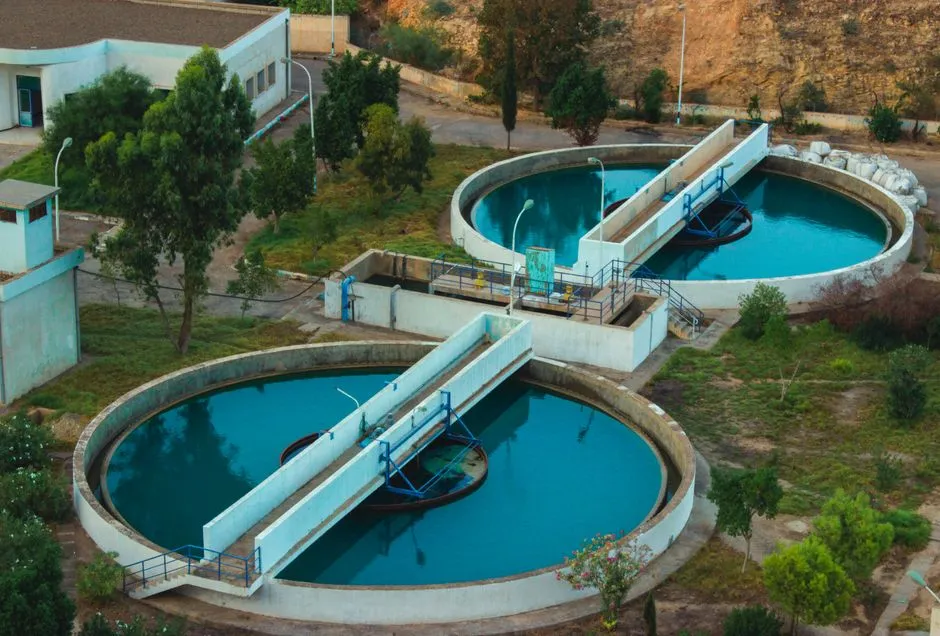
A gravity clarifier — including the inclined-plate (lamella) variant used in industrial plants — relies on Stokes settling velocity, not bubble attachment. Feed is dosed with coagulant and flocculant, floc grows in a serpentine or paddle mixer, and flocculated particles settle under gravity into a sludge bed. Lamella plates reduce the effective settling depth to roughly 50 mm between plates and raise the hydraulic loading to 20–40 m/h, which is the figure HydropureWater publishes for its high-efficiency sedimentation tank line. The contact-zone physics differ in a way that matters for transportation equipment wastewater: DAF bubble-particle attachment efficiency (αPB) typically falls in the 0.35–0.55 range in water-treatment experiments, per Shawwa's kinetic model referenced in the Clari-DAF literature (S1). That is why DAF excels at low-density particles and emulsified oil — and why a lamella clarifier, no matter how well-dosed, will pass emulsified coolant through to the effluent.
What neither unit does is also worth flagging. Neither DAF nor a lamella clarifier removes dissolved metals, COD, or the biodegradable organic load; both are primary treatment steps that need biological or membrane polishing downstream if the plant plans reuse or faces a CBOD limit. Treat them as the first physical barrier, not the whole system.
Head-to-Head Comparison: DAF vs Lamella Clarifier for Transportation Equipment Plants
The decision between a DAF and a lamella clarifier for a transportation equipment plant reduces to a small number of load-driven trade-offs. The table below consolidates the operating envelope each technology occupies on the streams described above, with numbers cross-checked against the DAF Corp catalog (S5), SigmaDAF/Clari-DAF design references (S1, S2), and the HydropureWater lamella catalog.
| Parameter | DAF (dissolved air flotation clarifier) | Lamella / inclined-plate clarifier |
|---|---|---|
| TSS removal (raw feed, with polymer) | 85–98% (DAF Corp FC Maximizer 92–98%; RC UniMax 85–90%) — see S5 | 50–70% raw, 80–90% with optimized polymer at 20–40 m/h hydraulic loading |
| FOG / oil removal | Free + emulsified oil to <20 mg/L clarified TSS and 2–4% DS sludge (S5) | Free oil only; emulsified oil passes through; needs upstream skim tank |
| Surface loading rate | 15–20 gpm/ft² (≈30–50 m/h) — Clari-DAF design, S1 | 20–40 m/h (HydropureWater catalog, inclined plates) |
| Footprint, 100 m³/h plant | ~2 m² flotation cell (up to 82.7% smaller than conventional settling, per S1) | ~5 m² equivalent settling area plus lamella pack depth |
| CAPEX band (20–50 m³/h, 2026) | Skid-mounted package; higher unit cost, smaller civil scope | Tank + lamella pack + dosing; lower unit cost, larger civil scope |
| OPEX drivers | Recycle-pump energy, saturator air, polymer (lower dose than lamella on FOG feeds), sludge already 2–4% DS so dewatering cost is lower (S5) | Higher polymer dose for high-TSS feeds, larger sludge volume, lower energy |
| Sensitivity to feed swings | Tolerant of oil surges; surface blanket buffers shock loads | Sensitive to hydraulic surges; floc can shear and resuspend |
| Sludge dryness | 2–4% DS float (S5); easy to dewater further | 0.5–1.5% DS underflow; higher hauling cost per ton of dry solids |
Read the FOG row first if your plant runs machining or e-coat. A lamella clarifier physically cannot break an oil-in-water emulsion; a DAF can, which is why every DAF Corp automotive and aerospace reference installation (S5) is sized on the FOG envelope, not the TSS envelope alone. The CAPEX delta is real but smaller than vendors imply once civil works, tank excavation, and sludge-hauling OPEX are included.
Decision Rule: When a Montgomery Plant Should Pick DAF and When to Pick a Clarifier
Pick a DAF if any of the following apply to your 2026 influent numbers: FOG >100 mg/L; emulsified coolant present in any appreciable flow; raw TSS >500 mg/L during a typical production shift; available footprint inside the existing headworks is <0.5 acre; or the local discharge limit on oil & grease is <50 mg/L daily max. These are the thresholds a Montgomery transportation equipment plant will routinely trip, because the machining coolant stream alone will push FOG over 100 mg/L on most days and over 500 mg/L on dump days.
Pick a lamella clarifier if the wastewater signature is dominated by settleable TSS from parts washing, FOG is consistently <50 mg/L, you already have a chemical dosing room and sludge-handling infrastructure, and CAPEX is constrained tighter than footprint. A lamella unit is also a defensible choice for the e-coat rinse line if the e-coat is segregated from the machining coolant stream, because the e-coat overflow is mostly hydroxide floc and detergent that settles well with a simple cationic polymer.
Consider a hybrid (lamella roughing plus DAF polish) when raw TSS is high but the bulk is settleable grit and metal fines, and the residual FOG still needs flotation. A typical configuration: lamella handles 60–70% of TSS at high hydraulic loading, then a small DAF polishes the overflow to the ADEM discharge target. This works when the lamella effluent FOG would otherwise fail the 50 mg/L O&G daily max but a smaller DAF can be justified on flow. Tie the choice back to Montgomery permitting explicitly: ADEM and the City of Montgomery Industrial Pretreatment Program have tightened local limits between permit cycles in past renewals, and DAF buys a margin of 20–40 percentage points of additional TSS and FOG removal at the same hydraulic load, which translates into permit headroom you can defend in the next renewal cycle.
Sizing and Operating Parameters a 2026 Spec Should Lock In
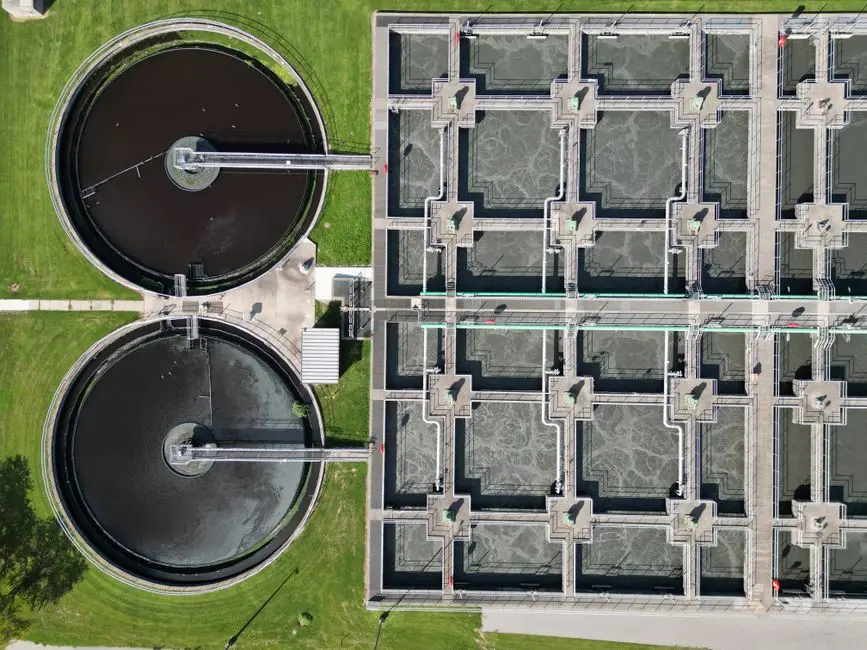
Write the RFQ around the parameters below so every vendor is compared on equal terms. These are the spec points that will actually drive both performance and total cost of ownership over the next 10 years.
| Parameter | Specification to lock in |
|---|---|
| DAF surface loading | 15–20 gpm/ft² (industrial design, per Wong/Farmerie/Wang 2019, S1) |
| Lamella surface loading | 20–40 m/h hydraulic loading (HydropureWater catalog, inclined plates) |
| Microbubble size | 30–50 µm at the contact zone (SigmaDAF spec, S2); 20–40 µm achievable with dedicated micro-bubble generator (S5) |
| Recycle ratio | 10–30% of forward flow, sized on saturator pressure 4–6 bar |
| Construction material | 304SS standard; 316SS or polypropylene if chlorides >200 mg/L, pH excursions, or plating rinse carryover are present (S2) |
| Controls | PLC with chemical dosing trim, automatic skim speed control, sludge cone with auger, interface probe for sludge blanket; matches SigmaDAF Compact DAF features (S2) |
| Sludge handling | Float to 2–4% DS (S5); specify auger or paddle removal and downstream dewatering |
One example of a unit already engineered to these spec points for FOG/TSS-heavy transportation equipment wastewater is the HydropureWater dissolved air flotation system, which covers 4–300 m³/h across 13 models, generates 30–50 µm microbubbles, and ships with automatic skimming and PLC control. For a lamella comparison, the HydropureWater high-efficiency lamella clarifier is rated to the 20–40 m/h hydraulic loading band above and integrates with an automatic coagulant and flocculant dosing skid for the upstream conditioning step. If you need a refresher on where each unit sits in the overall process train, the DAF system process flow diagram walkthrough maps the unit operations from influent to clarified overflow.
2026 Cost and ROI View for a Montgomery Plant
For a 20–50 m³/h industrial skid in 2026, DAF CAPEX typically lands in the mid-five-figure USD range for a small pre-assembled unit and reaches the low-six-figure range for a turnkey system with chemical conditioning, controls, and installation. A lamella clarifier package — tank, lamella pack, dosing skid — is often 30–50% lower in upfront cost because the components are simpler, but the civil tank and larger footprint push the installed cost closer once excavation and yard piping are added. OPEX is where the comparison gets interesting: polymer consumption is lower on a DAF for FOG-rich feeds because the float already removes oil-bound solids without high-dose polymer, and DAF float leaves the sludge at 2–4% DS, which cuts downstream dewatering and hauling cost per ton of dry solids (S5). The recycle pump and saturator compressor do add an energy line item, but for plants already running compressed air it is rarely the dominant OPEX term.
Frame the payback to procurement in non-monetary terms first. A DAF typically enables 50–80% recycle of clarified water back to e-coat rinse or parts-wash stages, which reduces both POTW surcharges and freshwater draw. More importantly, it eliminates the surcharges the City of Montgomery POTW bills for FOG and O&G exceedances, and it removes the permit-violation exposure that escalates with each quarterly exceedance. The 2026 reality is that ADEM pretreatment enforcement is intensifying, Alabama industrial electricity tariffs are volatile, and chemical costs continue to track oil prices — so the right primary unit is the one that minimizes chemical plus sludge-disposal OPEX over a 10-year horizon, not the one with the lowest sticker price. The automatic coagulant and flocculant dosing skid tied to either choice also pays back through tighter dose control and reduced chemical waste, which a comparative reference like the Goshen decision guide (see DAF vs clarifier for transportation equipment wastewater in Goshen) treats the same way.
Frequently Asked Questions
When should a transportation equipment plant pick DAF over a lamella clarifier in 2026?
Pick a DAF when the wastewater carries emulsified oils from machining coolants, FOG exceeds 100 mg/L, or raw TSS regularly exceeds 500 mg/L — conditions typical of stamping, machining, and paint-shop streams. A lamella clarifier is the right answer only when FOG is below 50 mg/L and the TSS is mostly settleable grit from parts washing.
What FOG and TSS removal can a DAF realistically hit on automotive or aerospace wastewater?
An industrial DAF routinely delivers 85–98% TSS removal (FC Maximizer 92–98%, RC UniMax 85–90%, per DAF Corp, S5) and produces float sludge at 2–4% DS, with clarified TSS below 20 mg/L when paired with proper coagulant and flocculant conditioning. Emulsified oil removal is the DAF's specific advantage over a lamella unit, which physically cannot break an emulsion.
What surface loading rate should a 2026 RFQ specify for a DAF?
Specify 15–20 gpm/ft² (≈30–50 m/h) for industrial DAF service, per the Clari-DAF design reference (S1), with microbubbles in the 30–50 µm range and a recycle ratio of 10–30% of forward flow. A lamella clarifier RFQ should specify 20–40 m/h hydraulic loading on the inclined-plate pack.
How does a Montgomery plant tie the DAF-vs-clarifier choice to ADEM pretreatment limits?
Map the technology choice to the City of Montgomery Industrial Pretreatment Program discharge envelope: TSS typically 250 mg/L daily max, FOG 100 mg/L, and O&G 50 mg/L daily max into the POTW. A DAF provides 20–40 percentage points of additional TSS and FOG margin over a lamella clarifier at the same hydraulic load, which translates directly into permit headroom at the next renewal cycle. For context on how other transportation equipment plants have structured their pretreatment programs, the Spirit Lake case study (how transportation equipment plants meet 2026 pretreatment limits) walks through a comparable compliance design.