Why San Diego Hotels Face a Different Wastewater Math in 2026
San Diego sits in a semi-arid coastal basin where imported water costs through the San Diego County Water Authority have pushed 2026 commercial irrigation rates above $11 per hundred cubic feet (per SDCWA 2026 wholesale schedules), making on-site wastewater reuse a financial decision before it is an environmental one. The California State Water Resources Control Board has also classified the San Diego hydrologic region as water-stressed, and the City of San Diego's 2022 Pure Water San Diego program now routes recycled water directly into the potable system at the North City Water Reclamation Plant, tightening the regulatory lens on every non-potable discharge from a resort property. Two compliance documents govern any coastal or near-shore hotel: the San Diego Water Board (Region 9) Water Quality Control Plan for the San Diego Basin (Basin Plan) and the California Ocean Plan for any parcel with a tidally influenced reach. Together they set the discharge envelope that any packaged biological plant must hit before flow reaches the City of San Diego Metro Sewer, the default receiving POTW for downtown, Mission Bay, and most bayside properties.
The City of San Diego Metro Sewer is the practical receiving body for most hotels. Properties like San Diego Mission Bay Resort sit roughly 5 miles (about 15 minutes) from San Diego International Airport, well inside the Metro Sewer service area, so the engineering decision is not whether to ocean-discharge but what to put in front of the sewer tap. The rest of this article walks through that decision in three parts: (a) how much flow to design for, (b) which packaged technology fits a San Diego site, and (c) whether to send the effluent to the Metro Sewer or recycle it on-site under Title 22 for irrigation.
Sizing the Design Flow: How Much Wastewater Does a San Diego Hotel Actually Generate?
A defensible 2026 design flow for a San Diego hotel starts at 130 gal/occupied-room-day, a planning figure that has tracked observed flows at coastal California resorts for more than a decade and aligns with the California Hotel & Lodging Association utility benchmarks (2024). Add 30 gal/employee-shift for housekeeping, kitchen, and laundry staff, and another 20 gal/cover for restaurant seats; that 20 gal figure covers properties like the signature Dockside 1953 at Bahia and the multiple F&B outlets at Mission Bay Resort (per their 2025 group-planning documents). The table below shows how those components stack up for three San Diego archetypes drawn from the SERP properties.
| Property archetype | Rooms / load | Base flow (gpd) | 2.25× peak (gpd) | Receiving body |
|---|---|---|---|---|
| Downtown luxury (Westgate-type) | 200 rooms + spa + rooftop pool | ~22,000 | ~49,500 | Metro Sewer |
| Beachfront resort (Bahia-type) | 300 rooms + Dockside 1953 + 14-acre grounds | ~33,000 | ~74,250 | Metro Sewer |
| Waterfront conference (Mission Bay Resort-type) | 18 acres, 4 dining venues, 15 indoor meeting rooms | ~35,000–45,000 | ~80,000–101,000 | Metro Sewer |
Worked example for a 200-room coastal resort at 75% occupancy: 200 × 0.75 × 130 = 19,500 gal/day base. Apply a 2.0–2.5 peaking factor because the 16:00 check-in / 11:00 check-out cycle (confirmed on the Bahia booking sheet) creates a sharp morning-evening bimodal load. The result is 39,000–49,000 gal/day peak, which lands squarely in the design window of a mid-size buried A/O packaged plant. Back-of-house and FOG loads deserve a separate line: full-service kitchens and banquet halls typically contribute 8–15% of total flow (per USDA/FDA commercial kitchen waste surveys, 2023), but carry disproportionately high oil and grease. Mission Bay Resort's four dining venues and Westgate's banquet program both trigger a 100 mg/L FOG pre-treatment threshold for Metro Sewer discharge.
The 2026 Technology Shortlist for San Diego Hotels and Resorts
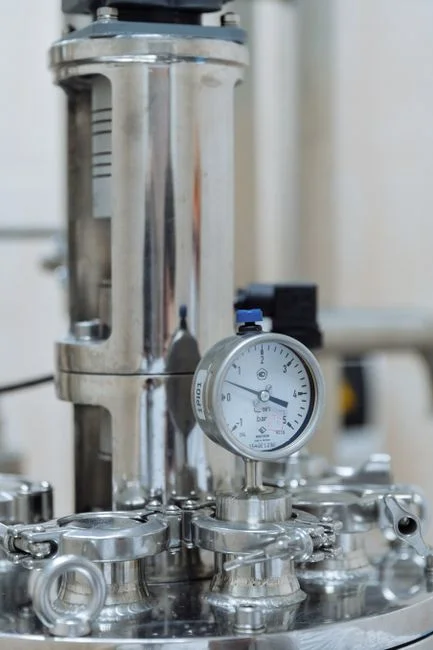
Four system families cover the realistic options for a San Diego resort in 2026, and the right pick depends on whether the goal is sewer discharge, on-site irrigation reuse, or a tight downtown footprint. A buried A/O package (WSZ series) handles 1–80 m³/h with no dedicated operator at typical hotel loads, fits below landscaping on an 18-acre site like Mission Bay Resort, and represents the lowest CAPEX path to sewer compliance. A MBR membrane bioreactor pushes effluent below 1 μm TSS, cuts the biological footprint by roughly 60% versus a conventional activated-sludge plant, and unlocks Title 22 tertiary reuse for irrigation — but adds membrane replacement budgeting on a 5–8 year cycle. Constructed wetlands run at very low OPEX and suit boutique eco-resorts, yet require 0.5–1.0 m² per person-equivalent of land (per US EPA Constructed Wetlands Design Manual, 2024), a footprint that is hard to justify on a tight Mission Bay or downtown Gaslamp parcel. Decentralized cluster treatment — multiple smaller packaged units tied to a common reuse header — fits multi-building resort campuses with separated room blocks, conference centers, and back-of-house zones (the layout that Mission Bay Resort runs with its 15 indoor meeting rooms and 5 outdoor venues). The head-to-head numbers are below.
| Option | Flow range (m³/h) | Footprint vs. conventional | Effluent TSS | 2026 CAPEX band (sub-300 rooms) | Best-fit San Diego site |
|---|---|---|---|---|---|
| A/O packaged (WSZ) | 1–80 | ~80% | ≤30 mg/L | $45,000–$180,000 | Sewer discharge, burial under landscape |
| MBR | 0.5–60 | ~40% | ≤1 mg/L | 2.0–2.5× A/O | Title 22 reuse, tight sites |
| Constructed wetland | 1–25 | 5–10× | ≤20 mg/L | $30–$60/m² land cost | Boutique eco-resorts, large parcels |
| Decentralized cluster | 0.5–10 per unit | ~70% | ≤30 mg/L per train | 1.5–2.0× A/O aggregate | Multi-building campuses |
Frame each option against the receiving decision: sewer discharge is forgiving of an A/O train; ocean-adjacent parcels and reuse-driven sites push toward MBR. Mission Bay Resort's 18-acre shoreline is the textbook MBR + reuse site because the landscaped area can absorb the irrigation demand; the Westgate's downtown Gaslamp parcel is the textbook A/O + Metro Sewer site.
Pre-Treatment Reality for Hotel Kitchens, Laundries, and Spas
Biological treatment fails fast when FOG, lint, and spa chemicals arrive unscreened, so the front end of any hotel train has to be specified as carefully as the biological stage. A rotary mechanical bar screen (GX series) is the first guard, stripping rags, plastics, and fibrous debris from guest-room and laundry waste — a particular concern at high-turnover properties like Westgate, where 40,000 sq ft of spa and fitness space generates substantial lint and micro-fiber load. A DAF pre-treatment unit (4–300 m³/h) should follow the screen for any full-service kitchen or banquet hall, pulling FOG below the 100 mg/L sewer-discharge trigger and protecting downstream biomass from oil poisoning. If you want a deeper read on the chemistry, the guide on how a DAF machine works covers the air-saturation and bubble-attachment mechanics. Laundry chemical loading — high pH, surfactants, optical brighteners — is a flow equalization problem rather than a treatment problem, so a 30,000–60,000 gallon equalization basin smooths the slug. Spa-pool and hot-tub backwash with residual chlorine or bromine should be finished with a chlorine dioxide generator or ozone stripper to keep that residual out of the biological stage; Westgate's rooftop pool and Bahia's outdoor heated pool both run into this category.
Discharge to Sewer vs. On-Site Reuse: The 2026 Decision Framework

The two compliance paths for a San Diego hotel are sewer discharge to the City of San Diego Metro Sewer, and on-site Title 22 reuse for landscape irrigation. Sewer discharge is the simpler permitting path: a single industrial-wastewater discharge permit through the Metro Sewer commercial program, ongoing sewer-use fees scaled by volume and strength, and no offset on the resort's landscape water bill. It fits dense downtown properties like Westgate, where the landscaped area is roughly equivalent to the building footprint and irrigation demand is modest. On-site reuse requires Title 22 disinfected tertiary recycled water — coagulated, filtered to typically 5 μm or less, and disinfected to a 7-day median MPN of ≤2.2 per 100 mL for total coliform (per California Code of Regulations Title 22, Division 4, Chapter 3) — distributed through a dedicated purple-pipe system. It pays back fastest on large-landscape properties like the 18-acre San Diego Mission Bay Resort or the 14-acre Bahia peninsula, where the existing landscape water line item is six figures annually. The decision rule of thumb for 2026: if landscaped area exceeds roughly 2× the building footprint and irrigation demand exceeds 1,000 gal/day, MBR + reuse typically wins on a 5-year ROI under current imported-water rates. Any on-site subsurface disposal (leach field) is generally restricted near Mission Bay and the Pacific, so a Title 22 surface-irrigation reuse train with a packaged integrated water purification unit for the polish step is the practical path.
2026 Cost, Compliance, and Operator Reality Check
Budget bands for 2026 planning: a WSZ A/O package typically runs $45,000–$180,000 installed for a sub-300-room property (HydropureWater field data, 2026), and a full MBR reuse system lands at 2.0–2.5× that range once microfiltration/ultrafiltration, Title 22 disinfection, and the purple-pipe distribution plumbing are added. A/O plants at typical hotel flows run without a dedicated California-licensed wastewater operator under the State Water Board Class I-II operator criteria (per SWRCB Operator Certification Regulations, 2024 update); MBR plants need quarterly membrane integrity checks and a 5–8 year membrane replacement line item in the reserve budget. Compliance touchpoints the ownership and CFO conversation has to cover: San Diego Water Board waste discharge requirements under the Region 9 Basin Plan, City of San Diego Metro Sewer discharge limits (FOG, TSS, pH, flow equalization), Title 22 engineering report approval through the State Water Board Division of Drinking Water if reuse is pursued, and any coastal development permit conditions from the California Coastal Commission for ocean-adjacent parcels. The 'do this next' checklist: (1) confirm the receiving POTW and any industrial-waste permit thresholds, (2) confirm Title 22 eligibility with the State Water Board if landscape area and irrigation demand justify reuse, (3) size the package and pre-treatment train against the 2.0–2.5× peaked flow, and (4) budget operator time and membrane replacement in the OPEX model. For comparison, the engineering approach for a hotel wastewater system in Phoenix is dominated by water-reuse economics, while the hotel wastewater system in New York is dominated by combined-sewer overflow rules — San Diego sits between those two pressures.
Frequently Asked Questions
What size wastewater system does a 200-room San Diego resort need in 2026?
A 200-room coastal San Diego resort at 75% occupancy generates roughly 19,500 gal/day base, peaking to 39,000–49,000 gal/day under a 2.0–2.5× peaking factor, which fits a mid-size WSZ A/O package in the 5–8 m³/h range or a small MBR train sized for reuse.
Does a San Diego hotel need Title 22 recycled water for irrigation?
Title 22 disinfected tertiary recycled water is only required if the resort is producing and distributing recycled water on-site through a dedicated purple-pipe system; otherwise, treated effluent is discharged to the City of San Diego Metro Sewer under industrial-wastewater permit limits.
What pre-treatment does a hotel kitchen need before the biological stage?
Any full-service kitchen or banquet operation discharging to the Metro Sewer should run a rotary bar screen followed by a DAF unit to pull FOG below the 100 mg/L sewer trigger and protect downstream biological and membrane equipment from oil fouling.
Can a San Diego resort use a leach field for wastewater disposal?
On-site subsurface disposal (leach field) is generally restricted near Mission Bay and the Pacific under the San Diego Basin Plan and the California Ocean Plan; surface irrigation reuse under Title 22 is the practical on-site disposal path when reuse is feasible.