Why DAF Machines Outperform Sedimentation for Industrial Wastewater
Dissolved air flotation systems achieve 95%+ Total Suspended Solids (TSS) removal and 90%+ Fats, Oils, and Grease (FOG) reduction, significantly outperforming conventional sedimentation in applications involving low-density particles. While sedimentation relies on gravity to settle solids to the tank bottom, DAF utilizes the buoyancy of micro-bubbles to lift contaminants. This fundamental difference makes DAF the preferred technology for industrial wastewater containing emulsified oils, fibers, or colloidal solids that exhibit neutral or near-neutral buoyancy. According to EPA 2024 benchmarks, DAF systems operate at hydraulic loading rates of 2-10 m/h, whereas sedimentation clarifiers are typically limited to 0.5-2 m/h, resulting in a footprint reduction of up to 50% for the same flow capacity.
Sedimentation is often hindered by flow variations and "bulking" sludge, which can lead to solids carryover in the effluent. In contrast, DAF is highly resilient to hydraulic surges because the flotation force provided by air bubbles is several orders of magnitude stronger than the gravitational force acting on a settling particle. For instance, in food processing plants where FOG levels fluctuate rapidly, a DAF system maintains consistent discharge compliance where a clarifier would fail due to oil capping. DAF produces a much drier sludge (3-5% solids) compared to sedimentation (1-2% solids), which directly reduces downstream dewatering costs and disposal volumes.
| Parameter | Sedimentation (Clarifier) | Dissolved Air Flotation (DAF) | Industrial Advantage |
|---|---|---|---|
| TSS Removal Efficiency | 70-80% | 95-99% | DAF meets stricter discharge limits |
| FOG Removal Efficiency | Poor (<50%) | 90-98% | Essential for food/petrochemical |
| Hydraulic Loading Rate | 0.5-2.0 m/h | 2.0-10.0 m/h | DAF requires 50% less space |
| Sludge Concentration | 1-2% DS | 3-5% DS | Lower disposal/dewatering costs |
| Sensitivity to Flow | High | Low | DAF handles process surges better |
The 4-Stage DAF Process: Engineering Mechanics and Key Parameters
The engineering mechanics of a DAF system involve a precise sequence of chemical and physical interactions designed to maximize particle-bubble collision frequency. The process begins with Stage 1: Coagulation and Flocculation. Wastewater enters a reaction zone where coagulants like Polyaluminum Chloride (PAC) or ferric chloride are dosed at 5-50 mg/L to neutralize particle charges. This is followed by flocculant addition (polymer) to bind micro-flocs into larger, stable aggregates. For optimal performance, the mixing intensity (G-value) must be maintained between 500-1000 s⁻¹ during coagulation and significantly lower during flocculation to prevent floc shear. Efficient chemical delivery is often managed via a PLC-controlled chemical dosing for DAF flocculation to ensure stability under variable influent loads.
Stage 2: Air Saturation is the core of the flotation mechanism. A portion of the clarified effluent (typically 10-30%) is recirculated and pumped into a saturation tank at pressures of 4-6 bar (60-90 psi). Compressed air is dissolved into this water until it reaches a state of supersaturation. When this "whitewater" is released into the DAF tank through a pressure-reduction valve, the sudden drop to atmospheric pressure causes the air to come out of solution, forming millions of micro-bubbles ranging from 30 to 50 microns in diameter.
Stage 3: Bubble-Particle Attachment occurs in the contact zone. The micro-bubbles collide with and adhere to the chemical flocs. Because the 30-50 micron bubbles are smaller than the flocs, they become entrapped within the floc structure or attach to the surface via hydrophobic interaction. The contact time in this zone is critical, typically requiring 30-120 seconds, with a flotation zone depth of 1.5 to 2.5 meters to allow for stable rise velocities.
Stage 4: Sludge Removal and Clarification concludes the process. The bubble-floc complexes rise to the surface, forming a thick, buoyant sludge blanket. A mechanical skimmer—often a chain-and-flight or spiral mechanism—removes the surface sludge into a hopper. The clarified water exits from the bottom of the tank through an underflow weir. The resulting sludge, containing 3-5% solids, can be further processed using sludge dewatering solutions for DAF-generated sludge to achieve 25-35% cake dryness.
| Stage | Key Engineering Parameter | Typical Value/Range | Objective |
|---|---|---|---|
| Flocculation | Mixing Intensity (G-Value) | 50-100 s⁻¹ | Form stable, buoyant flocs |
| Saturation | Operating Pressure | 4.0 - 6.0 bar | Maximize air solubility |
| Bubble Size | Bubble Diameter | 30 - 50 microns | Optimize attachment surface area |
| Recirculation | Recycle Ratio | 10% - 30% | Provide sufficient bubble density |
| Separation | Retention Time | 20 - 45 minutes | Ensure complete flotation |
DAF System Design: Hydraulic Loading, Bubble Size, and Efficiency Trade-offs
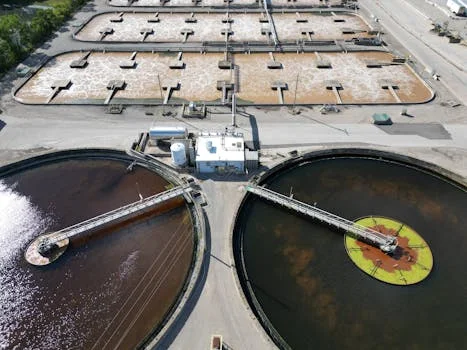
Hydraulic loading rates (HLR) for DAF systems are the primary design criteria, ranging from 2 to 10 m/h depending on the specific gravity of the contaminants and the temperature of the water. For difficult applications like emulsified oils in petrochemical wastewater, a lower HLR of 2-4 m/h is required to provide sufficient residence time for the smaller, lighter particles to reach the surface. Conversely, in pulp and paper fiber recovery, where particles are larger and more easily attached to bubbles, rates of 8-10 m/h are common. Designers must balance HLR against the tank's cross-sectional area to prevent turbulence that could break the bubble-particle bond.
The relationship between bubble size and saturation pressure represents a critical energy-efficiency trade-off. While smaller bubbles (under 30 microns) provide a higher surface-area-to-volume ratio for attachment, they require significantly higher saturation pressures, increasing energy consumption (kWh/m³). Most industrial DAF systems are optimized for 30-50 microns, as this size provides sufficient buoyancy to lift flocs at a rise velocity of approximately 0.1 to 0.2 meters per minute. Increasing the saturation pressure beyond 6 bar yields diminishing returns in removal efficiency while exponentially increasing pump wear and power costs.
Temperature also plays a significant role in DAF physics. As water temperature drops below 10°C, the viscosity of the water increases, and the solubility of air changes, which can lead to larger, less stable bubbles. In cold-climate municipal pre-treatment, operators may need to increase the recirculation ratio by 5-10% to compensate for reduced bubble-particle adhesion. In contrast, high-temperature wastewater (above 60°C) in textile or food processing can cause bubbles to coalesce rapidly, reducing the effective surface area for flotation. In such cases, pre-cooling or specialized surfactant dosing may be required to maintain performance.
| Industry Application | Recommended HLR (m/h) | Recycle Ratio (%) | Typical Saturation Pressure (bar) |
|---|---|---|---|
| Meat/Poultry Processing | 3.5 - 5.0 | 20 - 30% | 4.5 - 5.5 |
| Pulp & Paper (Fiber Recovery) | 6.0 - 10.0 | 10 - 15% | 4.0 - 5.0 |
| Oil & Gas (Produced Water) | 2.0 - 4.0 | 25 - 35% | 5.0 - 6.0 |
| Municipal Pre-treatment | 5.0 - 8.0 | 15 - 20% | 4.5 - 5.0 |
| Dairy Processing | 3.0 - 4.5 | 20 - 25% | 5.0 - 5.5 |
DAF vs Sedimentation vs MBR: Which Technology is Right for Your Application?
Comparing DAF, sedimentation, and Membrane Bioreactors (MBR) reveals that DAF offers the optimal balance of footprint and FOG removal efficiency for primary and secondary treatment. While sedimentation is the most cost-effective for heavy, inorganic solids (like sand or grit), it fails to address the light organic loads typical of industrial processes. On the other end of the spectrum, MBR systems for high-BOD industrial wastewater provide the highest effluent quality, capable of removing dissolved organic matter that DAF cannot touch. However, MBR systems are sensitive to FOG; if influent oil levels exceed 50 mg/L, membranes will foul rapidly. Therefore, a DAF system is frequently used as a vital pre-treatment stage for MBR to protect the membranes from grease and suspended solids.
Energy consumption is a major differentiator in technology selection. Sedimentation is the "passive" choice, consuming only 0.1-0.3 kWh/m³ for bridge drives. DAF is more energy-intensive, requiring 0.2-0.5 kWh/m³ to power the saturation pumps and compressors. MBR is the most energy-intensive at 0.4-0.8 kWh/m³ due to the high-pressure filtration and aeration requirements. From a capital expenditure (CAPEX) perspective, DAF ($50-$200/m³/day) sits between the low cost of sedimentation and the high investment required for MBR. The decision framework usually follows a clear logic: if the goal is FOG and TSS removal for discharge to a municipal sewer, DAF is the standard; if the goal is water reuse or direct discharge to a river with high BOD limits, MBR is necessary.
| Feature | Sedimentation | DAF | MBR |
|---|---|---|---|
| Primary Removal Target | Heavy Solids/Grit | FOG, TSS, Light Solids | BOD, COD, Bacteria |
| Footprint Requirement | 100% (Baseline) | 40-50% of Baseline | 20-30% of Baseline |
| Energy Use (kWh/m³) | 0.1 - 0.3 | 0.2 - 0.5 | 0.4 - 0.8 |
| Operational Complexity | Low | Moderate | High |
| CAPEX ($/m³/day) | $30 - $100 | $50 - $200 | $200 - $500 |
Real-World DAF Performance: Removal Rates for Common Industrial Contaminants
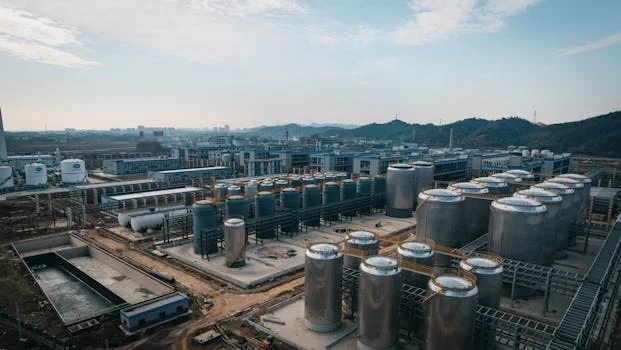
Real-world performance data from the food processing industry shows that DAF systems consistently reduce influent FOG from 1000 mg/L to less than 100 mg/L without biological intervention. In pulp and paper mills, DAF is utilized for fiber recovery, achieving 92% TSS removal and significantly reducing the chemical oxygen demand (COD) associated with suspended organic fibers. While DAF is primarily a physical separation process, its efficiency for COD removal is highly dependent on the fraction of COD that is "particulate" versus "dissolved." Typically, DAF can remove 40-70% of total COD in industrial streams by stripping out the suspended organic matter. For more information on benchmarks, see this detailed DAF efficiency benchmarks and case studies report.
Beyond organic solids, DAF is an effective tool for heavy metal removal when coupled with chemical precipitation. By adjusting the pH to the point of minimum solubility (typically pH 8.5-9.5 for most metals) and adding a coagulant, metals like Copper (Cu), Zinc (Zn), and Nickel (Ni) form hydroxide precipitates. These precipitates are then easily floated to the surface by micro-bubbles. Field data from semiconductor and electroplating facilities indicates removal rates of 80-90% for these metals. However, DAF is not suitable for removing highly soluble contaminants like ammonia or phosphorus unless they are first converted into a solid phase through specialized chemical reactions.
| Industry | Contaminant | Influent (mg/L) | Effluent (mg/L) | Removal Rate (%) |
|---|---|---|---|---|
| Food Processing | FOG | 500 - 2,000 | < 50 | 95 - 98% |
| Pulp & Paper | TSS | 1,000 - 3,000 | 80 - 150 | 92 - 95% |
| Petrochemical | Free Oil | 500 - 3,000 | 15 - 30 | 97 - 99% |
| Electroplating | Heavy Metals | 10 - 50 | 1 - 5 | 85 - 90% |
| Municipal | TSS (Pre-treat) | 200 - 500 | 30 - 60 | 85 - 90% |
DAF Operation and Maintenance: Common Problems and Solutions
Operational failures in DAF systems are most frequently caused by improper saturation tank pressure or inadequate chemical coagulation. If an operator observes "burping" or large bubbles in the flotation tank, it usually indicates a failure in the pressure-reduction valve or a leak in the air supply, leading to air-binding. The saturation pressure must be maintained strictly between 4-6 bar; if the pressure drops below 3.5 bar, the air will not dissolve sufficiently, and the resulting bubbles will be too large to attach to flocs, causing the sludge blanket to sink. Regular maintenance of the DAF systems for industrial wastewater treatment involves cleaning the air injection nozzles weekly to prevent mineral scaling or biological fouling.
Excessive sludge volume is another common issue, often resulting from the overdosing of coagulants. While more chemicals might seem to improve clarity, an excess of PAC or polymer creates a bulky, water-heavy sludge that is difficult to skim and expensive to dispose of. Operators should perform "Jar Tests" weekly to calibrate the dosage to the current influent strength. If the effluent TSS exceeds 50 mg/L despite correct chemistry, the hydraulic loading rate may be too high, or the recirculation ratio may need to be increased. For plants struggling with sludge management, reviewing sludge dewatering options for DAF-generated sludge can help identify more efficient ways to handle the 3-5% solids produced by the DAF unit.
Maintenance Checklist for DAF Operators:
- Daily: Verify saturation pressure (4-6 bar) and check skimmer speed for consistent sludge removal.
- Weekly: Inspect chemical dosing pumps for clogs and perform a jar test to optimize polymer usage.
- Monthly: Clean the whitewater release nozzles and calibrate pH/TSS sensors to ensure automated controls are accurate.
- Quarterly: Inspect the saturation tank for internal corrosion and check pump seals for leaks.
How to Select a DAF System: Cost Breakdown and ROI Calculation
The capital expenditure (CAPEX) for a high-performance DAF system ranges from $30 to $100 per cubic meter of daily treatment capacity, depending on the material of construction (e.g., 304 vs 316 stainless steel) and the level of automation. For an industrial plant treating 1,000 m³/day, the equipment cost typically falls between $50,000 and $150,000. Installation and civil works generally add another 30-50% to the total project cost. While the initial investment is higher than that of a simple sedimentation tank, the return on investment (ROI) is driven by significantly lower chemical consumption and reduced sludge disposal fees. Because DAF produces a more concentrated sludge, the volume of waste hauled off-site can be reduced by 50% or more.
To calculate the ROI of a DAF system, procurement managers should consider the "Avoided Cost" of municipal surcharges. Most municipalities charge heavy penalties for FOG and TSS levels exceeding 250 mg/L. A DAF system that brings a food processor from 1,000 mg/L down to 50 mg/L can save tens of thousands of dollars annually in fines. A typical ROI formula is: (Annual Surcharge Savings + Reduced Sludge Costs - Annual OPEX) / Total CAPEX = ROI (years). In many industrial scenarios, a well-engineered DAF system pays for itself in 1.5 to 3 years. For facilities dealing with complex waste streams, such as those discussed in the advanced treatment for DAF effluent containing heavy metals guide, the ROI is often even faster due to the high costs of specialized metal disposal.
| Cost Category | Estimated Cost (per m³ treated) | Primary Cost Driver |
|---|---|---|
| Energy (Electricity) | $0.05 - $0.20 | Saturation pump & compressor operation |
| Chemicals (PAC/Polymer) | $0.02 - $0.12 | Influent contaminant concentration |
| Sludge Disposal | $0.05 - $0.25 | Local landfill/incineration rates |
| Maintenance/Labor | $0.01 - $0.05 | Automation level & component quality |
| Total OPEX | $0.13 - $0.62 | Varies by industry and location |
Frequently Asked Questions
What is the difference between DAF and IAF?
Dissolved Air Flotation (DAF) dissolves air under high pressure (4-6 bar) to create micro-bubbles (30-50 microns), which are highly efficient for fine particles. Induced Air Flotation (IAF) uses mechanical aeration or venturi injectors to create larger bubbles (100-500 microns). IAF is lower cost and simpler but far less effective for removing emulsified oils or colloidal solids compared to DAF.
Can DAF remove heavy metals?
Yes, DAF can remove heavy metals like Cu, Zn, and Ni, but only after they have been chemically precipitated into a solid form (hydroxides or sulfides). Once the metals are in a solid floc, the micro-bubbles can attach to them and float them to the surface. Removal rates typically range from 80% to 95% with proper pH control.
What is the typical lifespan of a DAF system?
A high-quality DAF system manufactured from 304 or 316 stainless steel typically has a lifespan of 15 to 25 years. Carbon steel units with epoxy coating usually last 10 to 15 years, depending on the corrosivity of the wastewater. Moving parts like skimmer chains and pump seals require replacement every 2 to 5 years.
How much space does a DAF system require?
DAF systems are highly compact. For a flow rate of 100 m³/h, a DAF unit requires approximately 20-25 m² of floor space. In comparison, a traditional sedimentation clarifier for the same flow would require 40-60 m². This makes DAF ideal for retrofitting into existing factories with limited space.
Is DAF suitable for high-temperature wastewater?
DAF can treat wastewater up to approximately 60°C. Beyond this temperature, the stability of the micro-bubbles decreases, and air solubility drops significantly, which can impair flotation efficiency. For very hot streams, such as those from industrial boilers or textile dyeing, a heat exchanger is often used to pre-cool the water to 40°C before it enters the DAF unit.