Why Polish Textile Plants Are Under Pressure in 2026
WIOŚ issued a PLN 450,000 fine to a Łódź dye-house in 2025 for effluent COD of 152 mg/L against the EU Directive 91/271/EEC ceiling of 125 mg/L — a single non-compliance event that wiped out roughly two years of compliance-only OPEX savings for a 200 m³/h plant. WIOŚ unannounced audits rose 30% in 2025, and 2024 agency data sets the maximum annual penalty for repeat violations at PLN 500,000 (per WIOŚ 2024 enforcement data). That combination — higher audit frequency plus a hard PLN 500,000 ceiling — converts what used to be a routine technical risk into a board-level exposure for every Polish finishing mill discharging to a municipal sewer or surface water.
The Łódź case is not an outlier. The 2024 WIOŚ national report shows tightened sampling at reactive-dye and finishing facilities across the Łódź, Lower Silesian, and Mazowieckie voivodeships, and the 2026 enforcement plan prioritizes dye-house effluent specifically because reactive and disperse dye streams are the hardest sub-category to bring below 50 Pt-Co color. For procurement and EHS managers, this is a regime change, not a one-off crackdown. Parallel EU pressure is already landing: separate textile collection has been mandatory since January 2025, and amendments making textile Extended Producer Responsibility obligatory took effect 16 October 2025, with full operational schemes required by 17 April 2028 (per ERP Poland). For the broader permitting context that frames an industrial discharge application in 2026, see the broader Polish wastewater permitting context.
What Polish Textile Effluent Actually Looks Like
Reactive-dye bath effluent is the dominant stream in Polish dye-houses and is the design driver for any retrofit: COD typically runs 800–3,000 mg/L, BOD₅ 200–600 mg/L, color 500–3,000 Pt-Co units, TDS 2,000–10,000 mg/L from glauber's salt and common salt used to drive dye fixation, pH 9–12, and temperature 40–70°C straight off the dyebath. Those numbers are not academic — they explain why a Polish dye-house cannot route raw reactive effluent to a municipal biological plant and why DAF coagulation alone fails. The 2,000–10,000 mg/L TDS suppresses the osmotic gradient biology needs to break down residual dye, and the high pH strips out any biological activity that a downstream MBR depends on unless equalization and pH correction are designed in.
Disperse-dye effluent, common in polyester finishing, has lower TDS (typically 500–2,000 mg/L) but reaches 5,000–8,000 Pt-Co color units per bath because disperse dyes are intensely chromatic. Finishing wastewater (softening, anti-static, resin finishing) carries a different signature: high surfactant load (COD 1,500–4,000 mg/L, BOD₅ 600–1,200 mg/L) and lower color (typically <300 Pt-Co) but frequent foaming events that upset DAF skimming. A well-run equalization tank sized for 24–48 hours HRT absorbs the seasonal 1.5–2× swings between winter low-flow and summer peak production — under-sizing this tank is the single most common cause of downstream MBR membrane fouling in Polish plants (HydropureWater field data, 2025).
| Stream | COD (mg/L) | BOD₅ (mg/L) | Color (Pt-Co) | TDS (mg/L) | pH | Temp (°C) |
|---|---|---|---|---|---|---|
| Reactive dye bath | 800–3,000 | 200–600 | 500–3,000 | 2,000–10,000 | 9–12 | 40–70 |
| Disperse dye bath | 600–2,200 | 150–450 | 5,000–8,000 | 500–2,000 | 6–9 | 50–80 |
| Finishing (softeners, resins) | 1,500–4,000 | 600–1,200 | <300 | 1,000–3,000 | 5–8 | 30–50 |
The TDS and pH together are the technical reason every serious Polish retrofit puts a DAF for textile TSS and color pre-treatment ahead of the biology. DAF removes 50–70% of color and 92–97% of TSS, but only 50–70% of COD, and it cannot break down dissolved reactive dye chromophores — the chemistry for that is biological, and biology needs protected, equalized feed.
The Process Train That Actually Hits <50 Pt-Co and <50 mg/L COD
A Polish retrofit that clears 91/271/EEC plus the <50 Pt-Co color target is a five-stage train, not a single unit. The order matters because every stage protects the next one.
Step 1 — Headworks screening. A rotary bar screen (typically 2–5 mm aperture) removes lint, fiber, and fabric scrap before they enter the equalization tank. In a 200 m³/h finishing mill, the screen typically captures 80–150 kg/day of fiber that would otherwise accumulate in downstream sumps and trigger ragging on MBR membranes.
Step 2 — Equalization. Sized for 24–48 hours HRT, the EQ tank dampens the 1.5–2× seasonal swing in COD and flow, drops temperature spikes from 70°C dyebath discharge, and brings pH into a 7–8.5 band using a PLC-controlled coagulant and pH dosing loop. Skipping EQ is the most common reason MBR plants fail in Poland — biology cannot tolerate a 4 pH-unit swing in a single shift.
Step 3 — Coagulation/flocculation and DAF. FeCl₃ or PAC plus anionic polyelectrolyte at 20–80 mg/L is dosed into a flocculation tank (15–25 minutes HRT) ahead of the DAF. DAF micro-bubbles (40–80 μm) float the floc, removing 92–97% of TSS and 50–70% of color, which protects the downstream membranes from particulates that would otherwise accelerate fouling. For a reference sequence where DAF feeds an MBR under tighter discharge targets, see the AOP polishing flow diagram.
Step 4 — Biological MBR. Activated sludge at 8,000–12,000 mg/L MLSS paired with submerged PVDF flat-sheet membranes at 0.1 μm pore size achieves COD <50 mg/L, BOD <10 mg/L, TSS <1 mg/L, and color <10 Pt-Co (per HydropureWater field data, 2025, on Polish reactive-dye retrofit). The flat-sheet geometry tolerates the 2,000–4,000 mg/L residual TDS that survives DAF far better than hollow-fiber, which is why a 200 m³/h Polish retrofit typically uses an integrated MBR for <50 mg/L COD and <10 Pt-Co color with DF series PVDF flat-sheet membranes rather than an imported hollow-fiber cassette.
Step 5 — Optional polishing. For mills that need <10 Pt-Co color on recalcitrant reactive dyes (phthalocyanine blues, metal-complex blacks), ozone at 2–5 mg O₃/mg color or UV/H₂O₂ AOP is added as a polishing step. For plants targeting 70–80% water reuse — typically finishing lines where softened water is fed back to the dye-bath header — an RO polishing for 70–80% water reuse stage is added downstream of the MBR.
Sludge handling. A plate-and-frame filter press dewatering the combined DAF float and MBR waste activated sludge brings cake dry solids to 22–28%, well above the 18–20% typical of a decanter centrifuge on textile waste, and that dry-solids lift is what makes the sludge acceptable to a Polish cement kiln or hazardous-waste incinerator. A plate-and-frame filter press with 30–50 chambers at 200 m³/h is the standard configuration.
DAF vs MBR vs Hybrid: Which Train for Your Polish Plant?
The choice is not which technology is best — it is which train clears your discharge limits at the lowest 10-year lifecycle cost. DAF alone is the cheapest install but cannot meet <50 Pt-Co color and rarely meets <50 mg/L COD on reactive effluent; an MBR alone at 200 m³/h has a 30–40% CAPEX premium but clears 91/271/EEC without polishing; a hybrid DAF→MBR→RO hits 70–80% water reuse and future-proofs against the 2027 PFAS limits, but it is a CAPEX tier above MBR-only. The decision rule is straightforward: pick DAF→MBR if you only need to clear 91/271/EEC; add RO if freshwater cost >PLN 8/m³ or you anticipate PFAS-driven retrofit obligations by 2028.
| Parameter | DAF | MBR (integrated) | Hybrid DAF→MBR→RO |
|---|---|---|---|
| CAPEX (PLN, 200 m³/h) | 1.2M–1.8M | 2.2M–3.0M | 3.0M–5.0M |
| OPEX (PLN/m³) | 1.2–2.0 | 2.5–3.5 | 1.8–2.8 (excl. reuse savings) |
| Effluent COD | 150–300 mg/L | <50 mg/L | <25 mg/L |
| Effluent color | 200–500 Pt-Co | <10 Pt-Co | <5 Pt-Co |
| TSS removal | 92–97% | >99% | >99.9% |
| Water reuse | None | 30–50% (rinse water) | 70–80% |
| Footprint vs. activated sludge | ~50% smaller | ~60% smaller | ~70% smaller |
For plants under 200 m³/h, a DAF→MBR sequence is the default. Between 200–500 m³/h, the MBR may operate without a dedicated DAF pre-treatment only if the influent TSS is consistently under 150 mg/L — almost never the case for reactive dye-house effluent. Above 500 m³/h, the case for hybrid DAF→RO strengthens because the freshwater-reuse credit and the avoided PLN 500,000-a-year WIOŚ ceiling both compress payback. The 5-year membrane warranty and roughly PLN 50,000/year membrane replacement cost for a 200 m³/h MBR are the operational benchmarks to anchor supplier discussions; for cross-border comparison data, the Dutch dye-house process selection guide provides a useful parallel.
Realistic 2026 CAPEX, OPEX, and ROI for a Polish Textile Retrofit
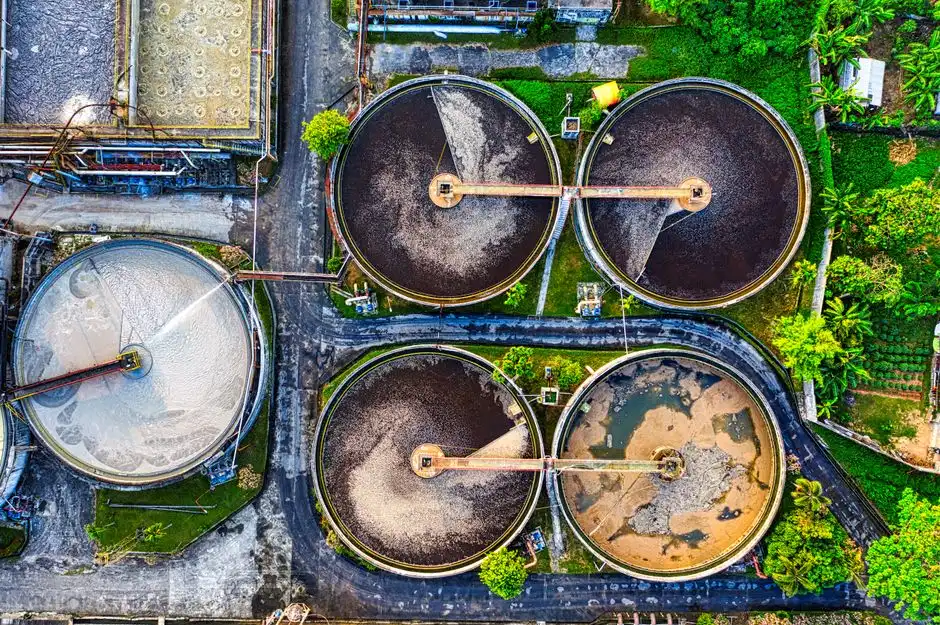
Budgeting a 200 m³/h reactive-dye retrofit in Poland in 2026 looks like this: DAF unit + civil works + installation = PLN 1.2M–1.8M; an integrated MBR for <50 mg/L COD and <10 Pt-Co color sized at the same flow = PLN 2.2M–3.0M; a hybrid DAF→MBR→RO train starts at PLN 3.0M and runs to PLN 5.0M for a 500 m³/h installation. OPEX bands hold across the Polish market: DAF PLN 1.2–2.0/m³, MBR PLN 2.5–3.5/m³ (the MBR figure assumes 0.3 kWh/m³ energy plus membrane swaps at PLN 50,000/year for 200 m³/h), and hybrid PLN 1.8–2.8/m³ before water-reuse credits.
ROI is where the CFO conversation turns. A compliance-only retrofit pays back in 4–6 years through avoided fines and reduced municipal discharge fees; a hybrid water-reuse project with 70% recovery pays back in 3–5 years at PLN 800,000/year freshwater savings, which mirrors the 2025 Ecokube metalworking case study and translates cleanly to a finishing mill feeding softened water back to the rinse header. The hidden costs that quietly blow out a retrofit budget are permitting delays (PLN 50,000–100,000/month in lost production if the Pozwolenie wodnoprawne stalls), operator training (PLN 20,000–50,000 for a 5-person shift rotation), and emergency membrane repair (PLN 100,000–300,000 if a CIP cycle is missed). NFOŚiGW grants cover 30–50% of CAPEX for EU-compliant projects, with application windows in Q1 and Q3 of each year (per NFOŚiGW 2025 program calendar) — apply before procurement, not after. The trade-off framework for adding AOP polishing on top of DAF→MBR is laid out in the AOP system engineering guide.
| Cost line | DAF only | DAF→MBR | Hybrid DAF→RO |
|---|---|---|---|
| CAPEX (PLN, 200 m³/h) | 1.2M–1.8M | 3.4M–4.8M | 3.0M–5.0M (at 500 m³/h) |
| OPEX (PLN/m³) | 1.2–2.0 | 2.5–3.5 | 1.8–2.8 (excl. reuse) |
| Payback (years) | 4–6 | 4–6 | 3–5 (with reuse) |
| Hidden cost (PLN) | Permitting 50k–100k/month | + membrane repair 100k–300k | + RO membrane swap 80k/year |
| NFOŚiGW grant eligibility | Limited (compliance only) | Yes (30–50% CAPEX) | Yes (30–50% CAPEX, priority) |
Permitting, 2027 PFAS Limits, and How to Pick a Supplier
A 200 m³/h textile retrofit in Poland runs 6–12 months end-to-end: 3–6 months for the Pozwolenie wodnoprawne, 3–4 months for equipment manufacturing, and 1–2 months for install and commissioning. Submit the permit application before procurement is signed — WIOŚ can and does ask for additional influent characterization that pushes a 3-month application to 6, and that delay is what triggers the PLN 50,000–100,000/month production-loss exposure. Plan the polishing stage (ozone or RO) into the 2026 design even if it is not commissioned until 2027, because the EU PFAS limit expected in 2027 is the single most likely trigger for a second retrofit, and adding a polishing train to an existing MBR is roughly one-third the cost of a full second plant.
Score potential suppliers on a defensible 100-point rubric rather than on price alone. The weighting below is calibrated to a Polish dye-house buyer who needs long-term membrane warranty support and a local service depot:
| Criterion | Points |
|---|---|
| EU Directive 91/271/EEC compliance assurance | 15 |
| Price competitiveness | 20 |
| 3+ Polish textile case studies (same industry) | 15 |
| ISO 9001 certification | 10 |
| Local service depot <200 km | 10 |
| 24/7 technical support | 10 |
| 5+ year membrane warranty | 10 |
| 2+ year mechanical/electrical warranty | 10 |
| Total | 100 |
Red flags are easier to spot than positive signals: no ISO 9001, vague pro-rated warranty language, fewer than five years operating in Poland, or no verifiable Polish reference plant. Credible Polish-market suppliers include Ekowater (DAF strong, ≤500 m³/h), Marex (MBR, >500 m³/h), Ecokube (hybrid, water-reuse track record), and Veolia (large-scale, full-train integration). A Chinese OEM with full EU CE documentation and a 5+ year membrane warranty can compete on price for a 100–200 m³/h MBR without sacrificing compliance — the DAF for textile TSS and color pre-treatment and the integrated MBR for <50 mg/L COD and <10 Pt-Co color are designed to be specified into that kind of CAPEX-driven bid. Demand a 12-month performance guarantee tied to specific effluent parameters and a full refund clause, and insist on liquidated damages for missed delivery dates — both are standard in Polish municipal tenders and there is no reason a private dye-house should accept less.
Frequently Asked Questions
Can a DAF system alone meet Polish textile discharge limits in 2026?
No. A DAF removes 92–97% of TSS and 50–70% of color, but on reactive-dye effluent it leaves COD at 150–300 mg/L (well above the 125 mg/L EU Directive 91/271/EEC ceiling) and color at 200–500 Pt-Co (above the typical <50 Pt-Co target). For <50 mg/L COD and <10 Pt-Co color, a DAF must be paired with an MBR (HydropureWater field data, 2025).
How much does it cost to retrofit a 200 m³/h Polish dye-house to full compliance?
A DAF→MBR train for a 200 m³/h reactive-dye plant installs for PLN 3.4M–4.8M total (PLN 1.2M–1.8M DAF + PLN 2.2M–3.0M MBR), with OPEX of PLN 2.5–3.5/m³. Adding RO for 70% water reuse lifts CAPEX to PLN 3.0M–5.0M but cuts OPEX to PLN 1.8–2.8/m³ before reuse credits and shortens payback to 3–5 years.
What is the permitting timeline for a 200 m³/h textile wastewater plant in Poland?
A Pozwolenie wodnoprawne takes 3–6 months, equipment manufacturing 3–4 months, and installation plus commissioning 1–2 months, giving a total project lead time of 6–12 months. Permitting delays cost PLN 50,000–100,000 per month in lost production, so submitting the application before procurement is signed is the single highest-leverage scheduling decision.
Will the 2027 EU PFAS limit require a second retrofit?
For most Polish reactive-dye and finishing mills, yes — the 2027 PFAS limits are expected to be tight enough that an MBR alone will not clear them. Specifying the polishing stage (ozone at 2–5 mg O₃/mg color, or RO) into the 2026 design roughly one-third the cost of installing a second plant in 2028.
Are there Polish government grants for textile wastewater upgrades in 2026?
Yes. NFOŚiGW grants cover 30–50% of CAPEX for EU-compliant wastewater treatment projects, with application windows in Q1 and Q3 each year per the NFOŚiGW 2025 program calendar. Projects that combine water reuse, energy recovery, or zero-discharge design are prioritized. For an overview of the broader Polish permitting context that surrounds an industrial discharge application, see the broader Polish wastewater permitting context.