Why Textile Wastewater in Spain Demands a Dedicated Treatment Train
Textile mills in Catalonia and Valencia produce a wastewater stream that defeats generic municipal biology: a reactive-dye load of 60–200 mg/L, color measured at 1,000–1,500 ADMI units, COD of 800–3,000 mg/L, and NaCl/Na2SO4 salinities reaching several grams per litre (Yaseen & Scholz 2016; Dos Santos et al. 2007; S3). At a water footprint of roughly 200 L per kg of fabric (Ghaly et al. 2014, via S3), a 20 t/day cotton finishing mill near Terrassa or Alcoy discharges 4,000 m³/day of process water that the local Confederación Hidrográfica will not accept from a municipal connection alone. Conventional activated sludge is documented to underperform on color and on the azo (–N=N–) chromophore responsible for most reactive dye fixation; Holkar et al. (2016) report that conventional biology decolorizes only 20–50% of reactive azo and anthraquinone dye structures, with the residual color travelling through secondary clarifiers intact (S3).
Spain's geography sharpens the problem. The Terrassa/Barcelona cluster handles the bulk of Catalan cotton finishing, while the Alcoy dyeing hub in Valencia runs a mix of cotton and polyester lines. Both regions sit in water-stressed river basins (CH Ebro and CH Júcar respectively) where 2026–2029 hydrological plans cap industrial self-supply and tighten return-quality requirements. Permitting officers expect to see a treatment train — not an end-of-pipe screen — that explicitly addresses color, salinity, and reuse.
Influent Characteristics Every Spanish Mill Must Characterize First
Before sizing a single pump, an engineer in Catalonia or Valencia needs a defensible influent table that can be submitted to the Confederación Hidrográfica with the discharge permit application. The values below are the realistic operating envelope for a Spanish cotton-and-polyester finishing mill, drawn from S3 and the wet-process literature.
| Parameter | Typical range | Source / process |
|---|---|---|
| pH | 8–12 (peaks 13 from mercerizing) | Scouring, bleaching, mercerizing (Babu et al. 2007) |
| COD | 800–3,000 mg/L | Dyeing, printing effluent (S3) |
| BOD | 200–600 mg/L | Desizing, sizing wash (S3) |
| TSS | 100–500 mg/L | Fibre lint, finishing auxiliaries (S3) |
| Color | 1,000–1,500 ADMI | Reactive + disperse dye baths (O'Neill et al. 1999) |
| Reactive dye (cotton mills) | 60–200 mg/L; outliers 600–800 mg/L | Exhaust dyeing (Gahr et al. 1994; Vandevivere et al. 1998) |
| Salinity (Cl− + SO42−) | 1,000–8,000 mg/L; peaks >10,000 mg/L in NaCl dye baths | Salt-driven reactive fixation (S3) |
| Temperature | 30–60 °C (often 50–60 °C) | Hot wash after dyeing (Dos Santos et al. 2007) |
| Heavy metals | Cr, Cu, Co, Zn, Fe traces from dye chromophores and mordants | Adinew 2012 (via S3) |
Cotton-dominant mills should expect reactive dye loadings closer to 200 mg/L; the reactive class is the dominant one for cellulose fibres and is the reason the Azo Bond Restriction under REACH Annex XVII (22 azo amines) matters in Spanish permit files (S3, ECHA). Mills finishing cotton/polyester blends will see a more bimodal distribution: reactive dye peaks during cotton runs and disperse dye peaks during polyester runs, with the auxiliary chemistries (carriers, dispersants) shifting the COD:salt ratio by step.
2026 Spanish and EU Discharge Limits for Textile Effluent
The compliance target for 2026 is set by two overlapping instruments: Spain's Real Decreto 1290/2022 on industrial discharge to public Domain Hydraulic hydrological systems, and the EU Industrial Emissions Directive 2010/75/EU BAT-AEL for the textile sector (BAT Conclusions, 2014/687/EU). For a direct-discharge mill in Catalonia, the practical envelope is COD ≤125–160 mg/L, BOD ≤25 mg/L, TSS ≤35 mg/L, total nitrogen 10–15 mg/L, and color not visible after 1:20 dilution (RD 1290/2022 Annex II; BAT-AEL). Sulfate and chloride are addressed under RD 1290/2022 Annex III for discharges to sensitive receiving waters — the CH Júcar applies stricter sulfate limits in the lower Serpis, while the ACA in Catalonia often sets site-specific color and TDS caps.
EU Directive 2024/3019, transposed into Spanish law during 2025, added PFAS and micropollutant watchlists that hit textile mills through fluorinated water-repellent finishes and fluorosurfactants used in finishing. Spain's ECHA REACH implementation also enforces the Annex XVII restriction on azo dyes that release carcinogenic amines (22 listed compounds) and is increasingly used by Confederaciones Hidrográficas to demand dye-class declarations on the permit file. The single point of contact for a textile mill's discharge permit is the Confederación Hidrográfica for the receiving basin (CH Ebro, CH Júcar, CH Guadalquivir, CH Cantábrico), with the Agència Catalana de l'Aigua (ACA) co-signing permits in Catalonia. For mills pursuing reuse, the 2026 update to Spain's Real Decreto 1085/2024 on water reuse sets quality criteria for industrial reuse, with a risk-management plan reviewed by the basin authority.
The Standard 2026 Treatment Train for Spanish Textile Mills
A 2026 train that reliably meets RD 1290/2022 and BAT-AEL in Spain runs in five stages. Each stage has a quantifiable job and a defensible design basis.
- Headworks and equalization. A rotary bar screen for textile headworks at 3–6 mm opening removes fibre lint and stitching debris before the flow enters an equalization basin sized at 8–12 h HRT to dampen shock dye loads from batch dyeing machines (Holkar et al. 2016). For guidance on selection between screen types, the mechanical bar screen selection guide is a useful 2026 benchmark.
- Coagulation/flocculation + DAF. Al or Fe coagulants (50–200 mg/L as metal) plus anionic polymer at 0.5–2 mg/L drive colloids, hydrolysed dye, and sizing residue to the surface. The DAF system for textile effluent operates at 20–40 m/h hydraulic surface loading and removes 50–80% of TSS and 30–50% of color, with the floated sludge sent to a thickener. A chemical dosing system sized for the peak-day flow is required to keep coagulant stoichiometry stable across the 8–12 h EQ swings.
- Biological treatment — anoxic + aerobic MBR. An A/O configuration with a PVDF submerged MBR membrane bioreactor for textile wastewater (0.1 µm pore) is the workhorse. Design envelope: HRT 18–36 h, MLSS 8,000–12,000 mg/L, SRT 25–40 d, and F/M 0.05–0.15 kg COD/kg MLSS·d. Reported performance: >95% color removal and 84% COD removal on cotton finishing effluent (S4). For operators integrating biological polishing with the rest of the train, the biological treatment troubleshooting guide is a practical reference.
- Tertiary polish — RO or electrooxidation. A reverse-osmosis polish via an RO polish for water reuse achieves up to 98% dye rejection and supports multiple reuse cycles with stable flux (S4). Where the mill wants to recover NaCl/Na2SO4 and treat a salt-rich stream, electrooxidation with a BDD anode is the alternative — see the next section.
- Sludge handling. Both the DAF float and the waste biological sludge route to a filter press for textile sludge; polymer conditioning is normally required to bring the combined sludge to 22–28% dry solids for off-site disposal or co-incineration in a cement kiln.
| Stage | Typical removal / role | Key design parameter |
|---|---|---|
| Bar screen + equalization | Lint removal; dampens shock loads | EQ HRT 8–12 h |
| Coag/Floc + DAF | 50–80% TSS, 30–50% color | Surface loading 20–40 m/h |
| A/O MBR | 84% COD, >95% color | MLSS 8,000–12,000 mg/L; SRT 25–40 d |
| RO or electrooxidation | Up to 98% dye rejection; salt recovery option | RO flux 15–25 LMH; BDD 30–80 mA/cm² |
| Filter press | Sludge to 22–28% DS | Cycle 90–180 min |
Electrooxidation: Spain's Emerging 2026 Compliance Edge
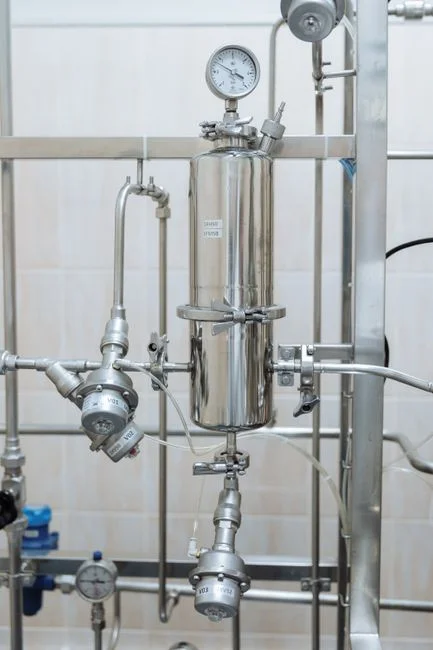
Electrooxidation is no longer a lab curiosity for Spanish mills. The January 2026 paper from UPC Barcelona's Department of Projects and Construction Engineering (Cuesta-Mota, Canals-Casals, López-Grimau et al., Environmental Research 293:123713) reports a bicompartmental reactor that decolorizes real textile wastewater with a Procion Blue H-EXL dye while simultaneously producing saleable hydrogen (S2). The reactor uses an anion-exchange membrane to keep the anolyte and catholyte streams separate, so the H2 stream stays clean.
Two operating windows were identified for industrial use: Ir-Ru/MMO anode with Ni cathode at 150 mA/cm² for NaCl-bearing dye baths, and a BDD anode with Ni cathode for Na2SO4 baths. The applied charge required to hit 95% dye degradation ranges from 1.7 to 12.3 Ah per gram of dye, depending on the salt/alkali system, with NaOH systems reacting 2–5× faster than Na2CO3. Faradaic efficiency for H2 was 94.3–96.9% at a gas purity of 98.7%, and the recovered hydrogen represents 23–33% of the energy consumed in treatment (S2). For a mill with a decarbonization plan under the PERTE de Economía Circular, the hydrogen credit materially shifts the OPEX math. The ECUVal integrated electrochemical + UV system, cited in the same body of work, demonstrates 70% water reuse with full salt recovery at pilot scale (S4). As a retrofit on an existing MBR effluent stream, electrooxidation slots in as a membrane-bioreactor polish step — it does not replace the biology; it decolorizes and unlocks reuse.
Cost Benchmarks and Decision Matrix for 2026 Spanish Projects
Cost is the question every mill owner asks after the permit engineer signs off. Two trains dominate the Spanish market in 2026: DAF + MBR + RO, and DAF + MBR + electrooxidation. Both meet the same RD 1290/2022 envelope, but they differ in CAPEX, OPEX, and reuse/salt-recovery profile.
| Parameter | DAF + MBR + RO | DAF + MBR + Electrooxidation (BDD) |
|---|---|---|
| Indicative OPEX (Spain, 2026) | €0.80–1.20/m³ treated | €0.45–0.85/m³ treated (with H2 credit) |
| Reuse % | Up to 90% (RO permeate) | Up to 70% (S4) plus salt recovery |
| Salt recovery | No (concentrate disposal) | Yes, NaCl or Na2SO4 reusable in dye bath |
| CAPEX driver #1 | RO membrane replacement every 5–7 years | BDD electrode replacement every 2–4 years |
| CAPEX driver #2 | High-pressure pump skid, energy recovery | Rectifier (150 mA/cm² class) and AEM stack |
| Energy intensity | 0.8–1.5 kWh/m³ (RO pump + MBR aeration) | 0.6–1.1 kWh/m³ net of H2 offset |
| Tariff exposure (Spain industrial, 2026) | €0.08–0.14/kWh | €0.08–0.14/kWh; H2 credit offsets 23–33% |
| Best fit | Cotton mills with freshwater scarcity; no on-site salt loop | Polyester/cotton mills with PERTE-aligned circularity goals and on-site NaCl/Na2SO4 reuse |
OPEX ranges above describe typical 2026 Spanish operating envelopes for industrial projects of 1,000–5,000 m³/day at industrial electricity tariffs; exact figures depend on influent COD, salt loading, and the cost of sludge disposal in the host comunidad autónoma. Mills under Spain's PERTE de Economía Circular textile line can offset CAPEX through 2026 subsidy calls (Ministerio de Industria, Comercio y Turismo) and should request a circularity scoring under the PERTE Annex when filing.
A Real Spanish Reuse Case: MBR-Treated Water at Alcoy
The Alcoy (Valencia) MBR plant is the working reference for industrial symbiosis in Spanish textile regions. It runs a biological line with 88 TORAY MBR modules and produces an effluent with turbidity of 1–1.5 NTU and COD below 25 mg/L — well inside the BAT-AEL envelope (S4). That effluent is currently being reused in cotton dyeing at Montaltex (Barcelona) and polyester dyeing at Seriprint (Valencia). The published trials showed stable color coordinates, acceptable fastness properties, and multiple reuse cycles without significant fouling, using flocculation polishing before the dye bath (S4). The implication for a mill in Terrassa or Ontinyent is direct: a properly run MBR on either a municipal or industrial sidestream is a viable reuse water source, and a downstream electrooxidation polish can push reuse to 70% with salt recovery on the same site.
Frequently Asked Questions
What are the 2026 Spanish discharge limits for textile effluent?
Under RD 1290/2022 and EU BAT Conclusions 2014/687/EU, direct-discharge textile mills must hold COD ≤125–160 mg/L, BOD ≤25 mg/L, TSS ≤35 mg/L, and color must not be visible after 1:20 dilution; site-specific sulfate and TDS caps are set by the Confederación Hidrográfica for the receiving basin (CH Ebro, CH Júcar, etc.).
Can a textile mill in Spain legally reuse treated wastewater in its dye bath?
Yes, under Real Decreto 1085/2024 on water reuse and a site-specific risk-management plan approved by the basin authority; the Alcoy MBR reuse case demonstrates cotton and polyester dyeing with MBR-treated municipal water at COD <25 mg/L and turbidity 1–1.5 NTU (S4).
How much does electrooxidation actually remove reactive dye in 2026?
The UPC Barcelona bicompartmental reactor (S2, January 2026) reaches 95% decolorization of Procion Blue H-EXL at 1.7–12.3 Ah/g dye, with Ir-Ru/MMO anodes for NaCl baths and BDD anodes for Na2SO4 baths, while producing H2 at 98.7% purity.
Which treatment train gives the lowest €/m³ for a 2,000 m³/day Spanish cotton mill?
In 2026 OPEX terms, DAF + MBR + electrooxidation typically lands at €0.45–0.85/m³ once the 23–33% hydrogen-recovery credit is applied; DAF + MBR + RO is comparable at €0.80–1.20/m³ but without the salt-recovery upside (per S2, S4, and standard 2026 Spanish industrial operating envelopes).