Why Chicago Hotels Are Reassessing Wastewater Systems in 2026
On 17 December 2025, a Chicago Department of Public Health (CDPH) inspector documented three prep sinks draining directly onto the kitchen floor at the main kitchen of Trump International Hotel & Tower, a commercial dishwasher that was not reaching the temperatures or chemical concentrations required to sanitize crockery, and more than ten small flies throughout the bar and dish areas of the rooftop Terrace 16 restaurant. The inspector also cited a cracked ice-machine lid, a prep cooler with built-up gunk, and debris on the floor beneath a sink (CDPH inspection records via the Chicago Data Portal, reported by inkl/ibtimes, 2026-03). A 23 December 2025 re-inspection cleared the kitchen drainage and dish-sanitization issues, but the cracked ice-machine lid remained outstanding, proof that deferred maintenance, not only process design, drives citations.
The same property sits under a separate regulatory cloud. In September 2024, Cook County Circuit Court Judge Thaddeus L. Wilson ruled that 401 North Wabash Venture LLC had violated the Illinois Environmental Protection Act and committed a continuing public nuisance, finding that the building's cooling-water intake had drawn up to 21 million gallons per day from the Chicago River without required permits, and had underreported heated discharge by roughly 44% for more than a decade (Cook County ruling, 2024-09). For a 100–300 room Chicago operator or hospitality development engineer, the translated question is direct: which packaged wastewater system prevents these failures, satisfies the Metropolitan Water Reclamation District of Greater Chicago (MWRDGC) and Illinois EPA, and stays clear of the specific CDPH cross-citations a hotel kitchen can trigger in 2026? A properly designed MBR membrane bioreactor system or buried WSZ package plant, preceded by correctly sized grease interception and fine screening, is the architectural answer.
Chicago and Illinois Compliance Framework for Hotel Effluent
Every hotel discharging to the MWRDGC sewer system in 2026 must meet the Sewage & Wastewater Ordinance user-category limits: BOD₅ ≤ 200 mg/L, TSS ≤ 250 mg/L, FOG ≤ 100 mg/L, total nitrogen on a tightening trend toward ~50 mg/L, and pH 6.0–9.0, with chronic toxicity monitoring on industrial-strength discharges (MWRDGC Sewage & Wastewater Ordinance, current edition). Illinois EPA additionally requires construction and operating permits for on-site wastewater systems discharging above 1,500 gallons per day, and pre-treatment coordination for any hotel whose kitchen flow exceeds the residential threshold.
CDPH food-inspection cross-citations are the regulator most operators underestimate. The 17 December 2025 violations at 401 N. Wabash — drainage failure, dish sanitization shortfall, and pest harborage — are not separate from the wastewater system. A clogged or undersized grease trap is the most common root cause of kitchen-floor wastewater backing up through floor drains, and the same biological plant that runs hot on FOG overload will pull dissolved oxygen from dish-machine effluent, masking sanitization chemistry. Properties near the Chicago River or with Lake Michigan cooling-tower intake must additionally track thermal discharge and intake-structure compliance under the 2024 Cook County ruling framework. Disinfection for both reuse and sewer discharge is most reliably delivered by an on-site chlorine dioxide generator, which holds residual across the 6.0–9.0 pH band that chlorination cannot.
| Parameter | MWRDGC 2026 User Limit (sewer) | Typical MBR Effluent | Typical WSZ Effluent |
|---|---|---|---|
| BOD₅ | ≤ 200 mg/L | ≤ 10 mg/L | 20–30 mg/L |
| TSS | ≤ 250 mg/L | ≤ 5 mg/L (≤ 1 µm membrane barrier) | 20–30 mg/L |
| FOG | ≤ 100 mg/L | ≤ 5 mg/L after DAF polishing | ≤ 15 mg/L with upstream DAF |
| Total Nitrogen | ~50 mg/L (tightening) | ≤ 15 mg/L with denitrification | 30–40 mg/L |
| pH | 6.0–9.0 | 6.5–8.5 | 6.5–8.5 |
How to Size a Chicago Hotel Wastewater Treatment Plant
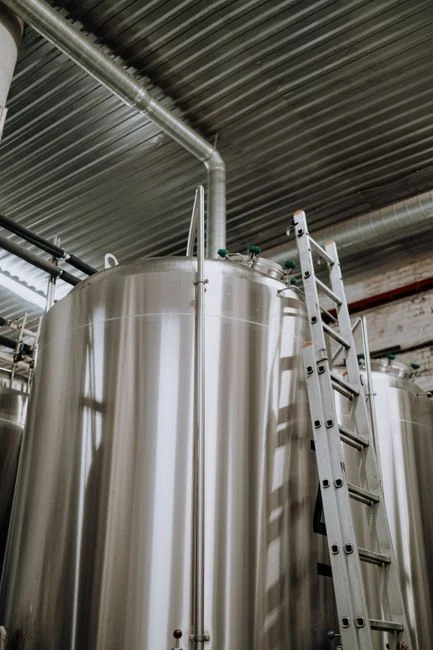
Sizing a Chicago hotel starts with a flow-loading table by area, not a single global per-room number. Domestic load from guest rooms runs 200–450 L per guest per day, with a peak factor of 2.5× during the morning shower window. Food and beverage adds 50–80 L per cover, with raw kitchen FOG concentrations of 200–800 mg/L before the interceptor. Laundry at a full-service property is 30–60 L per occupied room; limited-service properties with no on-site laundry are 5–10 L per room. Pool backwash, condensate, and ice-machine purge typically add 5–10% of total flow and carry high TDS, so they should be accounted for separately rather than blended into the sanitary calculation (HydropureWater field data, 2026).
For a 200-room full-service Chicago hotel at 80% occupancy, 220 covers per meal period in F&B, and on-site laundry, the design daily flow lands in the 80–110 m³/day range, which sets the biological-reactor capacity and the equalization-tank volume. A undersized or never-pumped grease trap is exactly the failure mode that produced the 17 December 2025 kitchen-floor wastewater at 401 N. Wabash; specifying a GX rotary mechanical bar screen for ≥2 mm solids removal upstream of the biological stage eliminates the debris-pass-through that triggers CDPH cross-citations.
| Source | Unit Loading | Peak Factor | Design TSS/FOG Signature |
|---|---|---|---|
| Guest rooms (domestic) | 200–450 L/guest·day | 2.5× morning | TSS 200–400 mg/L |
| Kitchen (F&B) | 50–80 L/cover | 1.8× dinner service | FOG 200–800 mg/L pre-trap |
| Laundry (full-service) | 30–60 L/occupied room | 1.4× | High TDS, lint |
| Pool backwash + ice-machine purge | 5–10% of total flow | Intermittent | High TDS, low BOD |
| Cooling-tower blowdown (river-fed) | Site-specific | Steady | High temp, high conductivity |
MBR vs Buried Package Plant (WSZ): Choosing the Right 2026 Architecture
The two packaged architectures that fit a Chicago hotel in 2026 are the WSZ buried A/O package plant and the MBR membrane bioreactor. The WSZ line is fully buried, runs unattended, fits flow ranges of 1–80 m³/day, and produces effluent at BOD 20–30 mg/L and TSS 20–30 mg/L — clean enough for sewer discharge but marginal for reuse. The MBR line covers 10–2,000 m³/day on roughly 60% of the WSZ footprint, drives COD to ≤ 50 mg/L with < 1 µm membrane filtration, and qualifies for toilet-flush, irrigation, or cooling-tower makeup reuse (HydropureWater field data, 2026).
The decision rule is straightforward: properties under 60 m³/day with no reuse target and adequate landscape area above the tank should select the WSZ buried package sewage plant for lowest installed cost. Properties above 60 m³/day, with a water-reuse mandate, or on tight urban sites where footprint and buried volume are constrained should specify the MBR membrane bioreactor module. Both architectures eliminate the open-clarifier hygiene risks and the drainage-backup mode that triggered the December 2025 CDPH citation at 401 N. Wabash, because both enclose the biological stage in a sealed, buried vessel and rely on mechanical rather than gravity clarification.
| Parameter | WSZ Buried A/O | MBR Membrane Bioreactor |
|---|---|---|
| Flow range | 1–80 m³/day | 10–2,000 m³/day |
| Footprint | Baseline (buried) | ~40% of WSZ for equivalent load |
| Effluent BOD | 20–30 mg/L | ≤ 10 mg/L |
| Effluent TSS | 20–30 mg/L | ≤ 5 mg/L |
| Reuse suitability | Limited (irrigation only) | Toilet flush, cooling tower, RO polish |
| Operator attendance | Minimal | Part-time, membrane CIP quarterly |
| Energy use | ~0.2 kWh/m³ | 0.4–0.6 kWh/m³ |
The 2026 Process Train: From Kitchen Drain to Discharge
The end-to-end process train in 2026 runs in five stages. Stage 1 is headworks: a properly sized hydromechanical grease interceptor drops kitchen FOG from 200–800 mg/L to under 100 mg/L, followed by a rotary bar screen for ≥ 2 mm solids removal, both of which can be paired with a dissolved air flotation system for properties with high-cover banquet operations. Stage 2 is equalization: a balancing tank sized to the 2.5× morning peak and F&B surges, with mixing and pH trim. Stage 3 is the biological reactor: anoxic/oxic (A/O) in the WSZ line, or activated sludge with a submerged MBR cassette in the MBR line.
Stage 4 is disinfection. On-site generation of chlorine dioxide is the 2026 default because it holds biocidal efficacy across the 6.0–9.0 pH band that chlorination loses above pH 7.5, and the chemistry is registered for potable-water contact under EU 98/83/EC and WHO guidelines. Dosing is controlled through an automatic chemical dosing system tied to the MWRDGC sampling-port flow meter. Stage 5 is optional reuse: an RO polish step on MBR permeate for cooling-tower makeup, paired with a plate-and-frame filter press to drop waste-activated sludge volume before off-site hauling. For medical, spa, or salon waste streams within the property, a dedicated medical-wastewater treatment sidestream should be specified upstream of the main biological train.
2026 CAPEX and Operating Cost Bands for Chicago Hotels
Capital cost is most defensibly framed as 2026 dollars per 10 m³/day of installed capacity. A WSZ buried package plant runs roughly $25,000–$60,000 per 10 m³/day installed, with minimal operator cost and a lifecycle dominated by sludge hauling at $80–$150 per cubic yard. An MBR system runs roughly $80,000–$180,000 per 10 m³/day installed, with higher energy use of 0.4–0.6 kWh/m³, partially offset by reuse-water savings of $3–$6 per cubic meter when reused for cooling-tower makeup or toilet flush (HydropureWater field data, 2026). Add 15–25% to either architecture for Illinois EPA permitting, CDPH coordination, and MWRDGC discharge-sampling program setup.
Headworks is a small line item with outsized compliance value. A correctly sized grease interceptor paired with a rotary bar screen runs $15,000–$40,000 for a mid-size hotel and is the single most cost-effective defense against the exact CDPH citation issued at 401 N. Wabash on 17 December 2025. A comparable Costa Rica hospitality project is detailed in the 2026 hotel wastewater guide for Costa Rica, and the Ankara equivalent in the 2026 hotel wastewater guide for Ankara; both apply the same MBR/WSZ decision rule but with different discharge limits.
| Line Item | Cost Band (2026 USD) | Notes |
|---|---|---|
| WSZ buried plant | $25,000–$60,000 per 10 m³/day | Includes tank, blowers, control panel |
| MBR system | $80,000–$180,000 per 10 m³/day | Includes membrane cassette and CIP |
| Headworks (grease + screen) | $15,000–$40,000 | Mid-size hotel, installed |
| Disinfection (ClO₂ skid) | $8,000–$25,000 | 50 g/h to 20,000 g/h range |
| Permitting + sampling | +15–25% of system cost | Illinois EPA, CDPH, MWRDGC coordination |
CDPH-Ready Design Checklist Before You Sign a PO
This is the punch list a Chicago operator can hand to a contractor the same day. All prep sinks, dishwashers, and pot-washers must drain to a properly vented and trapped sanitary line — no fixture discharge to floor drains, which is exactly the failure mode the CDPH inspector documented at 401 N. Wabash on 17 December 2025. The commercial dishwasher must reach ≥ 170°F final rinse or hold 50–100 ppm chlorine across the wash cycle, verifiable by an inline data logger. The grease interceptor must be pumped on a documented schedule, with manifests retained for three years. Ice-machine, prep-cooler, and sink enclosures must be sealed and cleanable; a cracked ice-machine lid was the one violation that survived the 23 December 2025 re-inspection, so specify replacement at PO.
The biological plant must be sized to peak 2.5× average flow with redundancy on the aeration blower and the disinfection skid. A sampling port must be installed at the MWRDGC connection with chain-of-custody documentation for every BOD, TSS, FOG, and pH result. The 2024 Cook County ruling on 401 N. Wabash is the cautionary anchor: a property can pass kitchen inspection in one cycle and still face continuing-nuisance liability on its water-side systems. For deeper treatment-train design, the DAF process flow walkthrough documents where dissolved air flotation fits in this train.
Frequently Asked Questions
What is the 2026 MWRDGC discharge limit for FOG from a Chicago hotel?
MWRDGC user-category limits for 2026 cap FOG at 100 mg/L to sewer, BOD₅ at 200 mg/L, and TSS at 250 mg/L, with total nitrogen tightening toward approximately 50 mg/L and pH held between 6.0 and 9.0. Properly sized hydromechanical grease interception plus DAF polishing reliably drops raw kitchen FOG from 200–800 mg/L below the 100 mg/L ceiling (MWRDGC Sewage & Wastewater Ordinance, current edition).
How much does a packaged wastewater treatment system cost for a 200-room Chicago hotel?
A WSZ buried A/O package plant runs $25,000–$60,000 per 10 m³/day installed, and an MBR system runs $80,000–$180,000 per 10 m³/day installed in 2026. A 200-room full-service hotel at 80% occupancy with on-site laundry typically requires 80–110 m³/day of design capacity, placing total packaged-plant CAPEX between roughly $200,000 and $700,000 before permitting, headworks, and disinfection (HydropureWater field data, 2026).
MBR or WSZ package plant — which is right for a Chicago hotel?
WSZ buried A/O is the right choice for properties under 60 m³/day with no reuse target and adequate landscape area above the tank; MBR is the right choice for properties above 60 m³/day, with a water-reuse mandate, or on tight urban sites where footprint matters. MBR delivers effluent COD ≤ 50 mg/L and < 1 µm filtration, enabling toilet-flush, irrigation, or cooling-tower makeup reuse (HydropureWater field data, 2026).
What CDPH violations can a hotel trigger from a failing wastewater system?
The 17 December 2025 CDPH inspection at Trump International Hotel & Tower cited three prep sinks draining onto the kitchen floor, a commercial dishwasher not reaching sanitization temperatures, more than ten small flies in the bar and dish areas, a cracked ice-machine lid, and debris beneath sinks — all conditions that can originate from an undersized or unmaintained grease trap upstream of the biological train (CDPH inspection records via the Chicago Data Portal, 2025-12).