Why Italy's Textile Sector Is a 2026 Compliance Pressure Point
Textile wet processing in Italy consumes 200–400 L of freshwater per kg of finished product and discharges up to 70% of that volume as effluent (per S3). Italy is the EU's second-largest textile exporter after Germany, with Tuscany, Lombardia, Veneto and Piemonte housing most of the wool, cotton and finishing capacity (per S2). For 2026 CAPEX planning, that footprint means two regulatory frameworks apply simultaneously: D.Lgs. 152/2006 governs surface-water discharge from industrial plants, while Ministerial Decree 185/2003 (MD 185/2003) sets the limits for any water a mill wants to reuse on-site or send to third-party irrigation.
The benchmark most Italian engineers cite is the Prato textile district, where the Baciacavallo WWTP — operated by G.I.D.A. S.p.A. — treats up to 100,000 m³/day of mixed municipal and industrial wastewater and reclaims 3.5 million m³/year for reuse across roughly 350 companies (per S3, S5). That is the district-scale ceiling the rest of Italy studies. It is also a model almost no other Italian province can copy: Prato's 60 km reclaimed-water network, central refining plant and consolidated industrial aqueduct are the result of 30+ years of public-private coordination. The engineering reality for a 2026 retrofit brief is that most Italian mills are not connected to a Prato-style centralized system and must design, procure and operate their own treatment train. The Memphis industrial water reuse case study, which profiles a comparable standalone retrofit of a 200 m³/day textile finishing line, is a useful peer reference for sizing and cost-band logic — see the Memphis industrial wastewater treatment systems, costs and compliance walkthrough.
What Italian Textile Effluent Actually Contains
Textile effluent is not one stream — it is the blended outflow of a sequence of wet-process unit operations: sizing, de-sizing, scouring, bleaching, mercerizing, dyeing, printing and finishing (per S2). Each step adds its own chemical signature, and the resulting mix is what your equalization basin will see at 6 a.m. on a Monday. Dye concentration in the combined waste typically runs 10–50 mg/L, rising to 60 mg/L in reactive cotton dyehouses, 100–200 mg/L in high-load lines, 600–800 mg/L in extreme cases, with reported outliers up to 7,000 mg/L in single-batch reactive discharges (per S2). Color intensity commonly sits at 1,000–1,500 ADMI units (per S2) — well above the visible threshold and the first thing a regulator notices.
The heavy-metal load splits into two groups: bulk metals (chromium, zinc, iron, mercury, lead) from process auxiliaries, and chromophore-bound metals (cobalt, copper, chromium) carried inside the dye molecule itself (per S2). Auxiliary parameters swing widely — pH can move from 3 (acid dye bath) to 13 (caustic scour) within one shift, temperatures exceed 60 °C at the dye-bath discharge, and total dissolved solids (TDS) climb past 5,000 mg/L when reactive dyeing adds 50–100 g/L of Glauber salt to the bath. Hardness is the parameter most engineers underestimate. Prato's reclaimed water sits at 32 °F on average (per S3), which is why nearly every mill in the district runs ion-exchange softening — and why standalone Italian mills with similar groundwater should plan for the same. The DAF pre-treatment unit is the unit operation most commonly sized first because it strips the bulk of suspended solids, oils and a fraction of color before the biological stage sees the load.
| Parameter | Typical range | Source / process |
|---|---|---|
| Dye concentration | 10–50 mg/L (general); 60 mg/L (reactive cotton); 100–200 mg/L (high-load); 600–800 mg/L (extreme); 7,000 mg/L (outlier) | S2 (Laing 1991; Shelley 1994; Gahr 1994; Vandevivere 1998; Koprivanac 1993) |
| Color (ADMI units) | 1,000–1,500 | S2 (O'Neill 1999, ADMI) |
| Bulk heavy metals | Chromium, zinc, iron, mercury, lead (variable, process-dependent) | S2 (Hussein 2013) |
| Chromophore-bound metals | Cobalt, copper, chromium | S2 (Adinew 2012) |
| Freshwater use | 200–400 L per kg finished product | S3 |
| Hardness (reclaimed water, Prato) | 32 °F average | S3 |
Italian Discharge vs Reuse: The 2026 Regulatory Map
The single most common mistake in 2026 CAPEX briefs is treating D.Lgs. 152/2006 and MD 185/2003 as one rule. They are not. D.Lgs. 152/2006, Part III, Annex 5, Table 3 sets the limits for industrial wastewater discharged to surface water — typically COD ≤ 160 mg/L, BOD₅ ≤ 40 mg/L, suspended solids ≤ 80 mg/L, color not visible after dilution, plus metal-specific ceilings for chromium (≤ 2 mg/L total Cr, ≤ 0.2 mg/L Cr(VI) for some tables), zinc, lead and copper (per D.Lgs. 152/2006, Annex 5). MD 185/2003 governs reclaimed water destined for reuse, with three end-use classes (urban, industrial, agricultural) and tighter ceilings on parameters that matter for downstream users — most notably the 250 mg/L chloride limit for irrigation reuse flagged in the Prato UF-NF pilot work (per S3).
The interaction is what trips up engineers. A mill that meets D.Lgs. 152/2006 surface-water limits can still fail MD 185/2003 if it wants to send the same water to a third-party farmer or use it for on-site process water. Chloride is the canonical example: ion-exchange regeneration pushes chloride above 250 mg/L, so a mill that softens with Na-form resin and then tries to reuse the rinse water will be non-compliant for irrigation no matter how clean the COD looks (per S3). Mills connected to a public sewer must additionally satisfy the local municipal pretreatment ordinance — Turin, Prato, Biella and Como each publish their own caps, typically tighter than D.Lgs. 152/2006. EU Industrial Emissions Directive 2010/75/EU and the associated BREF for Textiles add a fourth layer for installations above the IED capacity threshold, requiring BAT-AEL compliance by the 2026 reporting cycle.
| Parameter | D.Lgs. 152/2006, Annex 5, Table 3 (surface water) | MD 185/2003 (irrigation reuse class) |
|---|---|---|
| COD | ≤ 160 mg/L | ≤ 100 mg/L (typical limit) |
| BOD₅ | ≤ 40 mg/L | ≤ 20 mg/L (typical limit) |
| Suspended solids | ≤ 80 mg/L | ≤ 10 mg/L (typical limit) |
| Chloride | Not a primary surface-water parameter (limits set case-by-case) | ≤ 250 mg/L (irrigation) |
| Color | Not visible after 1:20 dilution | Not specified in same terms; downstream-use dependent |
| Total chromium | ≤ 2 mg/L (Cr(VI) ≤ 0.2 mg/L where applicable) | ≤ 0.2 mg/L (irrigation) |
The Standard 2026 Treatment Train for a Standalone Italian Mill
For a 50–500 m³/day wool, cotton or finishing mill without a Prato-style aqueduct, the 2026 P&ID starts at five stages. Stage 1 — Equalization and screening. A rotary bar screen removes fibers, rags and lint that would otherwise blind downstream equipment, followed by a 6–12 hour equalization basin with pH correction to flatten the diurnal swing. Stage 2 — Physico-chemical primary treatment. A DAF or lamella clarifier with paired coagulant (PAC or ferric chloride at 100–300 mg/L) and flocculant (anionic polyacrylamide at 1–5 mg/L) strips 50–70% of suspended solids and 30–50% of color before biological loading. Stage 3 — Biological oxidation. An MBR membrane bioreactor (submerged PVDF, 0.1–0.4 μm) running at SRT 20–40 days is the preferred 2026 choice for Italian mills because the high SRT absorbs the toxic-shock behaviour of reactive and azo dye loads; SBR is the lower-CAPEX fallback where flow is steady and load is moderate. Stage 4 — Polishing. UF-NF (per S3) when reuse is targeted, particularly to cut hardness and chloride; ozone (3–5 g O₃/g color) for residual color, matching the Prato post-coagulation-ozone configuration. Stage 5 — Sludge handling. A plate-and-frame filter press to cut sludge volume to 20–25% dry solids before D.Lgs. 152/2006-compliant disposal.
This sequence mirrors Prato's central chain — activated sludge, coagulation-flocculation, ozonation, UF, NF (per S3) — adapted for a single-site boundary. The 2026 retrofit brief should justify every unit op against the parameters it removes; the table below makes that case directly.
| Unit operation | Removes | Typical removal efficiency | 2026 Italian mill applicability |
|---|---|---|---|
| Rotary bar screen + equalization | Fibers, rags, pH/flow peaks | > 90% of > 5 mm solids; pH variance cut 60–80% | All mills |
| DAF / lamella clarifier | SS, oils, partial color | 50–70% SS, 30–50% color | All mills (HydropureWater field data, 2026) |
| MBR (submerged PVDF) | COD, BOD, azo/reactive dye residuals | 90–98% COD, > 99% SS | Preferred for variable dye loads |
| Ozone | Residual color, refractory organics | 50–90% ADMI reduction at 3–5 g O₃/g color | Polishing before reuse (per S3) |
| UF-NF | Hardness, chloride, TDS | Hardness 32 → < 5 °F; chloride cut 40–70% | Where MD 185/2003 reuse target applies (per S3) |
| Plate-and-frame filter press | Sludge water | Cake to 20–25% DS | All mills with biological stage |
Matching Unit Operations to Italian Dye Classes
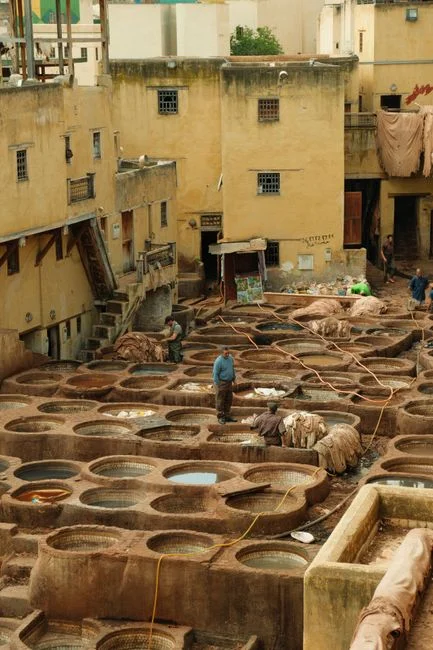
The dye class running on your line drives which polish step you actually need. Reactive dyes on cellulose carry 50–100 g/L of electrolyte (Glauber salt or NaCl) to drive fixation, so the MBR handles the COD load but an NF or RO step is mandatory to bring TDS and chloride below MD 185/2003 reuse limits — exactly the chloride problem the Prato UF-NF pilot was built to solve (per S3). Disperse dyes on polyester come off the dye bath at 130 °C with carrier chemicals; cool in the equalization basin, then run NF plus activated-carbon adsorption for color polishing. Vat dyes (indigo, sulphur) need a coagulation or chemical-oxidation step upstream of biology — Fenton or ozone — to break the chromophore, otherwise the MBR sees an unreduced dye load. Azo dyes respond well to anaerobic-aerobic sequential bioreactors, which decolorize under anoxic conditions and mineralize the resulting amines aerobically (per S2). Anthraquinone dyes are the most biologically recalcitrant class and typically require ozone or AOPs as the final polish. The DAF process flow diagram walkthrough is a useful P&ID reference for sizing the upstream end of any of these trains.
Retrofit or Greenfield: A 2026 Decision Framework
Three triggers should drive a 2026 CAPEX decision. Trigger 1 — Compliance failure. Your 2025 effluent composite fails MD 185/2003 or D.Lgs. 152/2006 on color, chloride or a regulated metal; corrective action is mandatory regardless of plant age. Trigger 2 — Softener chloride drift. Ion-exchange regeneration volumes have pushed reclaimed-water chloride above 250 mg/L — the exact failure mode the Prato UF-NF paper documents (per S3). Mitigation options are an NF polish on the softener brine, a regeneration-frequency reduction, or a wholesale shift from Na-IER to membrane softening. The ion exchange retrofit guide walks through resin-capacity and regeneration-volume math for Italian sites. Trigger 3 — Capacity overrun. Flow has grown > 20% beyond the original design hydraulic capacity, which means equalization retention time has dropped below 4–6 hours and the biological stage is seeing unbuffered slug loads.
The decision rule is straightforward. If hydraulic capacity is intact and only the polish step is failing, retrofit with UF-NF or ozone and keep the existing biological stage. If the biological stage is overloaded, retrofit with an MBR swap or add a second reactor in parallel; this is the most expensive unit op in the train and the one where vendor selection matters most. For a greenfield 50–200 m³/day Italian mill, the 2026 CAPEX band sits at roughly €180–€450 per m³/day installed for an MBR + UF polish train, with OPEX split dominated by energy (45–60% of OPEX, primarily aeration and membrane scour) and sludge disposal (15–25%) (HydropureWater field data, 2026). For SBR-based designs, see the SBR OPEX breakdown for a peer cost comparison. Heavy-metal polishing for chromium, zinc and copper should always be planned alongside — the heavy metal precipitation guide covers dosing and sludge-handling specifics.
Frequently Asked Questions
What is the standard treatment train for an Italian textile mill in 2026?
The 2026 baseline is screening + equalization, DAF or lamella primary, MBR (or SBR) biological, then UF-NF and/or ozone polish, finishing with a plate-and-frame filter press for sludge (per S3). Mills reusing water add UF-NF to meet MD 185/2003 chloride and hardness limits.
What chloride limit applies to reclaimed water in Italy?
MD 185/2003 sets a 250 mg/L chloride ceiling for irrigation reuse (per S3). The Prato UF-NF pilot was designed specifically to address this limit, which the centralized Baciacavallo WWTP cannot meet on its own because ion-exchange regeneration pushes chloride above the threshold.
How does D.Lgs. 152/2006 differ from MD 185/2003 for a textile mill?
D.Lgs. 152/2006, Annex 5, Table 3 governs surface-water discharge (COD ≤ 160 mg/L, BOD₅ ≤ 40 mg/L, SS ≤ 80 mg/L, color not visible after 1:20 dilution). MD 185/2003 governs water sent for reuse and adds tighter ceilings such as the 250 mg/L chloride limit. A mill can comply with one and still fail the other.
Why is the Prato Baciacavallo WWTP a benchmark for Italian textile water?
Baciacavallo reclaims 3.5 million m³/year and serves around 350 textile companies through a 60 km industrial aqueduct, treating up to 100,000 m³/day of mixed municipal and industrial wastewater (per S3, S5). It is the largest textile-water recycling plant in Europe and the district-scale model most Italian engineers reference.
Which biological reactor is best for a standalone Italian textile mill in 2026?
MBR (submerged PVDF, SRT 20–40 days) is preferred for variable reactive and azo dye loads because the high SRT absorbs toxic-shock events. SBR is a lower-CAPEX fallback where flow and load are steady (HydropureWater field data, 2026).
Related Equipment
- automatic chemical dosing skid — specifications, capacity range, and technical data