Why Memphis’ Wastewater Is Unique for Industrial Dischargers
The Mississippi River’s high organic concentration from agricultural runoff and cotton processing creates a "coffee-brown" influent in Memphis that renders traditional ultraviolet (UV) disinfection systems ineffective. Industrial facilities in the region, particularly those in food processing and textiles, contribute significantly to this organic load, which is processed primarily at the M.C. Stiles and T.E. Maxson wastewater treatment plants. These two facilities manage a combined flow exceeding 100 million gallons per day (MGD), but the specific optical characteristics of the wastewater—often described as having the clarity of dark coffee—prevent UV light from penetrating the water column to deactivate pathogens.
Because of these unique environmental conditions, the City of Memphis has transitioned to using peracetic acid (PAA) as its primary disinfection agent rather than chlorine or ozone. PAA is highly effective in high-organic environments because it does not react with organic matter to form toxic trihalomethanes (THMs), which are strictly regulated by the EPA. For industrial plant engineers, this means that any on-site treatment or pretreatment must be compatible with a system that prioritizes organic management. If an industrial stream contains high levels of lignin from wood processing or dyes from textile manufacturing, it further exacerbates the "brown water" issue, potentially leading to surcharges or required pretreatment before the effluent even reaches the municipal sewer lines (per Evonik 2019 case data).
The high silt and sediment load of the Mississippi River influences the baseline turbidity of the city's intake and discharge. Industrial operations must account for these seasonal fluctuations in raw water quality when designing their internal treatment loops. A facility that relies on municipal water for processing must be prepared for varying levels of suspended solids that can foul sensitive equipment like reverse osmosis membranes or high-precision cooling towers. Understanding this local baseline is the first step in designing a robust on-site treatment strategy that meets both operational needs and municipal mandates.
Memphis Industrial Discharge Regulations and Pretreatment Requirements
The City of Memphis Industrial Wastewater Services division mandates that all significant industrial users install continuous pH monitoring probes and provide detailed standard operating procedures (SOPs) for effluent management. These regulations are designed to protect the biological processes at the Stiles and Maxson plants, where excessive fluctuations in pH or chemical spikes can "kill" the active sludge bacteria, leading to catastrophic system failures. Under current City Ordinances, failure to comply with these discharge standards can result in civil penalties of up to $5,000 per day per violation.
Prohibited discharges in Memphis include any substances that could cause structural damage to the sewer system or interfere with the treatment process. Specifically, effluent must maintain a pH between 5.0 and 9.5. Discharges outside this range are considered corrosive to the concrete interceptor sewers, some of which are located 60 feet below ground level. Additionally, industries are prohibited from discharging "slug loads"—sudden bursts of high-concentration pollutants—that could overwhelm the municipal treatment capacity. This is particularly relevant for Memphis’ large cluster of food and beverage manufacturers, where clean-in-place (CIP) cycles can release high-temperature, high-caustic streams into the system.
To remain in compliance, many facilities must implement pretreatment for oily wastewater, leachate, or high biological oxygen demand (BOD) effluent. For instance, oil and grease concentrations must typically be reduced to below 100 mg/L before entering the municipal system. Standard monitoring requirements often include composite sampling over a 24-hour period to ensure the facility’s average discharge stays within permitted limits. For operations located near the Stiles plant, which serves over 300,000 people and numerous heavy industries, the scrutiny on total suspended solids (TSS) and volatile organic compounds (VOCs) is particularly intense due to the plant's gravity-fed interceptor design.
Best Available Technologies for Industrial Wastewater in Memphis
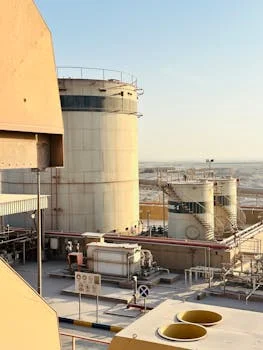
Dissolved Air Flotation (DAF) systems utilized in Memphis industrial facilities typically achieve 90% to 95% removal rates for fats, oils, and grease (FOG) and total suspended solids (TSS). In the context of Memphis’ high-organic influent, a high-efficiency DAF system for FOG and suspended solids removal is often the first line of defense. These systems work by dissolving air into the wastewater under pressure and then releasing it as microscopic bubbles in a flotation tank. The bubbles attach to solid particles and oil droplets, buoying them to the surface where they are skimmed off as sludge. This technology is particularly effective for the "brown water" conditions found locally, as it physically removes the organic solids that contribute to color and BOD.
For facilities aiming for higher effluent quality or potential water reuse, Membrane Bioreactors (MBR) represent the next tier of technology. An compact MBR system for high-quality effluent and reuse combines biological treatment with ultrafiltration, achieving effluent filtration levels of less than 1 μm. This is the technology utilized in major local projects, such as the xAI 13 MGD recycling facility, which processes effluent from the T.E. Maxson plant for industrial reuse. MBR systems are ideal for Memphis industries because they provide a barrier against the high turbidity and organic variability of the local water supply. However, operators must proactively troubleshoot MBR membrane fouling and low flux to maintain consistent throughput in high-load scenarios.
Chemical pretreatment remains a cornerstone of the Memphis industrial strategy. Using an automatic chemical dosing system to introduce coagulants like ferric chloride or aluminum sulfate can reduce turbidity from 3,000 mg/L to less than 3 mg/L in high-solids streams. This chemical step is often paired with lamella clarification to accelerate the settling of heavy solids. To maximize the efficiency of these biological and chemical stages, engineers must improve biological treatment efficiency with precise DO control, ensuring that aerobic bacteria have the oxygen necessary to break down complex organics without wasting energy on over-aeration.
| Technology | Primary Target Pollutants | Removal Efficiency (Typical) | Memphis Application Suitability |
|---|---|---|---|
| DAF (Dissolved Air Flotation) | FOG, TSS, Insoluble BOD | 90–95% TSS/FOG | Excellent for food processing & oily waste |
| MBR (Membrane Bioreactor) | Soluble BOD, Bacteria, Fine TSS | 98%+ BOD, 99% TSS | Best for water reuse and high-compliance zones |
| Chemical Dosing + Clarification | Heavy Metals, Turbidity, Phosphorus | 85–90% Turbidity | Required for textile and heavy manufacturing |
| Activated Carbon | Color, Odor, Dissolved Organics | Varies by carbon type | Used for "polishing" brown water effluent |
On-Site vs Hauled Treatment: Cost, Capacity, and Compliance
On-site treatment for a medium-scale food processing facility in Memphis typically requires a capital expenditure (CAPEX) of $120,000 to $500,000 but can eliminate third-party hauling costs averaging $0.20 per gallon. For a facility generating 50,000 gallons of high-strength wastewater per week, the cost of third-party hauling—provided by services such as Valicor—can exceed $10,000 weekly or $520,000 annually. In contrast, an on-site DAF system with a 50 m³/h capacity involves a CAPEX of roughly $150,000 and annual operating expenses (OPEX) of $65,000, including chemicals, power, and sludge disposal. This results in a simple payback period of less than six months (HydropureWater field data, 2025).
The decision to move on-site is often driven by the "FOG surcharge" applied by municipal utilities or the high volumetric rates of haulers, which range from $0.12 to $0.28 per gallon depending on the contaminant profile. Beyond direct costs, on-site systems provide greater control over compliance. Modern systems equipped with PLC automation for wastewater treatment allow for 24/7 monitoring of pH and flow, automatically diverting off-spec water to a holding tank before it can trigger a city fine. This automation reduces manual labor requirements by up to 60%, a critical factor for facilities operating near the Stiles plant that must manage high-volume shifts.
The integration of AI-driven chemical dosing optimization can further reduce OPEX by 15–25% by adjusting coagulant feed rates in real-time based on influent turbidity sensors. This prevents the common problem of "over-dosing," which not only wastes expensive chemicals but also increases the volume of sludge that must eventually be dewatered and landfilled. For Memphis industries, the ROI of on-site treatment is found not just in avoided hauling fees, but in the long-term stabilization of compliance risks and the potential for water recycling in an increasingly regulated Mississippi River basin.
| Metric | Third-Party Hauling (Valicor/Equivalent) | On-Site Treatment (DAF/MBR) |
|---|---|---|
| Initial CAPEX | $0 (Minimal setup) | $120,000 – $500,000+ |
| Cost per Gallon | $0.12 – $0.28 | $0.01 – $0.04 (Chemicals + Power) |
| Compliance Risk | Transferred to hauler | Managed on-site via PLC/Automation |
| Labor Requirement | Low (Loading only) | Moderate (60% reduction with automation) |
| Annual ROI (Typical) | Negative (Pure expense) | 18 – 36 months average payback |
Frequently Asked Questions
How much does it cost to treat industrial wastewater in Memphis?
The cost depends on the strategy. On-site system CAPEX ranges from $120,000 to $500,000 for standard DAF or MBR setups. Third-party hauling services in the Memphis area typically charge between $0.12 and $0.28 per gallon, depending on the volume and the concentration of oils and solids.
What are the three types of industrial wastewater treatment?
Industrial treatment is categorized into primary, secondary, and tertiary stages. Primary treatment involves physical separation (screening and DAF) to remove solids and fats. Secondary treatment uses biological processes (activated sludge or MBR) to remove dissolved organics. Tertiary treatment includes advanced filtration and disinfection (such as peracetic acid) for high-purity discharge or reuse.
Can I discharge oily wastewater to Memphis sewers?
Direct discharge of oily wastewater is prohibited if it exceeds local limits, typically 100 mg/L of oil and grease. Industries must use pretreatment technologies like Dissolved Air Flotation (DAF) to remove FOG and adjust pH to the 5.0–9.5 range before discharging to the City of Memphis Industrial Wastewater Services system.
Why does Memphis use peracetic acid instead of UV for disinfection?
The high organic content from the Mississippi River and local industry turns the wastewater a dark, "coffee-brown" color. This turbidity prevents UV light from effectively penetrating the water to kill pathogens. Peracetic acid (PAA) is used because it is a powerful oxidant that remains effective in high-organic loads without creating harmful byproducts