Why Manchester Hotels Need a Dedicated Wastewater Plan in 2026
A Manchester hotel or resort in 2026 typically requires a packaged biological wastewater treatment system — most commonly a submerged MBR or an underground A/O (WSZ) unit — sized at 0.25–0.45 m³ per bedroom per day, with a 30-minute hydraulic buffer for peak turnover. If the site can connect to the public sewer, discharge is regulated by a United Utilities trade effluent consent; if off-sewer, the Environment Agency issues a permit under the Environmental Permitting (England and Wales) Regulations 2016, typically with discharge consent values of BOD ≤20 mg/L, TSS ≤30 mg/L, and NH₃-N ≤5 mg/L (per EA Standard Rules SR2015No1, 2015).
The scale of the problem is non-trivial. A 200-bedroom Manchester hotel discharges roughly 50–90 m³/day at full occupancy, with a peak-to-average ratio of 1.5–2.0 driven by morning room turn-over (typically 08:00–10:30) and commercial laundry cycles. Urban infill sites such as the Weaste Hotel at 68 Edward Avenue, Salford (M68DA) demonstrate the constraint: a city-centre plot where any basement plant room of <50 m² must accommodate screening, biological treatment, sludge storage and (where off-sewer) disinfection, all without disrupting the 24-hour front-of-house operation (source: Tripadvisor/Trivago listing, M68DA).
Water economics also justify the design effort. The 209-bed Encore Manchester installation recorded 1.3 million litres of mains water saved annually and £4,302.05 in recovered water-and-wastewater charges at a unit water rate of £3.19/m³, with a payback of 1.3 years (Wates Group case study, 2019-08). For a North West region under increasing water-stress pressure from United Utilities' 2025–2030 draft Water Resources Management Plan, those numbers translate directly into planning-submission value in 2026.
UK Discharge Rules: Consent Versus Environmental Permit
Choosing the wrong legal pathway is the single most expensive mistake a hotel developer can make, because it dictates both the technology and the capital cost. England operates a two-track system for commercial discharges, and the correct track is determined by whether a public sewer is available within a workable distance.
On-sewer discharges are governed by a United Utilities Trade Effluent Consent issued under Section 119 of the Water Industry Act 1991. Typical sewer-acceptance limits (per United Utilities' published trade-effluent guidance, 2025) are: BOD ≤300 mg/L, TSS ≤400 mg/L, ammoniacal nitrogen ≤50 mg/L, oil & grease ≤50 mg/L, pH 6–10, temperature <43°C, with no visible foam or settleable solids. These limits are permissive — a basic packaged A/O plant will clear them, which is why sewer connection is the cheapest compliance route when available.
Off-sewer discharges are governed by the Environmental Permitting (England and Wales) Regulations 2016. For flows between 5 m³/day and 20 m³/day, the Environment Agency's Standard Rules Permit SR2015No1 (2015) is the default vehicle; above 20 m³/day, a bespoke permit is required. Common consent values for surface-water discharges in the Irwell and Mersey catchments are: BOD ≤20 mg/L, TSS ≤30 mg/L, NH₃-N ≤5 mg/L, total phosphorus ≤2 mg/L, E. coli ≤1,000 CFU/100 mL. Groundwater discharges via infiltration require the tighter SR2015No2 envelope, with BOD typically ≤10 mg/L. Manchester-area catchments are sensitive to phosphate loading, and a sitespecific permit will often require <2 mg/L P throughout the calendar year.
A commercial kitchen is a hard pre-treatment trigger on either pathway: a passive grease trap sized for 40 L per cover per peak hour, or a full automatic grease removal unit (GRU) discharging at <100 mg/L oil & grease, sits upstream of the biological stage regardless of consent type.
| Parameter | United Utilities sewer consent (typical) | EA SR2015No1 off-sewer (surface water) |
|---|---|---|
| BOD | ≤300 mg/L | ≤20 mg/L |
| TSS | ≤400 mg/L | ≤30 mg/L |
| NH₃-N | ≤50 mg/L | ≤5 mg/L |
| Oil & grease | ≤50 mg/L | ≤10 mg/L |
| pH | 6–10 | 6–9 |
| E. coli | Not routinely set | ≤1,000 CFU/100 mL |
| Issuing authority | United Utilities | Environment Agency (EPR 2016) |
For tropical-climate analogues that share the same consent logic, see our 2026 hotel wastewater guide for tropical resorts.
Process Options: MBR, A/O Package Plant (WSZ) and SBR
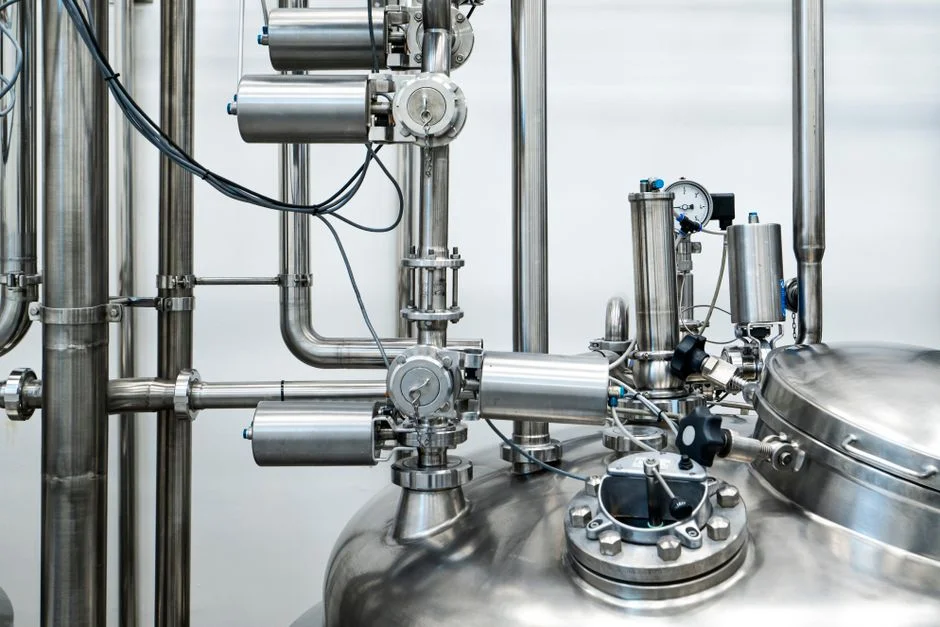
Three packaged biological architectures cover >95% of UK hotel applications up to 500 m³/day. Each solves a different problem, and choosing the wrong one is the second most expensive mistake a developer can make after getting the legal pathway wrong.
The WSZ underground A/O package plant combines anoxic/oxic contact oxidation, lamella sedimentation and chlorination in a single buried GRP tank, with throughputs of 1–80 m³/h and fully automatic operation requiring no on-site operator (manufacturer data, 2026). Typical effluent: BOD ≤20 mg/L, TSS ≤20–30 mg/L, NH₃-N ≤15 mg/L. It is the lowest-CAPEX option and suits on-sewer consent, the United Utilities pathway described above. Burial eliminates noise and visual impact, which is why the WSZ form factor dominates UK planning submissions for hotels on tight plots.
The submerged MBR system uses a PVDF flat-sheet MBR module with 0.1 µm (sub-micron nominal) filtration to replace the secondary clarifier entirely. Effluent quality is markedly tighter: BOD ≤5 mg/L, TSS ≤1 mg/L, NH₃-N ≤1 mg/L. Footprint is roughly 60% smaller than an equivalent conventional activated-sludge plant for the same duty (HydropureWater field data, 2026). The MBR is required when the discharge point is a surface-watercourse with a tight consent envelope, or where the developer plans to pursue BREEAM WAT01 credits by reusing treated effluent for toilet flushing or landscape irrigation.
The SBR (sequencing batch reactor), often supplied as CASS (cyclic activated sludge system), operates in time rather than space: fill, react, settle, decant within a single tank. It handles peak flows from conference events or large banqueting surges more elegantly than continuous-flow designs and produces near-MBR effluent if paired with a fine screen. Its footprint sits between the WSZ and the MBR.
| Parameter | WSZ underground A/O | Submerged MBR | SBR / CASS |
|---|---|---|---|
| Footprint (relative) | 1.0× (baseline) | 0.4× | 0.7× |
| Effluent BOD | ≤20 mg/L | ≤5 mg/L | ≤10 mg/L |
| Effluent TSS | ≤20–30 mg/L | ≤1 mg/L | ≤15 mg/L |
| Effluent NH₃-N | ≤15 mg/L | ≤1 mg/L | ≤5 mg/L |
| Automation | Full, no operator | Full, CIP every 3–6 months | Full, decanter maintenance |
| Membrane replacement | N/A | 8–10 years (PVDF) | N/A |
| Indicative CAPEX (£/m³/day) | £1,000–£1,900 | £2,100–£3,800 | £1,400–£2,400 |
| Best-fit hotel type | On-sewer, budget to 4-star | Off-sewer, 4–5-star, water-reuse | Conference/banquet peaks, mid-size |
The decision rule is straightforward: if the Manchester hotel can connect to a United Utilities sewer at a sensible connection cost, specify the WSZ; if it cannot and must discharge off-sewer to a surface watercourse in the Irwell or Mersey catchment, specify the MBR; if the design is dominated by event-peaking rather than consent tightness, the SBR warrants a seat at the comparison table.
Sizing a Manchester Hotel: Flow, Load and Peak Factor
Per-bedroom design flow is the single number that drives every downstream equipment selection, and the 2026 rule of thumb for UK hotels is well established. Budget properties generate 0.25 m³ per bedroom-day, 4-star properties 0.35 m³/bed-day, and 5-star properties with spa, restaurant and conference space 0.45 m³/bed-day (HydropureWater field data, 2026; cross-checked against BS EN 12056-2:2000 sanitary pipework assumptions). On top of the bedroom base, the engineer must add F&B load at roughly 25 L per cover per day, on-site laundry at 25 L per occupied room if the hotel runs an in-house laundry, and swimming-pool backwash at 5–10% of pool volume per day (Pool Water Treatment Advisory Group, 2019).
Hotel peaking factors are higher than domestic. Conference turn-over, breakfast service, and shift change-outs compress 50–60% of daily flow into four morning hours, so design peak-to-average ratios of 1.8–2.5 are appropriate (vs. 1.5–1.8 for domestic). The equalisation tank should hold at least 30 minutes of peak flow to protect downstream membranes or clarifiers from shock loading.
Worked example for a 200-bedroom 4-star Manchester hotel with 80-cover restaurant and on-site laundry: 200 × 0.35 = 70 m³/day average bedroom flow, 200 × 1.8 peak factor applied to 0.35 gives 126 m³/day peak bedroom flow, plus 10 m³/day restaurant and 5 m³/day laundry yields a design daily flow of 85 m³/day and a peak instantaneous flow of 140 m³/day (≈5.8 m³/h average, 9.7 m³/h peak). The equalisation volume comes out to 25 m³ at 30 minutes of peak. Influent characterisation for a hotel of this size is 250–400 mg/L BOD, 200–300 mg/L TSS, 30–60 mg/L NH₃-N, and 10–20 mg/L oil & grease after a properly sized grease trap (HydropureWater field data, 2026).
For comparison with a non-UK climate where the same sizing logic applies, see our parallel 2026 hotel STP guide for Ankara.
Pre- and Post-Treatment: Grease, Screening, Disinfection
The biological stage is the heart of the plant, but the pre- and post-treatment chain is what keeps it running between service intervals. A rotary mechanical bar screen with 1–3 mm aperture sits at the head of the works to protect downstream pumps and the MBR membrane modules from wipes, hair and food solids — hotel effluent is notorious for ragging. The screen is followed by a passive grease trap or automatic GRU sized for 40 L per kitchen cover per peak service hour; undersizing the grease trap is the most common cause of MBR fouling in hotel installations (HydropureWater field data, 2026).
Mid-stream, a lamella clarifier operating at 20–40 m/h surface loading rate is fitted in WSZ flow paths; the MBR replaces the secondary clarifier entirely. For the off-sewer disinfection stage, a on-site chlorine dioxide generator (50 g/h to 20,000 g/h capacity range) provides E. coli compliance down to ≤1,000 CFU/100 mL without the THM formation issues of sodium hypochlorite at warm temperatures. UV or ozone is an option for MBR-only flows where chemical handling on a hotel basement plant room is undesirable.
Sludge handling completes the train. MBR and WSZ plants generate 0.5–2% dry-solids waste activated sludge at a yield of roughly 0.8 kg DS per kg BOD removed. A Costa Rica 2026 resort wastewater guide notes the same sludge train works for tropical duty; a screw press or a Tunis 2026 hotel STP guide parallels that for Mediterranean climate. The dewatered cake at 20–25% DS is removed by licensed waste contractor for off-site disposal or, where EA-permitted, transported to a United Utilities' regional sludge treatment centre.
Cost, Footprint and ROI: A 200-Bedroom Worked Example
Indicative CAPEX for a packaged MBR at the 85 m³/day design flow derived above is £180,000–£320,000 installed in 2026 pricing (Q4 2025 / 2026 band; civils, MCC panel, kiosks and consent fees are included within the band but vary with site conditions). The WSZ underground A/O alternative for the same hotel sits at £90,000–£160,000 installed, but is only viable for on-sewer discharge because its effluent envelope will not satisfy EA Standard Rules SR2015No1 without tertiary polishing (HydropureWater field data, 2026).
OPEX is dominated by energy, membrane CIP chemicals and sludge haulage. MBR plants run £0.6–£1.1 per m³ treated; WSZ plants run £0.3–£0.6/m³. Sludge disposal at £40–£130/tonne (per UK Water Industry Research sludge handling guide, 2024, uplifted for 2026) is a variable that surprises hotel owners the first time it lands on the operating budget. A typical 85 m³/day MBR plant produces 2–3 tonnes of dewatered cake per month.
Water-cost reduction through condensate reuse is where the 2026 Manchester project differentiates itself in a planning submission. By analogy with the Encore Manchester 209-bed case study, condensate captured from air-conditioning condensate lines can be reused for toilet flushing, generating £4,302.05 in annual savings and 1.3 million litres of avoided mains water at a payback of 1.3 years (Wates Group case study, 2019-08). For a North West region where United Utilities is pushing commercial water rates up to fund its 2025–2030 Water Resources Management Plan, this add-on is a defensible BREEAM WAT01 credit in any 2026 planning submission.
| Metric (85 m³/day duty) | WSZ underground A/O | Submerged MBR | SBR / CASS |
|---|---|---|---|
| Container / skid count | 1 buried tank | 2–3 tank + container | 2 tanks + blower kiosk |
| Plant-room footprint | 0 m² (buried) | 30–45 m² basement | 20–35 m² basement |
| Indicative CAPEX (2026) | £90,000–£160,000 | £180,000–£320,000 | £120,000–£200,000 |
| OPEX (£/m³ treated) | £0.3–£0.6 | £0.6–£1.1 | £0.4–£0.8 |
| Sludge output (t DS/month) | 2.0–2.5 | 2.5–3.0 | 2.0–2.5 |
An automatic chemical dosing system for CIP and disinfection completes the skidded delivery. For a full budget line including civils, kiosk and 10-year membrane replacement, request a 2026 quotation with the design duty and consent pathway locked down.
Frequently Asked Questions
Does a Manchester hotel need an Environment Agency permit or a United Utilities consent?
It depends on the discharge point. Hotels that can connect to the public sewer require a United Utilities Trade Effluent Consent under Section 119 of the Water Industry Act 1991, with typical limits of BOD ≤300 mg/L and TSS ≤400 mg/L. Off-sewer hotels require an Environment Agency permit under the Environmental Permitting (England and Wales) Regulations 2016, typically SR2015No1, with consent values of BOD ≤20 mg/L, TSS ≤30 mg/L and NH₃-N ≤5 mg/L.
What size package plant does a 200-bedroom hotel need?
A 200-bedroom 4-star hotel generates 70 m³/day average bedroom flow plus restaurant and laundry load, giving an 85 m³/day design daily flow and a 140 m³/day peak. The equalisation tank should hold at least 25 m³ (30 minutes of peak flow), and the biological stage should be sized at the 85 m³/day AAF with a 1.8–2.5 peaking factor (HydropureWater field data, 2026).
How much does a hotel wastewater treatment plant cost in the UK in 2026?
An installed WSZ underground A/O plant for an 85 m³/day hotel duty costs £90,000–£160,000; an MBR for the same duty with off-sewer consent compliance costs £180,000–£320,000. Add 10–15% for civils, MCC and commissioning, and budget separately for sludge disposal at £40–£130/tonne (Q4 2025 / 2026 pricing).
What is the payback on water-reuse technology at a Manchester hotel?
The 209-bed Encore Manchester installation recovered £4,302.05 per year and 1.3 million litres of mains water at a unit rate of £3.19/m³, with a payback of 1.3 years (Wates Group case study, 2019-08). For a 200-bedroom Manchester 4-star hotel with comparable AC duty, expect a 1.0–2.0 year payback and a useful BREEAM WAT01 credit at the 2026 planning stage.
Can a packaged MBR fit in a Manchester city-centre basement?
Yes. A submerged MBR at 85 m³/day occupies 30–45 m² of basement floor area including the membrane tank, permeate tank and MCC kiosk, comparable to the plant-room footprint of the urban-infill Weaste Hotel site at 68 Edward Avenue, Salford (M68DA). A WSZ underground A/O plant removes the basement footprint entirely by burying the tank beneath the car park or service yard.