Why Ecuadorian Textile Plants Cannot Skip Wastewater Treatment in 2026
Ministerial Agreement 097 (2015) sets the binding national ceiling for industrial discharges to freshwater bodies and sewer systems at COD below 250 mg/L, TSS below 50 mg/L, and pH 6–9, with NTE INEN 2176:2013 layering heavy-metal limits of As below 0.1 mg/L, Pb below 0.2 mg/L, and Hg below 0.01 mg/L wherever dye auxiliaries or mordants are involved. In practice, EPMAPS in Quito runs tighter local pretreatment rules to protect its municipal biological stage, and 2024 compliance audit data from the Ecuadorian Ministry of Environment shows Pichincha and Guayas absorbing the highest inspection frequency in the country (per the industrial wastewater treatment in Ecuador guide). The financial stakes are concrete: a Guayaquil textile plant was fined $45,000 in a single 2023 enforcement cycle for exceeding COD limits, and only 30% of Ecuadorian industrial effluent is currently treated at all (Ecuadorian Environmental Inspectorate, 2023). Permitting adds 6–12 months of lead time and $5K–$20K in fees; the most common rejection reasons in 2023 were insufficient influent variability characterization and missing certified laboratory data. Plan for both when you build your 2026 capex timeline.
What Makes Textile Effluent Different from Other Industrial Streams
Textile effluent composition is defined by the chemistry of the chromophores it carries rather than total volume. Reactive dyes form covalent bonds with cellulose and resist biodegradation; disperse dyes are non-ionic and engineered to repel water; vat and acid dyes are tightly bound to fiber through reduction or salt bridges. The result is a stream that conventional activated sludge removes only partially—typically 50% of reactive dye color and 60–70% of COD (HydropureWater field data, 2026)—and carries a salt and sulfate load from electrolyte-heavy dyeing baths that conventional designs rarely accommodate. Typical 2026 influent ranges and design implications are summarized below.
| Parameter | Typical textile range | Design implication |
|---|---|---|
| COD | 800–3,000 mg/L | Requires biological stage after DAF |
| TSS | 200–800 mg/L | Needs lint/fiber screening plus DAF |
| Color | > 2,000 Pt-Co units | Coagulant/dosing required for reactive & disperse classes |
| TDS / sulfate | 2,000–10,000 mg/L | EPMAPS Quito surcharge trigger; salt-tolerant biology needed |
| pH | 4–11 across batch cycles | Equalization tank sized for 8–12 h of variability |
| Temperature | 30–60 °C from hot rinses | Cooling or down-stream heat exchanger |
These fluctuations in pH and temperature across a single shift can collapse an unprotected activated-sludge basin. EPMAPS Quito applies a local surcharge on discharges that exceed local TDS and sulfate thresholds, so a plant that passes MA 097 on COD can still be penalized monthly. For regional context on how neighboring jurisdictions handle this chromophore problem, see the textile wastewater treatment in Colombia guide.
The 2026 Process Train for Textile Dye Houses in Ecuador
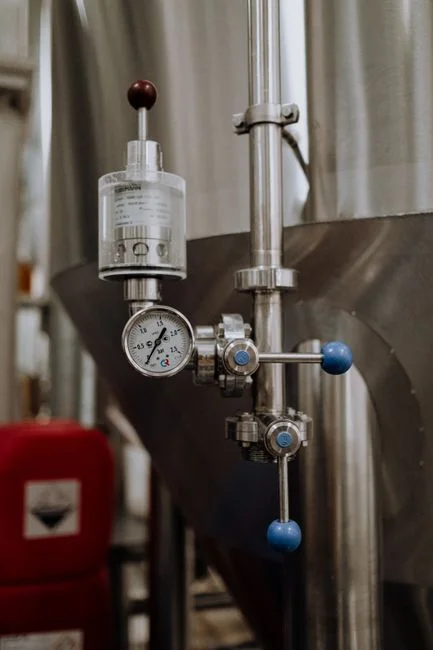
A defensible 2026 textile train in Ecuador runs in four stages, with each stage serving a specific technical function.
- Stage 1 — Headworks and equalization. A GX rotary mechanical bar screen pulls lint and loose fiber before they blind downstream equipment, followed by an equalization basin sized for 8–12 hours of batch variability to flatten the pH 4–11 swings and 30–60 °C thermal pulses from dyeing.
- Stage 2 — Physico-chemical (DAF). A dissolved air flotation system paired with an automatic chemical dosing system for coagulant and polymer handles color, TSS, and FOG. In textile service, DAF reliably removes 80–90% of TSS and 70–85% of color (HydropureWater field data, 2026), protecting the downstream biological stage from fat- and fiber-blinding.
- Stage 3 — Biological. An integrated MBR membrane bioreactor delivers the 60–80% COD reduction needed post-DAF, with < 1 µm membrane filtration that produces an effluent suitable for reuse in dyeing rinsing. Conventional activated sludge is acceptable where footprint and reuse targets are less aggressive.
- Stage 4 — Tertiary polishing and sludge handling. Sand/carbon filtration plus UV or chlorine dioxide disinfection closes the loop on water reuse, and DAF plus biological sludge is routed to a filter press to cut volume 70–80% before disposal.
Anaerobic options such as EGSB are becoming more common in Latin American dye houses to reduce aeration energy on high-COD streams, though they require post-polishing for color. For a regional cross-check on how the same train is being deployed elsewhere, the textile wastewater treatment in Cambodia guide walks through an analogous configuration.
DAF vs MBR vs Chemical Dosing: Choosing the Right Core Process
The right core process depends on three variables: discharge versus reuse, footprint, and local limit stringency. The matrix below ties those variables to the 2026 capex envelope of $50K–$2M and opex of $0.50–$3.00 per cubic meter for turnkey textile/chemical systems in Ecuador (per the 2025 Ecuadorian Environmental Inspectorate benchmark).
| Option | Capex range | Opex driver | Best fit | Limit |
|---|---|---|---|---|
| DAF + coagulant dosing | $50K–$300K | Polymer, coagulant | Quito dye houses, tight footprint, pretreatment before biology | Won't polish COD below ~250 mg/L on its own |
| MBR (often with upstream DAF) | $100K–$500K | Energy 0.8–1.5 kWh/m³, membrane replacement | Plants targeting > 80% water reuse in dyeing rinsing | Higher capex; needs skilled operations |
| Chemical dosing only | $20K–$100K | Consumables up to $1.50/m³ | Small Guayaquil finishers, lax local limits, discharge-only | Sludge volume and chemical OPEX scale with flow |
For procurement planning, use these rules: water reuse → MBR (pair an integrated MBR membrane bioreactor with a dissolved air flotation system for upstream color/TSS knockdown); discharge-only with tight space → DAF plus downstream biology; smallest plant with lax local limits → chemical dosing only. A hybrid DAF + MBR is the recommended configuration for any Quito dye house planning to reuse rinsing water, as DAF reduces the color load that would otherwise foul the membranes.
Compliance, Sludge Economics, and ROI for a 2026 Ecuadorian Dye House
Local limits are often tighter than national ones, manifesting as surcharges on the monthly water bill. The table below compares EPMAPS Quito's published pretreatment thresholds against MA 097 (2015) for parameters critical to dye house operations.
| Parameter | MA 097 (2015) national limit | EPMAPS Quito local limit (typical textile) |
|---|---|---|
| COD | < 250 mg/L | < 200 mg/L |
| TSS | < 50 mg/L | < 30 mg/L |
| pH | 6–9 | 6.5–8.5 |
| Color | Not specified | < 100 Pt-Co units (visible) |
| Sulfate | Not specified | Surcharge trigger above 500 mg/L |
| Heavy metals (As / Pb / Hg) | NTE INEN 2176:2013 | Same national limits enforced at point of discharge |
Sludge disposal requires the same operational rigor as water treatment. In Ecuador, industrial sludge disposal costs $0.10–$0.50/kg, and a hazardous surcharge applies if heavy metals from mordants push waste above national thresholds (Ecuadorian Environmental Inspectorate, 2023). A plate and frame filter press is the standard 2026 solution for cutting sludge volume 70–80% before off-site disposal, and a chlorine dioxide generator handles final polishing. ROI walkthrough: a turnkey textile train in the $250K–$600K band, financed over 36 months against an opex of $0.50–$3.00/m³, typically pays back within 24–36 months when factoring in the avoided $45K Guayaquil-class fine, eliminated EPMAPS surcharges, and the value of recovered rinsing water. Calculate your total cost of ownership by including the $5K–$20K permitting fee and per-kilogram sludge disposal costs upfront.
Frequently Asked Questions
What COD and TSS limits apply to a textile plant discharging in Ecuador in 2026?
National compliance follows Ministerial Agreement 097 (2015), which sets COD below 250 mg/L and TSS below 50 mg/L; EPMAPS Quito tightens this to COD below 200 mg/L and TSS below 30 mg/L for typical textile discharges (per the 2024 Ministry of Environment audit).
Is a DAF enough on its own, or do I need an MBR for a Quito dye house?
For discharge-only into EPMAPS sewer systems, a DAF plus chemical dosing can clear local COD and color bands. For water reuse in dyeing rinsing, a DAF plus MBR pairing is necessary, as the MBR's < 1 µm membrane filtration provides the required polishing grade.
How much does textile wastewater treatment capex actually run in Ecuador?
Turnkey 2026 textile/chemical systems in Ecuador range from $50,000 for a small dosing skid to over $2 million for a full DAF plus MBR plant, with most Quito and Guayaquil dye houses landing in the $250K–$600K band (Ecuadorian Environmental Inspectorate, 2023). Budget an additional $5K–$20K for permitting.
What was the Guayaquil textile fine, and how do I avoid a similar penalty?
A Guayaquil textile plant was fined $45,000 in 2023 for exceeding COD limits under MA 097 enforcement. Reliable mitigation strategies include certified influent characterization, an 8–12 hour equalization basin, a DAF for color/TSS removal, and a biological stage sized to handle the post-DAF COD load.