Industrial wastewater treatment in Ecuador is sized to the receptor, not to one national COD number. FAOLEX lists Acuerdo Nº 97/A as dated 30 July 2015 and published in Registro Oficial Edición Especial No. 387 on 4 November 2015. Freshwater Table 9 caps COD at 200 mg/L, TSS at 130 mg/L, oil and grease at 30 mg/L, and pH at 6-9, all as daily means. Earlier sheets used COD < 250 mg/L, TSS < 50 mg/L, and pH 6–9, with oil and grease below 20 mg/L.
Industrial Wastewater Treatment in Ecuador: Pick the Receptor First
The outfall sets the legal target for industrial wastewater treatment in Ecuador. Freshwater Table 9 uses a daily mean of COD 200 mg/L, BOD5 100 mg/L, TSS 130 mg/L, and oil and grease 30 mg/L. Sewer Table 8 allows COD 500 mg/L, BOD5 250 mg/L, TSS 220 mg/L, and oil and grease 70 mg/L.
According to the Ministry TULSMA compilation on gob.ec (November 2025), section 5.2.4.6 applies Table 9 when no receiver study exists, with the competent authority’s approval. The concentrations in that table are daily means. Untreated liquid waste may not go to a receiver, an irrigation canal, or a storm drain. Sections 5.2.4.9 and 5.2.4.10 also require a contingency plan when treatment efficiency drops.
Municipalities may replace a table value with a mass-balance load, and most plants we size still arrive with only one COD target. Section 5.2.4.2 defines Ce as the maximum daily-mean concentration in the discharge that still protects downstream quality Cc. Qr is the critical receiver flow, given as a 10-year, 7-day low flow or a flow with 85% reliability. Qe is the future discharge, and decontamination works are generally designed on a 25-year horizon.
Table 8 also caps total petroleum hydrocarbons at 20 mg/L, lead at 0.5 mg/L, mercury at 0.01 mg/L, and temperature at 40 °C. Table 9 caps TPH at 20 mg/L, lead at 0.2 mg/L, mercury at 0.005 mg/L, and temperature change at the natural condition plus or minus 3 °C. Table 10 caps marine arsenic at 0.5 mg/L, mercury at 0.01 mg/L, and TPH at 20 mg/L.
Ecuador’s Industrial Wastewater Crisis: Compliance Risks and Economic Impact
Only 30% of industrial effluent in Ecuador is currently treated, so many plants still miss the table that matches their outfall. Facilities risk fines up to $50K/year or a shutdown. The 2025 project-sheet range for a turnkey system is $50K–$2M. Food, textile, and chemical sites are the three loads this note sizes.
Non-compliance is already a cash cost. According to 2023 data from the Ecuadorian Environmental Inspectorate, a textile plant in Guayaquil was fined $45,000 in a single year for exceeding chemical oxygen demand (COD) limits. A 2024 World Bank report estimates that untreated effluent reduces Ecuador’s GDP by 1.2% a year through scarcity and public-health costs. Most plants we review open the budget only after that first fine.
Food processing is the widest infrastructure gap. A 2024 ProEcuador industry report says 40% of the country’s 1,200 food processing facilities lack adequate pretreatment. That organic load reaches municipal sewers and returns as surcharges. For the food-sector rule set, read ecuador environmental regulations food industry. This page stays on shared equipment choices and the national tables.
The chemical industry is further behind on the same surveys. A 2023 UNEP regional assessment found that only 15% of 300 surveyed facilities meet the stated pH and heavy-metal limits. Inspections already cluster where the factories are. Treat the 15% figure as a survey result, not as a permit pass rate.
Ecuador’s Wastewater Regulations: Industry-Specific Standards and Enforcement
Ecuador wastewater rules split by receptor: Ministerial Agreement 097 (2015) sets the discharge tables, and Decree 1053 (2016) is the file’s reference for water administrative rights. Procurement should name the outfall before it compares vendors. A sewer quote and a river quote are not interchangeable. Most bids we see still price every pipe to one COD number.
ministerial agreement 097 ecuador cod limits
Ministerial Agreement 097-A sets freshwater COD at 200 mg/L as a daily mean in Table 9, and public-sewer COD at 500 mg/L in Table 8. The older screen of COD < 250 mg/L sits between those two official numbers and matches neither table. Marine Table 10 allows COD of 400 mg/L in the surf zone and 600 mg/L on a submarine outfall, and marine BOD5 is left blank below. Designers who copy 250 mg/L onto a river outfall are 50 mg/L over the freshwater cap.
| Receptor | COD (mg/L) | BOD5 (mg/L) | TSS (mg/L) | Oil and grease (mg/L) | pH |
|---|---|---|---|---|---|
| Freshwater, Table 9, daily mean | 200 | 100 | 130 | 30 | 6-9 |
| Public sewer, Table 8, daily mean | 500 | 250 | 220 | 70 | 6-9 |
| Marine surf, Table 10 | 400 | 250 | 30 | 6-9 | |
| Marine submarine outfall, Table 10 | 600 | 250 | 30 | 6-9 |
The screening table below is the sheet carried in earlier Ecuador project files. Its Standard (MA 097) column is not Table 9 and it is not Table 8. Textile and food columns are typical raw influent, not permit caps. Keep the cells for load estimates, then check them against the official row.
| Parameter | Standard (MA 097) | Textile Industry Avg. | Food Processing Avg. |
|---|---|---|---|
| COD (mg/L) | < 250 | 800 – 2,500 | 1,500 – 5,000 |
| TSS (mg/L) | < 50 | 150 – 500 | 300 – 1,200 |
| pH | 6.0 – 9.0 | 9.0 – 12.0 | 4.5 – 11.0 |
| Oil & Grease (mg/L) | < 20 | < 10 | 100 – 800 |
Inspection pressure is uneven. 2024 audit data from the Ecuadorian Ministry of Environment show the highest visit rates in Pichincha and Guayas, where Quito and Guayaquil concentrate factories. Azuay inspections focus on heavy metals from mining and metalworking.
Ecuadorian Technical Standard NTE INEN 2176:2013 is cited in older notes for arsenic below 0.1 mg/L, lead below 0.2 mg/L, and mercury below 0.01 mg/L. Table 9 sets freshwater daily means at arsenic 0.1 mg/L, lead 0.2 mg/L, and mercury 0.005 mg/L. Table 8 sets sewer daily means at arsenic 0.1 mg/L, lead 0.5 mg/L, and mercury 0.01 mg/L. Use the mercury number from the table that matches the pipe.
ecuador industrial wastewater permitting process
The Ecuador industrial wastewater permitting process commonly takes 6 to 12 months, and Guayaquil industries also need Interagua’s Certificado de Autorización de Descargas de Efluentes. Inspectorate notes from 2023 cite weak influent variability and missing certified lab results as frequent rejection causes. According to Interagua’s guide GI-OPC-001, Version 2, sewer control uses Table 8 and a river, estero, or natural channel uses Table 9. The same guide states that the certificate lasts one calendar year and must be renewed by the user.
Industrial users must build an inspection box between the property front and the public sewer so domestic and process flows can be sampled apart. The authority and Interagua need free access to that box. The guide also flags wastewater with pH below 6 or above 9, or with a corrosive effect on the collection system. Interagua may add other TULSMA parameters when the activity or the local sewer requires them.
Sampling for that certificate is a flow-proportional composite of at least 5 hours, with aliquots scaled to the discharged flow. That check is not a substitute for design data. Sizing still needs at least seven days of composites across the production cycle. EPMAPS in Quito can set pretreatment tighter than the national table to protect its biological plant.
Industrial Wastewater Treatment Technologies: How They Work and Which to Choose
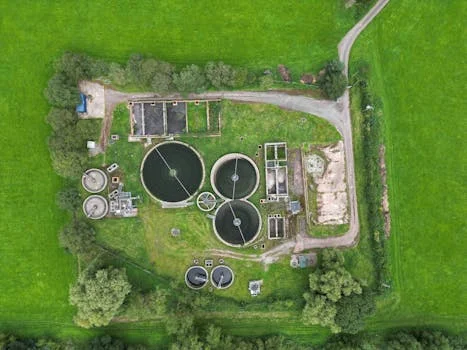
Primary, secondary, and tertiary stages do different jobs, and primary treatment alone does not meet Ecuador’s discharge tables. Screening plus sedimentation on plants we commission usually removes 50–70% of TSS and 30–40% of COD. That still misses freshwater COD of 200 mg/L and the older screen of COD < 250 mg/L.
Dairy and beverage loads usually go to activated sludge or to MBR systems for Ecuador’s stringent discharge limits and water reuse projects. An MBR pairs biology with membrane filtration, so the footprint is smaller than a clarifier and solids capture is higher. High oil or high TSS points to high-efficiency DAF systems for Ecuador’s food processing and textile industries. Micro-bubbles lift solids for skimming, which cuts fats, oil, and grease before biology sees them.
Tertiary filtration and disinfection appear when the plant reuses water or discharges to a sensitive receiver. Sand or carbon filtration plus UV or chlorine dioxide is the usual pair. According to EPA 2024 guidelines for Latin America, selection must allow for wide influent swings and for operators with little specialist training. On sites we start up, the upset is usually a weekend peak the average sample never caught.
Keep the sanitary line off the process train. An Underground Package Sewage Treatment Plant (WSZ Series) can sit below grade on the domestic side while DAF and biology treat the industrial line. Mixing canteen sewage into a dye or slaughter drain dilutes the sample and still fails the metals table.
DAF vs MBR vs Chemical Dosing: Removal Rates, Costs, and Ecuadorian Use Cases
Dissolved air flotation, MBR, and chemical dosing remove different fractions, and the capex bands on this sheet are $50K – $300K, $100K – $500K, and $20K – $100K. DAF is the oil and TSS tool. MBR is the soluble-COD and reuse tool. Chemical dosing is the pH and metals tool. Most plants we size use two of the three, not one.
daf system cost for food processing ecuador
A DAF system for food processing in Ecuador is usually quoted from $50K to $300K, while a full food-plant train at 200 – 500 m³/day sits at $150K – $450K on the 2025 sheet. DAF protects downstream biology from fat blinding, which is why shrimp and slaughter lines in Guayas put it first. Food influent on the screening sheet runs 1,500 – 5,000 mg/L COD and 100 – 800 mg/L oil and grease. Operating cost for that food band is $0.60 – $1.20 per cubic meter on the same sheet.
mbr wastewater system for textile ecuador
An MBR wastewater system for a textile plant in Ecuador is typically scoped at $100K to $500K for the membrane package, inside a textile-train capex of $250K – $600K at 100 – 300 m³/day. Quito dye houses use it where the lot is small and EPMAPS enforces the sewer or the receiving water hard. MBR footprint on this sheet is 0.5 – 1.0 m²/m³, against 1.0 – 2.0 m²/m³ for DAF. COD removal is listed at 90–98%, with TSS removal above 99%.
Chemical dosing is the flexible, low-entry option, at $20K to $100K for a basic skid. Guayaquil pharmaceutical and chemical plants use it to pull pH into the 6-9 band, and the reagent bill is the real operating cost. Per the 2023 UNEP cost study for Latin America, chemical dosing can cost up to $1.50/m³ in consumables, while an MBR may use 0.8–1.5 kWh/m³ and less chemical. Read the detailed cost comparison of DAF and sedimentation for industrial applications before you drop the primary clarifier.
| Technology | COD Removal | TSS Removal | Footprint (m²/m³) | Capex (USD) |
|---|---|---|---|---|
| DAF | 40–60% | 85–95% | 1.0 – 2.0 | $50K – $300K |
| MBR | 90–98% | > 99% | 0.5 – 1.0 | $100K – $500K |
| Chemical Dosing | 30–50%* | 70–90% | 0.2 – 0.5 | $20K – $100K |
*Note: Chemical dosing COD removal is highly dependent on the fraction of insoluble COD.
For a regional view of the same food-plant layout, see how DAF systems are deployed in Latin America’s food processing sector. In Ecuador the fork is reuse versus discharge: reuse favors MBR, and a plain discharge limit often favors DAF or chemical dosing. Performance detail for the membrane option sits in MBR systems for industrial wastewater treatment. Most coastal plants we size do not reuse, and they only need the table for the pipe they own.
Designing an Industrial Wastewater Treatment System for Ecuador: Step-by-Step Process
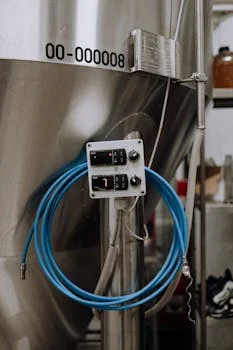
Influent characterization is the first design act on an Ecuador project, and it needs at least seven days of composite sampling across the real production cycle. Use a certified lab, such as ESPOL in Guayaquil or INIAP, so COD, TSS, pH, and metals are defensible in the file. A short campaign sample under-sizes the plant and fails the permit at peak week. Most plants we size for shrimp and fruit show a Friday peak near double the Tuesday flow.
- Define Treatment Goals: Determine if the objective is simple discharge compliance under MA 097 or water reuse for irrigation/cooling under Decree 1053.
- Technology Selection: Use a decision tree based on flow rate and organic load. For example, if Oil/Grease > 50 mg/L, a DAF unit is mandatory.
- Sizing and Engineering: Calculate hydraulic retention times (HRT) and sludge yield. Use high-efficiency sedimentation tanks for primary solids removal in large-scale operations.
- Chemical Optimization: Implement an precise chemical dosing for Ecuador’s variable industrial effluent to manage pH fluctuations and flocculation.
- Permitting and Documentation: Compile the Technical Project Report (Informe Técnico) for the Ministry of Environment, ensuring all equipment specs match the proposed removal rates.
Sludge disposal belongs in the same design, not in a later change order. In Ecuador, industrial sludge is often classed as hazardous when heavy metals are present, and that label raises the haul cost. Dewatering with a filter press or a centrifuge can cut sludge volume by 70–80%. Price disposal at $0.10–$0.50/kg on the wet cake you will actually truck, not on the raw slurry.
Selection Checklist Before You Freeze the Process
- Name the receptor and the table: sewer Table 8, freshwater Table 9, or marine Table 10.
- Collect at least seven days of composite samples through a real production cycle.
- If Oil/Grease > 50 mg/L, specify DAF before biology.
- Match metals to the table: freshwater mercury 0.005 mg/L, sewer mercury 0.01 mg/L.
- Split domestic sewage from process water, and add a sampling box before the public sewer.
- Size dewatering for a 70–80% sludge-volume cut and price haulage at $0.10–$0.50/kg.
- Put permitting fees of $5K–$20K and a 6 to 12 month review on the schedule.
Cost Breakdown for Ecuador Plants on 2025 Project Sheets
Turnkey capital cost for industrial wastewater systems in Ecuador runs from $50,000 for small pretreatment to over $2 million for full-scale MBR plants in textile or chemical service. These 2025 market figures include equipment, shipping, and installation. Payback on the same sheets often falls in 24 to 36 months when fines and sewer surcharges are counted as avoided cost. That payback is a comparison, not a promise.
Operating cost usually falls between $0.50 and $3.00 per cubic meter, covering energy, reagents, and labor. Specialist operator wages are rising, so automation is what holds the upper end down on plants we revisit after year two. Add permitting fees of $5K–$20K and sludge disposal at $0.10–$0.50/kg. For a dry-climate comparison, see global best practices for industrial wastewater treatment in arid regions.
industrial wastewater treatment cost ecuador textile
Industrial wastewater treatment cost for textile plants in Ecuador is shown as $250K – $600K capex at 100 – 300 m³/day on the project sheet, with full-scale plants reaching over $2 million. The textile row in the table below stops at capex. Do not read a blank operating cell as zero. Dye residual, not flow alone, is why this band sits above many food plants, and most dye houses we size spend the extra on the membrane stage rather than the DAF tank.
| Industry Sector | Typical Flow (m³/day) | Estimated Capex (USD) | Opex ($/m³) |
|---|---|---|---|
| Food Processing | 200 – 500 | $150K – $450K | $0.60 – $1.20 |
| Textile/Dyeing | 100 – 300 | $250K – $600K |
Who This Guide Is For
This guide is for plant engineers, EPC estimators, and procurement leads at food, textile, and chemical sites in Ecuador. It fits a discharge to a public sewer, a freshwater body, or the sea. It is the wrong page for a purely domestic town plant with no process drain. Readers who need only the food-industry rule set should use the food-regulations link above, not this equipment note.
Next, freeze the receptor and the seven-day composite, then send both with the flow band in one equipment sizing request. Include the table you believe applies, Table 8, Table 9, or Table 10. A quote that skips the outfall will not survive the permit review. Most files we see fail on that omission, not on the pump curve.
Frequently Asked Questions
Which outfall table should a Guayaquil plant use?
A Guayaquil plant uses sewer Table 8 or freshwater Table 9, depending on where the pipe ends. Interagua’s guide (GI-OPC-001, Version 2) requires the discharge certificate for industrial users and an inspection box that separates domestic flow from process flow. Marine outfalls use Table 10: COD 400 mg/L at the surf and 600 mg/L on a submarine line, with TSS at 250 mg/L. Pick the table on the drawing before you buy equipment.
How long does an Ecuador industrial discharge permit take?
Budget 6 to 12 months for the Ecuador environmental file. Inspectorate notes from 2023 cite weak influent variability data and missing certified lab results as common rejection causes. EPMAPS in Quito can set pretreatment tighter than the national table to protect its biological plant. Interagua states that its discharge certificate lasts one calendar year and then must be renewed.
Is DAF enough for a food plant, or do I need MBR?
DAF alone is enough only when oil, grease, and TSS are the permit problem and soluble COD still meets the outfall table. If Oil/Grease > 50 mg/L, a DAF unit is mandatory ahead of biology. Choose an MBR when the site must hit freshwater COD of 200 mg/L, reuse water, or fit a dye line on a small lot. Most food plants we size run DAF first, at $50K to $300K, then add biology if needed.
What makes textile treatment cost more than a food plant?
Textile trains on this sheet cost $250K – $600K at 100 – 300 m³/day, above the food band of $150K – $450K at 200 – 500 m³/day. Dye and the MBR scope, priced at $100K to $500K, explain most of the gap. Plain DAF removes 40–60% of COD and does not finish color. Reagent cost for chemical dosing can reach $1.50/m³, while an MBR often uses 0.8–1.5 kWh/m³.