MBR systems in Saudi Arabia produce near-reuse-quality effluent through <1 μm membrane filtration and typically use 60% less land than conventional activated sludge trains. In 2025, electro-mechanical Capex commonly ranges from SAR 2.5M for 100 m³/day municipal packages to SAR 15M for 1,000 m³/day industrial plants. Payback of 3–5 years is often driven by 20–30% lower sludge handling load and alignment with Vision 2030 reuse targets under SASO 2885:2020.
Why MBR systems in Saudi Arabia Fit Reuse Mandates
MBR systems in Saudi Arabia produce BOD below 10 mg/L and TSS below 5 mg/L without tertiary sand filters. They use about 60% less land than conventional trains and support SASO 2885:2020 reuse for cooling or irrigation. 2025 Capex spans SAR 2.5M–15M for 100–1,000 m³/day plants, with industrial payback often 3–5 years.
Saudi Arabia’s national water demand is projected to reach 24 billion m³/year by 2025, with approximately 85% of this demand currently met by non-renewable groundwater according to MEWA 2024 data. That finite supply pressure underpins Vision 2030 reuse targets of 70% by 2030, up from an 18% baseline recorded in 2020. For facility managers in Jubail, Dammam, and NEOM supply chains, MBR is now a sizing and compliance choice, not a novelty upgrade.
Land pricing shapes the decision as much as effluent quality. With MODON 2024 data indicating land costs between SAR 1,200 and SAR 2,500 per square meter, the smaller MBR footprint converts directly into Capex. Unlike trains that need large secondary clarifiers, MBR places membranes inside the biological tank and intensifies treatment on compact plots.
A Jeddah food plant had to double capacity inside its existing boundary. Switching from conventional activated sludge to MBR cut the treatment footprint from 1,200 m² to 480 m² and avoided roughly SAR 1.8M in land take, while meeting cooling-tower makeup quality on site.
How Does Saudi Arabia Dispose of Sewage?
Saudi Arabia disposes of sewage through municipal networks feeding centralized plants, plus onsite industrial systems that treat and reuse effluent before any surplus reaches the public grid. In MODON cities, facilities must meet SASO 2885 reuse limits for landscaping and cooling before discharge of excess flow is allowed. NEOM projects go further: Zero Liquid Discharge (ZLD) rules push biological effluent into RO or electrodialysis so marine discharge is avoided.
Where sewer capacity is limited or industrial COD is high, package MBR trains keep solids and pathogens inside the plant boundary. Most plants we size for Eastern Province sites still need DAF or oil removal ahead of the membranes when FOG spikes. For emerging micropollutant rules that sit beside conventional BOD/TSS limits, buyers also track pfas in saudi arabia when drafting discharge and reuse permits.
How MBR Systems Work: Process Flow for Saudi Engineers
MBR technology couples activated sludge with submerged PVDF membranes, typically 0.1–0.4 μm pore size, to hold biomass and produce high-clarity permeate. Saudi designs must allow for 40–50°C summer influent in the Eastern Province and elevated salinity from industrial process water. The MBR Membrane Bioreactor Wastewater Treatment System is specified to hold usable flux when feed chemistry shifts with production campaigns.
Warm water lowers dissolved oxygen saturation to roughly 3–4 mg/L and can accelerate fouling if scour air is undersized. Engineers therefore select VFD blowers and fine-bubble diffusers to hold about 2.0 mg/L DO in the aerobic zone while still scouring membrane surfaces. Oil and gas streams often move to hybrid Membrane Distillation-Bioreactor (MDBR) trains for TDS of 10,000–35,000 mg/L, matching NEOM brine-handling targets. With adequate DAF pretreatment, MBR routinely removes 95–99% of FOG and protects pores from irreversible clogging.
| Parameter | Standard MBR Specification | Saudi Climate Adjustment |
|---|---|---|
| Membrane Material | Reinforced PVDF | High-Temp Tolerant PVDF (up to 45°C) |
| Pore Size | 0.04 – 0.4 μm | 0.1 μm (Optimized for Turbidity) |
| Operating Flux | 15 – 25 LMH | 12 – 18 LMH (Accounting for Salinity) |
| MLSS Concentration | 8,000 – 12,000 mg/L | Max 10,000 mg/L (To manage DO levels) |
| Aeration Alpha Factor | 0.6 – 0.8 | 0.45 – 0.55 (Due to high TDS/Temp) |
MBR vs Conventional Systems: Saudi-Specific Comparison
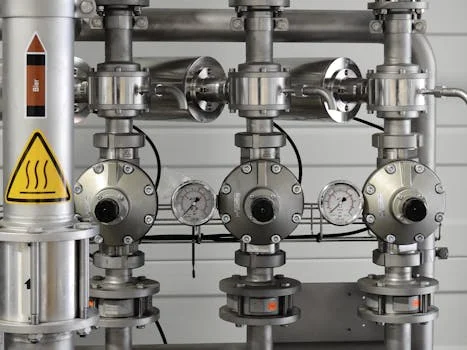
MBR effluent commonly sits below 10 mg/L BOD and 5 mg/L TSS, meeting SASO 2885:2020 reuse tiers without tertiary sand or microfiltration polishing. Conventional activated sludge or SBR trains more often leave 20–30 mg/L BOD and need extra steps to reach the same Class A irrigation or cooling reuse tier. That gap is why MBR is selected when reuse, not just discharge, is the permit driver.
Specific energy for MBR is higher at 0.6–1.2 kWh/m³ versus about 0.4–0.8 kWh/m³ for conventional biology alone. Lifecycle cost in the Kingdom still favors MBR when industrial power sits near SAR 0.18/kWh and sludge haulage is tightly controlled. Higher mean cell residence time cuts sludge mass by 20–40%, which lowers disposal overhead under strict transport rules.
Settleability swings in Dammam or Riyadh heat can push conventional TSS above permit limits. Membranes provide a physical barrier that holds effluent quality even when sludge bulks. A 500 m³/day MBR train needs about 200 m²; a conventional plant with equivalent tertiary filtration often needs over 500 m².
| Feature | MBR System | Conventional Activated Sludge + Filter |
|---|---|---|
| Effluent BOD (mg/L) | < 5 | 15 – 25 |
| Effluent TSS (mg/L) | < 1 | 10 – 20 |
| Footprint (500 m³/d) | 200 m² | 520 m² |
| Energy (kWh/m³) | 0.6 – 1.2 | 0.5 – 0.9 (Total system) |
| SASO 2885 Compliance | Direct Reuse Ready | Requires Tertiary UV/Sand Filter |
What Do MBR and RO Units Cost?
MBR Capex in the Saudi market currently ranges from SAR 2.5M for 100 m³/day municipal plants to SAR 15M for 1,000 m³/day industrial systems for the electro-mechanical package, excluding major civil works. Concrete basin civil costs typically run SAR 1,500–2,500 per cubic meter near Riyadh or Jeddah. RO stages added for NEOM-style recovery sit on top of that MBR backbone and are sized from permeate TDS and recovery targets, not from biology alone.
A typical Capex split is about 40% membrane modules, 30% civil works, 20% mechanical and electrical gear including PLC/SCADA, and 10% commissioning and training. Opex is estimated at SAR 0.8–1.5 per cubic meter treated, covering energy, labor (often two operators per shift on medium plants), and a membrane replacement sinking fund. Membrane life in Saudi service is generally 5–8 years, with replacement averaging SAR 50–80 per cubic meter of treated capacity over that life.
ROI is mainly the avoided purchase of desalinated freshwater. Replacing about 70% of intake with MBR permeate often yields 3–5 year payback on industrial sites. Against UK’s MBR energy efficiency benchmarks for comparison, Saudi projects enjoy lower unit power cost but carry higher cooling and aeration duty.
| Plant Capacity | Estimated Capex (SAR) | Estimated Opex (SAR/m³) | Payback Period |
|---|---|---|---|
| 100 m³/day | 2.5M – 3.5M | 1.2 – 1.5 | 5 – 6 Years |
| 500 m³/day | 6.5M – 8.5M | 0.9 – 1.1 | 4 – 5 Years |
| 1,000 m³/day | 12M – 15M | 0.8 – 1.0 | 3 – 4 Years |
What Saudi Compliance Regulations Apply to MBR?
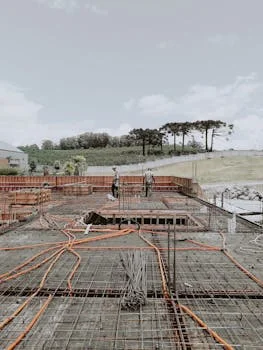
SASO 2885:2020 requires unrestricted irrigation and industrial reuse water to hold BOD below 10 mg/L and fecal coliform under 10 CFU/100 mL. Membrane pore size routinely drives coliform to non-detect levels when integrity is maintained. Healthcare sites often specify HydropureWater’s hospital wastewater MBR system with ozone disinfection to document 99.9% pathogen removal against Ministry of Health expectations.
NEOM’s ZLD policy is the strictest local frame. Projects there use MBR as the biological stage, then RO or Electrodialysis (ED) to push recovery above 90% with no liquid waste to the Red Sea. Developers submit water-balance drawings to NEOM Energy & Water (ENOWA) for approval. In MODON industrial cities, SASO 2885 onsite reuse is mandatory before surplus may enter the municipal network, backed by third-party lab data and an effluent quality guarantee.
Eastern Province hospital projects follow the same reuse logic with tighter disinfection proof. Dammam’s hospital wastewater treatment requirements emphasize virus log reduction values that membrane barriers sustain more consistently than clarification alone.
| Regulating Body | Standard/Policy | Key Requirement |
|---|---|---|
| SASO | 2885:2020 | BOD <10 mg/L, TSS <5 mg/L |
| NEOM | ZLD Policy | 90%+ Recovery, No Marine Discharge |
| MODON | Industrial Reuse | Mandatory reuse for landscaping/cooling |
| MOH | Hospital Standards | 99.9% Pathogen Removal (Log 3) |
Supplier Decision Framework for Saudi MBR Projects
Procurement teams should require local-content evidence and membrane warranties of 5–8 years written for high-temperature service. Service centers inside the Kingdom, ideally near MODON zones, matter when CIP chemicals or module swaps cannot wait on overseas freight. Ask for GCC case studies that show sustained flux under high TDS and heat, not only temperate-climate references.
Energy screens should target specific consumption below 1.0 kWh/m³ under stated MLSS and temperature. Red flags include missing membrane replacement schedules and no Trans-Membrane Pressure (TMP) trend data from similar Saudi duty. Independent lab packs showing SASO 2885 compliance for at least 12 months of operation belong in the bid file. Regional baselines from UAE’s MBR compliance standards and cost benchmarks help stress-test quoted Opex and flux.
Selection checklist most plants we bid against in Jubail and Yanbu still use:
- Influent COD, FOG, and TDS envelopes with summer temperature peaks stated
- Design flux at 12–18 LMH for saline duty, not temperate catalog flux
- VFD blower and scour-air margins for DO near 2.0 mg/L at 40–50°C
- 5–8 year membrane warranty plus SAR 50–80/m³ capacity replacement fund
- Third-party SASO 2885 lab history ≥12 months
- Local CIP/spares response time inside MODON or Eastern Province corridors
- Clear RO/ED interface if ENOWA ZLD recovery above 90% is required
NEOM and Vision 2030: The Future of MBR in Saudi Arabia
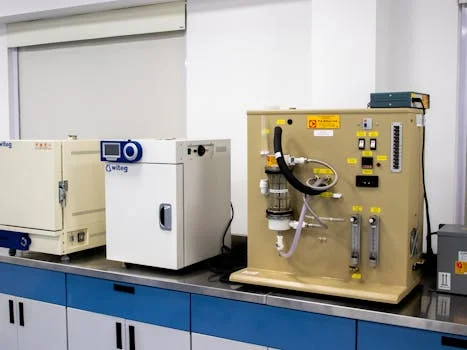
NEOM’s water strategy targets a fully circular water economy and about 2.5 million m³/day of treated water by 2030 under ZLD rules. MBR sits as the biological pretreatment for high-recovery RO. Modular and containerized trains are expected to support construction camps and decentralized worker communities as the program scales.
National Water Strategy incentives favor industrial facilities that install advanced reuse. An expected SASO 2885 update discussed for 2025 may tighten micropollutant and pharmaceutical residue limits. Specifying robust MBR membranes and CIP regimes now reduces the chance of costly retrofits if those limits arrive.
Who This Is For / Next Step
This guide is for plant engineers, EPC contractors, and procurement managers sizing reuse plants in Jubail, Dammam, Jeddah, Riyadh, or NEOM supply chains. Buyers who only need primary clarification for low-strength municipal discharge may still prefer conventional activated sludge plus filters. If you are matching capacity, flux, and SASO 2885 guarantees to a live plot, request a site-specific duty sheet through our MBR project inquiry form.
Frequently Asked Questions
What is the typical payback period for an MBR system in Saudi Arabia?
Industrial MBR projects in Saudi Arabia typically pay back in 3–5 years, while municipal schemes often need 5–7 years. Payback shortens when desalinated intake is expensive and 70% of freshwater demand can be displaced by permeate reuse. Sludge haulage savings of 20–40% and avoided tertiary filters also improve lifecycle cost. Exact timing still depends on tariff, FOG pretreatment quality, and civil scope outside the electro-mechanical package.
How does MBR handle Saudi high influent temperatures?
High-temperature PVDF membranes are specified up to 45°C for Eastern Province summer duty. Aeration must rise to hold DO near 2–4 mg/L because oxygen solubility falls as water warms toward 40–50°C. VFD blowers and fine-bubble scour keep both biology and membrane surfaces stable. Most plants we size for Jubail still derate flux to 12–18 LMH when salinity and heat arrive together.
What are membrane replacement costs for MBR in Saudi Arabia?
Membrane replacement in Saudi service typically costs SAR 50–80 per cubic meter of plant capacity over a 5–8 year module life. Life shortens when FOG pretreatment is weak or CIP intervals slip in high-TDS duty. Budget the sinking fund inside Opex of SAR 0.8–1.5/m³ rather than as a surprise Capex spike. Bid packages should show transparent TMP trends from comparable GCC installations.
Does MBR meet NEOM Zero Liquid Discharge policy?
MBR alone does not create ZLD; it is the biological stage that feeds RO or Electrodialysis for 90%+ recovery required by NEOM ENOWA. Hybrid flowsheets keep liquid waste off Red Sea discharge points and protect coral habitats. ENOWA still requires water-balance drawings and recovery proof before approval. Capex for the RO/ED polish must be added on top of the SAR 2.5M–15M MBR electro-mechanical ranges quoted for biology alone.
What energy consumption should Saudi MBR plants expect?
Saudi MBR plants typically consume 0.6–1.2 kWh/m³, higher than conventional biology at 0.4–0.8 kWh/m³ because of membrane scour air. At industrial tariffs near SAR 0.18/kWh, unit energy cost remains manageable when reuse displaces desalinated water. Target designs below 1.0 kWh/m³ when MLSS stays near or under 10,000 mg/L. Always state temperature and TDS with any energy guarantee, because alpha factors of 0.45–0.55 raise blower duty.
Related Equipment
- HydropureWater’s DF series PVDF flat sheet membrane modules — view specifications, capacity range, and technical data
Need a customized solution? Request a free quote with your specific flow rate and pollutant parameters.