
Why Textile Wastewater in Cambodia Is Under Closer Scrutiny in 2026
On 28 July 2026, the Cambodia Ministry of Environment (MoE) inspection teams visited the KICYN (Cambodia) garment-washing facility at Koh Khnor village, Prek Roka commune, Kandal Stung district — a plant operating 38 washing machines, 41 dryers and 7 boilers and treating final effluent with PAC, NaOH, PAM, soda ash and aeration before discharge to the Batheay River. Initial on-site instrument readings at the outlet recorded pH = 7.94, which sits inside the MoE laboratory range cited in the inspection report (5.5 < pH < 9). The MoE's Directorate of Environmental Protection, working with the provincial environment office, has made clear that legal liability is determined by confirmed laboratory exceedances rather than on-site instrument readings alone — so redundant sampling, chain-of-custody records and accessible monitoring logs are now a compliance necessity, not a paperwork chore (source: dgcambodia.net, 2026-07-28).
The regional stakes justify that scrutiny. The textile sector contributes roughly 20% of global industrial water pollution (Watari et al., cited in Business Strategy & Development, doi:10.1002/bsd2.324), and producing 1 tonne of fabric can pollute 300 tonnes of water (Chakraborty & Ahmad, in the same study). For an export-oriented Cambodian garment-washing or dyeing plant in the 50–500 m³/day band, that ratio translates directly into permit exposure: if you cannot prove the treatment train is working on a Wednesday afternoon during a buyer audit, you are exposed on two fronts — MoE enforcement and ZDHC-aligned buyer requirements from H&M, Inditex and Decathlon. Engineers in this market should design against the strictest applicable standard, not the lowest one on paper; for a parallel regional benchmark, the Malaysia 2026 textile wastewater engineering guide walks through the same logic for a comparable permit regime.
Typical Influent Characteristics from Cambodian Garment-Washing & Dyeing Plants
Textile effluent in Cambodia is not a single stream — it is the blended output of desizing, scouring, bleaching, dyeing and rinsing steps, and the design envelope must reflect that. Across the garment-washing and knit-finishing plants typical of Phnom Penh, Kandal and Svay Rieng, expect the following envelope at the inlet of the equalization tank:
| Parameter | Typical Cambodian range | Design driver |
|---|---|---|
| pH | 8–12 (alkaline soap/NaOH) | Caustic scour, reactive-dye fixation |
| COD | 800–3,000 mg/L | Size, dye, surfactant load |
| BOD₅ | 200–800 mg/L | Biodegradable organics from size and surfactants |
| TSS | 200–1,000 mg/L | Lint, fibre scraps, insoluble dye |
| Colour | 500–2,500 Pt-Co | Reactive and disperse dyes |
| Surfactant (MBAS) | 20–80 mg/L | Detergent and wetting agents |
| Temperature | 30–55 °C | Hot wash and post-dye rinsing |
Three points follow directly from those numbers. First, the pH swings and high temperature make plain settling inadequate — anything without pH correction and dissolved-air flotation will pass colour and surfactant straight to the biological stage. Second, the high MBAS load will foam and rag a hollow-fibre MBR; that is a unit-operation choice with real consequences, covered in the process train section. Third, most 50–500 m³/day Cambodian plants run batch campaigns by style and colour, so the equalization tank has to be sized for shock loads, not steady-state flow. The Bangladesh dyeing sector used 85.87 million m³ in 2019–2020 and saves 10–30% of freshwater by reusing the final-rinse stream (Chakraborty & Ahmad, Çay et al., in Business Strategy & Development, doi:10.1002/bsd2.324) — the same envelope is achievable in Cambodia and should be designed in from day one rather than retrofitted.
A reasonable design starting point for the front end is a dissolved air flotation (DAF) system after screening and pH correction, sized so the hydraulic load matches the equalization retention time below.
Cambodia 2026 Process Train: From Inlet to Compliant Discharge
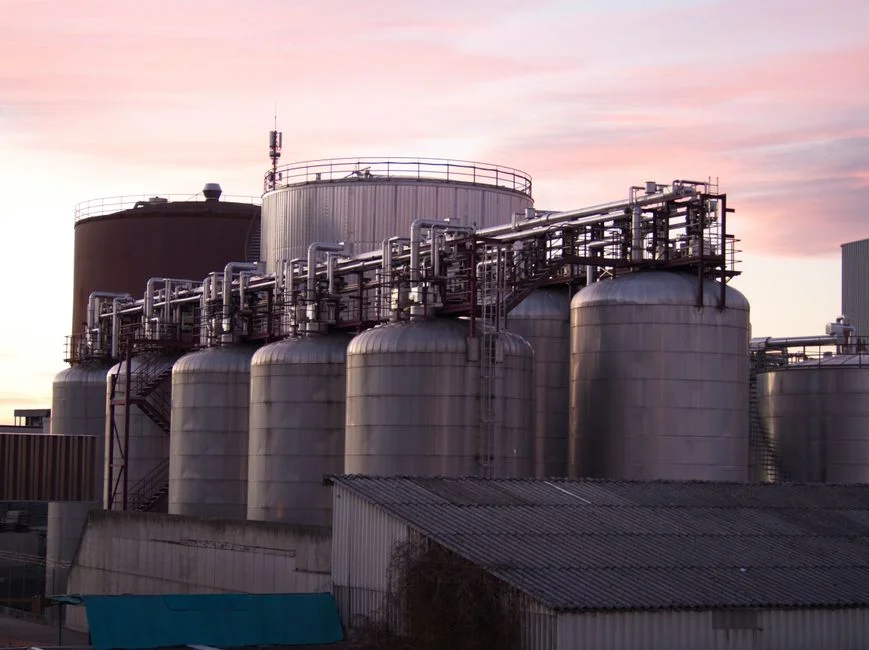
Six unit operations, in this order, cover the envelope above and produce effluent that simultaneously clears MoE 5.5 < pH < 9 and the tighter ZDHC Wastewater Quality Limits.
- Mechanical screening. A GX-series rotary mechanical bar screen with 2–5 mm bar spacing removes lint, fabric scraps, plastic strapping and packaging fibres. Skipping this step kills downstream pump impellers and fouls the DAF nozzle train within days — not months.
- Equalization and pH correction. A buffer tank with coarse-bubble aeration sized for 8–12 hours of hydraulic retention dampens batch peaks. pH is driven toward ~7 with a PLC-controlled automatic chemical dosing skid using NaOH and H₂SO₄; this is also where FeCl₃ or PAC can be staged if a coagulation-flocculation cell is added before the DAF. See the coagulant dosing system specifications guide for the selection math on pump head and tank sizing.
- Coagulation and DAF. The DAF, sized 4–300 m³/h, handles the bulk of the colloidal load. With PAC dosing at 50–150 mg/L and anionic PAM at 1–3 mg/L, the float removes >85% of TSS, most of the surfactant (MBAS) and a large fraction of the reactive-dye colour. The KICYN chemical regime (PAC + NaOH + PAM + soda ash + aeration) is a comparable baseline, but a properly designed DAF cell gives a tighter effluent and a drier float than a simple aerated equalization tank.
- Biological treatment. For ZDHC-aligned discharge at the smallest footprint, an integrated MBR membrane bioreactor is the default. Where surfactant is high and ragging is a risk, switch the membrane to a DF-series flat-sheet MBR module — flat-sheet geometry tolerates fouling far better than hollow-fibre in this service. A conventional SBR is acceptable for sites with steady flow and lower land pressure, but MBR delivers the tightest COD and the most defensible number on the MoE inspection sheet.
- Disinfection. A chlorine dioxide generator rated 50–20,000 g/h handles residual bacteria and supports downstream reuse. ClO₂ is preferred over chlorine where coloured effluent is present because it does not generate trihalomethane by-products.
- Sludge dewatering. A plate-and-frame filter press with 1–500 m² of filtration area brings DAF float and biological waste-activated sludge to roughly 30–35% dry solids, which is the practical floor for off-site landfill or incineration. The commissioning step-by-step for the upstream biological stage is laid out in the MBR installation and commissioning guide.
A properly tuned DAF + MBR train in this service regularly hits >90% COD removal (HydropureWater field data, 2026), which is the envelope needed to land inside ZDHC limits while still holding pH, temperature and MBAS within MoE ranges.
Cambodia MoE Discharge Limits vs ZDHC and Buyer-Brand Requirements
Meeting only the Cambodian MoE minimum is not enough if you ship to H&M, Inditex or Decathlon — those buyers require ZDHC-aligned discharge regardless of where the plant sits. The table below is the design envelope: the strictest applicable value wins.
| Parameter | Cambodia MoE general industrial textile guideline (cited 2026) | ZDHC Wastewater Quality Limits (2024 update) | Representative EU buyer-brand chemistry-restricted target |
|---|---|---|---|
| pH | 5.5–9 (laboratory standard range) | 6–9 | 6–9 |
| COD | ≤ 250 mg/L (typical industrial guideline) | ≤ 150 mg/L | ≤ 150 mg/L |
| BOD₅ | ≤ 50 mg/L | ≤ 30 mg/L | ≤ 30 mg/L |
| TSS | ≤ 50 mg/L | ≤ 15 mg/L | ≤ 15 mg/L |
| Total nitrogen | ≤ 20 mg/L | ≤ 15 mg/L | ≤ 10 mg/L (site-specific) |
| Total phosphorus | ≤ 4 mg/L | ≤ 2 mg/L | ≤ 1 mg/L (site-specific) |
| Colour | ≤ 100 Pt-Co | ≤ 50 Pt-Co (visual: not noticeable) | Not noticeable in receiving water |
| Surfactants (MBAS) | ≤ 5 mg/L | ≤ 2 mg/L | ≤ 2 mg/L |
| Temperature | ≤ 40 °C at discharge | ≤ 30 °C rise above ambient | Site-specific |
Where the buyer standard is silent on a parameter, the MoE limit is the binding design target. The second compliance lesson from the July 2026 KICYN action is procedural: MoE determines liability from confirmed laboratory exceedances, not on-site instrument readings, so 24-hour composite samplers, chain-of-custody logs and a 3-year retention policy for laboratory certificates are now standard practice (dgcambodia.net, 2026-07-28).
Equipment Selection Matrix for 50–500 m³/day Cambodian Textile Plants
Translate the process train above into a procurement-ready matrix. Three numbers drive each line: peak hydraulic load, peak COD, and whether the membrane will see high-surfactant ragging.
| Process step | HydropureWater product family | Model series | Capacity envelope | Key spec to verify |
|---|---|---|---|---|
| Mechanical screening | Rotary bar screen | GX series | 10–500 m³/h | Bar spacing 2–5 mm; material 304SS |
| pH / coagulant dosing | Automatic chemical dosing skid | PLC-controlled, multi-pump | 0–200 L/h per channel | Pump head, chemical compatibility (NaOH, H₂SO₄, PAC, PAM) |
| Coagulation / DAF | Dissolved air flotation | DAF line | 4–300 m³/h | Recycle ratio 20–30%; surface loading ≤ 10 m³/m²·h |
| Biological (compact) | Integrated MBR | MBR system | 10–2,000 m³/day per skid | MLSS 8,000–12,000 mg/L; flat-sheet preferred |
| Membrane element | Flat-sheet MBR module | DF series | 32–135 m³/day each (scale by parallel units) | PVDF, 0.1–0.2 µm; tolerance to high MBAS |
| Disinfection | Chlorine dioxide generator | ClO₂ generator | 50–20,000 g/h ClO₂ | Yield ≥ 90%; precursor feed ratio verified |
| Sludge dewatering | Plate-and-frame filter press | Manual / hydraulic | 1–500 m² filtration area | Cake DS target 30–35%; cloth material polyester |
Two selection rules of thumb. (1) When influent MBAS is regularly above 40–50 mg/L — common in detergent-heavy garment washing — pick the DF-series flat-sheet MBR over hollow-fibre; flat-sheet tolerates ragging and cleans back faster, which matters in a country where membrane cleaning chemicals are not always on the same truck. (2) Factory skid-mounting and FAT (factory acceptance testing) shorten the on-site install to 2–4 weeks in Cambodia, where specialist electrical and mechanical labour is scarce — confirm the supplier's skid scope before signing.
CapEx and OpEx Benchmarks for a Compliant 2026 Installation
Order-of-magnitude budgets for a turnkey DAF + MBR + filter-press system in the 100 m³/day band — using Chinese-engineered supply shipped into Southeast Asia — typically land in the low-to-mid five figures of USD per m³/day of installed treatment capacity, with the MBR membrane modules and the ClO₂ generator as the two largest single line items. OpEx is dominated by four drivers: coagulant consumption (PAC 50–150 mg/L plus PAM 1–3 mg/L per m³), pH-correction acid and caustic, electrical kWh per m³ for MBR aeration (typically 0.8–1.5 kWh/m³ at this scale), and sludge hauling from the filter-press cake. Filter-cloth replacement every 12–18 months and ClO₂ precursor chemicals are smaller but real lines.
The savings side of the ledger is concrete: reusing the final-rinse stream after DAF and MBR polishing gives a 10–30% freshwater reduction with no extra unit operations (Chakraborty & Ahmad; Çay et al., in Business Strategy & Development, doi:10.1002/bsd2.324). On a 100 m³/day plant that pays municipal water rates in USD, that is enough to fund the chemical budget inside two to three years. Set against that, a single MoE stop-order, a buyer-audit failure or a ZDHC non-conformance typically dwarfs a full year of OpEx savings — which is why the conservative CapEx number above almost always beats the cheapest quote once compliance risk is priced in.
Frequently Asked Questions
What does the July 2026 KICYN enforcement event mean for other Cambodian garment-washing plants?
It confirms that the MoE inspects permit conditions, takes laboratory samples and treats confirmed exceedances as the legal basis for action — not on-site instrument readings. The cited laboratory range for pH is 5.5 < pH < 9, and the inspected plant was using PAC, NaOH, PAM, soda ash and aeration (dgcambodia.net, 2026-07-28). Any Cambodian facility that cannot reproduce those logs and lab certificates on demand is exposed to the same action.
Can a properly sized DAF + MBR train meet both MoE and ZDHC discharge limits at 100 m³/day?
Yes. With DAF for >85% TSS, surfactant and colour removal, followed by an MBR operating at 8,000–12,000 mg/L MLSS, the train regularly delivers >90% COD removal and a polished effluent inside ZDHC Wastewater Quality Limits and the MoE 5.5 < pH < 9 range (HydropureWater field data, 2026). The catch is upstream equalization — without 8–12 hours of buffer the MBR cannot hold its numbers during batch peaks.
How much rinse water can a Cambodian garment-washing plant realistically reuse?
Documented textile-sector reuse of the final-rinse stream runs 10–30% of total freshwater demand without additional capital cost, by routing the clarified, disinfected effluent from the DAF + MBR train back into the first rinse of the next batch (Chakraborty & Ahmad; Çay et al., in Business Strategy & Development, doi:10.1002/bsd2.324). On a 100 m³/day plant that returns the water line item to the budget in 2–3 years.
What records should a plant keep to defend itself in an MoE inspection?
At minimum: 24-hour composite sampler logs with chain-of-custody, accredited laboratory certificates covering COD, BOD₅, TSS, pH, colour, MBAS, total nitrogen and total phosphorus, calibration records for the on-site pH and conductivity meters, and chemical dosing logs showing PAC, PAM, NaOH/H₂SO₄ and ClO₂ consumption per shift. The MoE treats confirmed laboratory exceedances — not on-site readings — as the legal basis for action, so this paperwork is the actual defense (dgcambodia.net, 2026-07-28).