
Why Textile Wastewater Is a Priority Compliance Risk in Malaysia
Textile wastewater treatment in Malaysia sits at the intersection of two accelerating pressures: tightening Department of Environment (DOE) discharge limits and rising industrial water demand. The textile sector generates approximately 22% of Malaysia's total industrial wastewater — a figure reported in the 2025 Universiti Malaysia Pahang review by Masiren et al., attributing the share primarily to dyeing and finishing processes (source: S4, Masiren et al., 2025-12). For a mid-sized Malaysian dyehouse processing 800-1,500 m³ of effluent per day, that share translates into a permit, a monitoring program, and a sludge-handling obligation that cannot be deferred.
The international picture reinforces the urgency. The World Bank estimates that 17-20% of global industrial wastewater originates from textile dyeing and finishing (source: S3, Ding et al., as cited in bibliometric review). Malaysia is anchored inside that envelope, and the local industry is growing on the back of e-commerce demand, government support, and a shift toward higher-value technical textiles (source: S4, Masiren et al., 2025-12).
Dyeing and finishing — not weaving, knitting, or cutting — are the water-intensive, high-pollution stages. Reactive, disperse, and vat dyes carry heavy metal ions and salt loads that resist conventional biological degradation. The DOE has responded by introducing progressively stricter dye discharge regulations over the past decade (source: S4, citing Zahuri et al., 2023), and a 400% projected increase in Malaysian industrial water demand by 2050 (source: S4, citing Nahar et al., 2024) means freshwater tariffs and intake restrictions are tightening in parallel. For any plant owner evaluating 2026 DOE compliance requirements for Malaysian factories, textile effluent is now a board-level topic, not a maintenance ticket.
Malaysia DOE 2026 Discharge Limits Every Textile Plant Must Meet
Malaysia's Industrial Effluent Regulations 2009 (as amended) under the Environmental Quality Act 1974 set discharge limits by catchment sensitivity, with Standard A for the most sensitive receiving waters and Standard B for the rest. The table below lists the parameters that most often drive textile plant compliance failures, alongside the ADMI color scale that DOE inspectors increasingly use as a first-pass check on dyeing operations.
| Parameter | Unit | DOE Standard B (typical) | Notes for textile plants |
|---|---|---|---|
| pH | — | 5.5 – 9.0 | Reactive dyeing baths drift alkaline; equalization is mandatory |
| Temperature | °C | < 40 | Hot rinses from printing must be cooled in equalization |
| COD | mg/L | ≤ 200 (B); ≤ 100 (A) | Untreated reactive dye baths often exceed 1,500 mg/L COD |
| BOD₅ | mg/L | ≤ 50 (B); ≤ 20 (A) | Surfactants and starch sizes drive BOD |
| TSS | mg/L | ≤ 100 (B); ≤ 50 (A) | Fiber lint and precipitated color bodies |
| Oil & grease | mg/L | ≤ 10 | Lubricants from knitting, softeners |
| Color | ADMI / Pt-Co | ≤ 200 ADMI (typical B enforcement) | Visible at 50 ADMI; reactive dyes are persistent |
| Sulfide | mg/L | ≤ 0.5 | Sulfur dye reduction baths |
| Chromium, total | mg/L | ≤ 1.0 | Acid dyes, mordants |
| Chromium, hexavalent | mg/L | ≤ 0.05 | Hard limit; dedicated reduction step if present |
| Mercury (Hg) | mg/L | ≤ 0.05 | Historical dye catalysts |
| Arsenic (As) | mg/L | ≤ 0.10 | Pigment residues |
| Lead (Pb) | mg/L | ≤ 0.50 | Some metal-complex dyes |
Enforcement in 2026 increasingly targets residual color and total dissolved solids, even where standard parameters pass, because of visible community complaints and downstream water-treatment plant stress. Plants discharging to municipal sewer networks must additionally satisfy Indah Water Konsortium (or the local sewerage operator) pre-treatment limits, which often run tighter than DOE Standard B on heavy metals and ammoniacal nitrogen. For context, Malaysia's piped-water coverage reached 100% urban and 93% rural by 2020 (source: S4, Masiren et al., 2025-12) — the receiving water bodies downstream of any noncompliant plant serve a near-fully-serviced population, which raises the political cost of any discharge incident.
What's Actually in Textile Effluent — The Pollutant Chemistry
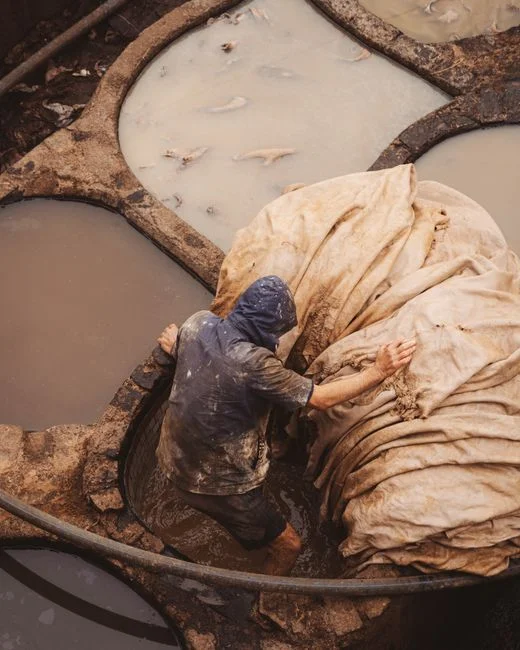
Textile effluent is a mixed chemical stream, not a single pollutant. The bibliometric review of 5,147 publications cataloged the recurring load: acids and alkalis from scouring and mercerizing, oxidizing bleaches, colorants (reactive, disperse, vat, and direct dyes), EDTA chelating agents, surfactants and wetting agents, and heavy-metal ions including Hg, As, and Pb (source: S3, citing Paul et al.). The reactive dye class is the most operationally painful because the chromophore forms a covalent bond with the cellulose fiber during dyeing; the unfixed fraction hydrolyzes in the bath and leaves the plant as a strongly colored, biologically recalcitrant dissolved load.
Untreated textile effluent typically carries 500-2,000 mg/L COD, 100-400 mg/L BOD₅, several hundred mg/L TSS, and 50-150 g/L total dissolved solids from the salt (NaCl or Na₂SO₄) used to push reactive dye fixation (source: S4, Masiren et al., 2025-12). Color is the parameter that triggers community complaints first — visible at ADMI values as low as 50 and intensifying downstream of the outfall. Salt load is increasingly the limiting parameter for reuse, because reverse osmosis recovery is bounded by osmotic pressure and concentrate disposal cost. The combination of persistent color, high COD, and a salt signature is what forces the process train beyond a simple biological plant.
The 2026 Process Train: From DAF Pretreatment to RO Water Reuse
A compliant 2026 process train for a Malaysian textile plant stacks six unit operations in sequence. Each step has a defined removal job, and the gaps between steps are where most underperforming plants lose compliance margin.
- Headworks and equalization. A rotary bar screen for textile headworks removes lint, fibers, and packaging debris before an equalization basin dampens pH (often swinging 9-12 from reactive dye rinses) and peak flow from batch dyeing cycles.
- Dissolved air flotation (DAF). A DAF system for textile effluent pretreatment floats out suspended solids, emulsified surfactants, and a meaningful fraction of the colloidal color bodies before they reach the biological stage, where they would otherwise add to sludge load.
- Chemical dosing. Automatic coagulant and pH dosing using PAC or alum and a polymer flocculant knocks down the remaining colloidal color and TSS, and corrects pH to the band the biological stage requires.
- Biological treatment. Conventional activated sludge or an A/O configuration handles the BOD/COD load. An MBR membrane bioreactor for textile wastewater is the higher-performance option: the bibliometric review reports dye removal above 87% for MBR, with low sludge age and NF post-treatment required to reach stricter reuse targets (source: S3, citing Brik et al.).
- Polishing and reuse. A sand or multi-media filter protects downstream membranes, and an industrial RO system for textile water reuse delivers the recovery that closes the loop. Pilot and industrial NF/RO data report dye and salt recovery above 90% for RO (source: S3, citing Marcucci et al.) and dye removal above 97% with nanofiltration (source: S3, citing Alardhi et al.).
- Sludge handling. A filter press for textile sludge dewatering drops chemical and biological sludge to a 25-35% dry cake for off-site disposal.
| Unit operation | Target pollutant | Typical removal / performance | Source |
|---|---|---|---|
| Rotary bar screen | Lint, fibers, debris | > 90% of > 2 mm solids | HydropureWater field data, 2026 |
| Equalization basin | pH, flow, temperature swings | pH 6-8.5, T < 38 °C out | S4, Masiren et al., 2025-12 |
| DAF | Emulsified oil, TSS, colloidal color | 60-80% TSS, 40-60% color | HydropureWater field data, 2026 |
| Biological (A/O) | Soluble COD, BOD | 70-85% COD, 90-95% BOD | HydropureWater field data, 2026 |
| MBR | Dye, residual COD, TSS | > 87% dye, < 5 mg/L TSS | S3, Brik et al. |
| NF / RO | Color, salt, residual organics | > 90% dye+salt (RO), > 97% dye (NF) | S3, Marcucci et al.; Alardhi et al. |
The sequencing matters: skipping equalization destabilizes the DAF, omitting DAF overloads the biological stage with surfactants, and putting RO directly after biological effluent fouls the membranes within weeks. Each unit earns its footprint.
Conventional vs. MBR+RO: Which Configuration Fits a 2026 Malaysian Plant?
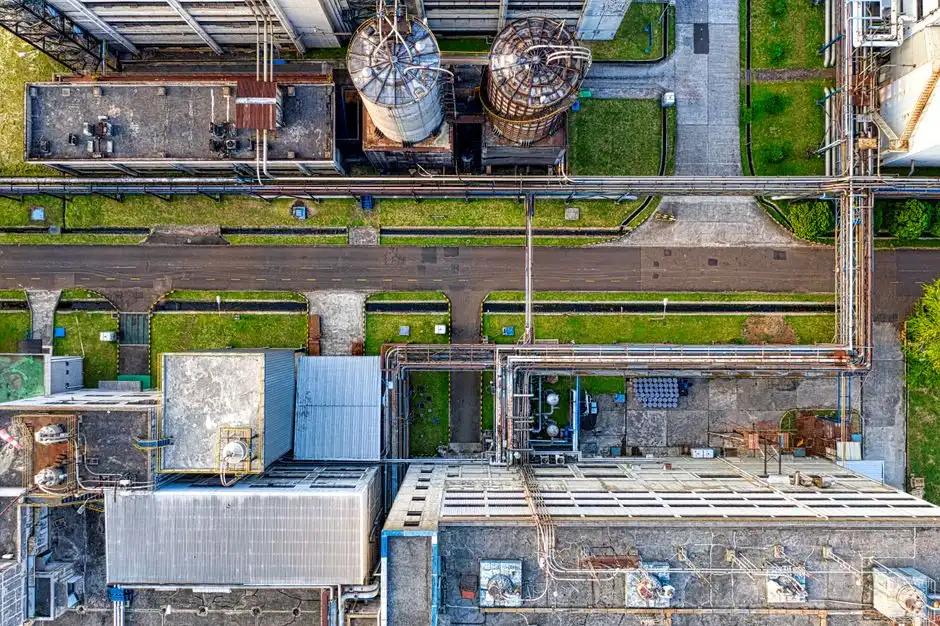
The right configuration is driven by what the plant needs to do with its water after treatment — discharge to drain, or reuse in the dyehouse. The two configurations diverge sharply on this point.
| Criterion | Conventional AS + clarifier + sand filter | MBR + RO |
|---|---|---|
| Effluent quality | Meets DOE Standard B; struggles on residual color | Meets reuse spec; typically < 5 mg/L COD, < 50 mg/L TDS, near-zero color |
| Footprint | Larger clarifier + sludge handling area | 40-60% smaller biological footprint due to high MLSS |
| Reuse potential | None — sand filter polish only | 60-80% freshwater offset at 70% RO recovery |
| OPEX driver | Sludge disposal, polymer | RO energy (high-pressure pump), membrane replacement every 3-5 years |
| CAPEX intensity | Lower (1.0x baseline) | Higher (1.8-2.5x baseline) due to membrane skids and RO housing |
| Operator skill | Standard wastewater operations | Higher — membrane cleaning, CIP, integrity testing |
The decision tree is straightforward. If the plant holds a discharge-only permit, operates in short dye cycles, and faces tight CAPEX constraints, a conventional activated sludge plant with DAF pretreatment is the right fit — and meets DOE Standard B reliably. If the plant targets ESG reporting, has 500+ m³/day of effluent, operates in a water-stressed catchment, or wants to insulate itself from industrial water tariff escalation, MBR + RO is the only configuration that converts the wastewater stream from a compliance cost into a freshwater asset. Malaysia ranks among the most-cited countries for textile wastewater research (source: S3), which means local engineering firms and university research groups are credible implementation partners for either configuration. For plants balancing discharge volume against reuse ambition, our industrial wastewater engineering specs for Southeast Asian factories walks through the same decision logic in a different regulatory context.
2026 Cost Benchmarks and the Water-Reuse Payback Case
Order-of-magnitude numbers — not quotes — for a 500-2,000 m³/day Malaysian textile WWTP in 2026. Project-specific numbers will vary with influent load, civil work, and discharge permit, but the ratios between configurations are stable.
| Configuration | Indicative CAPEX (USD/m³ capacity) | Indicative OPEX (USD/m³ treated) | Freshwater offset |
|---|---|---|---|
| DAF + conventional biological | 180 – 350 | 0.25 – 0.40 | 0% |
| DAF + MBR | 350 – 600 | 0.35 – 0.55 | 0% (no RO) |
| DAF + MBR + RO (reuse) | 600 – 1,100 | 0.45 – 0.80 | 60-80% |
The reuse case closes quickly on freshwater savings alone. A 1,000 m³/day plant running at 70% RO recovery saves roughly 700 m³/day of purchased industrial water — about 255,000 m³/year. Against Malaysian industrial water tariffs in the USD 0.30-0.80/m³ band, that is USD 75,000-200,000/year in direct water-cost avoidance, before factoring in discharge fees, ESG-linked incentive programs, and the avoided cost of freshwater supply interruptions during dry-season rationing. RO concentrate disposal and membrane replacement (typically every 3-5 years) are the offsetting OPEX items.
The macro signal is hard to argue with: industrial water demand in Malaysia is projected to grow 400% by 2050 (source: S4, citing Nahar et al., 2024). For a textile plant signing a 10-year water-supply contract in 2026, the question is not whether freshwater will become more expensive and less reliable — it is when. Plants that lock in 60-80% reuse today are buying optionality against tariff escalation, regulatory tightening, and ESG disclosure requirements that are already landing in the listed-company supply chains. For smaller or modular installations, package wastewater treatment plants in Malaysia show the cost-compressed path for sub-500 m³/day operations.
Frequently Asked Questions
What are the current DOE Malaysia effluent limits for textile wastewater in 2026?
DOE Standard B limits for textile effluent typically include pH 5.5-9.0, temperature below 40 °C, COD ≤ 200 mg/L, BOD₅ ≤ 50 mg/L, TSS ≤ 100 mg/L, oil and grease ≤ 10 mg/L, sulfide ≤ 0.5 mg/L, and color ≤ 200 ADMI, with tighter Standard A values applied to sensitive catchments and stricter color/salt enforcement emerging in 2026 (per Industrial Effluent Regulations 2009, as amended).
Which treatment process achieves the best dye removal for textile wastewater?
Reverse osmosis and nanofiltration deliver the highest dye removal, with pilot and industrial studies reporting above 90% dye and salt recovery for RO and above 97% dye removal for NF (source: S3, Marcucci et al.; Alardhi et al.). MBR alone achieves above 87% dye removal but typically requires NF post-treatment to reach reuse-quality targets (source: S3, Brik et al.).
How much does a textile wastewater treatment plant cost in Malaysia?
Indicative 2026 CAPEX for a 500-2,000 m³/day Malaysian textile WWTP runs USD 180-350/m³ for DAF plus conventional biological, USD 350-600/m³ for DAF plus MBR, and USD 600-1,100/m³ for a full DAF plus MBR plus RO reuse train, with OPEX in the USD 0.25-0.80/m³ treated range depending on configuration (HydropureWater project benchmarks, 2026).
Can textile wastewater be reused in the dyehouse?
Yes. A DAF plus MBR plus RO train can deliver 60-80% freshwater offset, with RO recovery typically set at 65-75% to balance membrane life against reuse volume. A 1,000 m³/day plant at 70% recovery saves roughly 255,000 m³/year of purchased industrial water against Malaysian industrial tariffs.