
Why Grand Forks Food and Beverage Plants Are Rethinking Primary Clarification in 2026
F&B wastewater from dairy, brewing, grain processing, and meat operations carries FOG, TSS, and BOD from processing, cleaning, and CIP cycles that drive surcharges and compliance risk when discharged untreated. In 2026, three pressures have converged for Grand Forks operators: polymer and electricity costs are running 15–25% above the 2022–2024 baseline, EPA and state-level FOG limits continue tightening, and City of Grand Forks pretreatment surcharges now apply on a stricter BOD/TSS schedule than three years ago. Sub-zero winter temperatures from November through March along the Red River basin raise influent viscosity, slow settling kinetics, and threaten open-basin overflows — factors that directly differentiate flotation from gravity separation. The decision is no longer academic: plants must choose between dissolved air flotation (microbubbles of 30–50 µm lifting floatables per Clearwater/SigmaDAF) and a lamella clarifier (inclined plates settling heavier inorganics at 20–40 m/h surface loading) as the primary step, with winter operability and 2026 OPEX as the deciding factors. Most Grand Forks F&B lines in 2026 should put DAF first and use a clarifier as polish — a reversal of the gravity-first default that older vendor pages still recommend.
How a DAF System Actually Removes FOG and TSS
DAF systems operate by saturating a side-stream with pressurized air and releasing it through needle valves at atmospheric pressure, generating a cloud of 30–50 µm microbubbles. Those bubbles attach to chemically flocculated particles and lift them to the surface, where paddle skimmers scrape the float layer into a sludge hopper. Heavier settleables drop to a bottom collection zone and are augered out separately. Chemical conditioning is mandatory: a coagulant (typically ferric chloride or PAC at 50–150 mg/L) destabilizes emulsified oils, and a flocculant polymer (1–5 mg/L) builds the floc size that microbubbles can nucleate on — pair the DAF with an automatic chemical dosing skid to keep dose proportional to flow. The HydropureWater DAF system covers 4–300 m³/h across 13 standard models with micro-bubble release and automatic skimming, suited to both single-line dairies and multi-stream brewers. Because flotation relies on bubble-particle attachment rather than density differential, it removes emulsified FOG and low-density flocs that a clarifier cannot capture, and it does so with hydraulic retention under 30 minutes versus 2–4 hours in a conventional basin.
How a Clarifier (Conventional and Lamella) Removes Solids
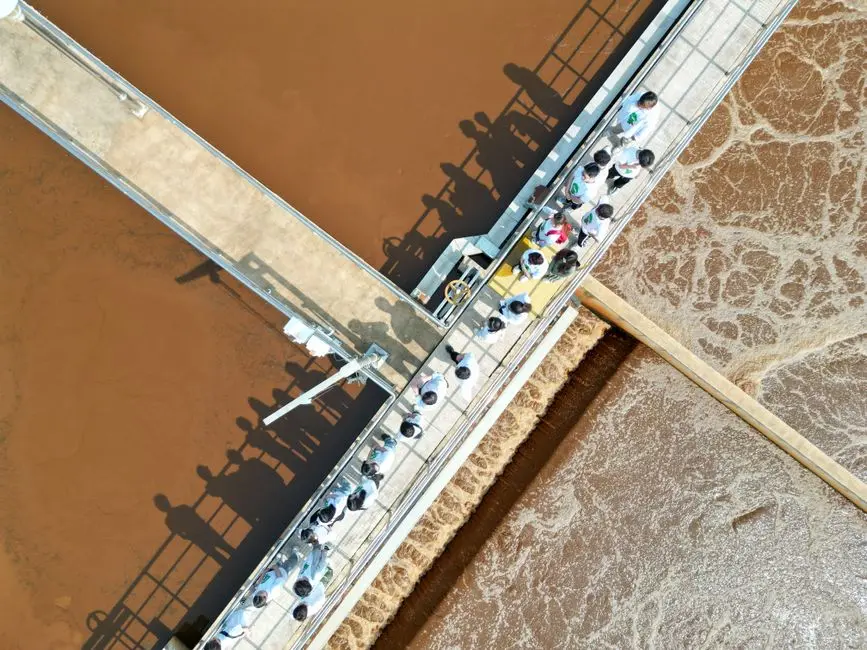
Conventional gravity clarifiers rely on quiescent settling at surface loading rates of ~1–2 m/h, which requires a large footprint and long retention times. A lamella clarifier stacks inclined plates at 55–60° inside a compact tank, multiplying the effective settling area and pushing surface loading to 20–40 m/h; the same job fits in roughly a quarter of the footprint (per HydropureWater high-efficiency sedimentation tank specifications). Lamella designs cut polymer consumption by up to 30% versus conventional basins because the shortened settling path reduces the floc strength required, and biogas-ready sludge from a well-conditioned lamella clarifier can be digested to recover methane. The HydropureWater lamella clarifier handles grain washwater, produce rinse, and other low-FOG streams efficiently, but it struggles with emulsified oils, light flocs, and low-density particles — these pass through and trip downstream BOD alarms, forcing the operator to push coagulant dose or accept a non-compliant effluent.
Side-by-Side: DAF vs Clarifier for F&B Wastewater
The table below summarizes the head-to-head parameters a Grand Forks procurement engineer should weigh when specifying primary solids removal. DAF typically removes 80–95% FOG and 70–90% TSS on F&B streams; a lamella clarifier typically removes 30–60% FOG and 50–70% TSS, with FOG performance limited to naturally buoyant material. Footprint favors whichever technology matches the dominant contaminant: lamella is compact for settleable inorganics, DAF is compact for FOG-heavy streams of equivalent pollutant load. Cold-climate tolerance is where DAF pulls ahead — enclosed skids tolerate sub-zero operation, while open lamella basins risk ice formation on overflow weirs and density-current short-circuiting. OPEX drivers differ by line item: DAF spends on compressed air, polymer, and skimmer wear; clarifiers spend on polymer, sludge pumping, and periodic basin cleaning.
| Parameter | DAF | Lamella Clarifier |
|---|---|---|
| Mechanism | Microbubble flotation (30–50 µm) | Inclined-plate gravity settling |
| Typical FOG removal | 80–95% | 30–60% (floatables only) |
| Typical TSS removal | 70–90% | 50–70% (settleables) |
| Surface/hydraulic loading | 5–25 m/h depending on model | 20–40 m/h |
| Footprint at 50 m³/h | ~8–12 m² enclosed skid | ~4–6 m² plus sludge zone |
| Cold-climate tolerance | Enclosed, works below 0°C if insulated | Open basin; ice and short-circuiting risk |
| Main OPEX drivers | Compressed air, polymer, skimmer wear | Polymer, sludge pumping, basin cleaning |
| Best-fit stream | FOG-heavy, emulsified, low-density solids | Settleable inorganics, low-FOG |
Grand Forks Climate, Discharge, and 2026 Compliance Considerations
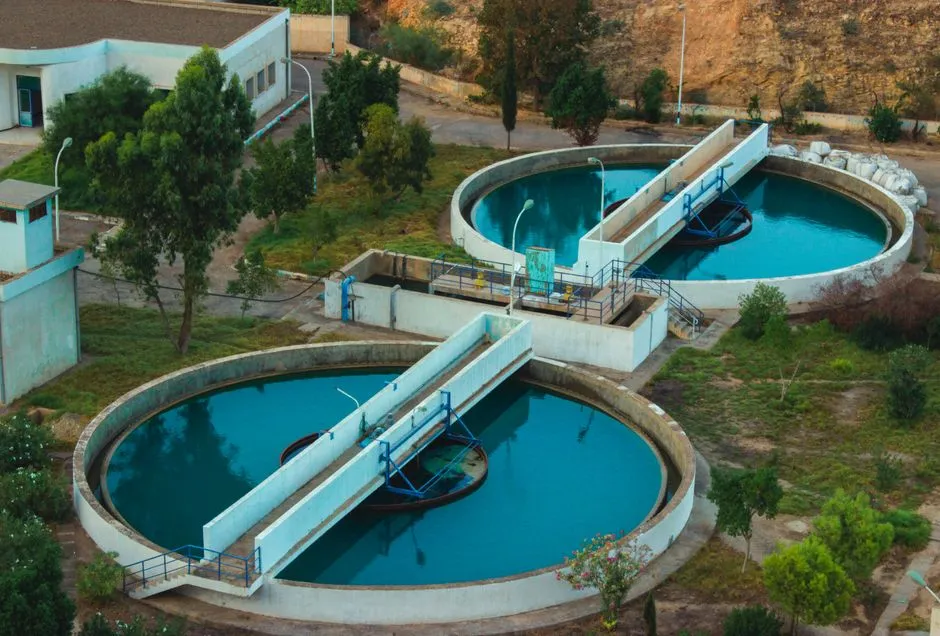
Grand Forks wastewater is regulated by the City of Grand Forks Water Treatment Plant and the North Dakota Department of Environmental Quality; F&B discharges must meet local pretreatment limits on FOG, TSS, and BOD before reaching the Red River basin. Cold inlet temperatures from November through March — often 1–4°C in the collection system — raise water viscosity by 20–35% versus summer baseline, which slows Stokes-law settling in a clarifier and risks lamella overflow freezing during extreme cold snaps. DAF microbubble release is less affected by viscosity because the driving force is bubble buoyancy, not differential settling, and enclosed DAF skids such as the COMPACT DAF plug-and-play design (≤66 GPM single skid per Clearwater/SigmaDAF) tolerate the same winter conditions without process drift. Federal EPA and state-level FOG limits continue tightening in 2026, so a primary step that misses FOG pushes the burden to biological treatment downstream and inflates aeration OPEX — a cost that compounds in cold weather when biomass activity is already suppressed. For a broader engineering and cost framing that applies across US F&B plants, see the F&B wastewater engineering guide for 2026.
Decision Framework: Which One Should a Grand Forks F&B Plant Choose in 2026?
Influent data dictates the selection of primary treatment technology. Choose DAF if FOG exceeds ~200 mg/L, TSS exceeds ~1,000 mg/L, emulsified oils are present, or the stream originates from fryers, dairy separation, brewing, or meat rendering. Choose a lamella clarifier if the stream is low-FOG, dominated by settleable inorganics (grain washwater, produce rinse, starch settling), flow is above 50 m³/h, and capital is the binding constraint. Consider DAF followed by lamella polish when FOG and TSS are both high and effluent BOD targets are tight enough that biological treatment alone cannot compensate. Pair either technology with an automatic chemical dosing skid and downstream sludge dewatering — a plate-frame filter press produces a cake dry enough to landfill or send to anaerobic digestion, and the biogas-ready sludge from a well-conditioned DAF or lamella can be co-digested for methane recovery. The table below restates the rules in extractable form for procurement.
| If your influent looks like… | Primary step | Why |
|---|---|---|
| FOG > 200 mg/L, emulsified oils, TSS > 1,000 mg/L | DAF (4–300 m³/h) | Floatables dominate; microbubbles outperform settling |
| Low FOG, mostly settleable inorganics, flow > 50 m³/h | Lamella clarifier | Compact, 20–40 m/h loading, lower chemical use |
| High FOG + high TSS + tight BOD target | DAF primary, lamella polish | Sequenced removal; protects downstream biology |
| Cold inlet < 5°C, winter operation mandatory | Enclosed DAF skid | Insulated, microbubble release stable below freezing |
For a parallel decision matrix applied to a different industry and climate, the DAF vs clarifier comparison for a different industry shows how the same parameter logic translates to mining wastewater in a warmer region.
Frequently Asked Questions
Is DAF worth the higher CAPEX over a clarifier for a small Grand Forks dairy?
Usually yes above ~10 m³/h. Polymer consumption, sludge hauling, and avoided BOD surcharges dominate lifecycle cost in F&B, and a DAF in the 4–20 m³/h range typically pays back the CAPEX delta inside 18–30 months on a dairy or brewing stream.
Can a lamella clarifier handle FOG?
Partially. A lamella clarifier removes floatables that rise naturally on their own, but it does not capture emulsified oils or low-density flocs without heavy coagulant chemistry — and the chemistry often costs more than running a DAF in the first place.
How cold is too cold for DAF in Grand Forks?
There is no hard cutoff if the DAF is enclosed and insulated. Microbubble release is governed by pressure differential rather than viscosity, so performance at –20°C is close to performance at +20°C provided the saturator and piping stay above freezing. Lamella overflow weirs do not get the same protection.
What flow rate justifies DAF?
DAF is viable from pilot skids around 5 m³/h upward. The HydropureWater DAF line covers 4–300 m³/h across 13 standard models, so a Grand Forks plant can size to its actual peak hourly flow rather than buy oversized conventional basin capacity.
Do I still need biological treatment after DAF or clarifier?
Yes. Both are primary steps. DAF typically removes 50–70% of the influent BOD load and a lamella clarifier 30–50%, so MBR or activated sludge is still required to hit discharge limits — the primary step just determines how hard that biology has to work.