Why Chemical Wastewater in Calhoun Is a Different Selection Problem
Calhoun, GA sits inside the Gordon–Bartow–Floyd specialty-chemicals corridor, where resin, coating, and adhesive plants generate streams that look nothing like the food-processing or municipal sludge that most DAF and clarifier marketing material is built around. A typical shift delivers a moving mix of emulsified oils, solvents, surfactants, catalyst fines, and inorganic salts, often with the same drain switching pH from 2 to 11 between batches. That variability — not flow rate — is what breaks the usual DAF or clarifier sizing rules.
Three site-level facts drive the decision. First, pH swings of 2–11 destabilize conventional floc, which compresses the design window for gravity settling and pushes the choice toward dissolved air flotation chemical plant configurations or hybrid trains. Second, discharge is to the Coosa River basin under GA EPD's approved Industrial Pretreatment Program, with categorical standards from EPA 40 CFR 430 (pulp/paper), 433 (metal finishing), and 469 (organic chemicals, plastics, and rubber) setting technology-based limits on TSS, O&G, and COD. Third, space is tight on most Calhoun lots, so a packaged DAF or lamella clarifier often replaces a civil-works clarifier in retrofit plans.
For the rest of this article, I'll use the term "primary separation" — the unit operation upstream of biological polishing or RO — rather than "pretreatment," which GA EPD uses for the regulatory program. The distinction matters when you are defending equipment selection in front of a pretreatment coordinator.
How DAF and Clarifiers Actually Separate Contaminants
The two technologies separate on opposite physical principles, and that drives every downstream trade-off. A DAF saturates a recycle stream with air at 60–80 psig, then releases the pressure inside the flotation tank. Micobubbles in the 10–80 µm range nucleate on oil droplets, floc, and colloids, lifting them to the surface as a float layer that an automatic skimmer removes into a hopper (per Ecologix 2026 update). The clarifier works on Stokes' law: flocculated particles settle under a quiescent upflow zone and are raked to a central sludge hopper, with hydraulic retention typically 2–4 hours.
Clarifier performance is highly sensitive to floc density. Light, oily, or chemically altered floc will not settle within the design retention time and will be lost over the effluent weir — that is the single most common failure mode in chemical plants running a single clarifier on a mixed stream. DAF tolerates a much wider floc-density range and a faster hydraulic throughput (5–25 m/h surface loading versus 1–3 m/h for a conventional clarifier), but the air-saturation system, recycle pump, and skimmer add mechanical complexity rated moderate by Ecologix (2026).
Two practical consequences. DAF can be turned over in 15–20 minutes of true retention, which makes it responsive to batch swings. A clarifier cannot — its 2–4 hour retention means a pH or surfactant upset will pass through before the operator can react, and the sludge bed will absorb the shock.
DAF vs Clarifier: Head-to-Head Comparison
The matrix below is the artifact most procurement managers will lift into a slide. All removal-efficiency benchmarks are from Ecologix's 2026 industrial selection guide, where a food-processing DAF reference stream hit 95% oil/grease removal versus 70% for a clarifier on the same water, and a mining clarifier reference hit 90% TSS reduction on heavy sediment.
| Parameter | Dissolved Air Flotation (DAF) | Gravity / Lamella Clarifier |
|---|---|---|
| Best-fit influent | FOG 50–5,000 mg/L, emulsified organics, surfactants, light colloidal floc | TSS 500–10,000 mg/L, heavy inorganic settleables, low oil |
| Oil & grease removal | ~95% (Ecologix 2026 reference) | ~70% (Ecologix 2026 reference) |
| TSS removal | 80–90% | 85–90% on a settleable stream |
| Soluble COD removal | 30–60% (coadsorption onto floc) | < 15% |
| Surface loading / HRT | 5–25 m/h, 15–30 min retention | 1–3 m/h conventional; 20–40 m/h lamella; 2–4 h HRT |
| Footprint at equal flow | ~30–50% of a conventional clarifier | Larger; lamella recovers ~60% of the area |
| Polymer demand | 5–30 mg/L | 3–15 mg/L |
| Key OPEX drivers | Compressed air, saturator pump, polymer, float handling, skimmer maintenance | Sludge pumping, rake torque, polymer, periodic descaling |
| CAPEX (packaged, 2026) | $40,000–$450,000 depending on flow | $25,000–$200,000 packaged lamella; $150,000–$1,000,000+ concrete |
| Operator skill | Daily skimmer / pressure checks | Sludge-bed management; mechanically simpler |
| Typical failure mode | Saturator fouling, excessive polymer carryover | Floc carryover on light or oily streams |
The short version: DAF is the right tool when oil, emulsions, or surfactants are in the water. Clarifier — especially a lamella clarifier industrial wastewater — is the right tool when the stream is heavy, particulate, and predictable.
Which Technology Fits Your Chemical Sub-Stream
The matrix only matters when it is applied to a real sub-stream. Five cases cover most Calhoun chemical plants.
Oleochemicals, plasticizers, surfactants, and coatings washwater. DAF-first, without exception. Emulsified oils defeat settling, and the Ecologix 2026 reference of 95% oil removal on a high-FOG stream only holds for flotation. A standalone clarifier on this stream will produce a stable foam blanket on the surface and chronic O&G excursions. A packaged DAF system sized for the peak shift flow is the lowest-risk spec.
Heavy inorganic streams — pigment slurries, catalyst fines, lime-stabilized brine. A high-efficiency lamella clarifier, optionally with pH adjustment to enhance floc density. Lamella surface loadings of 20–40 m/h let you hold the same flow in roughly 40% of the footprint of a conventional clarifier, which is the deciding factor on most Calhoun lots.
Mixed streams (the most common case). DAF primary to strip FOG and floatable colloids, then a lamella clarifier for the particulate residual before biological polishing or RO. This is the configuration most 2026 retrofits in the corridor are converging on, and it is the same logic the DAF-vs-clarifier guide for heavy-solids streams applies to a different influent.
Surfactant-laden streams (> 200 mg/L LAS). DAF with coagulant dosing is the only realistic surfactant wastewater treatment option. Without coagulation, even a well-designed DAF will pass a stable foam blanket; the LAS strips into the float, where it concentrates rather than disappears.
Batch plants with intermittent discharge. A mobile DAF delivered and brought online within a single day (per WesTech's mobile DAF specification) is a lower-risk option than a permanent clarifier sized for peak flow. It also works as a pilot while a permanent system is being engineered — see the footprint data in the cost section below.
Calhoun, GA Regulatory and Site Constraints
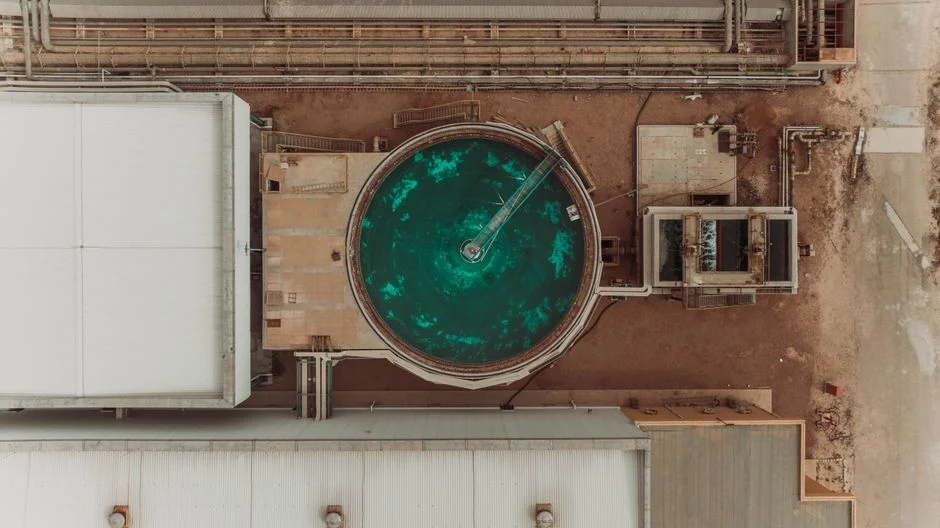
The chemistry decides the technology, but the GA EPD permit and the Coosa basin discharge rules decide the timeline. GA EPD administers an approved Industrial Pretreatment Program that covers the Calhoun service area, and categorical standards under EPA 40 CFR 430 (pulp/paper), 433 (metal finishing), and 469 (organic chemicals, plastics, and rubber) frequently set technology-based limits on the primary separation step before biological treatment. The plant's IPP permit and the receiving POTW's local limits then layer site-specific ceilings on top of those categorical numbers.
Typical local ceilings to design against: TSS 30–50 mg/L daily max, O&G 10–25 mg/L, COD 100–250 mg/L, pH 6.0–9.0. The exact values come from the permit — never assume them from a generic EPA table. When O&G < 15 mg/L is the binding limit, DAF becomes effectively mandatory. When TSS < 30 mg/L is the binding limit on a heavy particulate stream, a lamella clarifier with polymer optimization is usually the cheaper path to compliance.
Float and sludge handling is a Georgia-specific issue. DAF float above ~3% dry solids is typically classified as a hazardous waste if it contains listed solvents under RCRA; clarifier sludge follows Part 503 / RCRA Subtitle D rules. This drives the polymer dose, the float thickening step, and the disposal cost line that often decides a CAPEX case. On tight lots, a packaged DAF or lamella clarifier is the only practical path; a new concrete clarifier triggers civil works and a longer GA EPD permit review.
2026 Cost, Footprint, and Automation Comparison
Indicative 2026 packaged CAPEX (skid, tank, controls, PLC): DAF 4–50 m³/h in the $35,000–$180,000 band, 50–300 m³/h in the $180,000–$450,000 band. Packaged steel lamella clarifier runs $25,000–$200,000. A new concrete clarifier typically lands at $150,000–$1,000,000+ once civil works, excavation, and rake mechanisms are added — that is why most Calhoun retrofits are selecting against the packaged options.
OPEX benchmarks per cubic meter treated: DAF polymer 5–30 mg/L plus 0.08–0.15 kWh/m³ for the saturator pump; clarifier polymer 3–15 mg/L plus 0.01–0.03 kWh/m³ for the rake. Total DAF OPEX on the same stream is typically 1.4–2.0× clarifier OPEX — but the DAF is what gets you under a 15 mg/L O&G ceiling that a clarifier will not meet. The economics flip once you price a noncompliance event or a sludge-handling penalty against the power bill.
Footprint matters on a constrained lot. A trailerized mobile DAF is 47'6" × 8'6" (small) to 51'7" × 8'6" (large) in either shipping or operating configuration, with 3–5 ft of clearance recommended around the unit (WesTech mobile DAF spec). That footprint buys a real, deployable primary separation step while a permanent system is being engineered — useful as a pilot, an emergency-response asset, or a temporary capacity bridge during a tank outage.
| Parameter | Packaged DAF | Packaged Lamella Clarifier | Concrete Clarifier (new build) |
|---|---|---|---|
| Flow range | 4–300 m³/h | 5–200 m³/h | 50+ m³/h |
| 2026 packaged CAPEX | $35,000–$450,000 | $25,000–$200,000 | $150,000–$1,000,000+ with civil |
| Footprint vs conventional clarifier | ~30–50% | ~40% | 100% (baseline) |
| Polymer dose (mg/L) | 5–30 | 3–15 | 3–15 |
| Specific power (kWh/m³) | 0.08–0.15 (saturator) | 0.01–0.03 (rake) | 0.01–0.03 (rake) |
| Relative OPEX (same stream) | 1.4–2.0× | 1.0× (baseline) | 0.9–1.0× (if civil amortized) |
| Automation tier | PLC + SCADA standard; PLC-controlled coagulant and flocculant dosing common | PLC-friendly; sludge recirculation automated | Often the retrofit target; manual rake torque |
| Permit / civil lead time | Weeks | Weeks | 3–9 months |
Automation is where the 2026 packaged DAF and packaged lamella have moved past the legacy concrete clarifier. Modern DAF skids run unattended with PLC-based polymer dosing, automatic float discharge, and remote SCADA; lamella clarifiers integrate the same PLC layer for sludge recirculation and sludge-bed control. The concrete clarifier is usually the unit the buyer is trying to replace, not specify.
A 4-Question Selection Checklist for Calhoun Chemical Plants
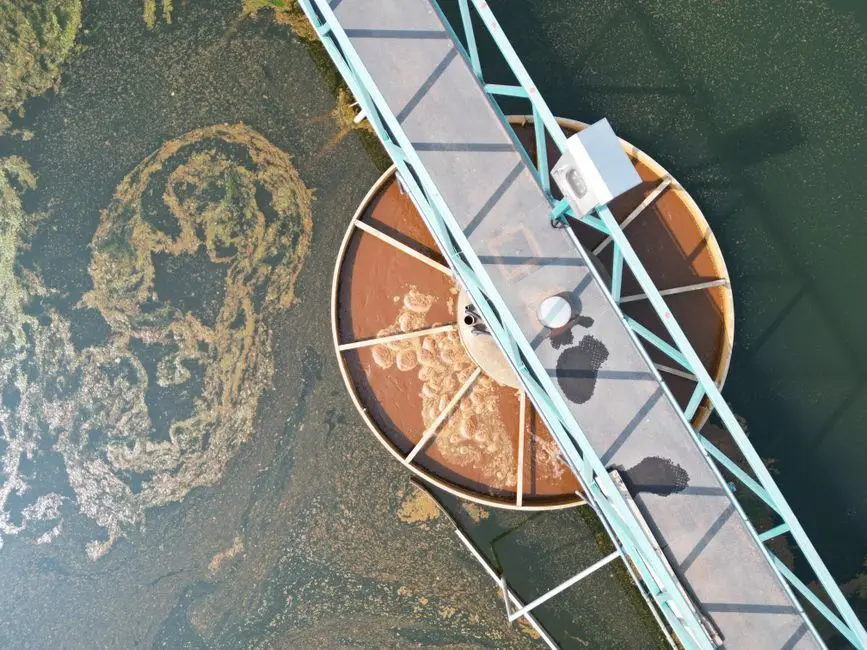
Run your influent and site through these four questions before you walk into a vendor meeting. If two or more answers point the same way, that is your default technology for the 2026 CAPEX plan.
Q1 — Influent mix. Is more than 25% of your COD as emulsified FOG or surfactant? Default to DAF, or DAF + lamella in series. Is the stream mostly settleable inorganics with low oil? A lamella clarifier will outperform a DAF on OPEX.
Q2 — Permit driver. Is O&G < 15 mg/L the binding limit? DAF, and accept the polymer cost. Is TSS < 30 mg/L the binding limit on a heavy particulate stream? Lamella clarifier with polymer optimization.
Q3 — Site constraint. Less than 200 m² available footprint, or no civil budget? Packaged DAF or packaged lamella. Open land and a new-build scope? Either, including a concrete clarifier — but only if the OPEX advantage survives the amortized civil cost.
Q4 — Operating model. Single-shift plant with limited operators? Avoid complex saturator systems without full automation. Choose a packaged DAF with PLC-based dosing and SCADA, or a packaged lamella. Both run unattended on a 24-hour basis with a single daily check.
For a deeper look at how a similar decision tree was applied to oil-laden streams, the DAF-or-clarifier guide for oil-laden industrial streams walks through the same four questions against a different influent. For pretreatment compliance framing under 40 CFR 469, the organic-chemicals pretreatment compliance guide shows how the permit and the unit operation are typically defended together.
Frequently Asked Questions
When should a chemical plant in Calhoun, GA choose a DAF over a clarifier?
Choose a DAF when the wastewater carries emulsified oils, surfactants, or low-density floc. DAF systems commonly remove 90–95% of FOG and 80–90% of TSS on those streams, versus 70% oil removal for a clarifier on the same water (Ecologix 2026). A DAF is also the right call when the binding discharge limit is O&G under 15 mg/L.
What is the typical 2026 CAPEX for a packaged DAF versus a clarifier?
Packaged DAF CAPEX in 2026 runs $35,000–$450,000 across the 4–300 m³/h range, while a packaged steel lamella clarifier runs $25,000–$200,000. A new concrete clarifier typically lands at $150,000–$1,000,000+ once civil works are included, which is why most Calhoun retrofits are selecting against packaged units.
Can a DAF and a clarifier be used together in a chemical plant?
Yes. A DAF primary to strip FOG and floatable colloids, followed by a lamella clarifier for the particulate residual, is the most common 2026 hybrid configuration for mixed chemical streams in the Gordon–Bartow–Floyd corridor. The DAF hits the O&G ceiling; the lamella hits the TSS ceiling before biological polishing or RO.
What GA EPD and EPA categorical standards apply to chemical plant primary separation in Calhoun?
Discharges to the Coosa River basin are regulated by GA EPD's approved Industrial Pretreatment Program, which layers site-specific limits on top of EPA categorical standards in 40 CFR 430 (pulp/paper), 433 (metal finishing), and 469 (organic chemicals, plastics, and rubber). Typical local ceilings are TSS 30–50 mg/L, O&G 10–25 mg/L, COD 100–250 mg/L, pH 6.0–9.0 — exact values come from the IPP permit.