
What Coal Run Village Plants Are Actually Discharging
Coal Run Village sits in Boone County, WV, surrounded by active coal prep plants, valley fills, abandoned deep-mine portals, and small metals/machine shops — every one a potential source of acid mine drainage (AMD) and process wastewater (BSS/AFP, 2026-08). The water coming off those sites is recognizable on sight: reddish, ochre-stained, low-pH, and carrying dissolved iron, manganese, aluminum, and sulfate at concentrations that violate any sewer-use ordinance on the books.
Typical central-Appalachian AMD, as characterized in USGS and WVU studies, falls in these influent ranges:
- pH 2.0–4.0 from pyrite oxidation
- Total Fe 50–500 mg/L (ferrous + ferric)
- Mn 10–100 mg/L
- Al 5–50 mg/L
- Sulfate 500–5,000 mg/L
- TSS often >200 mg/L from iron-oxide floc and coal fines
"Pretreatment" in this context is narrowly defined: the plant must clean the water before it enters the local publicly owned treatment works (POTW) sewer, not before it goes to a stream. That means meeting both EPA categorical pretreatment standards (40 CFR 433 for metal finishing, 40 CFR 434 for coal mining) and the local POTW's sewer-use ordinance, which is almost always stricter. The chemical reality on the ground drives every equipment choice that follows, so the rest of this guide is a response to those numbers. A PLC-controlled lime and NaOH dosing skid is the first piece of capital equipment most plants spec for this service.
The 2026 Regulatory Floor: 40 CFR 433, 40 CFR 434, and WV POTW Limits
Two federal categorical standards govern most Coal Run Village discharges, and the applicable one depends on SIC code. A metal-fabrication or job-shop finisher discharging to sewer is regulated under 40 CFR Part 433 (Metal Finishing); an active coal prep plant or mine-dewatering operation is regulated under 40 CFR Part 434 (Coal Mining Point Source Category). For mixed-use sites, the more stringent parameter governs.
Under 40 CFR 433, daily-maximum limits (per EPA's 2024 final rule, still the active standard through 2026) are:
- Total lead — 0.69 mg/L
- Total cadmium — 0.69 mg/L
- Total chromium — 2.77 mg/L
- Total copper — 3.38 mg/L
- Total nickel — 3.98 mg/L
- Total zinc — 2.61 mg/L
- Total cyanide — 1.20 mg/L
Under 40 CFR 434, coal prep plants must meet 3.0 mg/L daily-max total iron, 35 mg/L daily-max TSS, and pH 6.0–9.0 — the federal floor, not the ceiling (40 CFR 434.22). Most West Virginia POTWs layer local sewer-use limits on top: pH 5.5–10.0, oil & grease <100 mg/L, no visible foam, no free oil, and metals "below detection of the analytical method used." The "no visible foam" and "no free oil" clauses are the two that most often trip up mine-water discharges. Self-monitoring reports are typically twice-yearly for metal finishers and monthly for coal prep >X mgd, and an SNC (significant noncompliance) finding under EPA's 2024 PFAS/pretreatment enforcement framework can carry penalties of up to $56,468 per day per violation (per EPA 2024 civil penalty inflation adjustment).
| Parameter | 40 CFR 433 daily max (metal finishing) | 40 CFR 434 daily max (coal prep) | Typical WV POTW limit |
|---|---|---|---|
| pH | — | 6.0–9.0 | 5.5–10.0 |
| Total Fe | — | 3.0 mg/L | 2.0 mg/L |
| TSS | — | 35 mg/L | 30 mg/L |
| Total Pb | 0.69 mg/L | — | 0.5 mg/L |
| Total Zn | 2.61 mg/L | — | 1.5 mg/L |
| Oil & grease | — | — | <100 mg/L; no free oil |
| Cyanide | 1.20 mg/L | — | 0.5 mg/L |
The Pretreatment Process Train: From Raw AMD to POTW-Quality Effluent
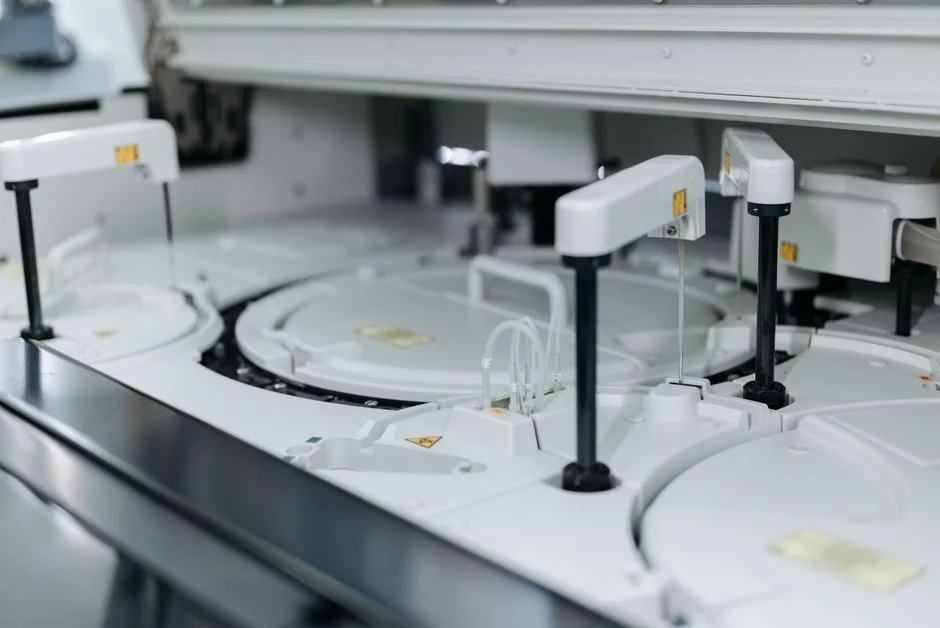
The standard train for AMD-to-sewer is a six-step sequence. Each step has a defensible loading and a target spec the engineer can hit with off-the-shelf equipment.
Step 1 — Equalization. A 12–24 hour HRT basin (50–200 m³ for a 50–100 m³/h plant) buffers slug loads from rain events, shift changes, and batch process dumps. Mechanical mixing and a level transmitter hold the basin within ±20% of design flow downstream.
Step 2 — Two-stage pH adjustment and metal precipitation. Stage 1 raises pH to 4.5–5.0 with lime slurry (Ca(OH)₂), which drops ferric iron as Fe(OH)₃. Stage 2 raises pH to 8.5–9.0 with NaOH or additional lime to precipitate Mn, Al, and trace heavy metals. Both stages should be on a single PLC-controlled lime and NaOH dosing skid with pH probes in a feedback loop; manual dosing at pH 2–4 influent is a recipe for excursions.
Step 3 — Coagulation, flocculation, and solids separation. A polymer flocculant is injected ahead of either a lamella clarifier for AMD sludge separation (surface loading 20–40 m/h) or a DAF system for metal-hydroxide flotation (hydraulic loading 4–25 m³/m²/h). Both should achieve >95% TSS removal and >90% total metals removal at this stage.
Step 4 — Multimedia filtration. A multi-media filter for residual TSS polishing (anthracite/sand/garnet, 10–15 m/h service rate) drops residual TSS below 10 mg/L and catches any metal-hydroxide floc carryover. Automated differential-pressure-initiated backwash is standard.
Step 5 — Ion exchange or RO (only if needed). When the POTW imposes sub-ppm metals limits or a sulfate cap, route the filtrate through a cation exchange resin (Cd, Ni, Zn polishing) or a brackish-water RO (sulfate and dissolved metals). Most Coal Run Village discharges stop at Step 4.
Step 6 — Sludge handling. Settled or floated sludge at 1–3% solids is pumped to a plate-and-frame press for AMD sludge dewatering running at 8–15 bar feed pressure, producing a 25–35% dry-solids cake for off-site disposal. The 80–95% volume reduction versus raw sludge is the line item that justifies the press.
Process flow, top to bottom: EQ → pH stage 1 (lime) → pH stage 2 (NaOH) → floc → lamella/DAF → MMF → IX/RO (optional) → POTW. MBR is generally not used for high-iron AMD — Fe/Mn fouling kills PVDF membranes within weeks, and replacement costs wipe out the footprint savings.
Equipment Sizing Parameters for a 50–100 m³/h AMD Pretreatment Plant
The table below is the highest-value asset in this guide. A plant engineer can lift the loading rates and material specs directly into a P&ID or a vendor RFQ without re-deriving them from first principles.
| Unit operation | Equipment | Capacity / loading | Material of construction | Key control | Target effluent |
|---|---|---|---|---|---|
| Equalization basin | Concrete or epoxy-coated CS tank | 12–24 h HRT at avg flow | Concrete / epoxy CS | Level transmitter + mixer | Flow smoothing ±20% |
| Lime slurry dosing | Skid-mounted slaker + dosing pumps | 200–600 g Ca(OH)₂/m³ (jar-test confirm) | PVC / PTFE head | pH probe at stage-1 outlet | pH 4.5–5.0 |
| NaOH polishing | Diaphragm metering pump | 0–100% stroke, 4–20 mA | PVC / PTFE | pH probe at stage-2 outlet | pH 8.5–9.0 |
| Lamella clarifier | Inclined-plate pack | 20–40 m/h surface loading | SS304 / FRP | Sludge scraper / blowdown timer | TSS <30 mg/L |
| DAF unit | Saturator + float cell | 4–25 m³/m²/h hydraulic loading | SS304 / carbon steel rubber-lined | Air-to-solids ratio, recycle % | TSS <20 mg/L, free oil <10 mg/L |
| Multi-media filter | Anthracite / sand / garnet | 10–15 m/h filtration rate | Rubber-lined CS | ΔP-initiated backwash | Turbidity <5 NTU |
| Plate-and-frame press | PP recessed plates | 8–15 bar feed pressure | PP plates, CS frame | Cycle timer / cake moisture | 25–35% DS cake |
| Dosing pumps | Diaphragm / peristaltic | Turndown 100:1 | PVC / PTFE head | 4–20 mA / pH-ORP loop | ±0.1 pH units |
Planning estimate: total installed CAPEX for a 100 m³/h AMD pretreatment skid is typically $1.2M–$2.5M in 2026 dollars, equipment-only — not a bid number, but the right order of magnitude for a Class V cost estimate before pilot work (HydropureWater planning data, 2026).
DAF vs Lamella: Which Solids Separator Fits an AMD Service?
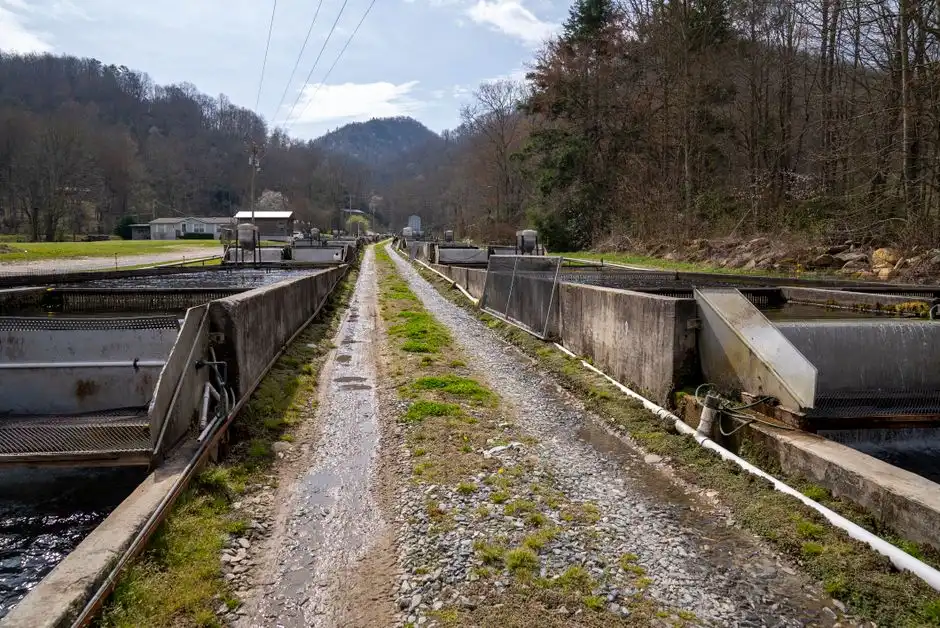
Three variables drive the choice: influent TSS, oil & grease presence, and footprint. AMD without oil → a lamella clarifier for AMD sludge separation is typically cheaper to run because there is no saturator, no recycle pump, and no compressed-air draw. AMD with occasional oil sheen from on-site equipment wash → a DAF system for metal-hydroxide flotation pulls free oil to the surface in the same pass, which a lamella cannot do.
The 2026 DAF vs clarifier comparison for mining wastewater and the Alabama mining-wastewater DAF vs clarifier buyer's guide both reached the same conclusion: DAF wins when influent TSS exceeds 1,000 mg/L or when oil is present. For the Coal Run Village envelope of 200–500 mg/L TSS and no oil, a lamella with sludge recirculation cuts chemical consumption by roughly 30% versus a comparable DAF and has lower compressed-air OPEX — a counter-intuitive point most specifiers miss because they default to DAF.
Decision rule: If oil & grease is detected at >50 mg/L OR TSS spikes above 1,000 mg/L during rain events, choose DAF; otherwise a lamella clarifier gives the lowest 10-year OPEX.
The 2026 Compliance Checklist for Coal Run Village Dischargers
- Confirm SIC code and applicable categorical standard (40 CFR 433 vs 40 CFR 434). Mixed-use sites default to the more stringent parameter.
- Pull the last 12 months of DMRs and flag any parameter exceeding daily-maximum limits. SNC status is a 2024 enforcement priority.
- Jar-test the current lime/NaOH dose on actual plant water. Confirm pH endpoint and polymer selection — Fe/Al/Mn content drives demand, and bench data beats a dosing-chart guess every time.
- Verify the automatic pH control loop is calibrated and that pH probes are less than 6 months old. A drifted probe is the single most common cause of SNC events.
- Confirm sludge hauling manifests are current and the dewatering press is producing >22% dry solids. Below that, hauling costs balloon.
- Re-confirm the local POTW sewer-use permit and flag any PFAS reporting required under EPA's 2024 multi-sector general permit updates.
- Document emergency bypass procedures and notify the POTW's pretreatment coordinator of any planned shutdowns at least 48 hours in advance.
For an internal benchmark above the regulatory minimum, the WVU Mount Storm pilot is the publicly funded proof point: AMD cleaned to near-potable color ("nearly turquoise" effluent, per BSS/AFP 2026-08), with about 4 t/year of mixed rare-earth oxide recovered as a byproduct, of which roughly 45% is "heavy" REE such as terbium and dysprosium (per WVU's Lance Lin, as reported by AFP 2026-08).
Frequently Asked Questions
What pH must mine water meet before sewer discharge?
Under 40 CFR 434, the federal floor is pH 6.0–9.0 for coal prep plant discharges. Most West Virginia POTWs tighten that to pH 5.5–10.0 in their sewer-use ordinance. Plants consistently operating at pH 8.5–9.0 have the best metals-precipitation performance and the lowest residual dissolved iron.
Can a Coal Run Village plant reuse AMD for dust suppression?
Yes, if the reuse meets NPDES permit conditions and does not cause groundwater degradation under WV DEP guidance. Many prep plants already do this with settled, partially treated water; however, the sulfate and total-dissolved-solids load still has to be tracked because runoff eventually reaches the same POTW or stream.
How much lime does it take to neutralize one cubic meter of AMD?
A working range is 200–600 g of Ca(OH)₂ per m³ treated, but jar-testing on actual plant water is non-negotiable because Fe, Al, and Mn content drive the demand. A plant at 300 mg/L Fe and 50 mg/L Al will sit at the high end of that range.
Is an MBR appropriate for AMD pretreatment?
Generally no. Iron and manganese foul PVDF membranes within weeks at AMD loadings, and membrane replacement wipes out the footprint advantage. The standard train is DAF or lamella plus a multi-media filter, with ion exchange or RO only where the POTW imposes sub-ppm metals limits.
Can the WVU Mount Storm rare-earth recovery model be replicated at a smaller Coal Run Village plant?
The treatment train can be replicated at any scale — equalization, precipitation, solids separation, and media filtration are all standard unit operations. The <10 t/year REO economics, however, require a regional consolidation hub and a downstream refiner; the WVU project partnered with REalloys for separation (BSS/AFP, 2026-08). For a single Coal Run Village plant, the by-product credit is real but small — treat it as OPEX offset, not primary revenue.