What Wastewater Profile Does an Asunción Hotel or Resort Actually Generate in 2026?
A 100–200 room riverside resort in Asunción generates three distinct wastewater streams that must be sized separately before they can be combined: black water from toilets, grey water from showers, kitchens, and laundry, and process streams from spa hydrotherapy, hydromassage tub dumps, pool backwash, and kitchen grease traps. Grey water dominates the hydraulic load, typically 60–75% of total flow, and carries the bulk of the BOD and suspended solids when food-service and laundry volumes are high (HydropureWater field data, 2026). Black water contributes most of the fecal coliform load and nitrogen, while process streams introduce surfactants, oils, and high instantaneous peak flows that distort a naïve design.
The 2026 sizing benchmark for Asunción hospitality is 0.15–0.25 m³ per guest-night for limited-service hotels and 0.25–0.40 m³ for full-service and resort properties that include pools, spa, and multiple restaurants. A property with the amenity profile of the Yacht & Golf Club Paraguayo (200-acre riverside site, full-service spa, hydrotherapy and hydromassage suites, two pool areas, 24-hour room service at Salon Verde, on-site golf course) sits firmly at the high end of that range, near 0.35–0.40 m³ per guest-night. By contrast, a small nature property such as Los Lagos Resort — where every room still ships with WiFi, AA (aire acondicionado, the local term for split air-conditioning), cable TV, minibar (frigobar), and an electric water heater (termocalefón) — generates only 30–60 m³/day for 25–40 keys, but its peak-to-average ratio still runs 2.5–3.0× because of weekend occupancy spikes.
Typical raw influent concentrations for hotel sewage in this climate fall in the following envelope, and these numbers drive every downstream unit-process selection:
| Parameter | Unit | Typical range (hotel sewage) |
|---|---|---|
| BOD5 | mg/L | 200–300 |
| COD | mg/L | 400–600 |
| TSS | mg/L | 200–250 |
| Oil & grease | mg/L | 30–80 |
| Total nitrogen | mg/L | 30–50 |
| Total phosphorus | mg/L | 5–10 |
| Fecal coliforms | CFU/100 mL | 10⁶–10⁷ |
| pH | — | 6.5–8.0 |
Two Asunción-specific loaders distort the average. First, the December–March high-tourism season routinely drives a 30–40% occupancy uplift, which the equalisation basin must absorb without spilling. Second, every guest room's AA condensate drains into the grey-water system in many older Asunción properties, adding 5–15 m³/day of essentially distilled water that dilutes load but inflates hydraulic peaks and must be accounted for in the grit and screen sizing.
Paraguay Discharge Limits: What SEAM/MADES Requires in 2026
The controlling instrument for hotel wastewater in Paraguay remains Resolución SEAM N° 222/02, administered in 2026 by the Ministerio del Ambiente y Desarrollo Sostenible (MADES). It sets the effluent quality that any new or expanded hospitality plant must demonstrate before a discharge permit is issued, and several of its parameters — particularly fecal coliforms, total nitrogen, and oil & grease — directly push the engineer toward MBR-class treatment rather than a basic package plant.
The 2026 design-effluent envelope a buyer must hit is as follows:
| Parameter | SEAM 222/02 limit (2026) | Design implication |
|---|---|---|
| BOD5 | ≤ 50 mg/L | Standard secondary treatment sufficient; MBR adds margin |
| COD | ≤ 250 mg/L | MBR or SBR needed for resort loadings |
| TSS | ≤ 150 mg/L | MBR delivers <5 mg/L — large compliance margin |
| Oil & grease | ≤ 20 mg/L | Forces a DAF upstream of any full-service kitchen |
| pH | 5.5–9.0 | Rarely binding with MBR; check on SBR/WSZ |
| Fecal coliforms | ≤ 1,000 CFU/100 mL | UV or ClO₂ required downstream of biological step |
| Total nitrogen | ≤ 40 mg/L | A/O or A²/O configuration needed for 100–200 m³/day class |
| Total phosphorus | ≤ 5 mg/L (eutrophication-sensitive receptors) | Riverside sites on the Paraguay River typically must demonstrate compliance |
Three disposal routes are common, and most Asunción hotel sites combine two of them. Discharge to a municipal sewer is only practical inside ESSAP's central service zone, which covers limited districts of Asunción proper. Subsurface disposal via soakaway works on the sandy soils east of the city but fails quickly in the heavy clays of the riverside districts without a polishing step. On-site irrigation reuse for landscaping — gardens, golf-course roughs, the macadamia groves seen at Los Lagos — is the most common 2026 solution for resort-scale sites and is regulated under MADES reuse guidance with a typical 100–200 m³/day permitting threshold.
The 2026 compliance watch is straightforward: MADES is tightening monitoring of fecal indicators and total nitrogen for new resort permits, and any riverside receptor (the Paraguay River at the Yacht & Golf Club site is the obvious case) is likely to require nitrate polishing before discharge is approved. Confirm the latest MADES resolution with a local environmental consultant before the equipment order is signed, because the permit condition is what locks the technology choice, not the designer's preference.
Technology Options for 2026: MBR, A/O Package Plant, IFAS, and SBR Compared
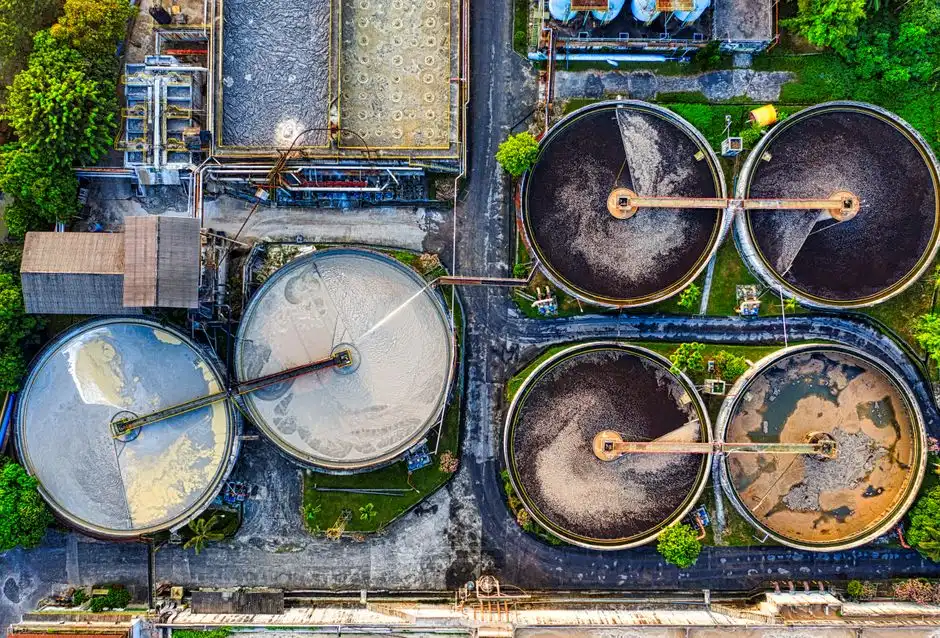
Four treatment trains are realistic for an Asunción hotel in 2026, and the choice falls out of flow range and reuse intent rather than brand. The first option is a submerged MBR (membrane bioreactor), typified by a flat-sheet PVDF module such as the MBR membrane bioreactor wastewater treatment system or the DF series flat-sheet MBR membrane module at 0.1 μm pore size, delivering <1 μm filtrate. The second is an A/O contact-oxidation packaged plant, typified by the WSZ series underground package sewage treatment plant, fully buried, with no operator and a flow window of 1–80 m³/h. The third is IFAS (moving-bed biofilm), robust to load swings and well suited to ≥150 m³/day. The fourth is sequencing batch reactor (SBR), flexible but with higher operator attention.
| Criterion | MBR (submerged PVDF) | WSZ A/O packaged | IFAS | SBR |
|---|---|---|---|---|
| Flow range (m³/day) | 10–2,000 | 24–1,920 (1–80 m³/h) | 150–5,000 | 50–2,000 |
| BOD effluent (mg/L) | < 5 | ≤ 30 | ≤ 20 | ≤ 20 |
| TSS effluent (mg/L) | < 1 (effectively) | ≤ 30 | ≤ 30 | ≤ 30 |
| Footprint vs. CAS | ~40% | ~50% | ~60% | ~70% |
| Automation / operator | PLC, low operator | PLC, unattended | PLC, low operator | PLC + scheduling, moderate |
| Reuse suitability | Direct to irrigation / cooling | Restricted reuse | Restricted reuse | Restricted reuse |
| CAPEX (USD per m³/day, 2026) | 280–450 | 150–260 | 220–340 | 200–320 |
| OPEX (kWh/m³) | 0.8–1.5 | 0.5–0.9 | 0.6–1.1 | 0.7–1.2 |
| Best 2026 Asunción fit | 80–500+ m³/day, irrigation reuse | ≤ 80 m³/day, buried installation | ≥ 150 m³/day, load swings | Flexible retrofit |
The decision logic is explicit. A boutique property of ≤ 80 m³/day — the Los Lagos class — should be specified as a WSZ underground unit because CAPEX is lowest, the unit is invisible at grade, and no operator is needed. An 80–500 m³/day full-service hotel or resort is the MBR sweet spot: DF series flat-sheet modules run 32–135 m³/day per unit, energy is 10–20× lower than cross-flow designs, and the <1 μm effluent is reusable directly on landscape. Multi-property or convention hotels ≥ 500 m³/day can be served by either MBR or IFAS, with IFAS preferred where influent BOD is unusually high or where the operator is comfortable with carrier media. A rural eco-lodge without grid reliability should run a WSZ with an optional solar-aeration upgrade sized at 1.5–2.0 kWp per 50 m³/day.
Three Asunción-specific drivers push the choice toward MBR. First, the larger resorts have large landscaped areas — golf roughs, gardens, the macadamia groves typical of sites like Los Lagos — where irrigation reuse has real economic value. Second, in some riverside districts the water table is high enough that a buried MBR with minimal surface footprint avoids buoyancy and flood-risk issues that complicate open-tank designs. Third, on the 200-acre riverside-resort archetype typified by the Yacht & Golf Club site, a compact, quiet, enclosed plant preserves the guest experience in a way that an open activated-sludge tank cannot.
Pretreatment, Disinfection, and Sludge: The Supporting Equipment You Cannot Skip
The bioreactor is roughly 60% of a working plant; the rest — headworks, disinfection, and sludge handling — is where compliance risk actually lives in 2026. The first line of defence is a rotary mechanical bar screen, such as the GX series rotary mechanical bar screen, with 5–10 mm spacing. Hotel sewage carries a disproportionate amount of lint, hair, and personal-care solids, and these need to be removed before any membrane or fixed-film media or the differential pressure climbs and the operator starts doing emergency cleans every few days.
For any property with significant kitchen output — a full-service resort with 24-hour room service such as Salon Verde at the Yacht & Club site — a small dissolved air flotation system (4–300 m³/h) must be placed upstream of the biological train to strip oil and grease to below the SEAM 222/02 limit of 20 mg/L. Without it, the biological stage will transport grease into the membrane tank on MBR sites, where it fouls the flat-sheet modules and forces cleaning cycles that are otherwise avoidable.
Disinfection in 2026 should be a chlorine dioxide generator (50 g/h to 20,000 g/h) rather than chlorination, because ClO₂ controls DBPs more tightly and stays aligned with current WHO guidance. UV is a viable alternative where the upstream MBR is already delivering TSS < 5 mg/L; the high UV transmittance of MBR filtrate lets a smaller UV bank hit the same fecal-coliform target. For irrigation reuse, MADES typically requires < 200 CFU/100 mL fecal coliforms, and chlorination alone struggles to hold that consistently at the turbidities seen in conventional secondary effluent.
Sludge handling closes the loop. A 100-room Asunción resort at 70% occupancy produces roughly 2–4 m³/day of waste activated sludge at 1–2% dry solids, and this must be dewatered to 22–28% DS before off-site hauling. A small plate and frame filter press for sludge dewatering is the standard 2026 answer for that scale; for sites ≥ 500 m³/day, a decanter centrifuge is the lower-labour alternative. Either way, the train needs an automatic chemical dosing system for polymer conditioning of the sludge and for coagulant feed to the DAF, sized to the actual solids loading rather than the nameplate flow.
Sizing, Footprint, and CAPEX for a 100-Room Asunción Resort (2026 Reference)
A defensible 2026 worked example anchors the abstract process selection. Take a 100-room Asunción full-service resort at 70% average occupancy, applying 0.30 m³ per guest-night: the design produces 21 m³/h average flow (≈ 500 m³/day), and a peak factor of 2.8× drives peak instantaneous flow to 60 m³/h. Sizing the biological and disinfection train for 700 m³/day absorbs the 30–40% tourism-season uplift without spilling or shedding load.
The plant envelope is compact. An MBR-based train (anoxic + aerobic + submerged PVDF + ClO₂) sized to 700 m³/day requires 60–90 m² of total footprint, fully enclosed in a single-storey utility building or partly buried; that is roughly 60% of the area an equivalent conventional activated-sludge plant would need at the same load. Energy demand is 0.8–1.5 kWh/m³, dominated by aeration and membrane scouring, which means a 700 m³/day plant draws 25–45 kW continuous. Paraguay's grid is roughly 98% hydropower-fed in 2026, so the effective electricity cost is among the lowest in the region, typically USD 0.06–0.09 per kWh at industrial tariffs.
| Line item (2026, FOB Ningbo, USD) | Low | High |
|---|---|---|
| Biological and disinfection train (MBR, anoxic + aerobic + membranes + ClO₂) | 120,000 | 220,000 |
| Headworks (rotary bar screen) and DAF | 25,000 | 45,000 |
| Sludge dewatering line (filter press + dosing) | 30,000 | 55,000 |
| PLC panel, instruments, remote monitoring | 15,000 | 30,000 |
| Containerisation, skids, packing | 10,000 | 20,000 |
| Equipment subtotal (ex-works, FOB Ningbo) | 200,000 | 370,000 |
These numbers exclude civil works, installation labour, freight to Asunción, and Paraguay-side import duties, which together typically add 60–110% to the equipment subtotal on a turnkey basis. OPEX runs USD 0.25–0.45 per m³ treated, covering chemicals, electricity, and sludge hauling, and a single part-time operator is sufficient for a fully automated MBR package at this scale.
How to Select the Right 2026 Vendor and Avoid the Common Asunción Pitfalls
The procurement check that separates a defensible 2026 spec from a guaranteed retrofit is short but specific. Ask the supplier for the documented MBR module replacement cost in USD per m² — flat-sheet versus hollow-fibre changes the number by a factor of 2–3 — and ask for the membrane supplier's name and warranty terms in writing. Confirm the PLC automation level (a 2026 hotel plant should ship with remote-monitoring over 4G/Ethernet, given that Asunción's site-management bandwidth is reliable), and ask for documented Paraguayan or South American reference projects with a working phone number. The MBR membrane replacement cost in 2026 pricing data and savings guide on our site gives the cost ranges to anchor that conversation.
Four Asunción-specific pitfalls bite repeatedly. First, designers underestimate pool backwash and laundry peaks; the equalisation tank must hold ≥ 8 hours of average flow, not 2–3 hours. Second, the high groundwater table in riverside districts is ignored when burying a WSZ tank, and the empty tank floats during construction; specify buoyancy protection (anti-flotation slab or ground anchors) in the civil package. Third, disinfection is undersized for irrigation reuse, where MADES typically wants < 200 CFU/100 mL fecal coliforms — chlorination alone struggles; specify ClO₂ or UV with a contact tank. Fourth, the Yacht & Golf Club class of riverside resort often needs a denitrification polishing step before discharge to the Paraguay River; check the permit condition before sizing.
On logistics, containerised MBR skids fit standard 40 ft containers and can be shipped via the Paraguay-Paraná waterway to the port of Asunción, which is a real 2026 supply-chain advantage for a Chinese OEM shipping to a landlocked South American site. For cross-checks against comparable Latin American and tropical specifications, the Casablanca hotel wastewater treatment 2026 MBR compliance and cost guide, the Guadalajara hotel and resort wastewater treatment 2026 guide, the Kuala Lumpur hotel wastewater treatment 2026 system guide, and the IFAS for hotel wastewater 2026 engineering guide provide parallel design envelopes for sanity-checking flows, limits, and CAPEX assumptions.
Frequently Asked Questions
What wastewater treatment system does a 100-room hotel in Asunción need in 2026?
A 100-room full-service Asunción resort at 70% occupancy generates about 500 m³/day (peak 700 m³/day) of sewage at 200–300 mg/L BOD. The 2026 specification is a packaged MBR (anoxic + aerobic + submerged PVDF membranes, 0.1 μm pore) sized to 700 m³/day, preceded by rotary bar screening and DAF for grease, followed by ClO₂ disinfection, with a plate-and-frame filter press for the 2–4 m³/day of waste activated sludge. The footprint is 60–90 m², and the equipment CAPEX range is USD 200,000–370,000 ex-works China (HydropureWater field data, 2026).
What effluent limits does SEAM Resolución 222/02 set for hotel discharge in 2026?
Resolución SEAM N° 222/02 (still administered by MADES in 2026) requires BOD ≤ 50 mg/L, TSS ≤ 150 mg/L, COD ≤ 250 mg/L, oil & grease ≤ 20 mg/L, pH 5.5–9.0, fecal coliforms ≤ 1,000 CFU/100 mL, total nitrogen ≤ 40 mg/L, and total phosphorus ≤ 5 mg/L at eutrophication-sensitive receptors such as the Paraguay River (per MADES guidance, 2026). These limits push any ≥ 100 m³/day hotel project toward MBR or SBR rather than a basic packaged A/O plant.
How much water does a hotel in Paraguay use per guest per day?
A 2026 limited-service hotel in Asunción uses 0.15–0.25 m³ per guest-night, while a full-service resort with pools, spa, and 24-hour room service uses 0.25–0.40 m³ per guest-night (HydropureWater field data, 2026). A 100-room resort at 70% occupancy and 0.30 m³ per guest-night therefore averages 500 m³/day with a peak-to-average ratio of 2.5–3.0× driven by spa sessions, pool backwash, and the December–March high-tourism season.