Why Plastics and Rubber Wastewater in Stockdale Is Not a Generic Stream
Plastics and rubber factories in Stockdale should choose DAF as primary clarification in 2026 because polymer processing wastewater is dominated by emulsified oils, plasticizers, and latex-bound fines — exactly the light, floatable fraction DAF targets at 92-98% TSS removal, versus 85-90% for gravity clarifiers. A lamella clarifier polish step downstream handles the residual fines and stabilizes effluent against 40 CFR Part 433 categorical pretreatment limits.
Extrusion, injection molding, latex dipping, and tire-curing wash operations produce a contaminant profile that no food-processing or mining DAF-vs-clarifier guide addresses. The waste stream carries three fractions that behave very differently in a settling tank: heavy polymer pellets and grindings that sink; buoyant latex-bound and oil-coated fines that float; and stable oil-in-water emulsions created by surfactants in release agents, plus dye and pigment bleed that resists coalescence. Phthalate plasticizers (DEHP, DINP) and residual styrene from rubber curing add a dissolved-organic load on top of the suspended fraction. The result is a bimodal particle population where a single clarifier can only address one half. Micro-bubble flotation collapses both fractions simultaneously: the 20-40 micron bubbles (per the DAF Corp MBG specification) attach to oil droplets and latex fines and lift them in 3-5 minutes, whereas Stokes-law settling in a clarifier needs 1-2 hours to do half the work. This is the operational reason a HydropureWater dissolved air flotation system covers flows from 4 to 300 m³/h across 13 models — a range matched to the mid-scale Stockdale plant, where injection-molding and tire-curing wash water typically lands in the 50-400 gpm band.
EPA 40 CFR Part 433 Pretreatment Limits Every Stockdale Plant Must Hit
40 CFR Part 433 sets categorical pretreatment standards for the Plastics and Rubber point source category, and Stockdale plants discharging to the San Antonio River Authority (SARA) collection system must meet both federal limits and local POTW discharge limits (SARA Industrial Pretreatment Program, 2026). The maximum daily and monthly average limits for rubber processing (subpart B) and plastics processing (subpart C) define the design envelope: the technology must reliably deliver effluent below these numbers under peak hydraulic and load conditions, not just on an average day.
| Parameter | Rubber Processing (433.12) Daily Max / Max Monthly Avg | Plastics Processing (433.16) Daily Max / Max Monthly Avg |
|---|---|---|
| TSS (total suspended solids) | 163 mg/L / 65 mg/L | 208 mg/L / 86 mg/L |
| Oil & Grease (FOG) | 107 mg/L / 43 mg/L | 138 mg/L / 56 mg/L |
| COD | 1,140 mg/L / 457 mg/L | 1,140 mg/L / 457 mg/L |
| BOD5 | — | 619 mg/L / 248 mg/L |
| pH | 6.0-9.0 (range) | 6.0-9.0 (range) |
| Total Chromium | 1.7 mg/L / 0.69 mg/L | 1.7 mg/L / 0.69 mg/L |
Two numbers from the table drive the technology choice. First, FOG at 43-56 mg/L monthly average is the binding constraint in most polymer lines, because release oils and plasticizer carryover dominate the influent — and FOG is exactly the fraction gravity settling handles poorly. Second, TSS at 65-86 mg/L monthly average is tight enough that a single clarifier running at 85-90% removal (per DAF Corp RC UniMax spec) leaves little safety margin; the plant needs DAF-class 92-98% removal or a polish step. SARA's local limits, published in the 2025 SARA Industrial User Handbook, are typically 10-20% tighter than federal categorical limits for TSS and FOG, so a Stockdale plant that hits only the federal number is still at risk of a surcharge or notice of violation. Design the system to a 30-50% safety margin below the federal daily max to absorb shock loads from batch dumps.
DAF vs. Clarifier: Mechanism, Performance, and Plastics/Rubber Fit
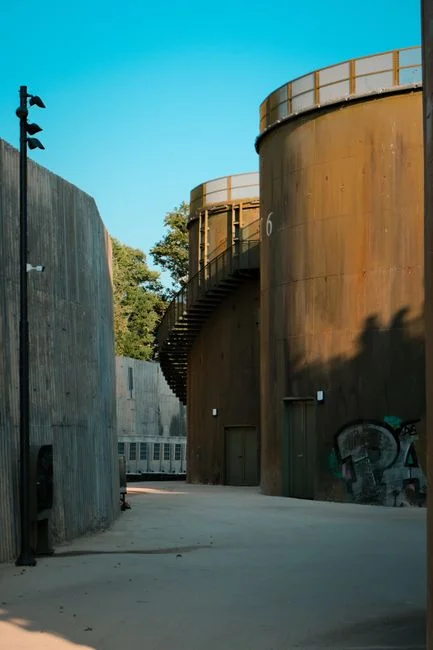
DAF injects 20-40 micron micro-bubbles (per DAF Corp MBG spec) that attach to oil droplets and latex-bound fines, floating them to the surface in 3-5 minutes; a clarifier relies on Stokes-law settling that takes 1-2 hours. The mechanism difference is the entire story: a bubble has a much higher surface-area-to-mass ratio than a quiescent settling tank, and the bubble-oil interaction is not gravity-limited. DAF also has a hydraulic residence time of 15-25 minutes versus 1.5-2.5 hours for a clarifier — roughly a 5-8x footprint advantage on equal flow.
Two equipment platforms dominate the DAF market for this flow range. The DAF Corp FC Maximizer (circular, 10-11,000 gpm, 6-70 ft diameter) hits 92-98% TSS removal and thickens float sludge to 2-4% solids; the DAF Corp RC UniMax (rectangular, 10-1,000 gpm) hits 85-90% TSS removal at a lower price point. Skid-Mounted FC Maximizers (48-450 gpm, 6-15 ft diameter) ship pre-assembled with piping, valves, and controls — a strong fit for Stockdale plants with short installation windows. Ecologix case data (2026) shows DAF achieving 95% FOG removal versus 70% for a clarifier on the same food-processing stream; the physics carry over to polymer release oils, which behave identically to food fats in terms of bubble attachment and float behavior. A HydropureWater dissolved air flotation system in this flow range delivers the same 92-98% TSS window.
Lamella clarifiers (inclined-plate settlers at 20-40 m/h surface loading) are the gravity alternative when FOG is low and footprint is tight, but they underperform on emulsified polymer release agents because the plate pack cannot break an emulsion — it only settles what already wants to fall. A HydropureWater lamella clarifier works as a polish step or as the primary when the stream is dominated by dense pigment press cake rather than buoyant polymer-coated fines.
| Parameter | DAF (FC Maximizer class) | DAF (RC UniMax class) | Lamella / Circular Clarifier |
|---|---|---|---|
| TSS removal | 92-98% | 85-90% | 70-85% (heavy solids) / 50-65% (FOG) |
| FOG removal | 90-95% (per Ecologix case data) | 80-88% | 50-70% (per Ecologix case data) |
| Float/sludge solids | 2-4% | 2-3% | 0.5-2% underflow |
| HRT (hydraulic residence time) | 15-25 min | 15-25 min | 1.5-2.5 h |
| Flow range | 10-11,000 gpm | 10-1,000 gpm | 10-2,000+ gpm (circular) |
| Best-fit contaminant | Emulsified oil, latex fines, plasticizer carryover | Mid-FOG polymer wash water | Dense inorganic fines, pigment press cake |
| Footprint factor | 1x (baseline) | 1x | 5-8x (lamella) / 8-12x (circular) |
Decision Framework: Pick DAF, Clarifier, or Hybrid for Your Stockdale Plant
Use DAF when influent FOG or oil exceeds ~50 mg/L, when the TSS stream includes a significant buoyant polymer-coated fraction, or when flow is variable — micro-bubbles handle shock loads better than a clarifier because the float forms in 3-5 minutes regardless of upstream swings. This covers the majority of Stockdale plastics and rubber plants: injection-molding release agents, extrusion cooling water, and tire-curing wash water all sit in the 100-400 mg/L FOG range on a typical operating day. The HydropureWater dissolved air flotation system is sized to handle exactly this band.
Use a clarifier (lamella or circular) when influent is dominated by dense inorganic fines — pigment press cake, calcium carbonate filler, or carbon black — and FOG is below ~30 mg/L. A HydropureWater lamella clarifier at 20-40 m/h surface loading gives a compact footprint for plants under 500 gpm and runs at lower OPEX when polymer demand for floc blanket is modest. Do not use a clarifier as the only step on a mixed FOG + fines stream; you will pay for it in permit excursions.
Use a hybrid DAF → lamella clarifier train when both contaminant classes are present and the plant must consistently hit <20 mg/L TSS filterable to protect downstream RO or meet tightened local limits. DAF does the heavy lift on FOG and buoyant fines; the lamella polishes residual dense solids and acts as a flow equalization buffer during shift changes. If the plant is under 450 gpm, a skid-mounted FC Maximizer-class DAF (48-450 gpm per DAF Corp spec) keeps civil works to a pad and a pipe rack — a major CAPEX advantage in Stockdale's industrial-park context where greenfield earthwork is expensive. For the regulatory frame behind this selection rule, the DAF or clarifier for petroleum wastewater in Baltimore guide covers a parallel oil-and-emulsion scenario.
CAPEX and OPEX Comparison for a Stockdale Plastics/Rubber Plant
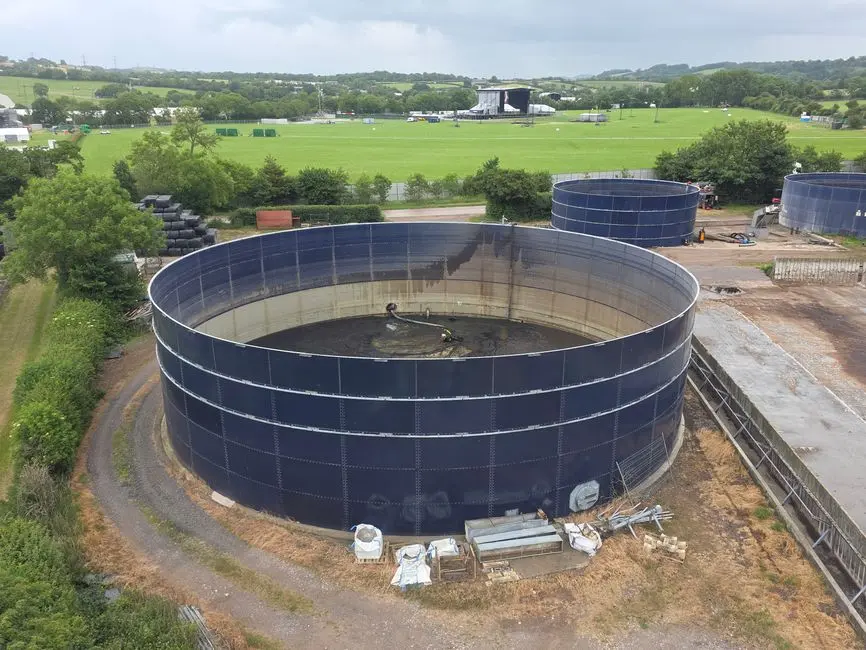
CAPEX ranges for the 2026 market, drawn from DAF Corp published specs and typical mid-scale industrial installs: a skid DAF in the 48-450 gpm FC Maximizer class lands at roughly $80,000-$300,000 installed, versus $40,000-$150,000 for a rectangular clarifier of similar flow — but the clarifier figure carries higher civil and earthwork cost because of the larger footprint and deeper basin. A lamella clarifier cuts footprint by 5-8x but adds plate-pack fabrication cost, so the all-in CAPEX on a lamella is closer to the DAF number than to a conventional rectangular clarifier. For the full equipment-spend context, the USA DAF system engineering guide with 2026 costs and compliance breaks down line items.
OPEX is driven by different things on each technology. DAF OPEX is dominated by coagulant and flocculant dose (typically 5-15 mg/L cationic polymer, 50-150 mg/L ferric or alum coagulant on polymer streams) plus saturator pump energy. Clarifier OPEX is dominated by sludge pumping (large volume of thin underflow) and the polymer dose needed to maintain a stable floc blanket. DAF sludge at 2-4% solids (per DAF Corp spec) is drier than clarifier underflow at 0.5-2%, which reduces downstream dewatering cost on a HydropureWater plate and frame filter press — typically 20-30% less haul tonnage per pound of TSS removed. A HydropureWater automatic chemical dosing system tied to flow-paced injection keeps coagulant spend on target and prevents the overdosing that drives OPEX up on polymer streams.
| Cost Driver | DAF (skid, 48-450 gpm) | Lamella Clarifier (similar flow) |
|---|---|---|
| CAPEX installed (2026) | $80K-$300K | $60K-$200K + civil |
| Coagulant/polymer dose | 5-15 mg/L polymer; 50-150 mg/L coagulant | 3-10 mg/L polymer (floc blanket) |
| Sludge solids | 2-4% (drier cake) | 0.5-2% (thin underflow) |
| Sludge volume index | Low (skimmer float) | High (rake underflow) |
| Energy profile | Continuous saturator pump (~3-7 kW at 100 gpm) | Intermittent sludge rake (~1-2 kW peak) |
| Maintenance hot spots | Saturator pump, skimmer drive, nozzle inspection | Plate-pack fouling, biofilm on inclined plates |
| 5-yr maintenance cost (est.) | Comparable | Comparable (plate replacement can spike) |
Recommended 2026 Setup for a Stockdale Plastics or Rubber Factory
Primary clarification: a DAF or equivalent skid, sized at 1.2-1.5x peak hourly flow to absorb batch dumps from extrusion line changeovers, paired with a HydropureWater automatic chemical dosing system for pH correction (target 6.5-7.5) and polymer flocculation. Polish: a HydropureWater lamella clarifier sized at 1.0x average flow for residual fines and hydraulic equalization across shift boundaries. Sludge line: route the 2-4% DAF float to a HydropureWater plate and frame filter press to produce a stackable 25-35% dry-solids cake — this combination cuts annual hauling cost by 20-30% versus a clarifier-only train. Compliance: tie the dosing skid to flow and pH probes with automatic shutoff on out-of-range signals to protect against 40 CFR 433 excursions during upset conditions. Before committing CAPEX, run a jar test or on-site pilot per DAF Corp's feasibility-study protocol; the lamella clarifier retrofit and upgrade guide for 2026 covers how to integrate the polish step into an existing concrete basin. For a parallel industry treatment scenario, the Iowa Park plastics and rubber pretreatment compliance guide walks through a similar equipment train in a different Texas locale.
Frequently Asked Questions
What is the best primary clarifier for a plastics or rubber factory in Stockdale?
A DAF system is the correct primary clarifier for most Stockdale plastics and rubber plants because the influent is dominated by emulsified release oils, plasticizers, and latex-bound fines — exactly the light, floatable fraction DAF targets at 92-98% TSS removal. A skid-mounted FC Maximizer-class DAF in the 48-450 gpm range covers the typical injection-molding or tire-curing wash flow band and ships pre-assembled, which shortens installation in Stockdale's industrial-park setting.
How does DAF compare to a lamella clarifier for FOG removal in polymer wastewater?
DAF removes 90-95% of FOG on polymer release-oil streams, versus 50-70% for a clarifier on the same emulsion (per Ecologix 2026 case data on a comparable high-oil stream). The 20-40 micron micro-bubbles attach to oil droplets that a gravity settler cannot capture, so DAF collapses the emulsified layer in 3-5 minutes where a clarifier needs 1-2 hours and still leaves most of the oil in the overflow.
Can a DAF and a lamella clarifier be used together in a plastics plant?
Yes — a hybrid DAF → lamella clarifier train is the standard 2026 setup for Stockdale polymer plants that must hit <20 mg/L TSS filterable under tightened local limits. DAF takes out the FOG and buoyant polymer-coated fines at 92-98% removal; the lamella polishes residual dense solids and buffers flow during shift changes. HRT is 15-25 minutes on the DAF and 1.5-2.5 hours on the lamella, and the combined footprint is still smaller than a single rectangular clarifier.
What are the 40 CFR Part 433 discharge limits for plastics and rubber in 2026?
For rubber processing (40 CFR 433.12), the categorical pretreatment limits are 163 mg/L TSS daily max, 65 mg/L monthly avg; 107 mg/L oil & grease daily max, 43 mg/L monthly avg; and 1,140 mg/L COD daily max. For plastics processing (40 CFR 433.16), the limits are 208 mg/L TSS daily max, 86 mg/L monthly avg; 138 mg/L oil & grease daily max, 56 mg/L monthly avg. San Antonio River Authority local limits are typically 10-20% tighter than these federal numbers, so design the DAF + lamella train to a 30-50% safety margin below the federal daily max.