DAF vs Clarifier for Petroleum Wastewater: What's Actually Different
For Baltimore petroleum wastewater in 2026, choose DAF when the stream contains free or emulsified oil above ~50 mg/L, TSS above ~200 mg/L, or temperature swings below 15°C; choose a gravity or lamella clarifier when the stream is predominantly heavy slop, settling solids, and low FOG with stable warm temperature. DAF typically removes 80–95% of free oil and 70–90% of TSS but adds 0.5 kWh/1,000 gal and chemical coagulation cost (per EPA 821-R-98-016, Section 2.8).
The mechanism gap explains the rest of the comparison. A dissolved air flotation system saturates a side stream with air at 60–80 psig, then releases it through needle valves to generate 30–50 micron micro-bubbles (per SigmaDAF/Clearwater, 2026). Those bubbles attach to oil droplets and suspended floc and lift them to the surface in 3–5 minutes, where a paddle skimmer removes the float. Heavier grit settles to a bottom auger. The process is collision-driven, not settling-driven, which is why it works on emulsified oil and cold streams.
A high-efficiency lamella clarifier is a settling vessel with inclined plates spaced at 50–80 mm, operated at 20–40 m/h surface loading rate per HydropureWater product data. Separation follows Stokes' law: oil (specific gravity 0.8–0.9) rises, grit (specific gravity 2.4–2.6) falls, and intermediate-density material exits with the underflow. Inclined plates cut the effective settling distance and can reduce coagulant demand by up to 30% versus a conventional clarifier, but the unit still depends on density contrast and residence time.
Petroleum service breaks the textbook assumption that gravity works for oily water. Free oil does float — but emulsified oil (droplets <20 micron, stabilized by surfactants from desalters, tank draw, or caustic washes) is stable enough to ride straight through a clarifier. DAF micro-bubbles physically collide with these droplets and lift them, which is why every major U.S. refinery and O&G terminal standardizes on DAF upstream of biological treatment (per rjes.iq, 354, 2024). The EPA 821-R-98-016 document still treats DAF and "Secondary Gravity Separation" as distinct unit processes in Section 2.7 and 2.8, reflecting the same operational reality.
How Baltimore's 2026 Discharge Rules Push the Choice Toward DAF
The Maryland Department of the Environment (MDE) administers NPDES permits in the Baltimore region and applies oil & grease limits typically at 10–15 mg/L daily max and TSS at 30 mg/L monthly average for direct surface discharge; the Back River and Patapsco POTW pretreatment programs enforce categorical limits under 40 CFR 413 (Petroleum Refining Point Source Category) for any facility routing waste through municipal sewers. These numbers are not aspirational — they are the basis for the daily-max and monthly-avg compliance calculations in your 2026 permit.
Chesapeake Bay TMDL pressure adds a second constraint. MDE's 2025–2026 implementation reviews have tightened nitrogen, phosphorus, and TSS excursions because every kilogram of TSS that escapes a petroleum site eventually deposits Bay sediment. DAF delivers a tighter TSS floor (70–90% removal in one pass) and stabilizes downstream biological performance, which matters when your POTW is computing rolling averages on a weekly basis.
The performance envelope is well documented. The Shahid Tondgooyan refinery pilot showed that DAF effluent feeding a hybrid activated sludge + MBBR + sand filter train reached 98.6% COD, 99.2% BOD5, 99.4% TDS, and 98.7% turbidity removal at 9-hour HRT (per rjes.iq, 354). A DAF-then-MBBR architecture is the configuration most likely to clear MDE permit limits consistently in 2026 — and it is the same architecture MDE reviewers recognize from EPA Region 3 case files.
When you size the unit, anchor the cost basis on EPA 821-R-98-016. MDE reviewers are familiar with this document because it underpins centralized waste treatment (CWT) cost-benefit analysis, and a CAPEX memo that references the same source the regulator knows moves faster through technical review.
Head-to-Head Performance: DAF vs Clarifier on Real Refinery Streams
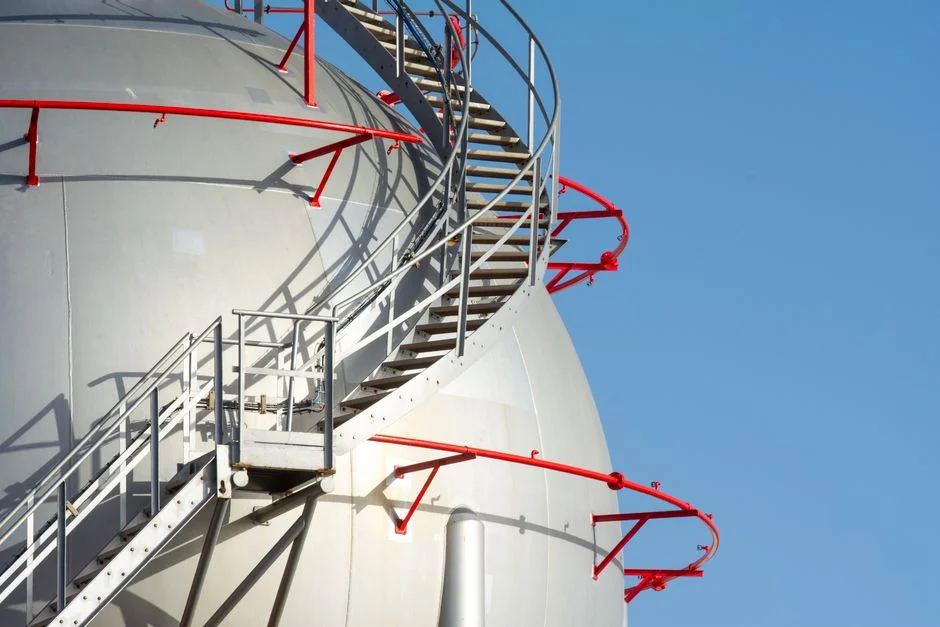
The table below compares DAF, lamella clarifier, and conventional API gravity separator on the parameters that drive a 2026 petroleum CAPEX decision: removal efficiency, influent tolerance, hydraulic loading, footprint, and sensitivity to cold and emulsified streams.
| Parameter | DAF (with chemical conditioning) | Lamella Clarifier | API Gravity Separator |
|---|---|---|---|
| Free oil removal | 80–95% | 40–60% | 60–75% |
| TSS removal | 70–90% | 50–70% | 40–60% |
| FOG removal | 90–95% | 30–50% | Not effective |
| Emulsified oil handling | Excellent (with coagulant/flocculant) | Poor | Not effective |
| Typical influent oil tolerance | Up to 5,000 mg/L | <500 mg/L | <2,000 mg/L free oil only |
| Typical influent TSS tolerance | Up to 3,000 mg/L | <500 mg/L | <1,000 mg/L |
| Hydraulic loading | 5–25 m/h | 20–40 m/h surface loading | 0.5–1.5 m/h |
| Footprint per 10 m³/h | Larger (rectangular basin) | ~60% smaller than API | Largest (long retention weir) |
| Cold-weather sensitivity (<10°C) | Low — collision-driven, ~10–20% coagulant increase | High — 15–25% capacity loss | High — viscosity-limited |
| Best fit role | Primary oil/TSS separator upstream of biological | Polishing or pre-treatment on warm, dilute streams | Grit and free-oil pre-separation upstream of DAF |
The decision rule follows directly from the table. If any of these three are true — oil >200 mg/L, TSS >500 mg/L, or emulsified oil present — DAF is the primary separator. If none are true and the stream is warm, low-strength, and predominantly settling solids, a lamella clarifier is acceptable as a polishing or pre-treatment step. An API separator alone rarely clears MDE limits on a 2026 refinery or terminal stream, and is best used upstream of DAF for grit and slop (per SigmaDAF/Clearwater, 2026; HydropureWater product data, 2026).
2026 Cost Reality: Translating the EPA DAF Cost Curves to a Baltimore Project
The EPA 821-R-98-016 "Detailed Costing Document for the Centralized Waste Treatment Industry" remains the only public reference that publishes separate Total Capital Cost curves, O&M curves, holding-tank capacity curves, and labor requirement estimates for DAF at >20 gpm and <20 gpm, plus a Modified DAF variant (Tables 1-1, 2-49 through 2-66, December 1998). The document also states the operating-energy baseline: 0.5 kWh per 1,000 gallons of wastewater treated (Table 2-60).
To convert those 1998 dollars into a defensible 2026 estimate, a Baltimore engineer should apply a chemical engineering cost index escalation. Using the CEPCI ratio of approximately 1.78 between 1998 and 2026, a hypothetical 50 gpm DAF system that cost ~$180,000 in 1998 dollars lands near $320,000 in installed CAPEX today, before site work, instrumentation, and chemical dosing. A comparable 50 gpm lamella clarifier escalates to roughly $200,000–$250,000 — which is where the 1.3–1.6× CAPEX ratio for DAF over clarifier comes from in 2026 dollars.
| Cost line item | DAF (2026 estimate) | Lamella Clarifier (2026 estimate) |
|---|---|---|
| Equipment CAPEX (50 gpm) | $300,000–$340,000 | $200,000–$250,000 |
| Electricity | 0.5 kWh/1,000 gal (per EPA 821-R-98-016) × BGE industrial rate × 8,760 h | Negligible (no aeration, no saturator) |
| Chemical conditioning (coagulant + flocculant) | $0.015–$0.04 per gallon treated (HydropureWater field data, 2026) | $0.005–$0.015 per gallon |
| Sludge handling | Thinner float (2–4% DS); requires plate-and-frame filter press | Thicker underflow (3–6% DS); less dewatering demand |
| Downstream biological load | Lower oil/TSS load → smaller MBBR basin | Higher residual oil → larger or upset-prone MBBR |
| Avoided non-compliance cost | High — tighter permit compliance | Moderate — depends on influent stability |
Budget the chemical line carefully. SigmaDAF/Clearwater (2026) notes that chemical conditioning via serpentine flocculator mix tubes or mix tanks is essential to DAF performance — without it, removal efficiency drops 20–30 percentage points. Plan for an automatic coagulant and flocculant dosing skid sized to the design flow with at least 1.5× turndown for slug events.
The 5-year TCO arithmetic typically favors DAF on a Baltimore petroleum site because the avoided non-compliance cost (a single MDE notice of violation ranges $5,000–$25,000; a consent order can run six figures) dominates the OPEX delta. The downstream biological load reduction is the second-largest offset: a DAF that cuts TSS from 800 to 120 mg/L before an MBBR lets you shrink the aeration basin by 20–30% (HydropureWater field data, 2026).
Cold-Weather and Slug-Flow Behavior in a Baltimore Winter
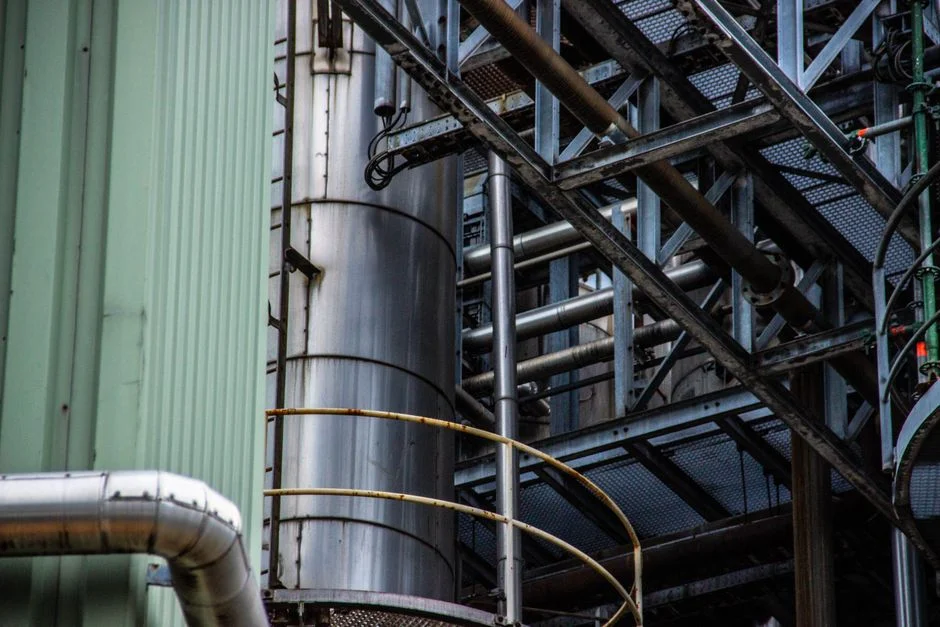
Baltimore winter wastewater temperatures routinely drop below 10°C in unheated equalization tanks from December through March. The viscosity penalty is real: water at 5°C is ~40% more viscous than at 25°C, which slows Stokes settling in a clarifier and reduces the effective surface loading rate by 15–25% in January–February (HydropureWater field data, 2026).
DAF tolerates cold influent better because the bubble-oil attachment is a physical collision process less dependent on viscosity than gravitational settling. The trade-off is floc formation: cold water slows hydrolysis kinetics, so coagulant dose should rise ~10–20% in winter to maintain the same floc strength. Budget for that in the chemical OPEX line — it is a predictable, seasonal swing, not a process upset.
Slug flow is the second winter risk. Refinery desalter dumps, tank-farm draw, and railcar wash events can deliver 5–10× design flow for 30–90 minutes. A lamella clarifier loses capacity exactly when you need it most; a DAF with a properly sized equalization tank and a flow-equalized saturator can ride through a 2× slug with a 15-minute recovery. The recommendation for any Baltimore plant: cover and insulate the equalization upstream of either technology, but flag DAF as the lower-risk default for unheated or partially heated facilities.
3-Step Decision Framework: DAF, Clarifier, or Both?
Step 1 — Characterize the influent. Pull a representative 7-day composite for oil (HEM), TSS, FOG, temperature, and flow variability. If oil >200 mg/L or TSS >500 mg/L or emulsified oil is present, go to Step 2. If none of these are true and the stream is warm and low-strength, a high-efficiency lamella clarifier alone is defensible for 2026 MDE compliance.
Step 2 — Decide whether biological polishing is in scope. If a downstream MBBR, SBR, or MBR is part of the 2026 upgrade — and it should be, given MDE's tightening nitrogen and carbon limits — choose DAF as the primary separator. The rjes.iq refinery study (354, 2024) demonstrated that DAF effluent feeds a hybrid MBBR to 98.6% COD and 99.2% BOD5 removal. Without a biological step, a lamella clarifier with chemical dosing is the lower-CAPEX alternative, but you will spend more on sludge hauling and risk tighter permit floors.
Step 3 — Stack DAF + lamella for high-load refinery service. For TSS >1,000 mg/L or frequent slop streams, install a primary API or lamella clarifier for grit and heavy slop removal, then a dissolved air flotation system for oil and emulsified solids, then biological polishing. This three-stage train is the most common 2026 architecture in U.S. EPA Region 3 refinery upgrades, and it is the configuration MDE reviewers will recognize without extended explanation. See also the parallel DAF or clarifier buyer's guide for fabricated metals and the DAF or clarifier buyer's guide for food and beverage wastewater for cross-industry perspective on the same decision.
Frequently Asked Questions
What oil and TSS removal can a DAF achieve on refinery wastewater?
A properly chemical-conditioned DAF achieves 80–95% free oil removal and 70–90% TSS removal in a single pass. When DAF effluent feeds a hybrid MBBR + sand filter train, the combined system reaches 98.6% COD, 99.2% BOD5, 99.4% TDS, and 98.7% turbidity removal at 9-hour HRT (per rjes.iq, 354, 2024).
Is a DAF required if I already have an API separator?
No, but a DAF downstream of an API separator is the standard 2026 train for emulsified oil and TSS compliance at Baltimore petroleum sites. The API handles grit and free oil; the DAF handles the emulsified fraction that an API cannot capture. Without the DAF stage, you will struggle to meet the 10–15 mg/L oil & grease daily max that MDE applies to surface discharge.
How much electricity does a DAF use?
EPA 821-R-98-016 (Section 2.8, Table 2-60) estimates 0.5 kWh per 1,000 gallons treated for the dissolved air saturation and recycle pump system. Multiply by the BGE 2026 industrial rate (~$0.11–$0.13/kWh) and your annual operating hours to size the OPEX line; a 50 gpm DAF running two shifts consumes roughly 13,000 kWh/year for the flotation step.
Can a lamella clarifier handle Baltimore winter temperatures?
Performance drops 15–25% below 10°C because water viscosity rises and Stokes settling slows. Insulated and covered equalization is required upstream. For unheated or partially heated Baltimore plants, DAF is the lower-risk default because the bubble-oil collision mechanism is less viscosity-dependent than gravity settling. Winter coagulant dose should rise 10–20% to compensate for slower floc kinetics (HydropureWater field data, 2026).
What MDE permit limits apply to petroleum wastewater in Baltimore?
Typical MDE oil & grease limits are 10–15 mg/L daily max and TSS 30 mg/L monthly average for NPDES surface discharge, with categorical standards under 40 CFR 413 (Petroleum Refining) governing discharges to the Back River and Patapsco POTWs. Facilities should also expect Chesapeake Bay TMDL-driven tracking of TSS, nitrogen, and phosphorus in the 2026 permit cycle. The related foam control in DAF and biological treatment guide covers a common downstream issue once you commit to a DAF-then-MBBR train.